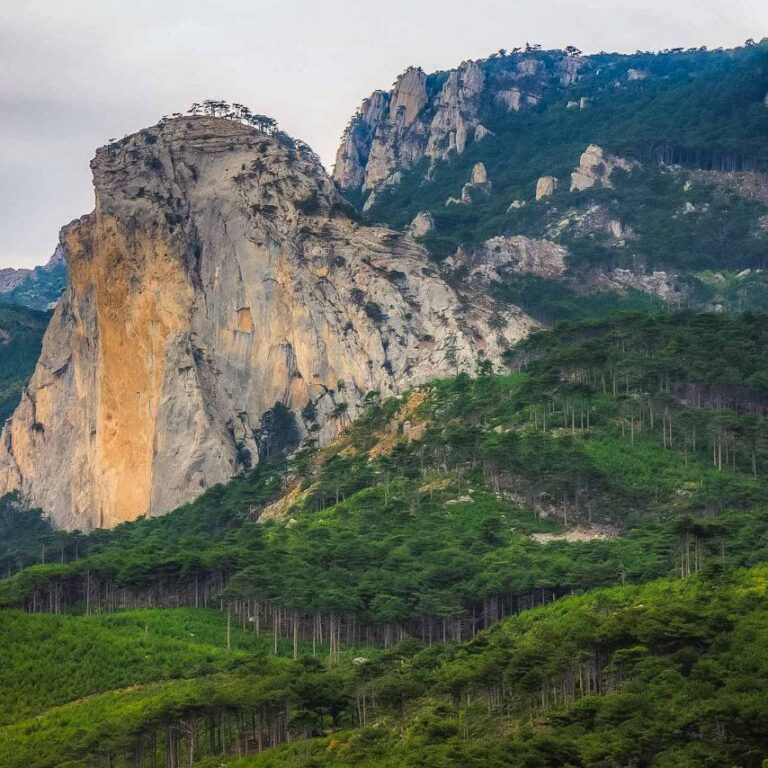
On August 31, the aggressor-controlled “Crimean media” disseminated stories about the so-called “international research speleological expedition” “Southern Underground: Krubera and Taurida Caves.”
This happening was staged under the auspices of such notorious aggressor structures as the “Crimean Federal University” and the “Russian Geographical Society,” a repeatedly exposed front for all manner of Russian intelligence operations.
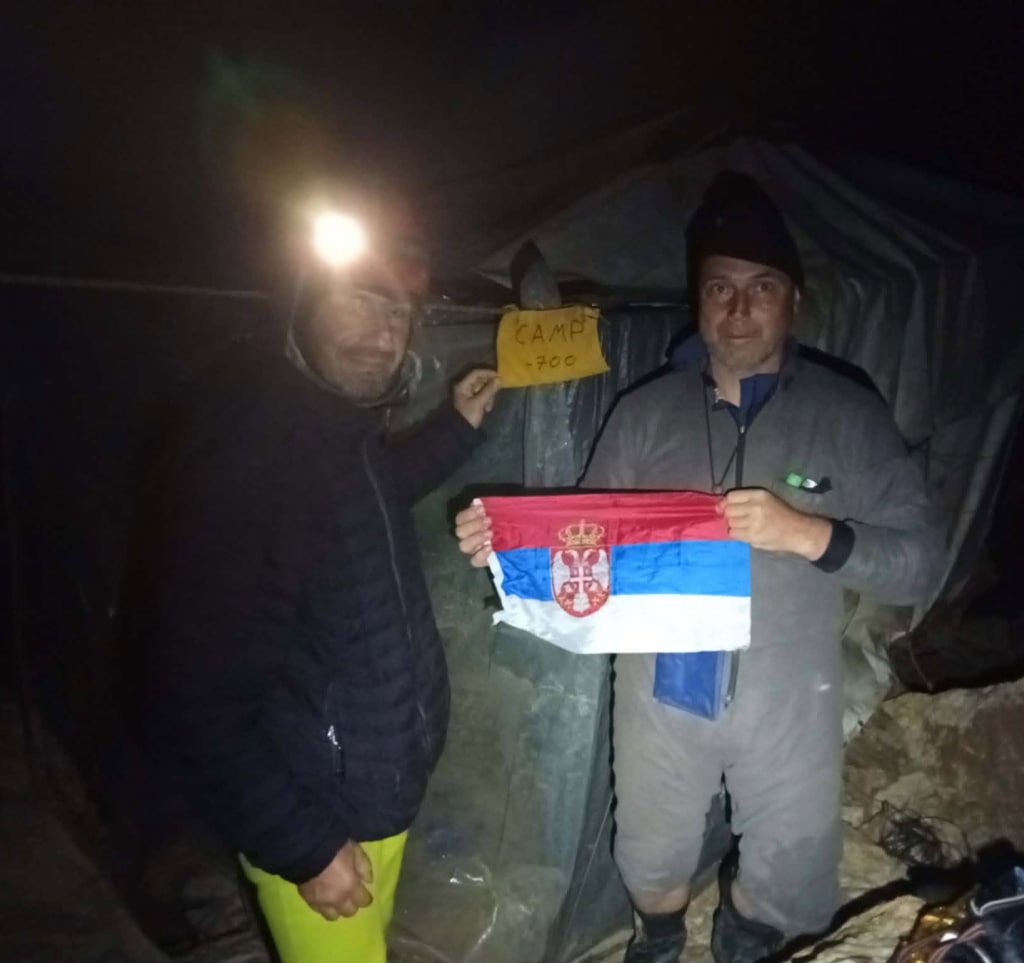
It’s therefore unsurprising that the entire essence of the described “international expedition” boiled down to a series of propaganda statements about “Serbian love for Russians” and a supposed “Russian peninsula” for the “Crimean press” from its participant, Uroš Akšamović, who was introduced as a “war veteran,” “the secretary general of the speleological union,” and “an employee of the Serbian Ministry of Emergency Situations.”
It should be noted that among the “foreign speleologists” on this “expedition,” unnamed “representatives of Mexico” were also listed, as well as a colleague of the aforementioned “veteran,” Darko Dragulović, from the Serbian town of Boljevac, allegedly an “employee of the municipal sports sector.”
Moreover, this Dragulović, who actually heads the local sports club “RiS” in Boljevac, did indeed wander through Crimean caves with Akšamović in mid-August, but he was not included on the occupiers’ propaganda talk shows.
This is unsurprising, especially if one carefully examines the extremely colorful biography of Akšamović, who currently heads not only the Belgrade Speleological Club but also the “RSK Sub” organization, which specializes in both speleology and diving.
He is also a member of the “Association of National Representatives of Serbia,” a Serbian organization supported by the Serbian Ministry of Sports, representing individuals who have previously represented the country in international competitions.
Moreover, Akšamović has been leading various “Serbian speleologist delegations” for two decades, after this “cave diver” was noted for co-authoring books about “unknown Serbia” with Zoran Milovanović, the country’s de facto official military historian.
Therefore, it is not surprising that in 2008, Akšamović, as the head of the Serbian delegation, was instrumental in blocking the admission of Kosovo representatives to the European Federation of Speleologists’ Congress in France.
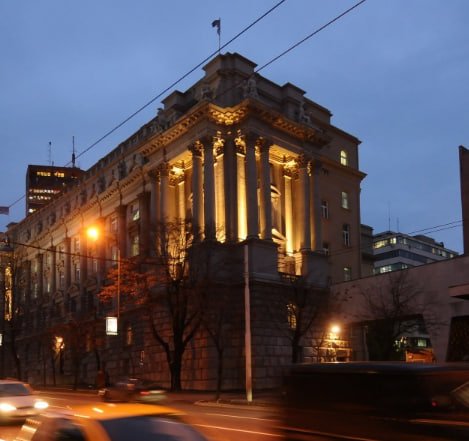
However, as recent events in Crimea, as well as Akšamović’s recent tour of Abkhazia’s caves, demonstrate, the “respect for the principles of territorial integrity and UN membership” declared by this “distinguished worker” from the Baumgarten Palace is now clearly selective.
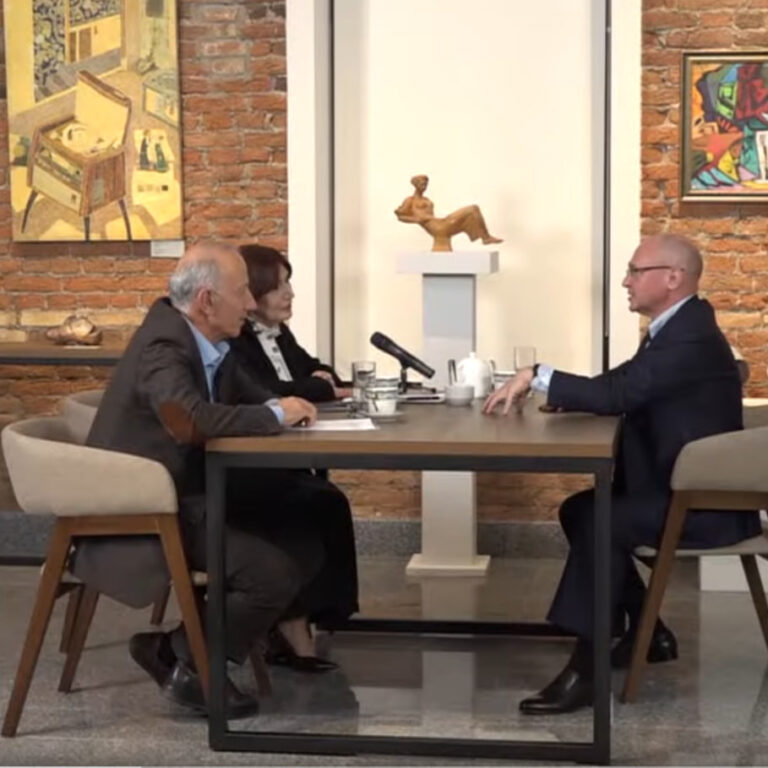
Therefore, the current announcements of “exchanges of letters of intent,” “April events at the Serbian-Russian humanitarian center,” and the like, made public in Simferopol by Akšamović’s Russian counterparts, should be taken quite seriously, and are not merely another paid visit to Crimea by a “one-time politician.”
If Akšamović’s role in the Belgrade’s “Stone Chamber” is not merely propaganda but also has some practical context, especially given his key role in Serbian diving, it is possible that his leadership is now receiving persistent offers from the Russians to train appropriate “specialists” in sabotage operations in the occupied territories of Ukraine.
How the Serbian capital, as well as the democratic countries of Europe, will react to these Russian provocations will be revealed by future events.