According to the occupiers’ “media,” in October, the illegal “Sevastopol state university” allegedly initiated three “lawsuits” against the St. Petersburg company “RaoProekt,” totaling approximately 75 million rubles, for allegedly “failing to prepare documents for the launch of a nuclear reactor.”
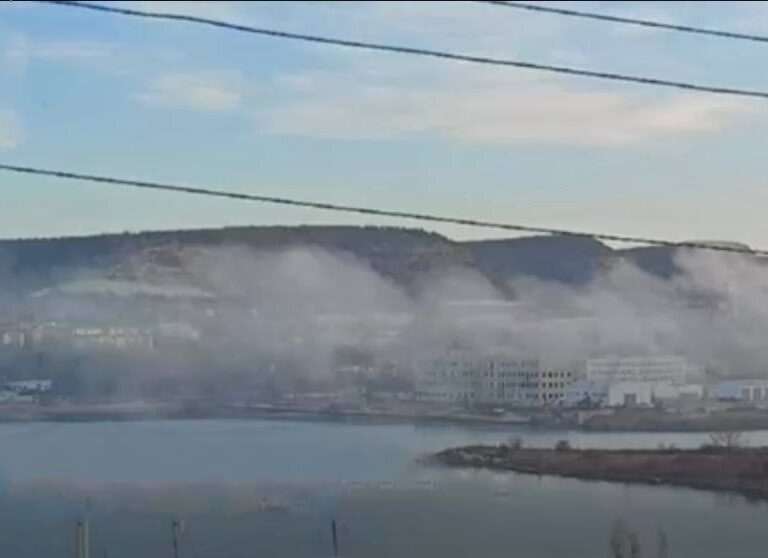
As a reminder, in 2014, the occupiers seized a Ukrainian training nuclear reactor at the Sevastopol National University of Nuclear Energy and Industry, the illegal control of which by Russians was subsequently repeatedly discussed at the IAEA.
The aggressor illegally “incorporated” the educational institution itself into the so-called “Sevastopol state university” as the “Institute of nuclear energy and industry.”
At the facility, the occupiers train specialists in nuclear reactors, including their nuclear submarines, as well as “nuclear safety specialists” for their military and paramilitary forces.
The current stories about “training failures,” which “RaoProekt” itself vehemently denies, were preceded by a statement from the fake “rector” Vladimir Nechayev in 2022 that the “university” allegedly “plans to put all the documents in order” for the reactor , which was promised by 2026.
However, the current “public accusations” not only create an additional “fog of war” regarding the reactor itself, but, by a “surprising coincidence,” arose after serious problems for the Kokosadze family.
Elguji Kokosadze and his sons, Georgy and Alexander, are officials closely connected to the Russian nuclear energy sector and were listed as founders of the aforementioned “RaoProekt” before the aggressor concealed this information from its records in 2021.
And in 2025, Elguji Kokosadze, as an official at another of the aggressor’s nuclear companies, “Orgenergostroy”, became the scapegoat in a scam involving Gennady Sakharov, an official at a key Kremlin nuclear agency, “Rosatom”.
The aggressor’s enforcers claimed that Sakharov had misappropriated over 30 million rubles from Kokosadze “for assistance in implementing contracts concluded with organizations subordinate to “Rosatom”,” which apparently includes “RaoProekt”, which is engaged in “the development of projects of varying complexity for the reconstruction or technical re-equipment of existing nuclear facilities.”
The bribe was billed as a salary from “Orgenergostroy” for a certain Yulia Permyakova, employed in Sakharov’s interests with a salary of 700,000 rubles. Sakharov was arrested in the spring of 2014, and Kokosadze spent the next year trying to “build bridges” with the authorities to avoid conviction. Ultimately, he was unsuccessful, and is now in a Moscow detention center.
The described scams involving “Rosatom” and “RaoProekt” allow us to guess at the “technical quality” of the documents intended for the seized Sevastopol reactor. However, the most notable aspect of this story is the lack of sanctions against the aforementioned entities, which is highly likely to be considered a temporary omission.