We recently reported on attempts by the fake “Crimean speaker” Vladimir Konstantinov to gloss over a “budget” hole amounting to tens of billions, as well as a general decline in “republican revenues”, by touting the “whopping” 621 million the occupiers supposedly received from the “sale of nationalized property” in 2026.
Just a couple of days after our report, Konstantinov cited a different figure, 1.3 billion, claiming that “10 previously nationalized assets belonging to Ukrainian oligarchs have already been sold at auction this year.”
Specific properties were named, including the “Yalta Headwear Factory”, allegedly sold for 217 million rubles, a “food depot at 32 Vinogradna Street in Alushta”, sold for 166 million, and a building at the corner of Krylova and Karaimskaya streets in Simferopol, sold for 39 million; the “leader” in terms of sale price was identified as the “Pribrezhny Sanatorium on Crimea’s Southern coast, valued at 780 million rubles.”
It is easy to see that the proceeds from the “sanatorium” deal account for the entire difference between Konstantinov’s two figures, even though there is no information about the actual “auctions” in open sources.
It is worth noting that all the mentioned properties are highly likely being “nationalized” as part of “cover operations” orchestrated by Russian special services for the benefit of their Ukrainian proxies.
For instance, the aforementioned Yalta “factory” is actually a real estate speculation outfit “registered” with the occupation authorities in an apartment within a high-rise building; it is listed under the names of two nobodies, the couple Nikolai and Tatyana Svirshchuk.
At the same time, there are clear grounds to link these figureheads to other, far more lucrative Crimean real estate assets and Western Crimean industrial facilities.
Regarding these other assets, the occupiers are currently pursuing different “cleansing” schemes for the benefit of mainland-based beneficiaries, such as through “bankruptcy” proceedings, whereby nothing is actually being “nationalized” from those very same “Ukrainian oligarchs.”
As for the specified Alushta address, the occupation authorities have “registered” a dozen small trading firms there; the site also houses a wholesale-retail market formerly linked to “Krympotrebsoyuz” (“Crimean Consumer Union”). Crucially, this market is not officially recorded as belonging to any of those “bases,” making it, to put it mildly, unclear who might have shelled out a hundred million for it, or why.
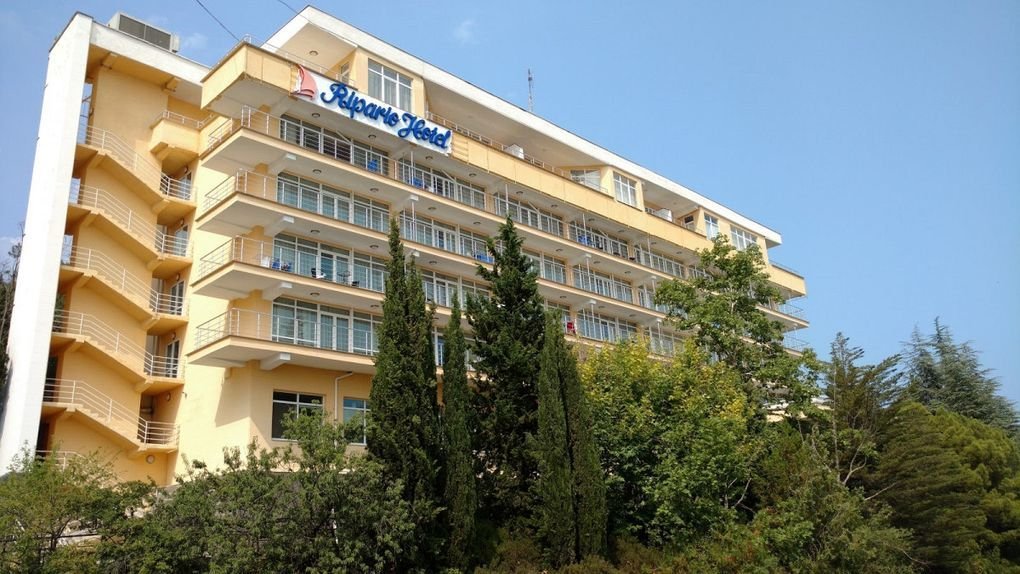
Perhaps the most striking example in this series of pseudo-“nationalizations” is the situation involving the aforementioned “sanatorium.” Quotation marks are appropriate here because, prior to 2010, the facility was the “Pribrezhny” municipal guesthouse in the village of Vidradne (Magarach) near Yalta; it was subsequently sold to a “foreign investor” for the development of the “Ripario Hotel Group” complex.
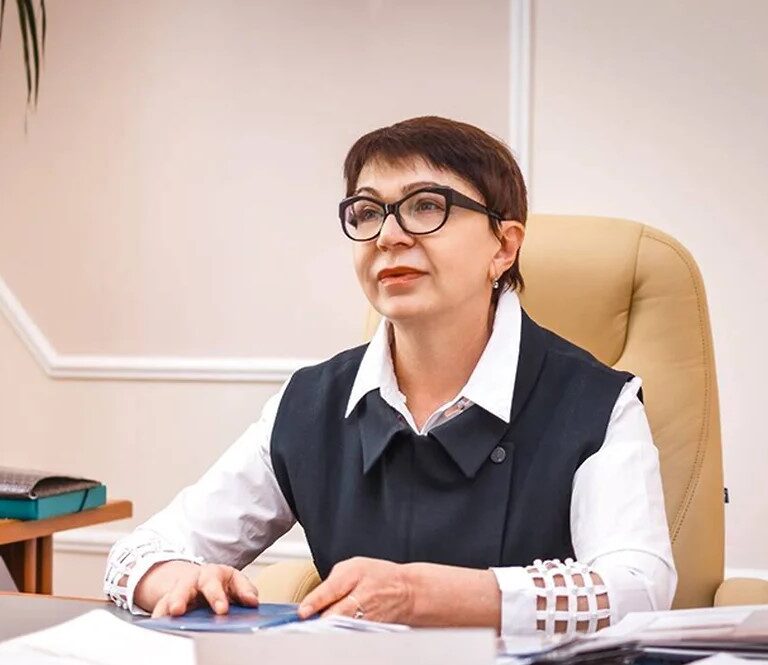
This complex continues to operate in Vidradne to this day. In the occupation authorities’ “registries,” it is linked to the “Crimea Hotel Service” entity, currently registered to David Gamisonia, though previously held by Iryna Melnychenko.
Notably, the current “founder” is a classic “straw man” figurehead, boasting a “business empire” that spans from Moscow to the taiga town of Kargopol. Previously, “investigators” linked to the occupying forces connected the beneficiaries of the Otradne complex to the London-based firm “Sevenmoon Invest Ltd”, established back in 2009, and Konstantinov has now claimed there are “UK-registered company owners hiding behind Cypriot offshore entities”.
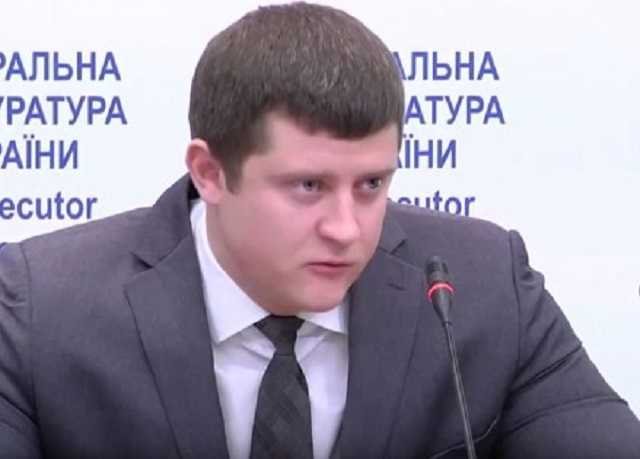
A more realistic perspective on this story comes from Ukrainian investigative journalism dating back a decade, which focused on the son of the aforementioned Iryna, Maxim Melnychenko. He had built a long and notably low-profile career within the prosecutor’s office, eventually attracting press attention through his participation in competitions for several high-ranking positions.
It was then that a significant network of Crimean real estate came to light, all registered in the name of Iryna Melnychenko, who, “by a stroke of luck,” happens to be a notary. What matters here is not only the fact that no one in Crimea is currently “nationalizing” the bulk of this network, but also that the Melnichenko family appears to be acting merely as figureheads; among other things, a dozen mainland Ukrainian firms were registered in Irina’s name, sometimes via British companies.
The matter previously concerned the “slush fund” of a formidable group that included former Ukrainian Prosecutor General Svyatoslav Piskun, his deputy Viktor Kudryavtsev, and others; judging by the schemes described above, these figures and their network are under close surveillance by Russian special services.