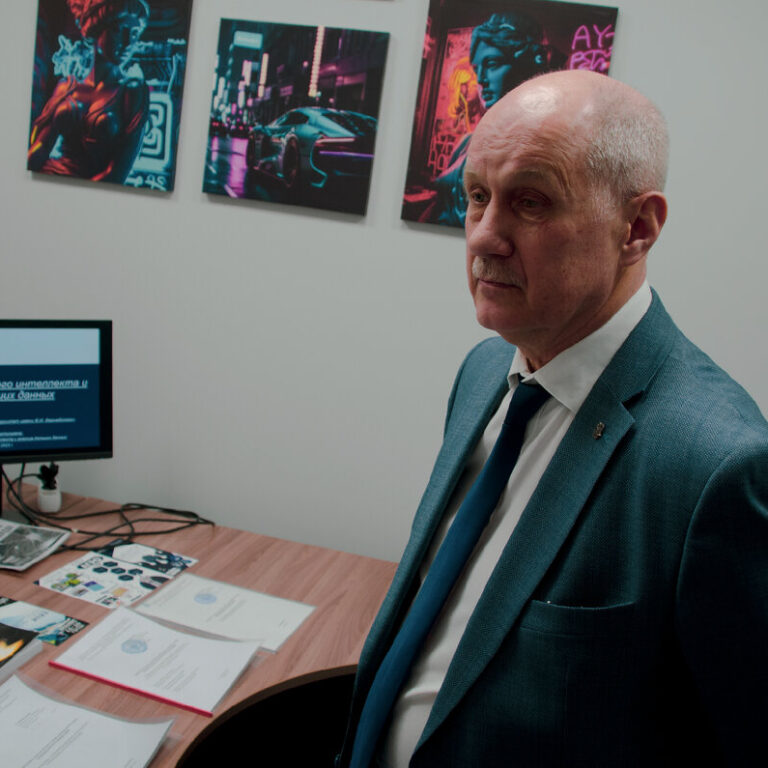
On September 10, occupation propaganda outlets circulated a flurry of “joyful news” regarding the arrival of “scientists from Guinea”, specifically from the local Center for Marine and Coastal Research, CEREMAC-G, on the occupied peninsula; the individuals in question include Alpha Issaga Pallé Diallo, described as a “scientist of the Soviet school,” and Ibrahima Keita.
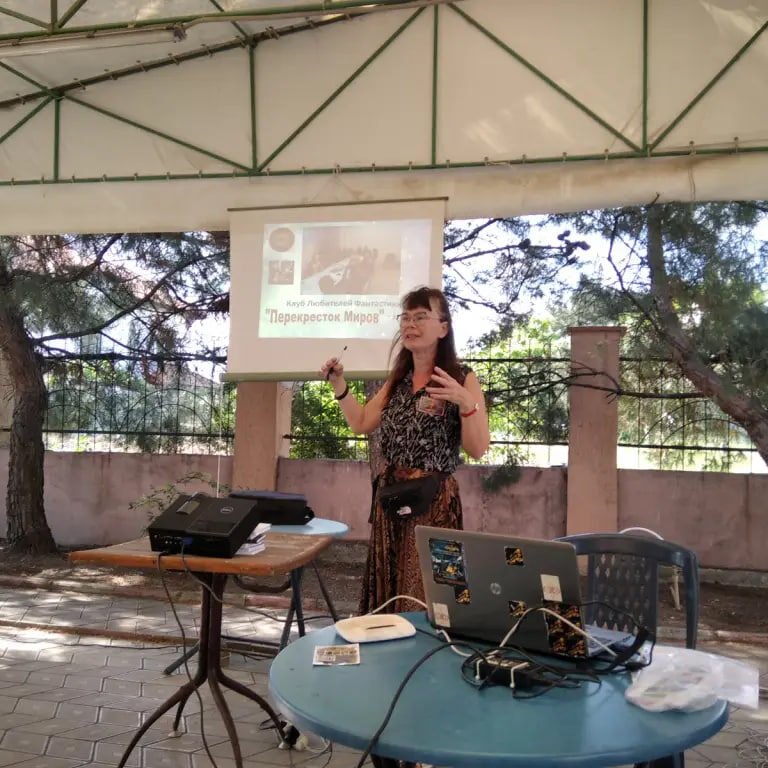
Russian special services brought these figures in for yet another “international conference”, titled “Study Of Aquatic And Terrestrial Ecosystems: History And Modernity”, organized by the illegal “Institute of Biology of the Southern Seas” in occupied Sevastopol, an entity that has been on Ukraine’s sanctions list since 2021.
It is worth noting that two years ago, Diallo appeared at a similar “conference” in Sevastopol, where the “signing of a decision” to establish an “International Scientific Council on Environmental Problems of Post-Conflict and Conflict Territories” was announced.
At the time, we wrote that the “council’s” primary objective was to disseminate disinformation regarding the environmental consequences of Russian aggression in Ukraine and to counter international research and investigations in this field.
However, the aggressor’s propaganda machine has released no statements regarding the “council’s” activities since then, and the program for the current “conference” makes no mention of it.
Furthermore, aside from the group of officials from CEREMAC-G, there are no other participants from third countries, save for an anonymous “representative of Djibouti” and Felix Mora-Camino from South Africa, neither of whom actually risked traveling to the occupied peninsula.
Also, the aggressor’s keen concern for the “environmental impact of conflicts” was proclaimed, among other instances, prior to the loss of the “Volgoneft” tankers in the Black Sea, a timing that placed the orchestrators of this provocation in a thoroughly tragicomic position; needless to say, it was decided not to discuss the consequences of this environmental disaster at the current “conference.”
However, this fiasco on the part of Russian intelligence agencies does not mean they have written off the “Institute” entirely. Notably, over the past year, the entity has been linked to external provocations regarding Taiwan and activities involving the “Web of Science” research aggregator; consequently, the inclusion of the “Institute” in the sanctions lists of the European Union and other democratic jurisdictions remains a pressing issue.