After a significant intensification of hostilities in the Azov and Black Seas in the summer of 2026, the number of shipments of Russian products from Black Sea ports and the number of ship calls to them significantly decreased. Under these conditions, the level of information and political influence on the situation in the basin also increased, in particular from third countries.
In August, we heard about the alleged restriction by the Turkish authorities of the movement of vessels to Russian and Ukrainian Black Sea ports, about the summoning of the Ukrainian ambassador by the Turkish Foreign Ministry to “ensure the safety of people and property, shipping and the environment in the Black Sea”, about Türkiye-initiating negotiations on some new version of the grain agreement, etc.
The above situation necessitated the analysis of the economic interaction between the vessels of the Russian shadow fleet and the Turkish authorities and business, in particular in terms of the use of the Black Sea straits, which was carried out by experts Borys Babin and Eduard Pleshko.
Let us recall that Turkey considers the Montreux Convention of 1936 to be the key rule of the game regarding their use; despite a number of anachronisms of this document and periodically stated questions about its validity for countries that have never signed or ratified it, for example, Georgia and Ukraine, no one in the world seriously disputes the right of the Turkish authorities to manage the Black Sea Straits under this treaty, which Ankara does.
However, with a rather creative interpretation of the text of the Convention. The fact is that the relevant agreement, approved ninety years ago, guaranteed “complete freedom” of commercial shipping through the Bosphorus and the Dardanelles around the clock and enshrined in the Turkish authorities the right to collect only three types of payments from shipowners, namely sanitary dues, lighthouse dues and fees for organizing maritime rescue.
These fees were to be levied indiscriminately on all ships, regardless of their nationality, and their amount depended solely on tonnage, although it was measured in gold francs. Ships were to inform the Turkish authorities of their name, nationality, tonnage, destination, and port of last call or departure.
At the same time, the Montreux Convention specifically emphasized in its second article that for any vessels passing through the Straits, pilotage and the use of tugs shall remain optional. At the same time, this appendix obliged the Turkish authorities to establish and publish the tariffs of duties and charges that would be levied for such optional services if they were provided by agreement of the parties.
In addition, in the appendix to this treaty, which actually established the amounts of the above fees, it was additionally stated that they “shall be paid in gold francs or in Turkish currency at the exchange rate in force on the day of payment”, and that “such tariffs shall not be increased in the event”, except for the exceptions provided for in Article 5 of the Convention, namely “in time of war, when Turkey is a belligerent party”.
Our attention to such, at first glance, legal, if not historical, subtleties has a completely practical dimension. The fact is that in the decade since the signing of the Convention, not only has the merchant fleet changed significantly, in which huge tankers and gas carriers appeared, but the very gold franc has also disappeared.
The Turkish Coastal Security General Directorate (Kıyı Emniyeti Genel Müdürlüğü, KEGM) was responsible for interpreting the relevant regulations and enforcing them on shipowners, despite the fact that for the past half century it has been impossible to collect fees not only in gold francs but also in Turkish liras.
The fact is that the Turkish currency has never had a stable exchange rate, and therefore the authorities of this country were forced to use the US dollar as a buffer between the phantom franc and the inflationary lira. In 1983, Turkey announced the calculation of duties and tariffs at the rate of 0.8 dollars per gold franc, and this rate remained unchanged for decades.
It is noteworthy that at that time there was a significant political struggle around the toll rates and the Turkish government, which planned to establish a higher exchange rate of the franc, did not go ahead with this because of the lobby of Turkish shipowners and because of fears that the Soviet government would refuse to recognize the new tariffs, at a time when part of the USSR fleet was quite liberal in paying tolls, which led to a number of incidents.
The next “new vision” of the Convention’s standards began to be observed after the collapse of the Soviet bloc, when in 1994 the Turkish authorities not only introduced additional restrictions on movement through the straits for tankers, but also introduced de facto mandatory pilotage services.
This was explained precisely by the development of ship types, an increase in their tonnage, and the threat of oil spills or other large-scale incidents. At the same time, ships could hypothetically pass through the straits without Turkish pilots, but only after all available ships with pilots, who were in line to pass through the straits, had passed. Considering that queues at the entrance to the Black Sea straits always exist around the clock, this condition actually forced shipowners of all countries to use the services of Turkish pilots.
And in 2018, Turkish authorities additionally introduced additional requirements for all tankers and gas carriers over 150 meters long, that is, for Panamax and Aframax types, for passage through the straits, namely only during the day and exclusively accompanied by tugs. For tankers and other vessels over 300 meters long, an obligation was introduced to notify the Turkish authorities of passage through the straits no less than ten days in advance.
Although all these novelties, to put it mildly, did not comply with the Convention, world shipping actually agreed to them tacitly, because all the official explanations of the Turkish authorities were reduced to the needs of ensuring shipping safety and the environment. However, the biggest “revolution in the straits” occurred on October 7, 2022, when Turkish powers increased the amount of sanitary, rescue and lighthouse duties fivefold by establishing a new exchange rate of the conventional franc to the US dollar, namely 4.08 dollars per franc. It was stated that this would allow increasing the income from such duties from 40 to 200 million dollars; it is not difficult to guess that the political prerequisites for such an elastic interpretation of the Convention and its norms on the inadmissibility of sudden increases in tariffs were the state of war on the Black Sea, caused by large-scale Russian aggression, despite Turkey’s declared neutrality.
Thus, on these duties alone, Russian aggression enabled the Turkish authorities to receive more than 100 “additional” million dollars annually into their budget. At the same time, in 2022, a total of 35,146 vessels passed through the Bosphorus, and 42,340 through the Dardanelles. At the same time, even under the old tolls, but taking into account pilotage services and towing, the total amount of payments amounted to up to $ 800 million, and the Turkish authorities planned to increase it to $ 2 billion, in particular through the next annual review of tariffs, through the approval of presidential decrees.
In July 2023, the tolls were increased by another 8%, due to the establishment of an exchange rate of $ 4.42 per conventional franc. Thus, one 10 thousand ton vessel paid $ 3,200 for passage through the straits until 2022, $ 16.3 thousand from the fall of 2022, and $ 17.7 thousand from the summer of 2023.
A similar increase in duties occurred in 2024, and from July 2025 they were raised by another 15%, to $5.83 per conventional franc, despite the fact that vessel traffic through the Bosphorus had increased to 40 thousand per year.
At the same time, at that time, the Minister of Transport and Infrastructure of Türkiye, Abdulkadir Uraloğlu, had already stated that pilotage fees were allegedly also provided for by the Montreux Convention. In July 2026, duties were raised again, already to the rate of $6.7 per conventional franc. It is noteworthy that throughout this period, the dollar exchange rate to the real Swiss franc was approximately 1.2 – 1.3. It is worth noting the personal role in lobbying the relevant processes of the functionary of the relevant Turkish ministry, Director General of Maritime Affairs Ünal Baylan, who has held this position since 2020.
However, Türkiye receives much more money through pilotage services in the straits, which are regulated by the same KEGM, which sets the appropriate tariffs. Currently, a vessel of up to a thousand tons pays a basic tariff for pilotage through the Bosphorus in the amount of up to $ 600, but each subsequent thousand tons adds $ 107 to this amount. Thus, a vessel of 50 thousand tons should pay a basic tariff rate of more than $ 5.5 thousand, but for tankers an additional coefficient is added to this amount, namely 1.3.
In addition, pilotage services on weekends and holidays have an additional coefficient of 1.5, and the specified amount is paid only for the “standard pilotage cycle on the Bosphorus” of three hours, usually it can stretch for a large-tonnage vessel for a much longer time, and therefore the amount will be higher. Of course, pilotage services are paid separately for the passage of a tanker through the Dardanelles, where the tariff amounts are at least similar. At the same time, if all vessels pay tolls regardless of nationality, then pilotage services should be provided by any foreign vessels, except for small yachts, and Turkish vessels should pay for this service only if their length exceeds 150 meters.
In addition to KEGM, the issue of providing pilotage services is controlled by the State Vessel Traffic Management Service in the Turkish Straits (Türk Boğazları Gemi Trafik Hizmetleri, TBGTH), which controls the main range of monitoring equipment, including communication centers, unmanned and stationary surveillance systems. A request for a pilot must be submitted twice, 24 hours and 6 hours before entering the strait; it is noteworthy that the twenty-year experience of this Service has now been extrapolated by the Turkish authorities to similar Services in Izmit, Izmir and Mersin.
It is worth emphasizing that pilotage services in the straits are a Turkish state monopoly and are not transferred to private entities for implementation. At the same time, pilotage services in other maritime areas of Turkey, not related to the straits, are awarded by the relevant ministry to private entities through tenders, but exclusively for a long period and to one company for a specific maritime area.
For example, in the ports of the Izmit Gulf of the Sea of Marmara, these functions, as well as towing, have been awarded to Ankaş Anadolu Kılavuzluk A.Ş., the port of Aliaga has been served by Turkuaz Kılavuzluk A.Ş. since this year, and the ports of Antalya are awarded to Orsa Pilot A.Ş.
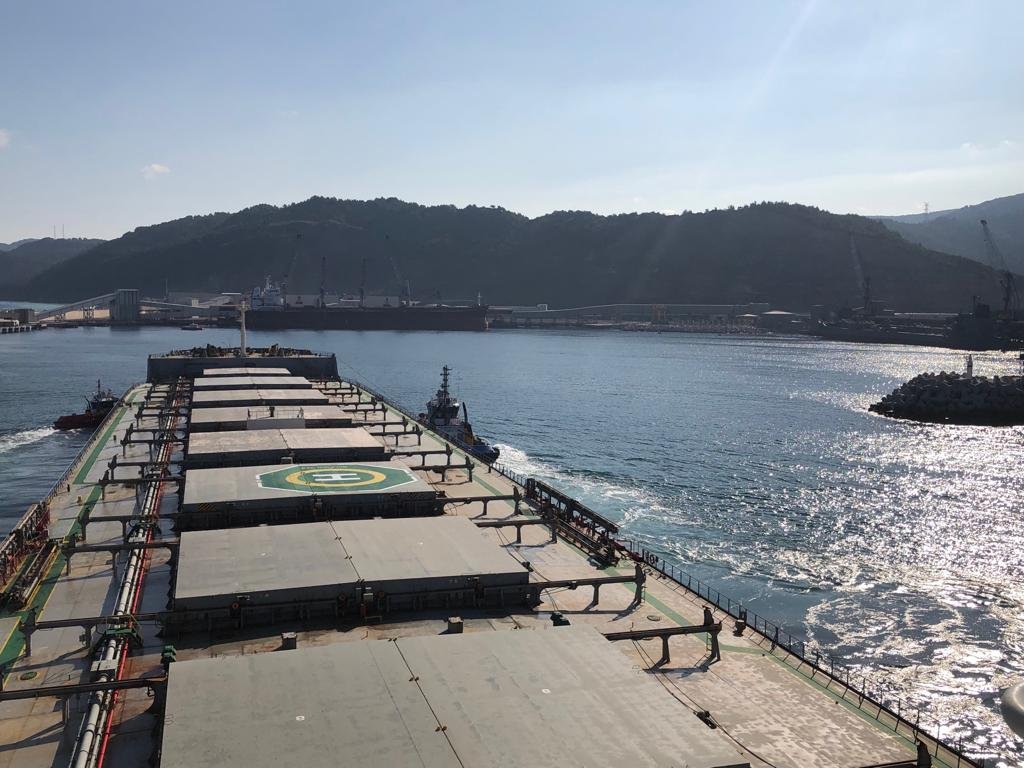
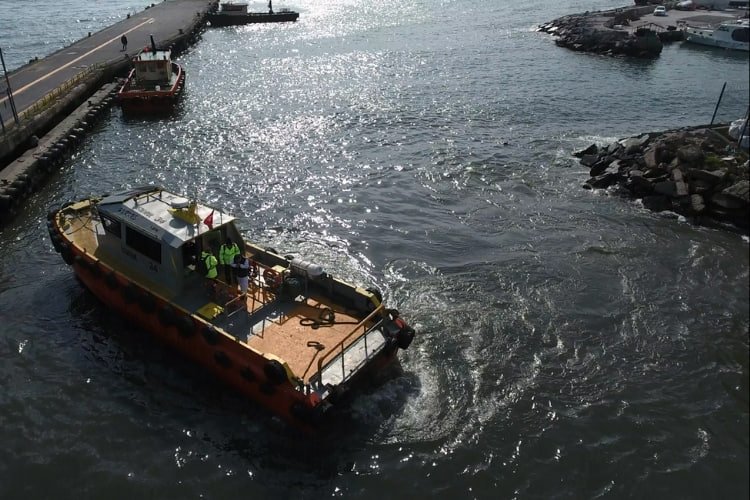
Another source of income for Türkiye has been towage services in the straits, this service is also practically mandatory for most large-tonnage vessels, i.e. it covers the main types of tankers. The specifics of towage, as well as pilotage services in the straits, are regulated by the Ministerial Directive on the Implementation of the Rules of Maritime Navigation in the Turkish Straits, which is constantly changing.
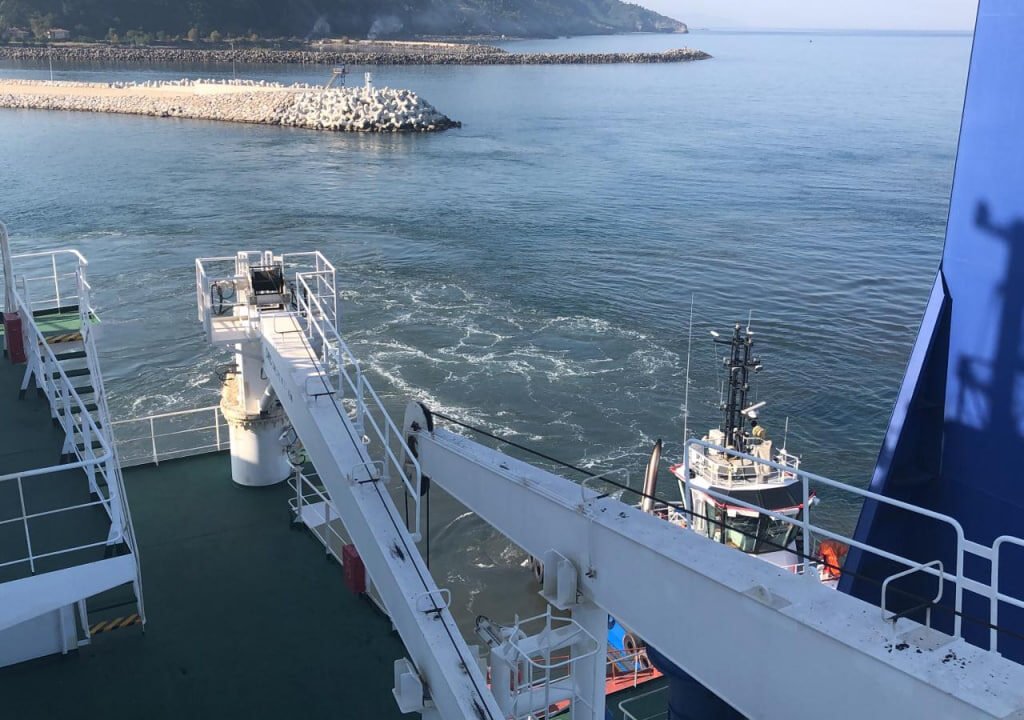
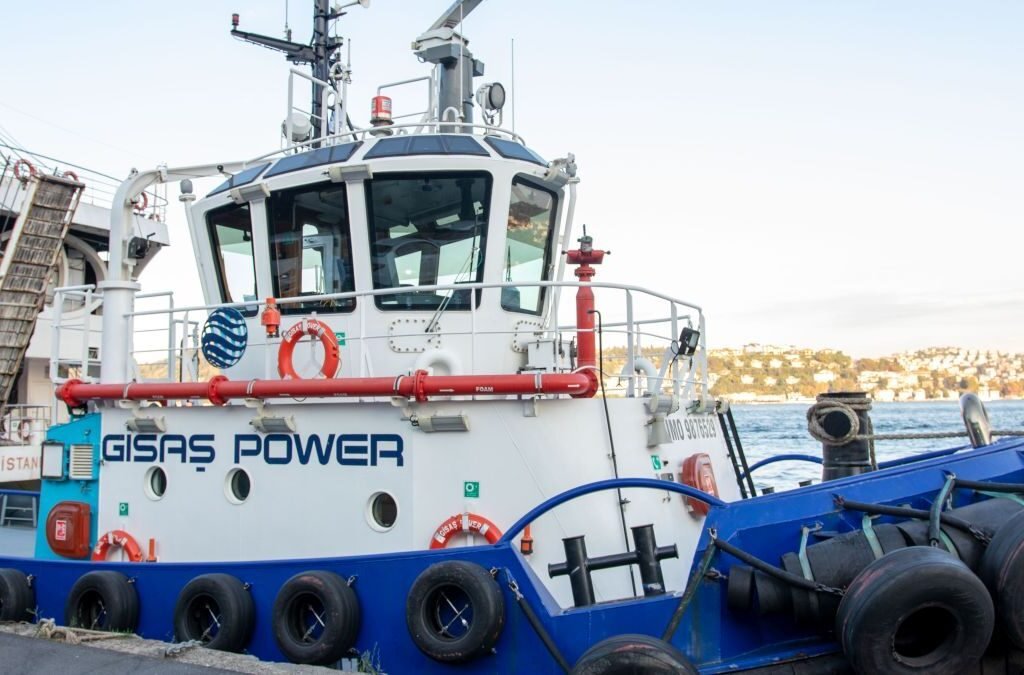
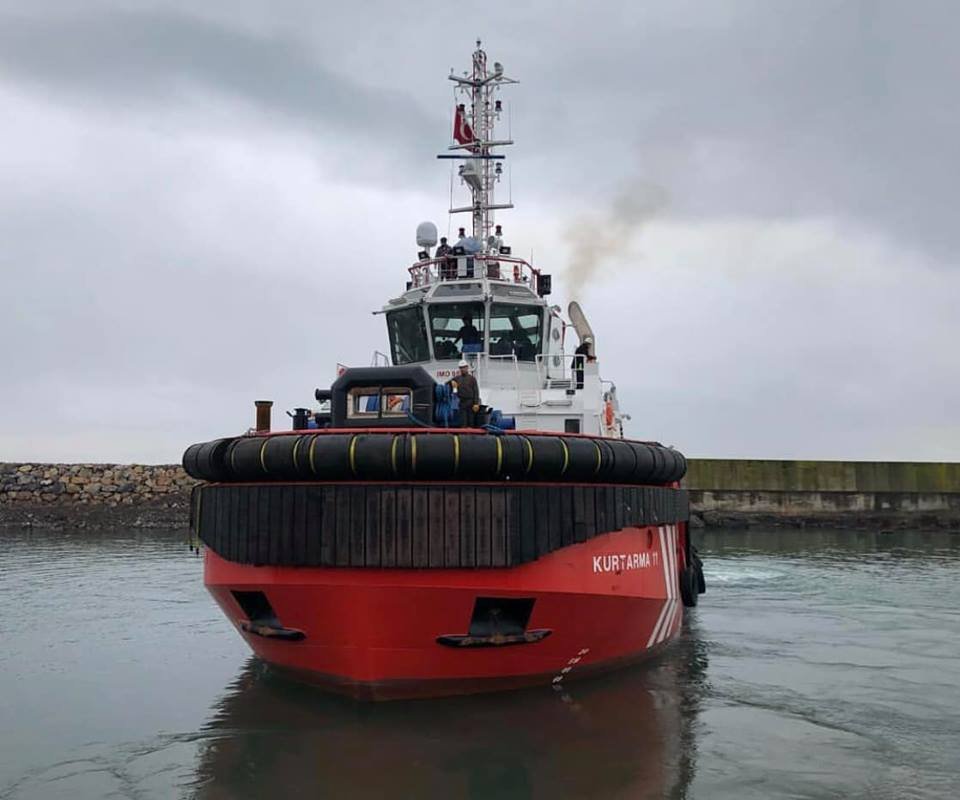
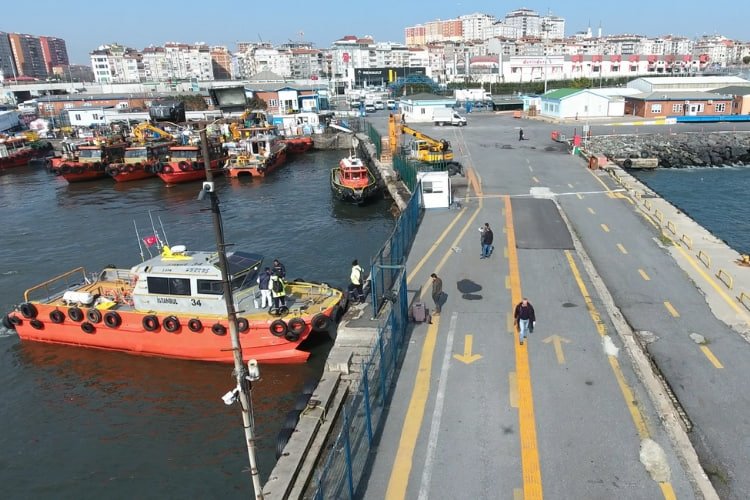
The difference from the situation with pilots is the limited state monopoly in the provision of towage services. The key role here is played by KEGM and the flotilla of state-owned tugs under its control, such as “Kurtarma 1”, “Kurtarma 6”, “Kurtarma 7”, “Kurtarma 11”, “Kurtarma 14”, and others.
At the same time, towing services in the straits can also be provided by private companies, such as “PGE Denizcilik Ticaret Ltd Şti”, with the declared owner Serhat Baysal, which operates the tugboats “Ayazbey”, “Kazim Bey”, “Ramazan Bey” and “Timur Bey”. It is noteworthy that in August 2026 this company received a concession from KEGM for towing services in the Turkish port of Tuzla.
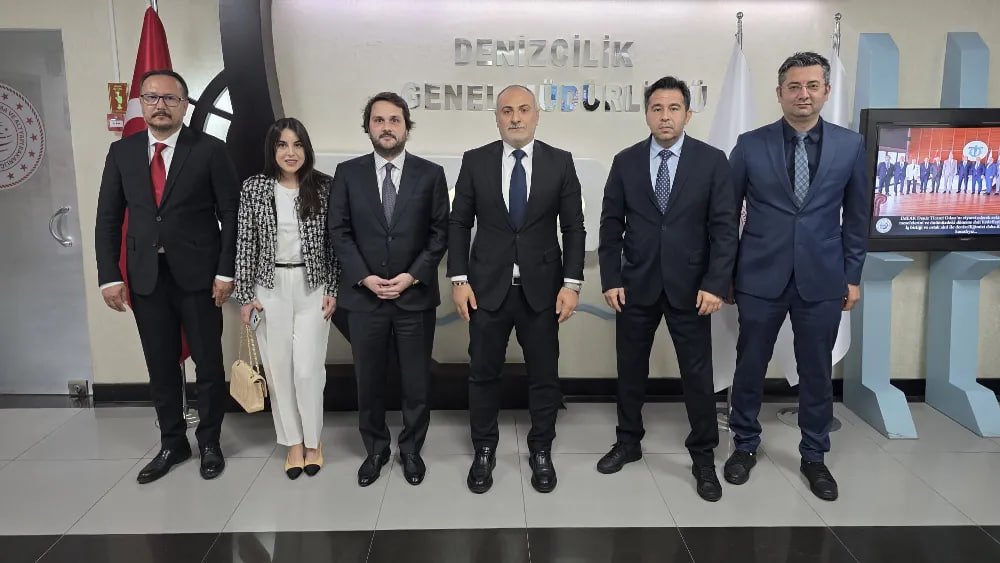
Turkish companies such as “DE Maritime”, “ID Shipping Agency”, “Huck Shipping Agency” and others act as intermediaries in the provision of towing in the Black Sea straits. The cost of the service consists of an hourly fee for using the tugboat, from 6 thousand dollars, with an additional fee for each actual towing operation, from 1.4 to 3.6 thousand dollars.
Thus, any passage of Russian shadow fleet vessels through the Black Sea Straits entails guaranteed payment by their shipowners of at least two groups of payments to Turkish state structures through KEGM, namely the duties described in the annexes to the Montreux Convention and the fee for pilotage services, while as specified above, the amount of such payment is independently determined by the Turkish authorities and was significantly increased by them precisely because of the large-scale Russian aggression. In addition, at least the vast majority of shadow fleet tankers pay either state or private Turkish structures significant services for towing in the straits.
In addition to the obvious political and economic conclusions from this situation, it is worth separately raising the legal issue of the proportionality of the provision of such services and receiving payment for them by Turkish structures in relation to vessels included in the sanctions lists of the USA, Switzerland and the European Union. Of course, the Turkish counterparties of these transactions can refer to the Montreux Convention, but it should be recalled that pilotage and towing operations under it are not mandatory; in addition, the Turkish authorities themselves and proactively calculate the relevant tariffs in US dollars, i.e. in the currency of the sanctioning state.
Moreover, it should be noted that in accordance with the requirements of the Turkish authorities for pilotage and especially towing in the straits, the shipowner to whom the relevant services are provided must first provide KEGM with comprehensive information about the vessel, which, among other things, must necessarily include data on its insurance by a recognized marine insurance club P&I. It should be recalled that the sanctioned vessels of the Russian shadow fleet are not insured in P&I clubs, since reputable marine insurers generally comply with the sanctions restrictions; at the same time, it is obvious that the Turkish authorities ignore the relevant situation.
It is also worth noting that the current Turkish rules for the order of passage of the straits provide for priority for tankers carrying cargo for Turkish refineries, LNG terminals and power plants, as well as for vessels heading to Turkish shipyards for repair or technological maintenance, stimulating the owners of the shadow fleet tankers to additional commercial communication worth many billions.
Against this background, it is worth examining the situation with the “fee rates” introduced by Russia for the use of the Kerch Strait, primarily the Kerch-Yenikale Canal. It is worth noting right away that these “collections” have been established by Russian-controlled structures since 2014 and are doing so completely illegally, since before the occupation of Crimea, Ukrainian maritime structures based in the port of Kerch had the right to collect the relevant funds.
At the beginning of the occupation of Crimea, the so-called “resolution of the State Council of the Republic” No. 2178-6/14 announced the corresponding “fee rates” that were to be collected by the Russian-controlled structure “Crimean Sea Ports”. The rates were calculated in US dollars per cubic meter of the vessel, and for example, for vessels transiting the Kerch-Yenikale Canal, they amounted to $8.7 “lighthouse fee” per thousand cubic meters, which is generally comparable to one registered ton of a tanker.
And the “pilot fee” for passage through the canal was announced for “vessels of foreign navigation” in the amount of $45.5 per thousand cubic meters, the “canal fee” for passage through the canal for such vessels was already $253 per thousand cubic meters.
At the same time, since 2015, the Russians have declared “pilotage services” for passage through the Kerch Strait mandatory for all vessels, except those under the Russian flag, less than 145 meters long, with a draft of less than 4.5 meters and constantly used in the water area of the strait. Since up to 22 thousand vessels passed through the Kerch Strait per year, the total amounts received by the occupiers amounted to tens of millions of dollars. The exact amounts that passed through the “Crimean seaports” during that period are hidden, but the total annual revenue of this structure by 2020 was at least a billion rubles, a significant part of which was “Kerch fees”.
However, since 2020, the Russian Ministry of Transport has transferred the functionality of collecting these “fees” to the Kavkaz Port Captaincy as a branch of the federal institution “Rosmorport” and established new “tariffs”.
For example, for tankers, they are 7.47 rubles of “ship dues” per registered ton, 10.44 rubles of “canal dues”, 1.9 rubles of “lighthouse dues”, 2.15 rubles of “navigation dues”. The “pilot dues” are declared at 5.2 rubles per ton, plus 0.98 rubles for each mile of service, but at the same time, a separate one-time fee for “providing guidance for a vessel through the Kerch-Yenikale Canal” is 20,820 rubles, regardless of the type of vessel. It is easy to calculate that only such a “one-time fee” in 2021 was collected in the amount of at least 400 million rubles.
We add that currently pilotage activities in the Kerch Strait are carried out by “Rosmorport” divisions. In the described period until 2020, the private Kerch structure “Yuvas-Trans” was also a player in this market. The beneficiaries of “Yuvas-Trans”, Anatoly and Yaroslav Narodytsky, lost their assets and fortune not because of the imposed sanctions, but as a result of the “nationalization” of the enterprise in 2023 by Crimean collaborators of the Vladimir Konstantinov clan.
“The trials” regarding which lasted until June 2025, despite the fact that the “nationalized” company was allegedly forcibly “bought out” by the occupiers in a non-public manner.
At the same time, the relevant systems of profiteering from shipping, as is well known, did not prevent large-scale accidents in the Kerch Strait area, an example of which was the “Volgoneft” tanker disaster. Under these conditions, even “analysts” controlled by the occupiers wrote that accidents and collisions of ships in the Kerch Strait are caused, among other things, by “lack of coordination of actions between the organizations that carry out pilotage and the level of professional training of pilots.”
In addition, the Port of Kavkaz, as even open sources suggest, completely ignores the situation with the insurance of the vessel from which the described funds are collected, as well as the level of compliance by the shipowner with basic maritime safety requirements.
Thus, the situation of systematic ignoring of sanctions against the Russian tanker fleet in the Bosphorus and Dardanelles should become the subject of special attention in jurisdictions that have established relevant restrictions, primarily by the European Union. In this regard, one cannot ignore the broader financial and organizational dimension of the current vision of the Turkish authorities of the Montreux Convention norms, and this issue can be brought to the attention of interested European countries for consideration by authorized international organizations.
And the situation of arbitrary and uncontrolled collection of funds by the Russians in the Kerch Strait, contrary to the norms of international law and the requirements of maritime security, requires a separate and systemic sanction response.