As we previously reported, following the collapse of the Kerch Bridge, the primary mode of passenger transport between Russia and occupied Crimea has become the commuter train service operated by the “Southern Suburban Passenger Company”, a subsidiary of “Grand Service Express.”
These “Lastochka” (“Swallow”) trains, originally three-car sets manufactured before 2022 at the “Ural Locomotives” plant using the “Siemens Desiro” platform, operate along the surviving railway tracks of the bridge, running between Kerch, Anapa, and Taman.
By November 22, the frequency of these services had been increased to what is likely their logistical limit: seven round trips during daylight hours.
This provides approximately 2,000 seats in one direction, or up to 6,000 passengers per day if the trains are packed to absolute capacity. It is probable that the occupation “authorities” will subsequently attempt to increase the number of carriages per train.
It is worth noting that before the bridge’s collapse, the passenger flow across its roadway section reached up to 10,000 people, a significant portion of whom were Crimean residents traveling to the Kuban region to purchase cheaper groceries and other goods.
Interestingly, despite the occupation “authorities'” earlier promises of an integrated “bus-and-train” transport system, where bus routes from various Crimean cities would be synchronized with these commuter trains, the reality is quite different.
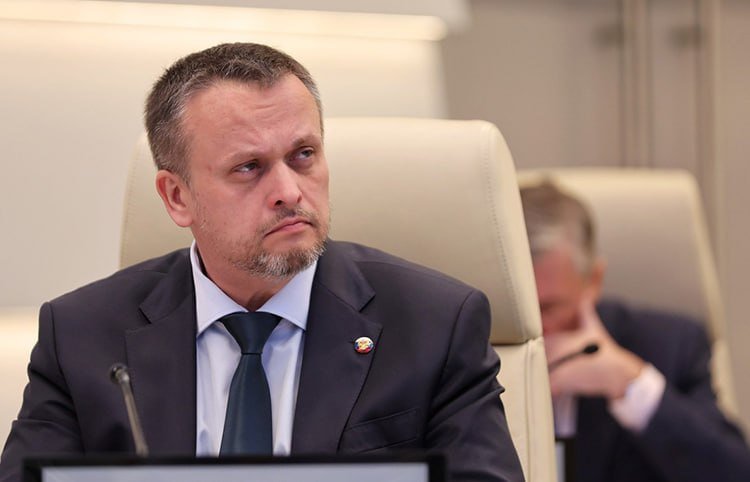
As the same “authorities” themselves now admit, “tickets are sold via bus terminal websites, while passengers must pay for the train fare separately.” Currently, these “logistics chains” are overseen by a protégé of the Rotenberg clan, Russian Deputy Prime Minister Andrei Nikitin, who, among other things, has publicly promised to impose certain “restrictions on railway passengers” in connection with this scheme.
Even more intriguing is the unfolding story regarding the “passenger boats” that Crimean “authorities” had promised for transporting people from Kerch to the Kuban region, an alternative to the ferry crossing, which, under current conditions, is clearly not intended for “moving civilians.”
Following the collapse of the bridge, Olga Kurlaeva, an “aide” to the Crimean gauleiter, along with other collaborators, promised that these boats would be free of charge and that passengers could “bring along hand luggage, anything they need, except for gasoline canisters.”
Yet, in the days since, there has been no evidence, neither in the occupiers’ propaganda nor on social media, that these mysterious boats are actually operating. It is worth noting that in the past, for instance, in 2022, the occupiers used the vessels “Diana Trivia”, built in 1971, and “Klemez”, built in 1989, for passenger transport during “peak” periods; these vessels had been seized in Kerch at the onset of the occupation.
However, as of 2025, the Kerch port fleet has fallen under the control of an entity known as “NIKIMP” , an organization we have written about extensively, which immediately began aggressively selling off the fleet, primarily as scrap metal. The current fate of these specific boats remains unclear.
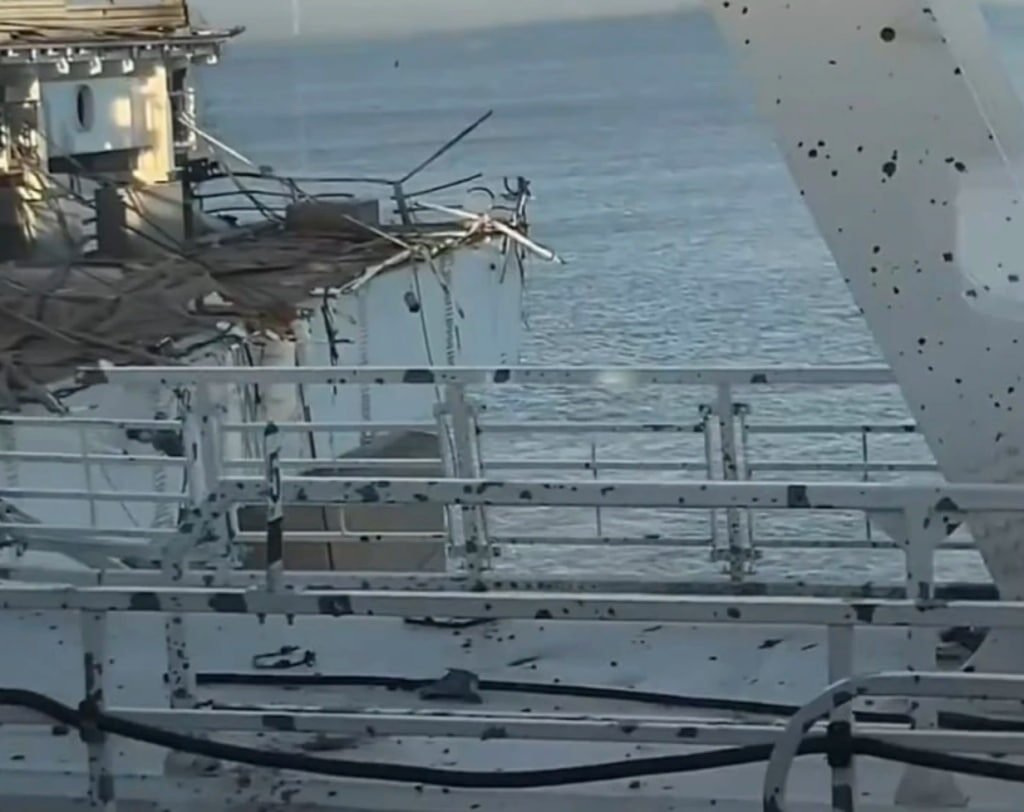
For example, while the “Diana Trivia” is still listed in the “Russian Maritime Register of Shipping”, the “Klemez” has “vanished” from the registry entirely. Following the destruction of the bridge, as part of an “operation to assess the consequences,” several vessels, in addition to a group of tugboats hastily assembled by the aggressor, were spotted in the Kerch Strait.
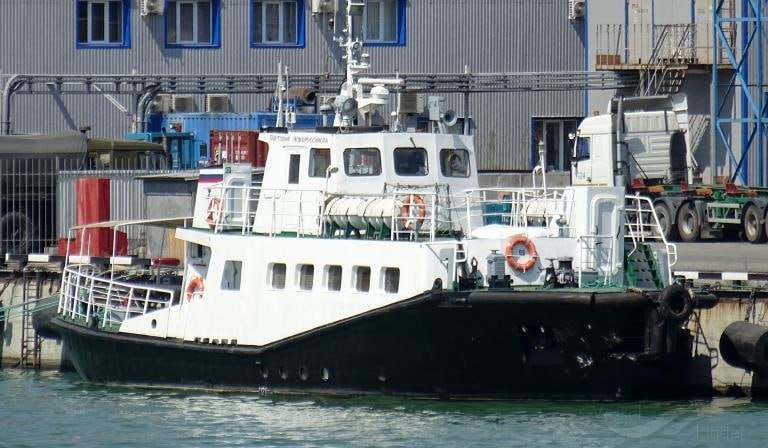
These included the passenger service vessel “Portovik Novorossiyska” and the pilot boat “Almaz”, both controlled by the “Novorossiysk Commercial Sea Port Fleet”, a Caucasian subsidiary of “Transneft”, as we have previously noted. Notably, no vessels from the Kerch side were observed in the area.
However, the aforementioned “Portovik Novorossiyska”, which was still near Kerch on the afternoon of November 22, has a capacity of only 40 passengers per trip, whereas the “Diana Trivia” was designed to carry 200.
Consequently, the vessels currently available in the waters off Kerch and the neighboring Caucasian coast, all under Russian control, are unsuitable for the mass transport of passengers.
It is highly likely that some of these vessels will be used to ferry “VIP passengers”, such as aggressor’s military and civilian “officials”, given that the occupiers have yet to organize dedicated rail shuttles for this “special contingent,” and there is a clear shortage of helicopters to handle this type of “cargo.”