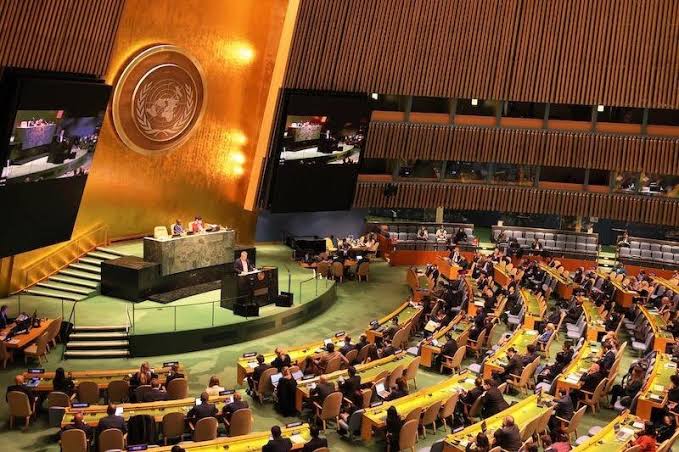
At the end of June, the UN Committee on the Elimination of Racial Discrimination did publish the Views, adopted at the Committee’s 117th session on 23 April 2026 regarding communications 85/2023, 86/2023, and 87/2023, submitted by three Crimean Tatars against Russia regarding the events of 2022. The Views, which are the legally binding Committee’s desicion, established the violations by Russia in the Crimea the part “1-a” of article 2, parts “a”, “b”, “d-viii” and “d-ix” of article 5, and article 6 of the International Convention on the Elimination of All Forms of Racial Discrimination.
Such aggressor’s violations, established by the Сommittee in that case, include racial discrimination before the tribunals and all other organs administering justice, racial discrimination connected with the violence and bodily harm inflicted by government officials, groups, and institutions, racially motivated limitation of the freedom of opinion and expression, also as of the freedom of peaceful assembly and association, and absence of the relevant effective protection and remedies.
The Views name the applicants as “X”, “Y” and “Z”, but, regarding the facts described by the Committee, two of them are human rights defenders Edem Semedliaiev and Nazym Sheykhmambetov, representing other indigenous Crimean Tatars in the aggressor’s “criminal and administrative proceedings” since 2014.
Their communications noted that indigenous Crimean Tatars, particularly through their representative body, the Mejlis, opposed Russia’s attempted annexation and have since faced systematic discrimination and persecution by de facto “authorities”, resulting in significant displacement due to fear of coercion, legal pressure, and social marginalization.
The applicants noted that Russian “anti-extremism and anti-terrorism legislation has been applied disproportionately, with mass raids, arbitrary arrests, and prosecutions often linked to alleged affiliation with banned organizations such as Hizb ut-Tahrir”, reminding that serious human rights violations, including enforced disappearances, torture, extrajudicial killings, and abductions, have been documented.
The applicants added that Crimean Tatars, including themselves, have also been targeted with the issuance of warnings against so-called “extremist actions” when they have sought to organize or participate in public gatherings or events, including events to commemorate the 1944 deportation of Crimean Tatars.
The applicants noted that the “Crimean Tatar media entities have been denied registration and/or licences to work under Russian legislation, and education in the Crimean Tatar language has been limited”.
They argued that their “administrative prosecution”,orchestrated by Russian punishers via “Kyiv District Court” and “Central District Court” of Simferopol, “formed part of a broader pattern of persecution targeting Crimean Tatars as an ethnic minority, in violation of the guarantees of equality and non-discrimination under domestic and international law”.
Finally, the applicants argued that, in the context of a generalized pattern of discriminatory practices against Crimean Tatars in occupied Crimea, domestic remedies cannot be considered effective. Despite the aggressor’s active communication with the Committee in that case, the Views agreed with the absolute majority of applicants’ arguments.
Let us recall that over the past five years, our Association has repeatedly informed this UN Committee about the systemic and large-scale racial discrimination against Crimean Tatars as the Indigenous People by the occupiers.