This November, on the sidelines of the latest Conference of the Parties to the UN Framework Convention on Climate Change (COP31), taking place in Antalya, Turkey (Türkiye), until November 20, a variety of noteworthy and interesting initiatives were presented. These included contributions from the summit’s “hospitable hosts,” focusing on the transition to a low-carbon economy and the phasing out of fossil fuels. Ukrainian diplomats, scientists, and experts also presented extensive information regarding environmental challenges exacerbated by Russian aggression. Notably, however, there was no room at the “Antalya Expo Center” for certain traditional speakers on these topics, nor for events concerning Crimea; indeed, they were strongly discouraged from taking advantage of the local hospitality few days before the visit. Meanwhile, several well-known professional Crimeans were occupied with a rather packed agenda of their own in the nearby resort town of Belek.
Given this context, our Association’s research into the circulation of Russian oil and petroleum products within Turkey’s economic and logistical landscape has become particularly relevant. To ensure robust findings, our experts analyzed Turkish commercial and official statistics, including periodic reports from Turkey’s Energy Market Regulatory Authority (EPDK), as well as maritime databases. This analysis covered shipments from Russian ports to Turkish port facilities, including instances of ship-to-ship (STS) cargo transfers. At the same time, we excluded statistics regarding oil and petroleum products of Kazakhstani origin that are transported to Turkey via Russian infrastructure.
Experts have noted attempts to conceal relevant data at the state level; for instance, the “Turkish Statistical Institute” (TURKSTAT) classifies Russia as a “confidential country” in its foreign trade database, and detailed data on imports of Russian crude oil and petroleum products are not made public.
The study demonstrates that Turkey remains a key market for Russian oil products, although there has been a certain decline in its share of Turkey’s total imports. These opaque schemes involve numerous terminals and storage facilities, vessels subject to sanctions, and major Russian corporations, as well as large Turkish businesses and intermediaries from third countries. Furthermore, Turkey’s oil infrastructure is replete with transit and transshipment hubs, creating the ideal conditions for the re-export of Russian-origin products to European countries, while Turkish companies continue to play a significant role in the implementation of large-scale Russian oil, gas, and petrochemical projects.
The analytical platform “TradeInt” indicates that in the first quarter of 2026, the value of Russian mineral fuel imports to Turkey fell by 32.2%, from $8.82 billion to $5.98 billion. Meanwhile, imports of goods in this category with an “undisclosed country of origin” rose to $7.27 billion, making it impossible to determine the actual origin of the bulk of these imported petroleum products.
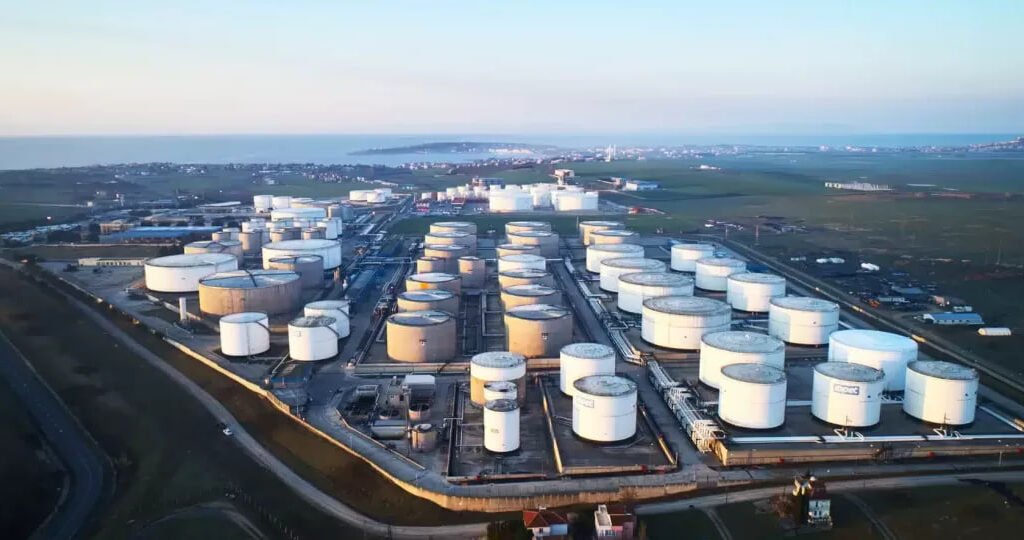
At the same time, the EPDK (“Energy Market Regulatory Authority”) notes that products of Russian origin continue to hold a dominant position in Turkey’s imports of oil and petroleum products. In 2024, Turkey imported 32.2 million tonnes of oil and petroleum products of Russian origin, accounting for two-thirds of its total imports in this category, while in 2025, this figure stood at 30.2 million tonnes, or approximately 60%. These supplies consisted primarily of up to 17 million tonnes of crude oil and about 11.5 million tonnes of petroleum products, chiefly gasoline and diesel fuel.
Concurrently, in 2024 and 2025, Turkey exported 14.37 million and 14.89 million tonnes of petroleum products, respectively; the primary export destinations were the United States and EU countries, including the Netherlands, Romania, Italy, Germany, Spain, Slovenia, and France. Turkey’s role as a transshipment and trading hub for Russian oil products creates risks that these products may subsequently enter the EU market. According to estimates by the “Centre for Research on Energy and Clean Air” and the “Centre for the Study of Democracy”, between February 2023 and February 2024, the EU imported oil products worth approximately €3 billion from the Turkish ports of Ceyhan, Marmara Ereğlisi, and Mersin. These ports lack oil refining capacity and serve only as storage terminals; during this period, 86% of the oil products imported into these facilities were of Russian origin. In December 2025, “The Wall Street Journal” reported a concurrent rise in imports of Russian oil products into Turkey—following the EU’s Fe
bruary 2023 ban on Russian diesel—and an increase in Turkish exports of similar products to the EU, primarily to Greece.
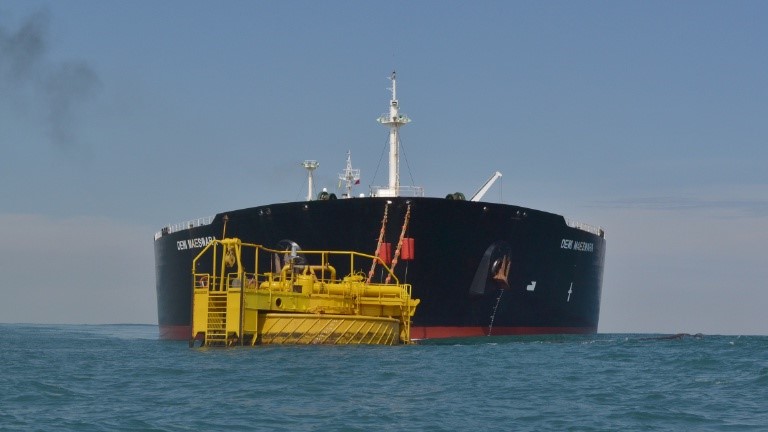
According to data from the analytical platform “Kpler”, 341.7 million barrels of crude oil and oil products of Russian origin were shipped by sea from Russian ports to Turkey between January 2025 and July 20, 2026. In total, 426 vessels completed over 1,039 voyages. The supply mix was dominated by crude oil, up to 145.46 million barrels, and diesel fuel and gas oil, up to 128.72 million barrels. Fuel oil accounted for 36.05 million barrels; kerosene and jet fuel for 16.85 million; and gasoline and naphtha for 12.98 million. Additionally, 1.12 million barrels fell into an unspecified category, 144.6 thousand barrels consisted of residual petroleum products, and 7.9 thousand barrels were blending components.
These data also confirm a certain decline in the share of Russian products within Turkey’s total imports of oil and petroleum products. For instance, the average monthly share of Russian oil and petroleum products stood at 66.3% in 2025, compared to 56.4% in the first half of 2026. The most notable reduction was observed in crude oil: the share of Russian crude oil in Turkey’s imports fell from 84.1% in January 2025 to 42.7% in July 2026. During the period from January to July 2025, the average share was 60.9%, while in the first half of 2026, it was approximately 48%. Against this backdrop, crude oil supplies to Turkey from the United States, Guyana, and Norway increased. “Urals” remained the primary grade of Russian crude oil, accounting for 135.62 million barrels; “CPC Russia” accounted for 6.15 million barrels, and “Siberian Light” (SBL) for 3.70 million barrels.
A significant volume of Russian oil products was supplied without the producer being specified. “Kpler” reported that between January 2025 and July 2026, 38.3 million barrels of products were shipped to Turkey without a specified producer; of this total, over 22.7 million barrels, or 59.4%, consisted of diesel fuel. The volume of such shipments surged during June–July 2025 and again from May to July 2026, further complicating efforts to identify the actual producer of the products.
During the period under review, the largest identified Russian seller was the oil company “Lukoil”, which supplied 69.8 million barrels of products to Turkey. The oil and gas company “SOCAR” received 36.7 million barrels of crude oil from “Lukoil”, accounting for 52.5% of the latter’s total exports to Turkey. Of this volume, 9.67 million barrels were supplied via an intermediary company registered in the UAE, “Alghaf Marine DMCC”.
The Turkish refining company “Tüpraş” (“Türkiye Petrol Rafinerileri A.Ş.”) purchased an additional 9.4 million barrels of crude oil from “Lukoil”. “Urals” was the primary grade within “Lukoil”’s crude oil supply mix, accounting for 39.9 million barrels or 80.7%; shipments also included the “CPC Russia” and “Siberian Light” grades. In addition to crude oil, “Lukoil” supplied Turkey with 17.4 million barrels of diesel, 1.8 million barrels of naphtha, and 1.1 million barrels of fuel oil. Of the 85 vessels involved in transporting “Lukoil”’s products, 36 were included on the sanctions lists of various jurisdictions at the time of the report by “Kpler”.
It should be noted that “Tüpraş” is a key Turkish energy company managed and controlled by the Koç family, one of the country’s wealthiest and most influential families, through their conglomerate, “Koç Holding”. Currently, key business decisions are approved by the third generation of the family: brothers Mehmet Ömer Koç and Ali Yıldırım Koç, along with their half-sister İpek Kıraç. In this context, it is also worth noting, as a detail of particular interest, that experts point to the family’s ethnic origins as being linked to one of the indigenous peoples of Crimea.
The second-largest Russian seller was the oil company “Rosneft”, which supplied 52.75 million barrels of crude oil and petroleum products to Turkey between January 2025 and May 2026. Of this volume, 26.4 million barrels consisted of “Urals” crude oil; the primary buyer was “Tüpraş”, 22.8 million barrels, while the Azerbaijani company SOCAR received 3.6 million barrels. Additionally, “Rosneft” supplied diesel fuel, fuel oil, naphtha, and lubricants. Identified buyers included “Koç Holding”, the Turkish energy company “Aygaz”, the fuel companies “Petrol Ofisi” and “Turkuaz”, and the petrochemical company “Petkim”. Of the 110 vessels involved in transporting “Rosneft”’s products, 17 were listed on sanctions lists.
It should be noted that “Aygaz A.Ş.” is also controlled by the Koç family through “Koç Holding”, whereas “Petrol Ofisi A.Ş.” is a subsidiary of the Dutch conglomerate “Vitol Group”. “Turkuaz Petrol Ürünleri A.Ş.”, in turn, is controlled by “Zülfikarlar Holding”, a family business belonging to the Zülfikari clan, which has Azerbaijani roots; the key figure in this family is currently İsfendiyar Zülfikari. For its part, “Petkim Petrokimya Holding A.Ş.” has been controlled for the last two decades by the aforementioned Azerbaijani state-owned company, “SOCAR”, through its Turkish subsidiary, “SOCAR & Turcas Petrochemical”.
Between January 2025 and June 10, 2026, the Russian oil company “Tatneft” supplied 49.85 million barrels of petroleum products to Turkey. The bulk of this consisted of diesel fuel, exactly 27.5 million barrels, while crude oil accounted for another 21.3 million barrels. “SOCAR” received 9.8 million barrels of “Tatneft” crude oil, and “Tüpraş” received approximately 9.1 million barrels. In May–June 2026, “Tatneft”’s supply volumes dropped sharply: following a volume of 2.5 million barrels in April, only a single shipment of diesel fuel was recorded in each of the two subsequent months. Of the 68 vessels involved in transporting “Tatneft”’s products, eight were included on sanctions lists.
Significant volumes also came from other Russian suppliers. The Russian-Vietnamese joint oil production venture “Rusvietpetro” exported 19 million barrels of “Urals”-grade oil between January 2025 and June 2026; of this volume, the Turkish entity “SOCAR” received 9.5 million barrels, while “Tüpraş” received 9.4 million barrels. The Russian oil company “Surgutneftegas” supplied 15.5 million barrels, comprising 8.3 million barrels of diesel fuel and 7.1 million barrels of crude oil. Crude oil shipments began in March 2026, and by July, the monthly volume had risen to 2.9 million barrels. “Tüpraş” received 4.2 million barrels of crude oil from “Surgutneftegas”, while the Turkish entity “SOCAR” received 2.9 million barrels. The Russian company “KNGK-INPZ”, also known as the “Ilsky Oil Refinery”, supplied 14 million barrels of products, 11.8 million barrels of which consisted of fuel oil.
Other participants in the supply chain included the Russian shipping and logistics company “RusExport,” which facilitated the delivery of 9.07 million barrels of products between November 2025 and May 2026; in certain transactions, it acted on behalf of the UAE-registered oil trader “Nexus Oil Trading FZCO,” an entity included on the EU sanctions list.
The Russian oil refining company “TAIF-NK” supplied 4.8 million barrels of diesel fuel between May 2025 and January 2026. The Russian oil terminal operator “Tamanneftegaz” exported 3.1 million barrels of petroleum products from January 2025 to July 2026, with no information available regarding the end buyer for over 1.9 million of those barrels. The Russian seller “STOIK” supplied 2.7 million barrels of diesel fuel and gas oil between March 2025 and June 2026; of this volume, 526,800 barrels were sold through the Swiss trader “Maddox SA.” Between January 2025 and February 2026, the Russian oil company “ForteInvest” supplied 1.6 million barrels, while the Russian oil producer “NK Neftisa” supplied 1.5 million barrels of Urals crude; the oil refining company “Orsknefteorgsintez” supplied 743,700 barrels of diesel fuel. The Russian gas company “Novatek” supplied diesel fuel, naphtha, kerosene, and jet fuel to Turkey, including shipments to terminals in Marmara Ereğlisi, Antalya, and Mersin.
Also of note is the Russian oil refining company “Slavyansk ECO”, which, between January 2025 and July 2026, acted as the seller in 38 transactions totaling approximately 5.4 million barrels of petroleum products, including 3.4 million barrels of fuel oil, 1.2 million barrels of diesel and gas oil, and about 0.78 million barrels of gasoline and naphtha. Corporate reporting from “Slavyansk ECO” for the first half of 2025 indicates that at least 48% of the company’s raw materials were sourced from three Russian suppliers: “Omega Energy LLC” with 20%, “Gazprom Neft” with 15%, and “Surgutneftegas” with 13%. All three companies are subject to sanctions imposed by at least one foreign jurisdiction. The remaining 52% of raw material supplies are not detailed in the report.
Meanwhile, 93.72% of the revenue generated by the Russian oil refining company “Slavyansk ECO” from product sales came from four intermediary trading companies registered in the UAE: “AP International Petroleum Trading DMCC” with 41.88%, “Vibranium Trading LLC” with 31.26%, “PRV International Trading FZCO” with 13.84%, and “D-Zell Petroleum DMCC” with 6.73%. Maritime shipping and foreign trade data point to the consistent involvement of these entities in exporting Russian products to international markets, including Turkey.
Personnel and corporate ties can be traced between “Slavyansk ECO” and “AP International Petroleum Trading”. The shareholders of “Slavyansk ECO” include Robert and Valeriy Paranyants, who own 42% and 25% of the company, respectively. Robert’s son, Artur Paranyants, also serves on the board of directors of “Slavyansk ECO”. Furthermore, certain employees of “Slavyansk ECO” hold management or administrative positions at “AP International Petroleum Trading”. Artur Paranyants was also the registrant for the “AP International Petroleum Trading” domain and has been identified in other sources as its founder and CEO. This indicates that “AP International Petroleum Trading” is closely linked to the Russian producer, acting as an intermediary entity to facilitate its export operations. In general, foreign intermediaries play a significant role in the supply of Russian petroleum products to Turkey. According to “Kpler”, the supply of nearly 222 million barrels of Russian-origin crude oil and petroleum products was facilitated through intermediary companies. For more than 179.3 million barrels, accounting for over 80% of the volume handled by intermediaries, information regarding the charterer was not disclosed.
Among the identified intermediaries, the largest volumes were associated with entities based in the UAE and Switzerland; some of these are already subject to sanctions or are linked to networks that facilitate the export of Russian oil despite sanctions restrictions. “Alghaf Marine DMCC”, an intermediary company registered in the UAE and included on the sanctions lists of the EU, the UK, and Ukraine, served as the primary seller in 30 transactions between November 2025 and May 2026, involving a total volume of 7.6 million barrels of Russian petroleum products destined for Turkey. Furthermore, the company acted as an intermediary for shipments involving the Russian oil company “Lukoil”.
On April 11, 2026, the international energy company “TotalEnergies” purchased 298,400 barrels of diesel fuel from “Alghaf Marine”; by that time, “Alghaf Marine” was already subject to UK sanctions, and on April 23, it was added to the EU sanctions list. On May 5, 2026, the international commodities trader “Trafigura” chartered a vessel to transport an additional 261,100 barrels of diesel fuel, with “Alghaf Marine” acting as the seller. Of the 17 vessels chartered by “Alghaf Marine” for these intermediary operations, seven were included on the sanctions lists of various jurisdictions, including five on the EU sanctions list. “Newton Resources FZE”, an intermediary company registered in the UAE and designated by the UK as part of the “2Rivers Group” oil-trading conglomerate, facilitated the supply of approximately 7 million barrels of diesel fuel to Turkey between January and June 2025, primarily on behalf of the Russian oil company “Rosneft”. Of the 28 vessels chartered by “Newton Resources”, 11 were included
on sanctions lists maintained by the EU and other G7 nations. In 2022, the company was also placed on a US sanctions list for facilitating the supply of Iranian naphtha.

“D-Zell Petroleum”, a UAE-registered company engaged in the trading and transportation of petroleum products, arranged the delivery of 3.8 million barrels of fuel oil to Turkish buyers between April 2025 and March 2026. The primary supplier was the “Ilsky Oil Refinery”, which accounted for 2.4 million barrels, while an additional 525,500 barrels were supplied by the mentioned “Slavyansk ECO”. According to commercial foreign trade data, between April 2023 and February 2025, “D-Zell Petroleum” imported petrochemical products from Russia valued at $424.9 million, with fuel oil accounting for 69% of these imports.
Between March and June 2026, the UAE-registered trading company “Eagle Middle East FZCO” was listed as the seller of 2.9 million barrels of Urals crude oil, 1.9 million barrels of which were delivered to the “STAR” oil refinery in Turkey, owned by the oil and gas company “SOCAR”. Since “Eagle Middle East FZCO” is not an oil producer, and given that the cargo was loaded at the ports of Primorsk and Ust-Luga, its designation as the seller makes it difficult to identify the actual Russian producer or supplier of the product. Between March and July 2026, the UAE-registered shipping company “Keelridge Shipping FZE” facilitated the delivery of 2.4 million barrels of fuel oil from the port of Novorossiysk.
In more than half of these transactions, clear information regarding the original Russian seller was absent. At the same time, as of August 2026, none of the six vessels chartered by “Keelridge Shipping” were subject to sanctions imposed by the EU or other major democratic jurisdictions. In June–July 2026, the Swiss oil trader “Alvari SA” chartered the tanker “Riti”, IMO number 9249075, for two voyages carrying Urals crude: one shipment of 909,200 barrels from the port of Ust-Luga, with “Eagle Middle East FZCO” listed as the seller, and another of approximately 1.1 million barrels from the port of Primorsk, supplied by the Russian oil company “Surgutneftegas”.
In April 2026, the Swiss trader “Maddox SA” arranged three shipments of products from the Russian seller “STOIK” and the “Ilsky Oil Refinery”, totaling 953,100 barrels; separately, in April 2025, “Maddox” organized the transport of 263,400 barrels of gas oil. “Euston Energy DMCC”, an energy trading company registered in the UAE, facilitated the supply of products to facilities belonging to the Turkish entities “SOCAR” and “Turkuaz”, while the UAE-registered oil trader “PetroRuss FZCO” arranged the delivery of 559,300 barrels of diesel fuel in January and June 2026. Certain executives at “PetroRuss” were previously associated with “Avestra Group”, a European distributor of Russian petrochemical products, and “Gazpromneft Trading GmbH,” the European trading arm of the Russian oil company “Gazprom Neft”.
In 2024, “PetroRuss FZCO” changed its name to “Transglobal Energy Investments FZCO.” It is part of a network of companies linked to the sanctioned trader Murtaza Ali Lakhani and the UAE-registered oil trader “Nexus Oil Trading FZCO.” This network also included affiliated legal entities in the UAE and Hong Kong, specifically “Amur Investments Limited,” “Amur Trading Limited,” “Nexus Oil Trading Asia Limited,” and “Transglobal Energy Investments Asia Limited.” The Hong Kong-based entities were registered in 2023 at the same address, with Hicham Fizazi serving as their director. This corporate structure was designed to obscure the identities of the actual participants and beneficial owners involved in transactions concerning Russian oil.
“Murtaza Ali Lakhani” is an oil trader who appears on UK and EU sanctions lists due to his involvement in the international trade of Russian oil. “Nexus Oil Trading FZCO,” which is linked to him, was formerly known as “Tejarinaft FZCO” and was involved in transactions concerning products from the Russian oil company “Rosneft”. Hicham Fizazi, mentioned above, also served as an executive and shareholder of “Tejarinaft FZCO.”

Other intermediaries included the Brazilian fuel distribution company “Ipiranga”, which in May 2026 arranged the shipment of 303,600 barrels of naphtha from the ports of Vysotsk and Ust-Luga to Marmara Ereğlisi; the intermediary firm “Lokal Trading DMCC”, which in July 2025 organized the supply of 773,400 barrels of “Urals” crude, originating from the Russian oil company “Lukoil”, to the aforementioned “STAR” refinery; and the UAE-registered oil trader “EDURC Company DMCC”, which arranged the delivery of 198,400 barrels of fuel oil, from the Russian oil company “Rosneft” to the aforementioned “Koç Holding”, as well as 171,900 barrels of fuel oil from the “Ilsky Oil Refinery” to the aforementioned “Tüpraş”.
In May 2026, the international commodities trader “Trafigura” arranged the transport of a shipment of ultra-low-sulfur diesel, sold by the aforementioned “Alghaf Marine DMCC”. Furthermore, corporate and personnel links can be traced between “EDURC Company DMCC” and individuals associated with “SOCAR”, as well as with “Petraco Energies DMCC” a UAE-registered unit of the Swiss oil trader “Petraco”, which points to interconnections between certain international traders and entities registered in the UAE. Key recipients of Russian petroleum products included major Turkish oil refineries and petrochemical plants, fuel companies, terminals, and storage facilities.
One of the largest transshipment hubs was the Turkish petroleum storage company “Turkis Enerji,” which operates an oil depot in Mersin with a capacity of approximately 304,000 cubic meters. According to “Kpler”, the facility received over 8 million barrels of Russian petroleum products in 2025, of which 7.6 million barrels were diesel, followed by another 6.2 million barrels in the first half of 2026, including 4.8 million barrels of diesel. In 2025, 4.4 million barrels of petroleum products were exported to the EU via “Turkis Enerji.” Given the significant volume of Russian products entering the facility, there is a risk that these goods are being re-exported to the EU. It should be noted that “Turkis Enerji” is part of the business empire of tycoon Hasan Tuncer and is controlled by him through “Tuncer Holding.”
In total, between January 2025 and July 20, 2026, the “Turkis Enerji” oil depot received 14.3 million barrels of products of Russian origin. Of the 63 vessels involved in these deliveries, 15 were subject to EU sanctions. Eleven of these vessels continued to call at the facility after being added to sanctions lists, subsequently delivering 2.45 million barrels of petroleum products. Furthermore, five ship-to-ship (STS) transfer operations were recorded, involving three sanctioned “donor” vessels. Approximately 3 million barrels of product were delivered with the involvement of at least one intermediary; notable intermediaries included the UAE-based entities “Alghaf Marine DMCC” and “Newton Resources FZE”, as well as the oil trader “Fenix Energy”.
Among Turkish facilities, the “OPET” terminal in Marmara Ereğlisi, operated by the Turkish fuel company “Opet Petrolcülük A.Ş.”, received the largest volume of Russian petroleum products, amounting to approximately 48 million barrels. This company is controlled by the aforementioned “Koç Holding”, in partnership with tycoon Fikret Öztürk, who operates through his own holding company, “Öztürk”.
It is therefore unsurprising that “Kpler” identified “Koç Holding” as the ultimate buyer for all the relevant transactions. Of the 85 vessels that delivered products to the terminal, at least 18 were subject to sanctions imposed by G7 nations. In 43 shipments, totaling over 13 million barrels, or roughly 27% of all deliveries to the terminal, the original Russian producer was not disclosed. Among the identified producers, the largest volumes came from the operator of the “Ilsky Oil Refinery”, with 5.4 million barrels, “Lukoil”, with 5.2 million barrels, “Tatneft”, with 4.9 million barrels, and “Slavyansk ECO”, with 2.9 million barrels.
The UAE-registered firm “D-Zell Petroleum” played a significant role as an intermediary, facilitating the supply of approximately 3 million barrels of fuel oil. Between January 2025 and July 20, 2026, the “OPET” terminal in Mersin received 38.8 million barrels of Russian-origin products via 164 maritime voyages. Of the 113 vessels involved in these shipments, 22 were subject to sanctions imposed by the EU and other G7 nations, while nine delivered products after having already been placed on the EU sanctions list. The primary Russian producer was the oil company “Tatneft”, which supplied 12.3 million barrels of diesel fuel, accounting for 31.6% of all deliveries to the terminal. For another 30 voyages, involving a total volume of approximately 7 million barrels, the original seller could not be identified. Additionally, seven ship-to-ship (STS) transfers of petroleum products were recorded near Cyprus and Malta; six of these involved tankers subject to EU sanctions.
Another instance of Turkish infrastructure being used to handle Russian petroleum products involves the Turkish terminal operator “Global Terminal Services AS” (“GTS”), which operates a facility in Dörtyol. In 2023, out of 14.1 million barrels of product received at the
“GTS” terminal, approximately 9.8 million barrels were of Russian origin. About 85% of the exports from Dörtyol were destined for European countries, primarily Greece, Belgium, and the Netherlands. In March 2024, the terminal operator GTS announced that it would stop accepting Russian petroleum products; according to “Kpler”, the last such shipment was recorded on March 11, 2024.
Significant volumes of Russian products also arrived at oil terminals in the city of Dilovası. During the observation period, the “Altintel” terminal received 545,500 barrels of products of Russian origin. The “SADAŞ” terminals received 6.2 million barrels; of the 22 vessels involved in these shipments, eight were subject to G7 sanctions, while four tankers delivered 955,000 barrels after having already been added to the EU sanctions list. Between January 2025 and July 2026, the “Solventaş” terminal received 1.02 million barrels via 30 shipments, with two of the 13 vessels involved being subject to EU sanctions.
It should be noted that the “Altintel” terminal in Dilovası is controlled by the firm “Altıntel Liman ve Terminal İşletmeleri A.Ş.,” which, twenty years ago, became part of the Istanbul-based “Arkem Chemicals” group aka “Arkem Kimya Sanayi ve Ticaret A.Ş.”, a family business owned by Levend Kokuludağ. The “SADAŞ” terminals in Samsun and Gebze are controlled by “Samsun Akaryakıt Depolama A.Ş.,” a joint venture between “Güzel Enerji” and “Shell & Turcas Petrol A.Ş.”, a joint subsidiary of Shell and Turcas Petrol. “Güzel Enerji Akaryakıt A.Ş.” is currently a subsidiary of the state-linked “OYAK Group” aka “Ordu Yardımlaşma Kurumu”, which serves as a pension fund for the Turkish military.
Meanwhile, the “Solventaş” terminal in Dilovası is controlled by “Solventaş Teknik Depolama A.Ş.,” a subsidiary operating under “Yılport Holding”, part of the “Yıldırım Holding” group, a long-standing family business belonging to Ali Rıza Yıldırım and Yüksel Yıldırım. Notably, Yüksel Yıldırım possesses thirty years of experience in maritime trade with Russia, specifically involving coal and scrap metal; however, as of 2024, he has partially separated from the family business group, though he retains control over its port operations.
The terminal belonging to the aforementioned Turkish energy company “Aygaz,” located in İzmit, received 10.9 million barrels of Russian-origin petroleum products between January 2025 and July 2026. In certain transactions, the buyers also included the UAE-registered oil trader “EDURC Company DMCC” and the oil trader “Fenix Energy”. “Fenix Energy” acted as an intermediary in two transactions involving the supply of vacuum gas oil, totaling 519,000 barrels.
During the same period, the terminal in Aliağa belonging to the Turkish petrochemical company “Petkim”, which is majority-owned by “SOCAR Turkey’, received 7.5 million barrels of Russian petroleum products, primarily naphtha; approximately 6.6 million barrels arrived via an unidentified intermediary. A petroleum product facility in Aliağa operated by the international energy company “TotalEnergies” received 3.9 million barrels of Russian diesel fuel, 1.4 million barrels or 36.4% of which were supplied by the Russian oil company “Tatneft”. Two tankers included on the EU sanctions list, the ‘Jin Hui” IMO number 9430272 and the “Tm Hai Ha 568” IMO number 9274082 delivered cargo to this facility after sanctions had already been imposed against them.
“Petrol Ofisi”, the largest retail fuel network operator in Turkey, also regularly received Russian products through several terminals. Specifically, 3.8 million barrels of petroleum products arrived via the company’s terminal in Trabzon. The primary sellers were the Russian oil companies “Tatneft” and “Rosneft”. Between January and June 2026, 6.1 million barrels of Russian diesel fuel arrived via the terminal in Iskenderun; one of the 11 shipments involved a ship-to-ship (STS) transfer of petroleum products off the coast of Greece. In two separate transactions, the international energy trader “Vitol” acted as both the seller and the buyer of diesel fuel shipments totaling 470,000 barrels, which had been loaded at the port of Primorsk. In February 2026, 71,500 barrels of diesel fuel from “Tatneft” arrived via the terminal in Derince.
The aforementioned Turkish entity “Turkuaz” received 3.7 million barrels of Russian petroleum products via a terminal in Samsun. Of the 27 vessels involved in these shipments, four were included on the sanctions lists of the EU and other key democratic nations; notably, the tanker “Storm Pearl”, IMO number 9263203, completed at least three deliveries even after being added to the EU sanctions list.
Through a terminal in Yarımca, the company received an additional 115,500 barrels of product. Between January 2025 and July 2026, the “ATAŞ” oil terminal in Mersin received 5.2 million barrels of Russian petroleum products, 5 million barrels, or 96.1%, of which consisted of diesel fuel. From March 2025 to June 2026, the “STAŞ” terminal in Antalya handled exclusively products from the Russian gas company “Novatek”: specifically, 643,600 barrels of “Jet A-1,” 236,500 barrels of kerosene, and 180,200 barrels of naphtha.
The “ATAŞ” terminal is owned by the firm “Anadolu Tasfiyehanesi A.Ş.,” which is jointly controlled by the aforementioned “Shell & Turcas Petrol A.Ş.” and “Petrol Ofisi A.Ş.”, the Turkish subsidiary of the international conglomerate “Vitol.” The “STAŞ” terminal, meanwhile, is entirely controlled by “Shell & Turcas Petrol A.Ş.” Certain Russian shipments were delivered to facilities for which no end buyer could be identified. Specifically, large consignments of Tatneft diesel fuel, originating from the aforementioned “Petrol Ofisi A.Ş.” were delivered via the Yilmaz complex in Alanya.
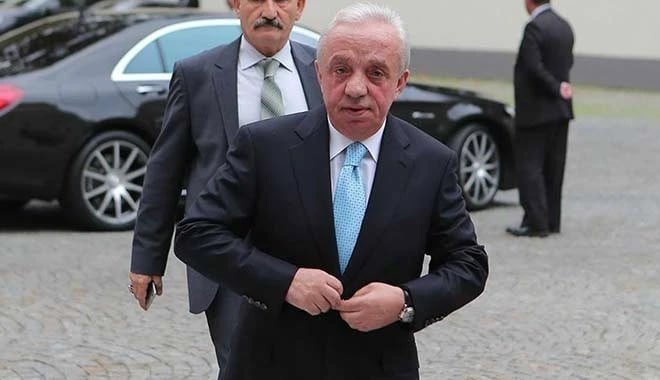
The “Eti Bakir Samsun” Copper smelter in Samsun, controlled by Mehmet Cengiz’s “Cengiz Holding”, received 330,300 barrels of “Lukoil” diesel fuel, facilitated by the UAE-based intermediary “Alghaf Marine DMCC”.
The “MDH” terminal, operated by “Marmara Depoculuk Hizmetleri A.Ş.”,a firm controlled by the aforementioned “Shell & Turcas Petrol A.Ş.” and “Petrol Ofisi A.Ş.” received “Rosneft” products, as well as shipments arranged by the UAE-based intermediary “Newton Resources FZE”. Meanwhile, the “Likit” port facility, owned by “Likit Depolama A.Ş.”, belonging to Istanbul-based businessman Ahmet Aksoy, received shipments of naphtha and gas oil, involving “Newton Resources” and the Swiss trader “Maddox SA”. The cumulative nature of these operations further underscores a high degree of opacity regarding the end buyers of Russian petroleum products in Turkey.
Overall, data concerning specific terminals confirm the regular use of vessels included on sanctions lists—even after such sanctions had been imposed. The use of ship-to-ship (STS) oil product transfer operations near Cyprus, Malta, and Greece further complicates the tracing of cargo origins and supply chains.

In addition to the trade in oil and petroleum products, this material covers the involvement of Turkish construction and engineering firms in Russia’s oil and gas sector. Data from the Russian Ministry of Labor regarding quotas for the employment of foreign workers indicate a sustained demand for Turkish engineers, installers, and other specialists to work on major industrial sites in Russia. An analysis correlating these migration quotas with corporate structures and project portfolios reveals that Turkish businesses remain engaged in the construction, modernization, and maintenance of gas processing, LNG, and petrochemical facilities.
One of the most significant examples of this involvement is the work of the construction and engineering firm “Rencons Heavy Industries”, formerly “Renaissance Heavy Industries”, founded in St. Petersburg in 1993 by the Turkish billionaire Erman Ilıcak. The company has participated in projects such as the “Arctic LNG 2” development, the gas processing complex in Ust-Luga, the “Amur Gas Processing Plant”, and the construction of the “Lakhta Center”, a multifunctional complex. Although “Rencons Heavy Industries” formally sold off its Russian assets in 2023, its Russian entities continue to be managed by a Turkish leadership team. The current ownership structure of “Rencons Heavy Industries” includes the “Garda” closed-end investment fund and the Russian corporate entity “Rencons Industry and Construction.” Through a related corporate structure, “Baltikstroyalyans,” these entities control a number of former “Renaissance” assets in Russia.
The portfolio of the construction and engineering firm “Rencons” lists eight ongoing projects; however, data regarding job vacancies and migration quotas point specifically to continued operations at Ust-Luga and the “Amur Gas Processing Plant”. In Ust-Luga, “Rencons”, in collaboration with the German engineering firm “Linde GmbH”, was involved in the construction of an LNG plant with an annual capacity of 13 million tonnes. In 2018, the Turkish construction group “Ronesans” secured a $1.6 billion contract to build external facilities for the “Amur Gas Processing Plant”. Previously, “Ronesans,” in partnership with the Italian engineering firm “Saipem,” had been awarded a €2.2 billion contract to construct two concrete gravity-based structures for natural gas liquefaction process trains.
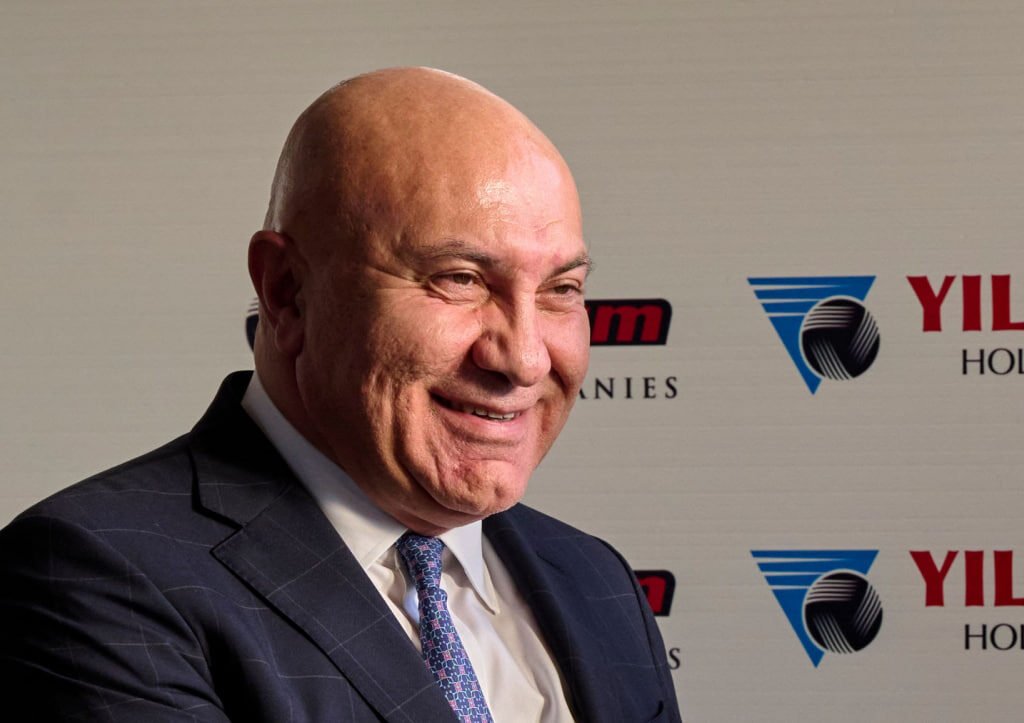
Migration quotas provide an indication of the scale of potential Turkish workforce involvement by the construction and engineering firm “Rencons.” As of December 2025, the company has been allocated a quota for 5,954 foreign workers in the Leningrad Region and 1,250 in the Amur Region. Of these, 1,023 and 640 places, respectively, were allocated to Turkish citizen, accounting for approximately 17% of the quota in the Leningrad Region and 51% in the Amur Region. The total quota for 2026 stood at 7,204 foreign workers, including 1,663 Turkish citizens.
The structure of the construction and engineering company “Rencons” also includes the pipeline entity “Ust-Luga Pipe Company,” whose operations are linked to a gas processing project in Ust-Luga. For 2026, the company was granted a quota for 100 foreign workers, including 31 positions for Turkish citizens, primarily in engineering and installation roles. According to personnel reports filed with the Federal Tax Service of Russia, the subsidiary “Renstroydetal”, owned by the “Baltikstroyalyans” entity, as part of the “Rencons” group, employed 1,589 people, while migration quotas for 2026 allowed for the recruitment of 50 Turkish citizens.
The construction firm “Kalkedon Stroy”, linked to Turkish nationals and entities associated with the Turkish construction group “Ronesans”, has reported its involvement in the “Arctic LNG 2” and “ZapSib-2” projects, the construction of a terminal for the Turkish fuel company “OPET” in Marmara Ereğlisi, and ongoing work at gas processing plants in Ust-Luga and the Amur Region. As of early 2026, the company was allocated a quota for 1,300 foreign workers in the Leningrad Region, including 150 Turkish citizens; by June 2026, this total quota was reduced to 890 individuals. The installation companies “Montazhenergostroy” and “2A Montek” received identical quotas for 2026: 325 foreign workers for each company. The identical professional and national breakdown of these quotas may indicate that both legal entities share the same pool of personnel.
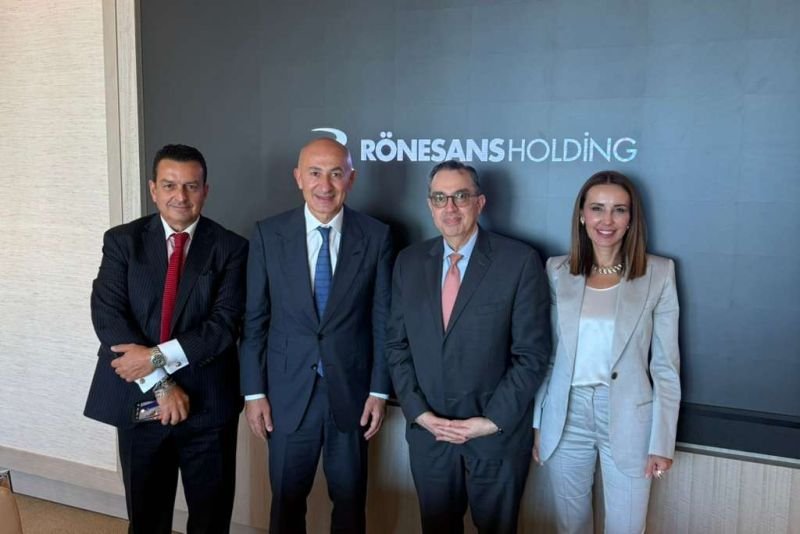
The Turkish construction and engineering firm “Yamata Yatirim Insaat Turizm ve Ticaret A.S.”, owned consistently by Ahmet Cengiz Duyar, also maintains a significant presence in the Russian construction sector. The company operates several branches and legal entities in Russia, including the Russian subsidiary “Yamata RUS,” and has a long-standing partnership with the Russian petrochemical holding company “SIBUR Holding.” Yamata served as one of the contractors for the “ZapSibNeftekhim” petrochemical complex in Tobolsk, a project with a total value of approximately $9.5 billion, and continues to carry out work at various Russian gas processing and petrochemical facilities. The company’s current projects include the “Amur Gas Processing Plant” and the “Amur Gas Chemical Complex”, the construction of polyethylene, polypropylene, and compounding production units, as well as the “2.1 EBSM+OSBL” section at the “Nizhnekamskneftekhim” petrochemical plant. Furthermore, “Yamata” personnel were present at the opening ceremony for the Kovykta gas condensate field, owned by the Russian gas company “Gazprom”, in December 2022.
The increase in quotas for the Turkish construction and engineering firm “Yamata” points to a rise in the company’s stated demand for foreign labor in 2026. In January, the company was allocated a quota for 1,192 foreign workers in Tatarstan, including 592 spots for Turkish citizens. By June 2026, the total quota had been increased to 4,802 workers, comprising 946 spots for Turkish citizens, 1,301 for citizens of Turkmenistan, and 2,555 for citizens of India. Thus, alongside the import of Russian oil and petroleum products into Turkey, Turkish companies and specialists continue to be involved in the development and maintenance of production infrastructure within Russia’s oil, gas, and petrochemical sectors.
Consequently, throughout 2025–2026, Turkey remained a key destination for Russian crude oil and petroleum products, despite a gradual decline in the share of Russian goods within Turkey’s total imports. At the same time, these trade flows are characterized by a significant lack of transparency: for some shipments, information regarding the producer or charterer is not disclosed; intermediaries based in the UAE and other jurisdictions are heavily involved; vessels subject to sanctions are utilized; and ship-to-ship transfers of petroleum products are frequently employed.
It is also worth noting that current Turkish regulations governing the order of passage through the Black Sea Straits grant priority to tankers carrying cargo destined not for transit, but for Turkish oil refineries, LNG terminals, and power plants, as well as to vessels heading to Turkish shipyards for repairs or maintenance. This encourages the operators of “shadow fleet” tankers to focus commercially on Turkish ports and terminals, viewing them as advantageous destinations for offloading, transshipment, or the processing of petroleum products.
Major Turkish terminals and oil refining facilities continue to receive Russian cargoes, with some infrastructure serving as a transshipment hub for onward exports to the European market. Meanwhile, Turkish construction firms maintain a significant presence in Russian LNG, gas processing, and petrochemical projects. This underscores the multifaceted nature of Turkey’s economic engagement with Russia’s oil and gas sector, ranging from the procurement and transshipment of products to participation in the development of industrial infrastructure.
A distinctive feature of major Turkish businesses in the oil refining sector, which are involved in all the aforementioned processes, is that they are predominantly family-owned, with the exception of subsidiaries belonging to foreign corporations such as “Shell” or “SOCAR”. The beneficiaries of the corporations described clearly have no intention of expanding the circle of shareholders in their business groups beyond immediate family members and direct heirs; furthermore, they typically aspire to integrate into the global elite.
Moreover, as evidenced by the experiences of Ahmet Cengiz Duyar, whose family became embroiled in a dramatic saga involving gunfire, and Ahmet Aksoy, whose high-profile marriage to Şebnem Bursalı, a key media figure within Turkey’s ruling “Justice and Development Party” (“AKP”), drew significant scrutiny, these “pillars of Turkish economic development” are extremely sensitive to public attention regarding their own questionable conduct. Consequently, the imposition of personal sanctions, or the credible threat thereof, combined with focused coverage in global media and expert circles regarding these families’ cooperation with the aggressor state, could serve as a potent deterrent against the negative trends described above.
Therefore, the European Union and other major democratic jurisdictions must finally address the systemic role played by large Turkish businesses in facilitating the entry of Russian petroleum products into the Turkish market, from where they are subsequently resold to Europe. A necessary response would be to at least consider imposing sanctions on the ultimate beneficial owners of the relevant corporations, while also restricting the influx of “Turkish-origin” petroleum products into the EU market. Particular attention should be paid to the conditions currently imposed by the Turkish authorities on tankers transiting the Black Sea Straits, conditions framed as “commercial” but which are, in effect, coercive, as these further incentivize Turkish oligarchs to engage in joint oil ventures with Russian entities.