Recent publications in the European press about challenges to Bulgarian democracy and its European future have prompted us to revisit a five-year-old investigation detailing the “Crimean connection” to Russian provocations in the Balkans, updating its materials to reflect new facts and developments.
The election of former Bulgarian President Rumen Radev as the new Prime Minister seemingly halted the long-running government crisis in this EU member state, when shaky parliamentary coalitions constantly changed amid corruption scandals and heated debates over attempts at further European integration.
The eurosceptic Radev and his parliamentary majority have not, and could not, changed the domestic political situation in recent months. However, the Bulgarian Prime Minister, constantly cited by Russian officialdom, has managed to assemble a considerable array of colorful statements on foreign policy.
Among other things, Radev declared that his country would no longer be part of the “Coalition of the Willing” supporting Ukraine, and at the NATO summit in Ankara, he literally threatened participants with the “inability to counter Russian hypersonic missiles.”
Furthermore, the Bulgarian prime minister suddenly and publicly expressed concern about the problems of the Bulgarian ethnic minority in Ukraine, not in Russian-occupied Crimea or the Azov region, but in government-controlled Bessarabia. Behind the scenes, Bulgarian diplomats and intelligence officers have become acutely and urgently concerned about this issue.
Moreover, taking advantage of the protracted US-Iranian standoff, Radev in July began to expel American troops stationed there under a 2006 agreement, including the Bezmer airbase, from Bulgarian territory. Radev also claimed to have received “warnings” from Iran and that “good relations” with the Tehran regime are important to Bulgaria.
Recall that Radev’s anti-Ukrainian rhetoric began back in November 2021, when he ran for Bulgarian president and became “famous” for his controversial statements regarding Crimea, followed by forced caveats about the illegality of the annexation, often spoken through gritted teeth.
Naturally, all these processes and statements by Radev are not accidental. Russia has long since deliberately chosen Bulgaria, due to a number of factors, as the supposedly “weakest link” in the European Union and NATO system.
And it is precisely within the “Bulgarian public” that the aggressor is actively promoting the concept of “recognizing the annexation of Crimea,” including by citing the Crimean community of Bulgarians and even the tragic events of Stalin’s deportation of this ethnic group from the peninsula.
From the first years of the peninsula’s occupation, Russian propaganda has announced “sister city agreements,” and in 2017, the “Ismail Gasprinski Media Center”, controlled by the occupiers, published a series of propaganda publications, “Bolgarsky Vestnik” and “Izvor.”
And although in Crimea itself, the role of “Bulgarian rejoicing at Russian power” has been assigned for the past ten years to Ivan Abazher, who consistently represents the half-fantastic “regional Bulgarian national-cultural autonomy” of “Paisius of Hilendar,” Bulgarian “people’s diplomats” have been periodically brought to the peninsula over the eight years of occupation.
Among others, the Russian agenda was pursued in occupied Crimea by the former “chief Russophile” Nikolai Malinov, who had long been a key functionary of the Bulgarian Socialist Party (BSP) and a member of parliament from it, as well as Professor Ivan Marazov, who ran for president of Bulgaria from the BSP in 1996 and took second place in the vote.
Since 2019, Malinov has been on trial in Bulgaria for espionage for Russia. According to the prosecution, he “entered the service of a foreign organization,” meaning the Russian intelligence services, working with Leonid Reshetnikov and the same Malofeev.
At that time, this figure was arranged a meeting with the Kremlin dictator to receive an award. Meanwhile, the defendant, Malinov, bribed a judge to leave Bulgaria, for which he was placed under US sanctions in 2023.
And in September 2022, Malinov was arranged an “interview at the International Department of the Russian Presidential Administration” with the assistance of Georgy Muradov, a veteran Russian intelligence functionary, to whom we will return.
It was then, most likely, that the Kremlin clerks were deciding on the “personnel issue” for future “Russophiles.” The movement’s name itself was borrowed by Malofeev and Kremlin officials from Malinov-affiliated Bulgarian groups like “Russophiles for the Revival of the Motherland” and others.
Malinov’s regular accomplice in the Bulgarian “Russophiles” was Asen Asenov, owner of the company “Primedia,” which had the rights to broadcast Russian television channels in Bulgaria and broadcast Russian narratives on its own channel, TV7. In March 2024, Asenov visited occupied Crimea, where he was recruited by Russian intelligence services to participate in propaganda events alongside the aforementioned Abazher.
In July 2024, Bulgarian security forces briefly detained and interrogated Zlatomir Devlenski, the head of the local “Russophile” branch in Plovdiv. He was not only a functionary of the local BSP cell but also a graduate student at Astrakhan State University.
This sparked hysterical claims by the aforementioned Nikolai Malinov that Devlenski was allegedly being “politically persecuted” precisely because of his visit to occupied Crimea. This story was broadcast both by Russian-controlled “Crimean media” and by the “Tsargrad” channel of the aforementioned Nazi oligarch Malofeev.
However, the Kremlin continued to use the “Russophiles” in the “Crimean direction.” A year ago, Malinov announced the “goal of European Russophiles”: collecting a million signatures from residents of EU countries in support of lifting sanctions. They promised to hold the next “movement congress” in the spring of 2025 in Crimea, in conjunction with the “Livadia” Forum, which the Bulgarian “Russophile” himself had visited repeatedly before 2020.
However, no “million signatures” were collected, and instead of sanctions against Russia being lifted, the “International Russophile Movement” itself was sanctioned by the European Union on December 15, 2025. At the same time, the Kremlin replaced Malinov as the “chief Russophile” with Cypriot Mikis Filaniotis, with the active assistance of the Russian ambassador to Cyprus, Murat Zyazikov, a longtime KGB and FSB functionary and “part-time” president of Ingushetia until 2008.
It should be noted that Zyazikov, as a “Kremlin heavyweight” and “godfather” of Odessa Civil Engineering Institute graduate Filaniotis, occupies the same post in Nicosia as the aforementioned KGB diplomat Georgiy Muradov, “godfather” of Kyiv University graduate Malinov.
Professor Marazov, a member of the “Thrace” Foundation and a truly distinguished historian, has found himself in an even more tragicomic situation. For a long time, Marazov was the key manager for the collection and promotion of ancient Bulgarian artifacts, which were collected in the private museum of another Bulgarian oligarch, Vasil Bozhkov, as well as in the “Arete-Fol” Foundation.
The corresponding exhibition, “Thracian Gold from Bulgaria: Living Legends,” was brought by Marazov to the Moscow State Historical Museum in late 2013, with the active support of the then Minister of Culture, the infamous Vladimir Medinsky, and with maximum coverage by Russian propaganda.
But later, a major scandal erupted over the “Thracian gold” when, in 2020, it was revealed that the artifacts carefully selected by Professor Marazov for the oligarch Bozhkov had disappeared from Bulgaria along with Bozhkov himself.
In response to all questions from investigators and journalists about the fate of the “Thracian gold,” Professor Marazov, head of the “Bulgarian Club of Friends of Crimea,” which is under the control of Russian intelligence and concurrently served as the “Librarian” agent of the Bulgarian state security until 1991 (Department VI, Political Police, Section V, Division I), stated that “he knows nothing about Bozhkov or the Thracian gold.”
It’s noteworthy that Radev’s remarks about Crimea, nominated by the BSP in 2016 and 2021, practically reiterated a 2015 statement by Professor Marazov, also nominated by the BSP as a presidential candidate in Bulgaria, that Crimea had allegedly “always been Russian.”
Naturally, Russia actively interfered in all Bulgarian elections, including those held in April 2026, the victory of Radev’s newly formed party being complemented by the election of both the Bulgarian Socialists and Kostadin Kostadinov’s openly pro-Kremlin “Revival” Party to parliament.
Bulgarian officials at the time vainly appealed to the European External Action Service to coordinate the detection and analysis of foreign influence campaigns and asked the European Union to activate its rapid response mechanism, “given the heightened risk of coordinated disinformation campaigns and foreign interference.”
The Bulgarian Foreign Ministry even created a temporary unit to coordinate such measures and brought in investigative journalist Hristo Grozev as an adviser, but it was too late. However, the installation of Radev, the Kremlin’s “patented” friend, significantly diminished in Moscow’s eyes the value, both in Bulgaria and Europe, of such politically marginal figures as the outspoken anti-Semite and tragicomic megalomaniac Malinov.
Of course, the media outlets controlled by Malinov actively promoted the political forces of Radev and Kostadinov in March and April, which was a direct fulfillment of Kremlin orders.
But to influence the election results, the Kremlin deployed not only “Russophiles” but a much broader range of forces and resources. Therefore, Malinov and his “Russophiles” have not received any lucrative positions from the new government in Sofia as a “thank you.”
Moreover, the aforementioned “Crimean tour” for the “Bulgarian guests” was carried out with the active participation of a once-key functionary of the occupiers, the corrupt Soviet intelligence officer Georgiy Muradov, who repeatedly emphasized the supposed importance of Bulgaria for “Russian Crimea.”
Muradov’s life has been repeatedly examined by experts, including his work under the guise of a diplomatic operative in Greece and Cyprus, not only for the Soviet and Russian intelligence services, but also for major business entities.
Muradov’s peculiar relationships with the relevant Greek “specialized institutions,” his involvement in the sale of Russian arms, and his “fruitful work” in appropriating funds for aid to compatriots in the Moscow city government and at Rossotrudnichestvo were also highlighted.
However, one page of Muradov’s biography was singled out by experts for a separate investigation, and it concerned Bulgaria, where, in particular, from 1992 to 1996, this “preacher of the Russian world” allegedly held the position of Russian “advisor-envoy.”
It is noteworthy that Muradov does not elaborate on this period of his biography in his numerous interviews “about a tasty and healthy life,” unlike, for example, his Cypriot one.
He only once told journalists that “in those years,” Bulgaria was supposedly “experiencing collapse” and that its “industrial sector had been substantially curtailed.” After the occupation of Crimea began, Muradov gave a lengthy interview to the Bulgarian publication “Focus”, but even there he chose to bore the reader with long-winded discourses solely on how Bulgaria would benefit from a “slightly more active friendship” with Russia.
Open sources contain several references to Muradov’s visits to Bulgaria as a Moscow City government official, for example, in 2010, to “negotiate the acquisition by the city of Moscow of the Primorsko International Youth Center near Burgas and a plot of land in the village of Yagoda in the Stara Zagora region.”
Let’s remember the city of Burgas, where, among other things, Muradov’s old patron, Yuri Luzhkov, also owned property, as we will return to this point repeatedly.
Muradov, who has been present at a number of “Rossotrudnichestvo” events on Bulgarian topics since 2010, also participated in them: the second Bulgarian-Russian Public Forum in 2012 in Varna, and the presentation of the “Bulgarian-language Encyclopedia Russia: Federal Districts and Regions” in Burgas in early 2014.
Muradov also attended the “meeting of the Jubilee Committee for the 100th Anniversary of the Great Consecration of the Church of St. Nicholas in Sofia – the Representation of the Patriarch of Moscow and All Rus'” on the same dates in 2014. However, the practice of these annual “public forums,” which began in 2011, soon ceased, and Muradov has not visited Bulgaria since 2014, for obvious reasons related to sanctions.
However, it’s possible to understand what exactly interested Mr. Muradov in Bulgaria during the first decade of the new century, thanks to his talkative Greek friends.
The project in question was the Burgas-Alexandroupolis trans-Balkan oil pipeline, with a capacity of 35 million tons per year. It was to transport Russian oil, transshipped from tankers in Burgas to the Novorossiysk sea terminal via Bulgaria and Greece, bypassing Turkey and the Bosphorus, and then being reloaded onto tankers in a Greek port.
Obviously, such an extravagant bypass of the Bosphorus was of interest primarily to the Greeks and, to some extent, to Russian businesses. Georgiy Muradov publicly participated in the events organized by the Greek authorities and relevant agencies to implement this project.
For example, in 2005, he, along with his old colleague and patron, Yevgeny Primakov, arrived in Athens for a specially organized Russian-Greek business forum, where the idea of this very pipeline was discussed.
Muradov also flew to Athens for the 2010 conference “Russia, Greece, Cyprus: Political, Economic, and Cultural Cooperation,” organized by Greek President and Muradov’s “old acquaintance” Karolos Papoulias, as well as then-Deputy Prime Minister Theodoros Pangalos, where the issue of this pipeline was also discussed.
However, in 2011, the Bulgarian government withdrew from the project, making it unfeasible. In early 2012, Bulgaria even repaid the Russian side the debt incurred during construction preparations. The project was finally closed in 2021, just before the Kremlin made every effort to ensure Radev’s re-election as Bulgarian president.
But not all Russian-Greek influence projects in Bulgaria involving Muradov were so unsuccessful, and here we need to return to the last years of the 20th century.
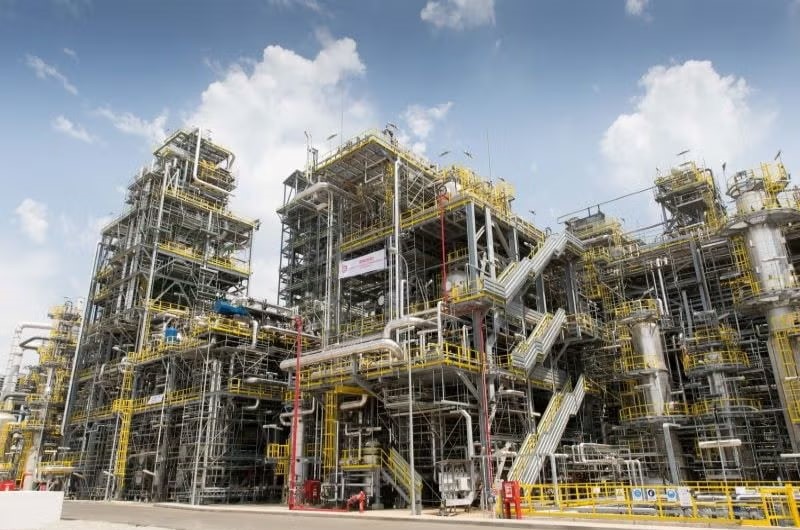
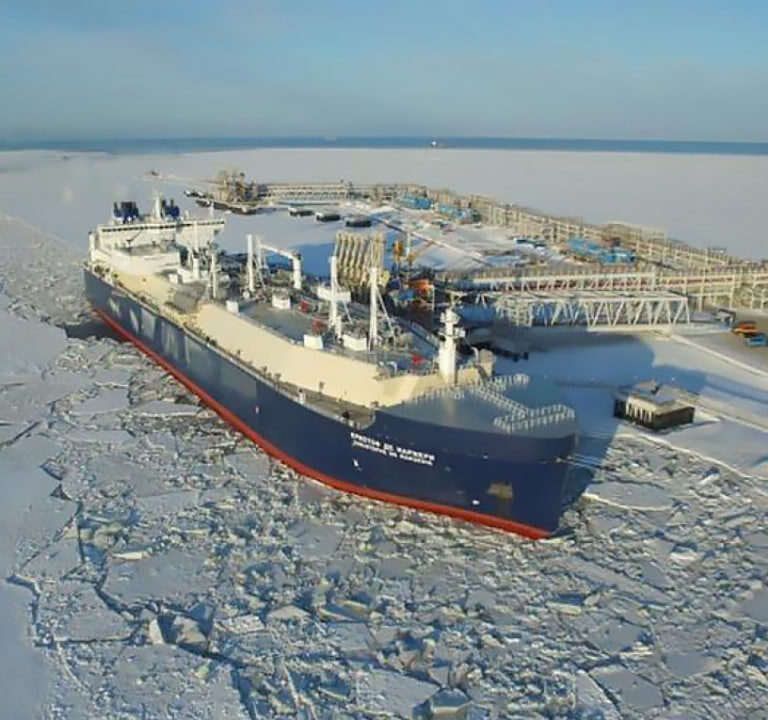
The key object of Soviet, and later Russian, interest in Bulgaria was and remains the oil refinery in Burgas, the largest oil refining facility in the entire Balkan Peninsula, built during “socialist times” as part of the Soviet satellites’ preparations for a global conflict with the Western world.
According to Soviet generals, the output of this “Neftohim” plant was intended to supply the entire southern flank of the Warsaw Pact forces with fuel in the event of a “war with NATO.” Bulgarian oil constituted a significant portion of the plant’s raw material, but its reserves were gradually depleted.
With the collapse of the “socialist camp,” Bulgarian oil production amounted to a million barrels annually. Therefore, to cover the shortfall in raw materials at this strategic state-owned enterprise, the authorities of a now democratic Bulgaria began purchasing oil for this key state-owned plant from various suppliers.
At the same time, the Bulgarian authorities, recognizing the role of “Neftohim” as the main supplier of fuel to the Bulgarian domestic market, immediately ensured the reconstruction of its facilities and the modernization of its processes using advanced technologies with the participation of renowned European and American firms. But the Russian lobby in Sofia and Burgas did not sit idly by.
Between 1994 and 1996, the share of Russian oil in the supply of raw materials to Neftokhim increased to 80%, and in 1994, the initially inconspicuous enterprise “LUKOIL Neftohim Burgas” was registered in Bulgaria.
Although “no one thought Neftohim could be sold” in Bulgaria’s wider public before 1997, the scam to create astronomical debts for the plant had already been carried out. In 1996, at the height of the artificially created “grain crisis,” the government of Zhan Videnov forced Neftokhim to enter into a deal to supply wheat in exchange for diesel fuel through Glencore.
The fuel was sold at reduced prices, and the grain at clearly inflated prices, and “Neftohim”‘s enormous losses were, of course, never reimbursed. The rest was a matter of procedure.
The decision to begin the privatization of “Neftohim” was made by the interim government, created to overcome the economic crisis and headed by Sofia Mayor Stefan Sofiyanski.
An analysis of “Neftohim”‘s financial condition revealed its allegedly enormous “budget liabilities,” and a decision was ultimately made to sell 58% of “Neftohim”‘s shares to the Bulgarian subsidiary of the Russian oil corporation “Lukoil” for a frankly paltry sum.
It’s noteworthy that Sofiansky never became a leading Bulgarian politician after selling his key national asset to Moscow, and after 2004, he became mired in court cases related to corruption charges. In particular, unsurprisingly, while mayor Sofiansky was suspected of issuing permits for the purchase of land for various construction projects at prices hundreds of times lower than market value.
After this “fair deal” to rob the Bulgarian people, “Lukoil Neftohim Burgas” became the crown jewel of the Russian oil empire and significantly strengthened the position of Russian business, politics, and the security services in the Balkans. As Ukrainian journalists have already reported, it is Lukoil’s Bulgarian subsidiary that traditionally supports the firmly Moscow-aligned BSP, as the successor to the Soviet secret service puppet, the Bulgarian Communist Party.
But perhaps envoy Muradov had nothing to do with the complex arrangement that brought “Naftohim” into the corporation headed for three decades by former USSR Deputy Minister of Oil and Gas Industry Vagit Alekperov?
It would be difficult to agree with this, at least given an understanding of Lukoil’s role in the realities of the Russian economy and politics. This was especially true after Russian government decree 861 in 1995 transferred controlling stakes in nine key oil production, marketing, and service companies in Western Siberia, the Urals, and the Volga region to Lukoil’s authorized capital.
It was then, with the full support of the Russian authorities, that Lukoil’s international economic expansion began in the interests of the “Russian world.” It is worth noting that in 1997, Alekperov was appointed to the Russian government commission on CIS issues, and subsequently, he repeatedly participated, along with Georgiy Muradov, in various official events.
For example, they were both responsible for hosting the international conference “Alternative Energy Sources for Large Cities” in Moscow in 2005. A year earlier, Alekperov’s subordinate, Lukoil’s head of public relations, Alexander Vasilenko, was appointed by Muradov to the board of trustees of the “Moscow House of Compatriots”. This structure was created, among other things, to “launder” funds allocated from the Moscow city budget to support Russian-speaking residents of the “near abroad.”
A notable event was the grand reception held in May 2008 by Sergei Lavrov and Yuri Luzhkov, with the participation of Vagit Alekperov and Georgy Muradov, “a presentation of Moscow’s economic potential.” Lavrov, then newly reappointed to his post, quoted Mikhail Bulgakov with obvious pleasure at this “ball” in the Reception House of the Russian Ministry of Foreign Affairs, the former mansion of Zinaida Morozova, clearly enjoying the ambiguity of the situation.
However, at this point, the reader should be asking what Lukoil’s deals and Muradov’s long-standing, and clearly not particularly recent, tie into the aforementioned statements by former Bulgarian President and current Prime Minister, Air Force General Rumen Radev.
After all, this Bulgarian politician, who rose to power in 2016 from the armed forces and consistently stated that he should “serve only his people” and not “depend on managers and external interests,” was not a member of big business and built his image precisely on the supposed “fight against corruption and oligarchs.”
Russian propaganda, for example, happily quoted Radev as saying that “it is impossible to overcome the moral and values crisis our society is experiencing with just money and the mechanical tools of European funds and projects.”
Indeed, voters appreciate General Radev’s track record, which spans a long career from junior pilot to commander of the Bulgarian Air Force, personally demonstrating aerobatics on a MiG-29 fighter jet in 2014, graduating from American training courses, and calling himself a “NATO general.”
Experts also initially found this track record credible, until a number of fundamental questions arose.
All open sources indicate that Rumen Radev graduated from the Georgi Benkovski Bulgarian Air Force University in 1987 and that he subsequently served from 1987 to 1994 in the 15th Fighter Regiment at Ravnets Air Base.
Radev then graduated from the Georgi Rakovsky Military Academy from 1994 to 1996, after which he returned to the same Ravnets Air Base, now serving as the Fifth Fighter Air Base, where he served until 1999. This air unit was later relocated to the Graf Ignatievo Air Base, where Radev held command positions. It was from there that he left in 2009 to become Deputy Commander, and then Commander, of the Bulgarian Air Force.
Meanwhile, Bulgarian publications from the BSP have emphasized pilot Radev’s constant thirst for knowledge. They highlight his training in 1992 and 2002 at the Maxwell Officer School in the United States, Radev’s internship in Brussels in 2000, and his defense of his Doctor of Military Sciences dissertation in 2000, a subject to which we will, however, have to return.
But first, let us inform the reader that the primary combat mission of the Ravnets airbase, established during the Warsaw Pact era, was to provide air cover for the aforementioned strategic “Neftohim” plant. By a “strange coincidence,” this key airbase, part of the Bulgarian air defense system, was liquidated in 1999, just after “Neftohim” was privatized by Russia’s “Lukoil”. But we’re interested in something else now.
Specifically, the importance of the combat mission and its proximity to what was then NATO’s “frontiers,” namely the border with Turkey, made this military unit, which called itself “Sharks,” an elite unit. Therefore, the Ravnets Air Base was the only one in Bulgaria to receive the then-new Soviet MiG-29 fighter jets before the collapse of the USSR.
It was this combat aircraft that Rumen Radev later flew for many years, a fact he never particularly hid. However, little known to this day is the fact that absolutely all the Sharks pilots based at Ravnets Air Base received MiG-29 flight training in the USSR in 1988 and 1990. According to experts, retraining of the 15th Fighter Regiment’s personnel on MiG-29 fighters began in 1988 at the Fifth Central Courses for the Training and Advanced Development of Aviation Personnel in Frunze, now Bishkek, Kyrgyzstan.
The Bulgarian regiment received MiG-29 fighters in 1990. A total of 22 aircraft were delivered, 18 of which were combat aircraft and four combat trainers, allowing both squadrons of the regiment to be equipped with the new fighters. It is noteworthy that not a single public biography of General Radev mentions his combat training in the Kirghiz SSR.
But it is obvious that without successfully completing these courses, Lieutenant Radev would not have been allowed to pilot the new MiG-29 in 1990. He simply could not have acquired the necessary flight skills for this aircraft in any other way than in the USSR.
However, it would seem—what exactly is so seditious about a business trip to Bishkek for a man who, twenty years later, publicly declared that he joined the Communist Party only to fly new fighter jets? This is precisely why we are certain that such seemingly innocuous facts are so carefully concealed (and Radev’s biographers consistently conceal them) only when there is truly something to hide.
However, we should add that President Radev was clearly sentimental, and his special attention to the affairs of distant Kyrgyzstan, which was not particularly important to Bulgaria, was quite difficult to hide.
After returning to Bulgaria, Radev’s biography spiraled into even greater uncertainty. Bulgaria was leaving the socialist bloc, pilots from the US and other Western countries were visiting its military units, and Muradov, an emissary of Russian and other intelligence agencies, began working in Sofia.
And at this very time, tragedy “suddenly” struck the Ravnets airbase: on September 29, 1994, Colonel Ivan Daev, the unit’s commander, who had led it since its inception, died in an unexplained crash of the same MiG-29. However, there remains no credible cause for the sudden crash and destruction of Daev’s plane in open sources.
However, according to the recollections of fellow soldiers, a couple of days before the tragedy, Daev had a conflict with the management of “Neftohim”. The regiment commander, in the face of a rather difficult period for Bulgarian aviation, requested assistance for his unit, which had been assigned to protect the plant.
Moreover, the tragic death of Colonel Daev, the officer previously responsible on the Bulgarian side for organizing Soviet training for Bulgarians to pilot the MiG-29, put an end to the question of what actually happened to Lieutenant Radev in the “glorious Soviet city of Frunze.”
Furthermore, the deceased, experienced pilot Daev “made room” for Radev, who then urgently went to the academy for advanced training. The 15th Regiment, created “under Daev,” later became the 5th Air Base, where Radev became squadron commander in 1996.
However, Radev’s career, once carefully honed by someone, still “hung by a thread” after, during a “training air duel” in 1998 with the deputy commander of the air base, Ilya Milushev, both officers were suspended from flying for a year for reckless driving that threatened the loss of aircraft.
Unlike his adventures in Bishkek and the unexplained death of his immediate superior, this episode is already briefly mentioned in some biographies of Radev, but only in the context of his “utilizing his time wisely and writing a doctoral dissertation, which he defended in 2000 as an airbase commander.”
Furthermore, publications from the BSP emphasize that during this period, Radev collaborated with a certain “professor, doctor of technical sciences, and former head of a department at Sofia Technical University” to conduct calculations for his doctoral dissertation.
Apparently, the authors of the “life of the president” wanted to emphasize to voters the “significance of Radev’s scientific research” as a candidate. However, General Radev’s dissertation suddenly became the subject of a minor scandal during his 2021 election campaign, when BSP propaganda began calling him a “Doctor of Military Sciences” everywhere, although he was, in our modern understanding, a “Doctor of Philosophy,” that is, merely a “Candidate of Sciences,” a fact his political opponents immediately began publicly pointing out.
But we’re interested in something else here: the identity of the mysterious “professor” who so helped Radev, who clearly still hasn’t figured out whether he’s a Doctor of Sciences or a Candidate of Sciences after his long-suffering dissertation.
Since the Sofia Polytechnic is small, only one scientist fits the criteria for the “anonymous professor” mentioned in Radev’s election campaign: Professor Grozo Grozev, a prominent functionary in the scientific system of socialist Bulgaria, who repeatedly visited both the USSR and capitalist countries before 1990 and then held “especially responsible positions.”
The question of why this respected man, who was undoubtedly closely connected until 1990 either to the Bulgarian socialist or simply to the Soviet special services, would “drop everything” and hastily obtain an academic degree and cobble together a dissertation for a certain Air Force major, suspended from flying for reckless driving, will be left as rhetorical.
We understand that the above would be quite difficult to prove in court, for example, since each fact described can only be considered circumstantial evidence.
Another factor should be considered indisputable: the history of Bulgarian military aviation. Of the 22 MiG-29s delivered to Bulgaria in the 21st century, only 19 remained in service, of which only 15 are airworthy. Their service life ends in 2030, but, as experts said five years ago, “they are in such a state that pilots are afraid to fly them.”
Meanwhile, NATO membership requires not only Bulgaria’s transition to Lockheed Martin F-16 multirole combat aircraft but also the maintenance of the basing infrastructure necessary for them. This situation did not arise yesterday, and Dr. Radev undoubtedly knew about it long before becoming Commander of the Bulgarian Air Force, yet he has essentially done nothing to address it.
In 2015, under his command, the Bulgarian Air Force’s situation became critical. Instead of replacing the hopelessly outdated Soviet fighters, Radev publicly declared that the Defense Ministry’s leadership had allegedly “failed to fulfill its obligations regarding the agreement to repair MiG-29 fighters,” after which he demonstratively removed them from combat duty.
In effect, this was General Radev’s move to force Bulgaria’s political authorities not only to pay substantial sums to Russian companies for the “modernization” of the Bulgarian air force, but also to completely disrupt its transition to modern equipment from key NATO countries.
In response, the country’s then pro-European leadership did not make a deal with the Kremlin, but instead began negotiating with NATO allies for the joint protection of Bulgaria’s airspace, which had been exposed by Radev’s demonstrative orders.
Specifically, it was envisaged that Polish pilots and equipment, Bulgaria’s NATO allies, would be involved in these missions. In response, Radev made the following demarche: in August 2016, he resigned as Air Force Commander “in protest against the agreement with Poland,” which, according to Radev, placed Bulgarian pilots in a “humiliating position.”
And so, in 2026, Radev’s government “for some reason” again became embroiled in a large-scale saga involving the MiG-29, this time with Polish aircraft, attempting to disrupt the transfer of this equipment to counter the aggressor by privately declaring to the Poles that these aircraft were supposedly “urgently needed by Bulgaria.”
We suppose it’s not particularly surprising that all the demarches of the “honest general” were savored by Russian propaganda, while the subsequent victory of Radev, nominated by the BSP, in the November 2016 presidential elections under the populist slogans of “defender of national interests,” was made possible by a series of ongoing corruption scandals.
However, Radev’s pro-Russian views weren’t particularly surprising to anyone in Brussels or Washington. Despite all the populist rhetoric about “national interests,” General Radev’s policies had become quite pro-Kremlin, and only his constant conflicts with the parliament-controlled Bulgarian government kept the country from turning toward the aggressor for a long time.
Naturally, after his 2016 election, President Radev hastily traveled to Russia, where, unlike many other EU leaders, he indulged in lengthy and repeated meetings with the Kremlin dictator.
Such visits to his Moscow counterparts have become annual for Radev, and in 2018, for example, he signed an agreement for the “modernization and repair” in Russia, at enormous expense from the not-so-enormous Bulgarian budget, of those ill-fated Bulgarian Air Force MiG-29s, which have now become largely museum exhibits.
Furthermore, in June 2019, President Radev actively attempted to veto a major government contract for the Bulgarian government to purchase several F-16 Fighting Falcons from the United States, which he failed to achieve when the country’s parliament overrode the presidential veto.
Given these actions, Radev’s statements about the construction of a gas pipeline connecting Bulgaria with Russia along the Black Sea, the need to lift EU sanctions against Russia as “ineffective,” and his constant “anti-corruption” attacks on pro-Western forces in Bulgaria are no longer surprising.
It’s also hard to be surprised by Georgiy Muradov’s joyful comments five years ago regarding the election of his “old client,” Radev, as president of a European country. And now we can recall the epic saga of Lukoil’s inclusion on the sanctions lists of the EU, the US, and other civilized jurisdictions, along with its permanent Moscow leadership.
In this story, the saga of “Bulgarian exemptions” from sanctions lists, “due to specific geographic vulnerability,” concerning “Lukoil” and the aforementioned plant in Burgas, has been ongoing since 2022. Before Rudev came to power, the Bulgarian government and “Lukoil Naftohim Bulgaria” “agreed that the company could continue its operations and export petroleum products to the EU until the end of 2024, subject to the payment of taxes.”
Later, Bulgarian authorities decided to transfer the Rosenets oil port terminal to state control following the termination of the concession agreement with Lukoil. The Bulgarian parliament also drafted a law that would have allowed the state to control the vast Russian tourist resort of Kamchia on the Black Sea coast.
Kamchia, advertised as a “center for education, culture, recreation, sports, healthcare, business and congress tourism,” belonged to the Moscow authorities, but is managed by Bulgarian citizens, who are formally not members of the EU.
Bulgarian media previously reported that representatives of the Moscow City Hall’s Property Department had requested that the head of the Russian oil company “Lukoil Neftehim Burgas” be appointed as the head of the Kamchia center.
This saga escalated after the US, rather unexpectedly for many, imposed sanctions on Lukoil in 2025, after which the then Bulgarian authorities stepped up their efforts with the completion of the confiscation of the Burgas refinery from the Russians. “By a strange coincidence,” it was then that Radev “suddenly wanted” to move from the largely ceremonial post of president to the “levers of governing the country” from the prime minister’s chair.
Needless to say, Radev’s government is currently implementing most-favored-nation treatment for “Lukoil” in Bulgaria. Publicly, Radev promises that new sanctions could lead to another price hike or even disrupt fuel supplies.
Privately, Bulgaria lobbied to have “Lukoil” owner and loyal Kremlin acolyte Vagit Alekperov removed from the EU sanctions list. This story makes it clear that the Russian oil empire served the interests of its intelligence agencies for decades, right up until the rise of Kremlin protégés to the highest positions in European countries.
The future will tell what the current Bulgarian Prime Minister is capable of, but I’d like to believe that no one, neither in Moscow nor in Sofia, can now defy Bulgaria’s path to democratization and European integration.