In January 2026, 14 littoral states of the Baltic and North Seas issued a joint demand for the need to comply with basic maritime law during tanker traffic, as an apparent response to the constant and systematic provocations of the Russian shadow fleet.
Among other things, the demand once again states that a vessel must fly the flag of only one country and that the presence of flags (nationalities) of two or more countries on a vessel at the same time makes this vessel a vessel without nationality, that is, one that can be detained and inspected by any state.
It is no secret that the Russian shadow fleet either uses flags that impose minimal requirements on the shipowner, are blacklisted in port control memorandums and are therefore often called “junk” (“black” or “rubbish”), or imitate the presence of a flag, without having the proper documents even from the “junk” maritime administration.
At the same time, the beginning of the detentions of tankers of the shadow fleet by the USA and European countries, precisely because of doubts about the legal nationality of their ships, led to a mass change of flags of the relevant vessels to Russian ones, which obviously did not stop the facts of detentions and inspections of tankers, as the initiators of such a process intended.
As reported by the “Canadian National Post”, in July-October 2025, 14 vessels changed their flag to the Russian one, in November this happened to six vessels, and from December 25, 2025, 26 vessels declared their transfer to the Russian flag within a month.
But in reality, these replacements raised questions about both the legality of the “new” Russian flags from the point of view of international law and the role of Russian classification societies in the relevant maritime scams.
The relevant aspects were investigated by experts from our Association, Borys Babin and Eduard Pleshko. The fact is that at the beginning of the described processes, Russia tried to keep ships under its own flag under fairly close supervision, which clearly did not contribute to the particular desire of local shipowners to use the nationality of their own state, as inconvenient for business, due to a significant tax and excessive control burden.
Realizing that a similar system inherited by Russia from Soviet times, which consisted in including seagoing vessels in a single official list, namely in the state court register, contributed to the total flight of Russian shipowners to “convenient flags”, the Kremlin tried to change this by gradually introducing two more lists.
Initially, it was the “Russian International Register of Vessels” (“RIRV”), created specifically to register ships of Russian beneficiaries using “convenient” flags under the Russian flag, but this idea of the Russian authorities did not work.
Later, to streamline the activities of ships that were to be operated within the framework of “large investment projects”, in 2018 a “Russian Open Register of Ships” (“ROS”) was created, which did not gain popularity among shipowners. All these registers are not separate institutions; their formation and maintenance, as databases, are carried out by the Russia’s Federal Agency for Sea and Inland Water Transport, also known as “Rosmorrechflot”.
Entry into the registers is formally carried out by port captains (in the open register this function is provided only to the captaincies of Vladivostok and Kaliningrad), but since in Russia all ports are state-owned and controlled by the same “Rosmorrechflot”, this becomes a single bureaucratic process. But the main thing in this ritual is the classification societies, which give the process of obtaining the Russian flag a “unique charm”.
In general, in world practice, in order to provide documents about the flag, the maritime administration registers the vessel on the basis of technical documents about the characteristics of the vessel, issued by one of several (or even many) classification societies that this administration recognizes. Recognition of the powers of the classifier, as a rule, is formalized by a separate agreement and a government act that is published.
If the flag administration is authoritative, then it, as a rule, declares the recognition of the vessel documents from key structures that are part of the International Association of Classification Societies (IACS); if a flag is problematic or “junk”, then the list of classifiers becomes much wider, including structures with a clearly dubious reputation.
But both authoritative classifiers from IACS and their less reputable colleagues, according to established maritime practice, are non-politicized and impartial private, commercial institutions, not associated with national maritime administrations.
At the same time, the Russian position on classifiers differs significantly from world practice. First, the Russian authorities, represented by the Ministry of Transport and “Rosmorrechflot”, have never massively recognized foreign classification societies as authorized to certify ships for their Russian registration, this applied to both newly built ships and situations of flag changes.
Earlier, before the large-scale invasion of Ukraine, in an attempt to lure ships into the “RIRV” and “ROS”, the Russian authorities announced the conclusion of agreements with the French classifier, “Bureau Veritas”, and with the Italian classification society, “RINA Services”, but in the fall of 2022, the Russian authorities announced the “termination” of the relevant agreements, while neither the agreements concluded with these members of IACS, nor the documents on the termination of their validity by the Russians were ever published.
Therefore, today Russia recognizes as the basis for inclusion in its own three state registers of ships exclusively technical documents issued by its own classification societies, namely the “Russian Maritime Register of Shipping” (“RMRS”) and the “Russian Classification Society” (formerly the “Russian River Register”).
Both of these structures are “federal autonomous institutions” founded by the Russian government and subordinate to the same “Rosmorrechflot”, that is, they are parts of the same management mechanism for registering ships under the Russian flag, as are the port captaincies and federal officials who maintain the three ship registers.
Accordingly, all documents issued by these classification societies are not an independent form of assessment of the technical condition of ships, their equipment and crew training, but are purely a managerial position of the Russian authorities, which was clearly confirmed by the situation with the re-registration of tankers of the shadow fleet.
In particular, all the identified tankers of the shadow fleet, which in recent months changed their own flag to the Russian one, did so by allegedly inspecting the “RMRS” vessel and providing it with relevant documents.
At the same time, according to experts, before issuing classification documents for the Russian flag, the “RMRS” applies to the Ministry of Transport of Russia with information about the shipowners and vessels that initiated the receipt of such documents. Formally, such an appeal is called “informing”, but in fact it plays the role of political approval from the Russian authorities for the further issuance of technical documents for a specific vessel.
Thus, the tanker “Ekspander”, former “Dianchi” IMO number 9281011, which was previously under the flag of the Comoros Islands, and most likely used technical documents from the “American Bureau of Shipping”, received the Russian flag after being registered with the “RMRS” with the number 042022.
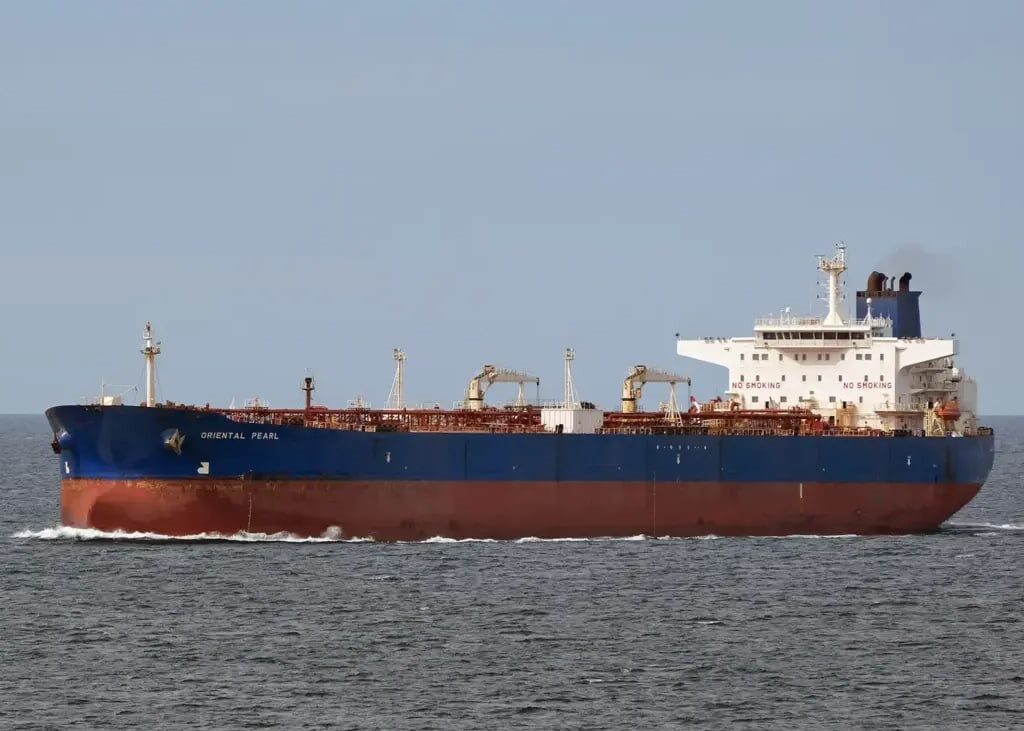
The tanker “Galileo”, former “Veronica” and “Pegas” IMO number 9256860, which previously used the flag of Guyana and probably had technical documents from the “American Bureau of Shipping”, received the Russian flag after being registered with the “RMRS” under the number 020907.
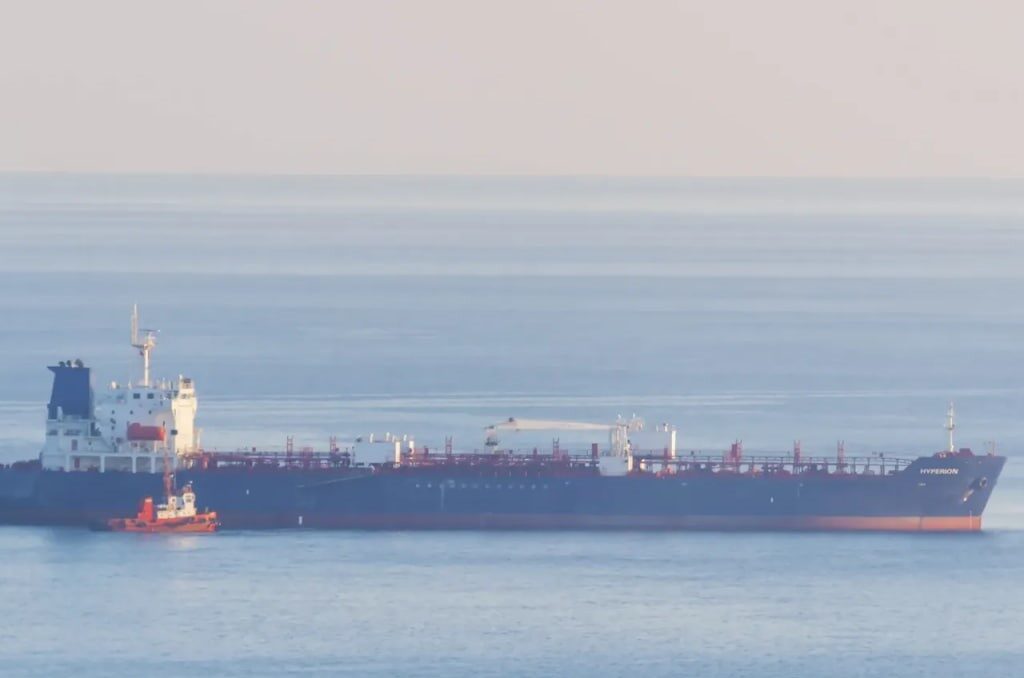
The tanker “Hyperion”, IMO number 9322968 declared itself under the flag of Gambia and previously could have had technical documents from “Det Norske Veritas”, but received the Russian flag through the registration of the “RMRS” under the number 061589.
The tanker “Marinera”, former “Bella 1” IMO number 9230880, which previously declared the flag of Guyana and may have once had technical documents from Lloyd’s Register, declared the Russian flag after registration in the “RMRS” under number 010977.
The tanker “Premier”, former “SCF Prime” IMO number 9577082, was previously allegedly under the flag of Gambia, was once supervised by “Bureau Veritas”, but allegedly received the Russian flag after “maintenance” in the “RMRS”, where it received the registration number 101930.
The tanker “Syntez”, former “Malak” IMO number 9378632 previously declared itself under the flag of the Comoros and could previously have technical documents from the “American Bureau of Shipping”, was registered under the flag of Russia through registration in the “RMRS” under number 061639.
The tanker “Sokolo”, former “Lilian” and “Lydia N”, IMO number 9153525 was previously under the flag of Cameroon and probably had technical documents from “RINA”, and received the Russian flag in the same way through the “RMRS”, where it now has the register number 981280.
All these tankers, after the formation of documents from the “RMRS”, were entered into the Russian register of ships by the captain of the port of Sochi Vyacheslav Rumyantsev, except for “Galileo”, which was entered into the register by the captain of the port of Taganrog.
The falsity of the documents allegedly issued by the “RMRS” to these tankers is obvious due to the fact that these vessels mainly declared receiving the Russian flag and documents while on the high seas, where no “technical declaration” from representatives of the “RMRS” could pass by definition.
The most famous media example was the tanker “Marinera”, which declared the Russian flag during a multi-day pursuit by ships of the Navy and the US Coast Guard. Similarly, in the high seas, the “Galileo”, also known as “Veronica”, tried to change its flag to the Russian one, but this did not prevent the US Coast Guard from detaining the vessel on January 15, 2026.
At the same time, the aforementioned “Hyperion” with a cargo of light oil (which Venezuela needs to mix with its own heavy oil) left the Russian Ust-Luga in November 2025 and in mid-December was on the approach to the Venezuelan Port of Jose Terminal.
At that time, it became clear that the US was not bluffing about the intention to detain tankers with a dubious flag, and therefore this tanker changed its flag to the Russian one, but not on the high seas, but during a formal call to the Colombian Port of Cartagena. Subsequently, the “Hyperion” headed back to Russian ports and arrived in Vysotsk at the end of January 2026.
At the same time, the documents for the ownership of this tanker were issued to the St. Petersburg-registered LLC “New Fleet Ltd”, Russian tax code 7805812093. This sanctioned company is also associated with the “RMRS”, where it has registration number 69781.
The founders of “New Fleet”, registered at the address of the “Sovcomflot” office, and with a contact email with a domain from “Sovcomflot” indicated in the registration databases, are the structure “Novoshipinvest”, tax code 2315116130, and the same “Sochi Sea Commercial Port”, code 2320072713, the captain of which registered most of the tankers, including “Hyperion”, in the Russian register.
At the same time, the founder of “Novoshipinvest” is “Novorossijskoye Morskoye Parokhodstvo” (“Novoship”), tax code 2320072713, the main shareholder of which is the same sanctioned “Sovcomflot”, and this same “Novoship” is also the founder of the
Sochi Sea Commercial Port” enterprise.
At the same time, the US authorities included “Hyperion” in the sanctions lists in January 2025 as being associated with the UAE-based company “Fornax Ship Management FZCO”, which the US authorities exposed as being in connection with the same “Sovcomflot”.
We would like to add that the aforementioned tanker “Premier” left the port of Ust-Luga in November 2025 with a cargo of light oil in the direction of Venezuela, was unloaded at the same Port of Jose Terminaland in December 2025 moved to the Brazilian port of Belem, from where at the end of January 2026 this vessel crossed the Atlantic. According to experts, this vessel is also part of the “Sovcomflot” tanker group.
Thus, the Sochi Sea Port’s Captaincy plays a key role in the re-registration of Russian tankers. This raises the issue of sanctions and other responses to the relevant activities.
It should be recalled that earlier, in the 16th package of sanctions, the European Union introduced them in February 2025 against the Russian ports of Ust-Luga, Primorsk and Novorossiysk (due to the transportation of oil), as well as Astrakhan and Makhachkala (for the transportation of military cargo); Novorossiysk port is also under sanctions by Australia and New Zealand, while Sochi port was not included in the sanctions lists at that time.
We add that in the relevant regulation, the European Union prohibits carrying out any operations, directly or indirectly, with ports and harbors and the above ports are indicated in the acts of the EU precisely as logistical and geographical objects, and not as enterprises, for example, not as the existing public joint-stock company “Novorossiysk Commercial Sea Port”, tax code 2315004404, or not as JSC “Sea Commercial Port of Ust-Luga”, tax code 4707018000.
At the same time, for example, the oil terminal in the port of Ust-Luga is controlled by a completely different structure, namely JSC “Ust-Luga Oil” code 4707013516, which at least formally has other beneficiaries and managers and is separately included in the sanctions lists of Canada and Ukraine, but not of the European Union.
At the same time, PJSC “Novorossiysk Sea Commercial Port”, separately from the port of Novorossiysk, has been under sanctions by the European Union and Ukraine since 2022, and by Canada since 2024.
In turn, Joint-Stock Company “Sochi Sea Commercial Port”, tax code 2320072713, is not included in the sanctions lists.
And Joint-Stock Company “Taganrozh Sea Commercial Port”, tax code 6154010465, did not fall under sanctions, as did its port captain Vasily Yarantsev. But the aforementioned captain of the Sochi port, Vyacheslav Rumyantsev, fell under Ukrainian sanctions back in 2015, as the former head of the state enterprise “Sevastopol Sea Fishing Port”, which directly contributed to the occupation of the peninsula, the sanctions against him were extended by Ukraine in 2021.
At the same time, the relevant Russian maritime practice, according to which a port as a geographical and administrative object is linked to a specific enterprise, which is at the same time part of public maritime management, is not widespread in the world, where ports can have a purely logistical and managerial significance, and cargo turnover occurs through the terminals of various operators, which are often controlled by the transnational corporations described above.
For example, oil terminals, through which Russian oil is transshipped and processed, can be completely separate structures autonomous from traditional multifunctional ports, as evidenced by the example of the Georgian Kulevi and the Indonesian Karimun, studied by a number of experts, regarding which there was a discussion about their inclusion in the European Union sanctions lists in 2026.
Accordingly, the imposition of sanctions on ports as infrastructure facilities should be accompanied at least by sanctions pressure on the enterprises that control the relevant transshipment complexes and terminals, on the beneficiaries of such enterprises and on their top management. An effective example of such sanctions pressure could be the inclusion in the sanctions lists of the structures we previously investigated that contribute to the aggressor’s maritime economy, such as the “Crimean” “NIKIMP” and the “RMRS”.
The processes of transferring tankers of the shadow fleet with the participation of “RMRS” are ongoing, among other things, in early March “RMRS” “informed”, that is, requested a sanction from the Russia’s Ministry of Transport for the issuance of technical documents for the transfer of 11 tankers to the Russian flag.
Of these vessels, seven are currently reportedly flying the flag of Sierra Leone and are under sanctions by a number of jurisdictions (the EU, the UK, Ukraine, Switzerland, and others) for transporting Russian oil.
These are the vessels “Savitri” IMO number 9289752, “Nagarjuna” IMO number 9299733, “Tendua” IMO number 9299862, “Jaldhara” IMO number 9304825, “Kartha” IMO number 9317949, “Night Glory” IMO number 9319674, “Nilanga” IMO number 9412452.
At the same time, “Jaldhara” already has the classification number “РМРС” 042003, its owner and ship manager are the Indian company “Naag Maritime Inc”, and the ship manager is the Indian company “Meegaman Maritime Pvt Ltd”, at the end of March this vessel arrived in Mumbai with a cargo of oil from the port of Primorsk.
The vessel “Kartha” has also already received, as of the beginning of April, the “RMRS” number 061235, its formal owner is the Seychelles company “Vavau Maritime Ltd”, and the ship manager is the Hong Kong company “Xi Long Shan Shipmanagement Co Ltd”. The vessel was last loaded with Russian oil in the port of Ust-Luga from February 12 to 17, and since the end of March it has been in the Indian port of Vadinar.
Similarly, the “Night Glory” has already received the classification number “RMRS” 061562, its formal owner is the Seychelles company “Ajmera Shipping Ltd”, and the ship manager is the Shanghai company “Da Li Hu Shipmanagement Co Ltd”, at the end of March this vessel left the port of Ust-Luga with a cargo of oil.
The tanker “Nilanga” also already has the number 091264 in the “RMRS”, its formal owner is the UAE company “Afsona Ltd”, and the ship manager is the Shanghai company “Ge Le Shan Shipmanagement Co”. At the end of March, this ship arrived in Ust-Luga from Vadinar, where it was delivering another cargo of Russian oil.
The vessel “Savitri” also already has the classification number “РМРС” 041848, its owner is the Indian company “Sagara Ltd”, and the ship manager is the Indian company “Chenab Ship Management Opc”, at the end of March this vessel was sailing across the Atlantic with a cargo of oil from the port of Ust-Luga.
Similarly, “Tendua” has already received the classification number “РМРС” 051523, its formal owner is the Mauritian company “Ragang Shipping Inc”, and the ship manager is the Indian company “Charai Sea Shipping Pvt Ltd”, at the end of March this vessel was in the Tunisian port of La Goulet, after leaving in December last year with a cargo of Russian oil from Tuapse for Mediterranean recipients.
The vessel “Nagarjuna” as of the end of March is without a published classification number “RMRS”, its nominal owner is the Seychelles company “Devta Ltd”, and the ship manager is the Shanghai company “Kun Lun Shan Shipmanagement Co”. The vessel was last loaded with Russian oil in the port of Ust-Luga until February 26, and since the end of March it has been in the Indian New Mangalore Port.
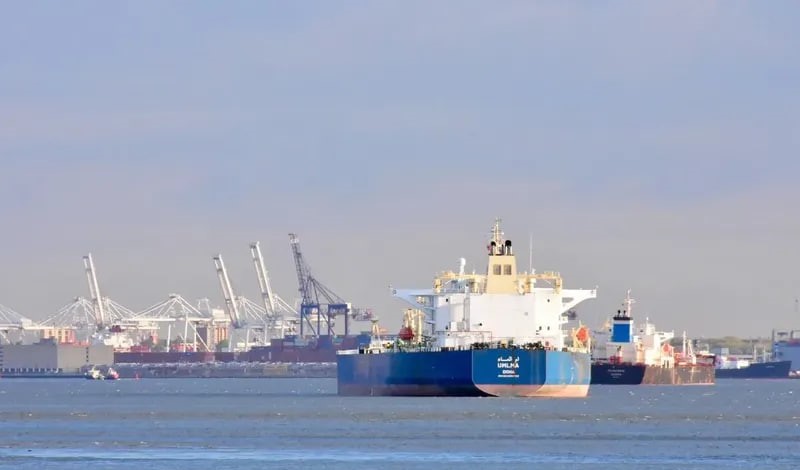
“RMRS” also informed the Russian Ministry of Transport about the procedure for issuing technical documents for obtaining a Russian flag for the tanker “Marven” with IMO number 9305556, which uses the flag of Palau, transports Russian oil, but is currently only on the sanctions list of Ukraine.
Its nominal owner and shipowner are Hong Kong companies “Po Yip Shipping Ltd” and “Peng Hu Wan Shipmanagement Co Ltd”, in early April “Marven” entered the Mediterranean Sea from the Atlantic with a cargo of Russian oil from Port of Primorsk.
In addition, “RMRS” has separately launched such a procedure for approval of the issuance of documents for the Russian flag for gas tankers that have not previously been used to transport Russian products and are not under sanctions.
For example, the gas tanker IMO number 9326689, which was recently used under the name “Zahit LNG” and under the flag of Panama, is now in “RMRS” under the flag of Russia, classification number 051695 and the name “Mercury” and the port of registration of Sochi.
Under the old name, the vessel had a Panamanian nominal owner, “Celtic Maritime & Trading SA” and an Istanbul ship manager, “Fidelity Denizcilik ve Ticaret”.
The second “RMRS” declared for certification of a gas carrier, namely “Nizva LNG” with IMO number 9294264 under the Panamanian flag, does not have a published Russian classification number, but its nominal owner is the same “Celtic Maritime & Trading SA”.
The third “RMRS” included in the request for the ministry is a tanker, namely “Cagri LNG” under the Panamanian flag (aka “Ocean LNG” under the Sierra Leonean flag) with IMO number 9300817, which also does not yet have a published Russian classification number, but its nominal is the same “Celtic Maritime & Trading SA”, and the operator is “Fidelity Denizcilik ve Ticaret”.
These tankers of considerable age were sold in February, 2026 for the indicated nominal amounts by the Omani company “Asyad Shipping”, and it was initially assumed that the vessels would be disposed of due to age, but now it turns out that they are being transferred to Russian owners, and experts indicate that in Russia the only relevant operator of such vessels may be the sanctioned “Novatek”.
At the same time, there is another trend towards changing flags, when the most “toxic” vessels operated by the aggressor are transferred from the Russian flag to another, in particular by “exclusion” from the Russian ship registers, in particular through the same “Rosmorrechflot” and port captains.
For example, on March 6, the Swedish coast guard and police detained the dry cargo ship “Caffa” with IMO number 9143611 in the Baltic Sea after it entered the country’s territorial waters. The Swedish authorities stated that the Guinean flag declared by the ship was fake, which became the legal reason for the detention.
This vessel was indeed included in the Ukrainian sanctions decree in November last year for the illegal export of grain from occupied Sevastopol to Tartus; when it was detained, it was going from Casablanca, Morocco to St. Petersburg.
The formal owner and operator of the vessel is the offshore company “Caffa Shipping Ltd”, apparently specially created for its service; previously, the bulk carrier was under the Russian flag and owned by the St. Petersburg company “Idan Shipping”.
The founders of “Idan Shipping” are Russians Andrey Selyanin, Sergey Sergeyev and Anastasia Sochina, the Astrakhan “Caspian Logistics Company” is also registered with Sochina, and “Intermar SPb” and “Ingria Shipping” are registered with Sergeyev, as well as a number of other companies. “Idan Shipping” is listed in the “RMRS” under number 59618 and has IMO number 6175143.
Previously, until 2024, the co-founder of “Idan Shipping” was the Finnish company “Idän Liikenteenvälittys IL” from Lappeenranta, the beneficiary of which is Risto Riihimäki, who also owns several companies in the field of freight transportation and consulting in Russia and Kazakhstan, in particular, this is the Vyborg “Idan.Ru”, which deals with forestry, as well as “Idan” from Almaty.
But “Ingria Shipping”, as the press writes, was associated with an offshore shipowner from the British Virgin Islands, “Aressa Shipping Ltd”, where the same Sergeyev, as well as residents of St. Petersburg Vyacheslav Fesko, Andrey Kuznetsov and Denis Kropotkin are considered its owners. Fesko, who is a resident of the UK, had a company registered in London, “Aressa Alliance Ltd”, until 2024.
The “Aressa Shipping Ltd” operated the dry cargo ship “Aressa”, IMO number 7612498, built in 1978, formerly the “Baltiyskiy-103”, and in 2020, a ton of cocaine was found on it, which was being transported from Venezuela to Greece. The ship was detained during a joint operation in the Caribbean island of Aruba by a joint police operation of the United Kingdom, the Netherlands, Montenegro and other countries.
Now this ship, renamed “Turbo-SM” under the flag of the Comoros, carries out transportation in the Black and Mediterranean Seas, but not only between Russian, Greek and Turkish ports, but also with illegal calls to Abkhazia, as well as to Russia-occupied Kerch.
Thus, in addition to the obvious scams with the change of flag and circumvention of sanctions, the dry cargo ship “Caffa” could be involved in other criminal stories, including drug trafficking, for which it was “prudently” removed from the Russian judicial registers.
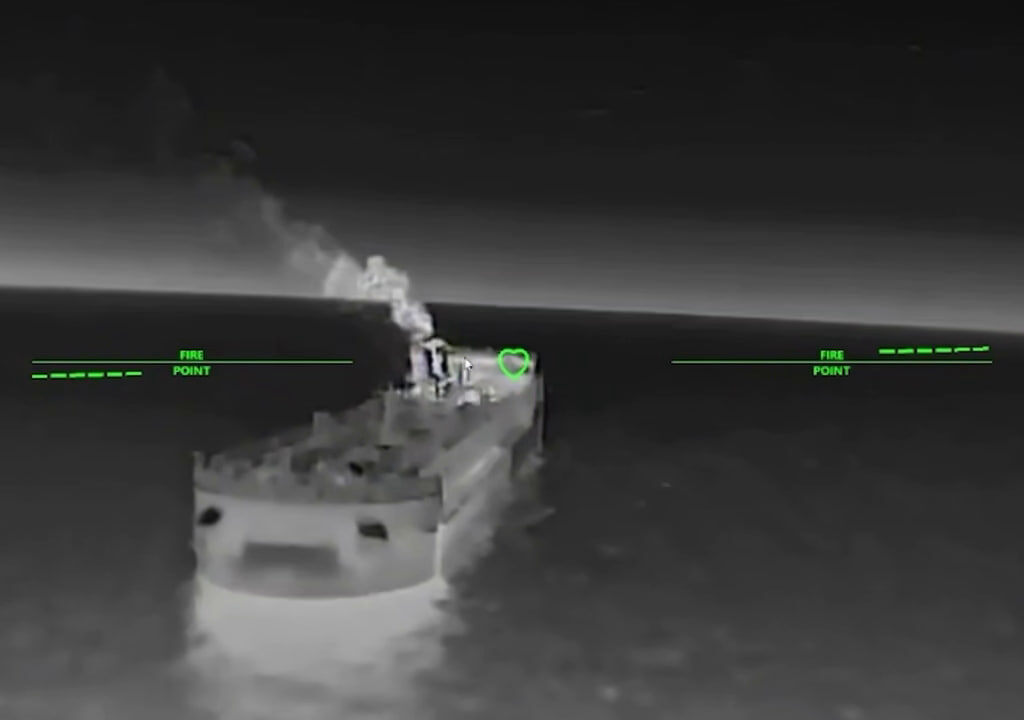
The consequences of changing flags to Russian ones became noticeable after the attacks of the Ukrainian Defense Forces on Russian tankers in the waters of the Sea of Azov in July 2026. After all, most of the affected vessels were under the Russian flag, although previously these relatively small tankers used a convenient flag.
This concerns the affected tankers “Efrosinia V” IMO number 1039682, “Kapitan Barmin” IMO 9269350, “Sanar-1” IMO 9332389, “Climene” IMO 9376593, “Sanar-3” IMO 9457804, “Sanar-4” IMO 9476771, “Teti” IMO 9540352, “Penelope” IMO 9540364, “Venus III” IMO 9599353, “Aura” IMO 9624316, “Ilya Repin” IMO 9640504, “Sanar-17” IMO 9640554 and “Alexey Savrasov” IMO 9645061, controlled by “RMRS” with a deadweight of 5400-7500 tons, primarily Russian-built, but also Chinese built in 2006-2013, recorded primarily at the Port of Taganrog.
At the same time, “Aura”, “Climene”, “Penelope”, “Teti” and “Venus III” are controlled by the Samara-based company “Prime Shipping LLC-RUS” as a subsidiary of “Rosneft”. “Sanar-1”, “Sanar-3”, “Sanar-4” and “Sanar-17” are operated by the Rostov-on-Don company “Rosewood Shipping LLC”, a subsidiary of the “Novoshakhtinsky Oil Products Plant”.
The tankers “Ilya Repin” and “Alexey Savrasov” are operated by the Moscow-based company “Ilya Muromets”. “Kapitan Barmin” is managed by Sochi-based “MTF-Service LLC” and owned by billionaire Sergei Fofanov’s “Volgotrans LLL”, while “Efrosinia V” is controlled by Rostov-on-Don company “Azov-Don Shipping Co LLC”.
Thus, the aggressor’s change of flag of vessels, both in terms of entering tankers of the shadow fleet into Russian registers and removing individual vessels from these registers, associated with all sorts of maritime scams and general criminality, requires special attention from authorized international structures, classification societies, insurers and port and flag administrations.
The replacement of such a flag during a voyage indicates a gross violation by both the shipowner and the Russian maritime administration, in particular by the specific captain of the Russian port controlled by this administration, of the requirements of the UNCLOS, SOLAS, STCW and MARPOL conventions, since the ship’s flag documents are issued in this situation by the Russians on the basis of knowingly fake classification society certificates.
In addition, during such a replacement of the flag during a voyage, the documents on the qualification and certification of crew members also obviously acquire a fake character, since they are either absent or formed with obvious gross violations of the procedure.
At the same time, the promptness of the replacement not only of the flag and ship’s technical documents, but also of the commercial signs of the vessel, including the details of the owner and operator, indicates that such structures were guaranteed to be of a formal nature for the vessel.
But in any situation, obtaining a Russian flag for a vessel requires its certification by such classification societies as the state structures “Russian Maritime Register of Shipping” or “Russian Classification Society”, which not only neglect the requirements of maritime security for the political dividends of Russia, but are also a direct tool of Russian special services in their fight against Western countries and Ukraine.