Our Association periodically reports on the situation in the occupied Crimea as a springboard for the aggressor’s cognitive war against the civilized world. Analysis of the accumulated information allowed our experts Anna Prykhodko and Eduard Pleshko to form a broader picture in this dimension.
Let’s start with more recent events, back in 2014, when the Kremlin quickly built a stable system of involving European figures to simulate “international recognition” of the occupation of Crimea. At the same time, Western, and in particular French, politicians were used to create a media illusion that the European community supposedly perceives the attempted annexation “as a fait accompli and legitimate fact.”
At one time, we showed in detail how Leonid Slutsky, the chairman of the State Duma Committee on International Affairs, oversaw contacts with French far-right politicians for years and organized visits by their “observers” to pseudo-elections in Crimea.
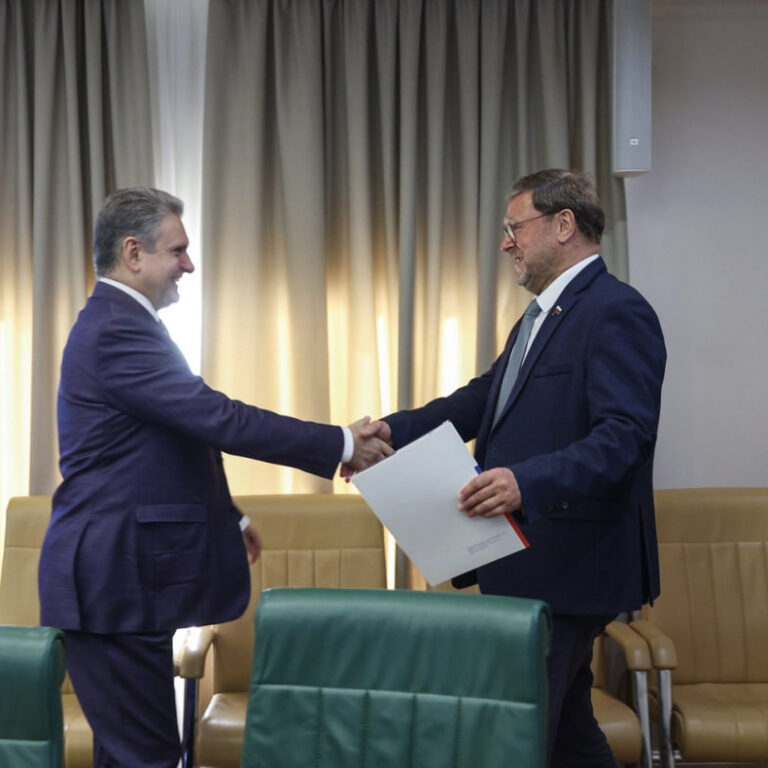
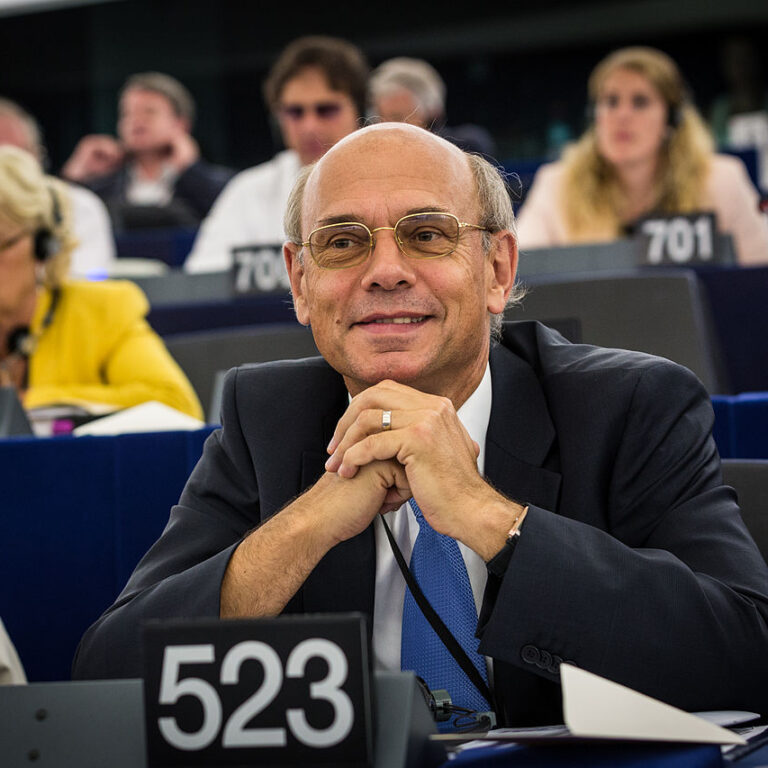
In the carefully planned and very well-financed operation regarding Crimea, the key figures were the then deputy of the French National Assembly, and later the MEP from the “National Rally” (“Rassemblement national”, “RN”) Thierry Mariani, who became a significant architect of pro-Russian lobbying in Paris, and a handful of other politicians.
Mariani himself repeatedly led illegal delegations of French politicians to the occupied Crimea in 2015, 2018 and 2020, and participated in the “observation” of illegitimate votes. His trips were financed, among other things, by funds controlled by Leonid Slutsky.
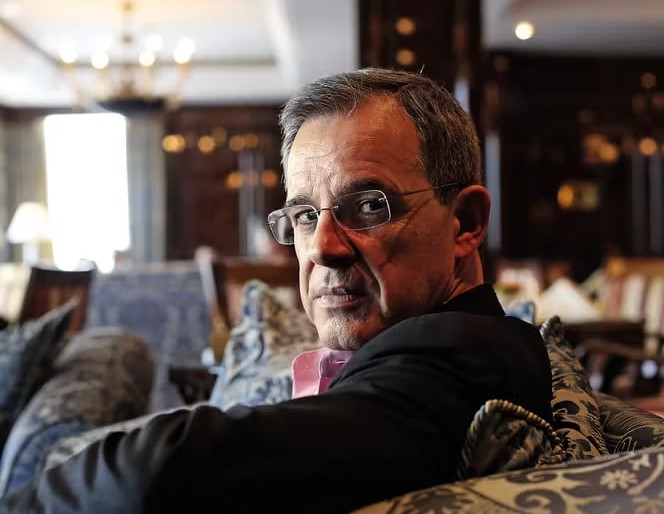
We have previously written many times about the activities of the “National Union” and its long-time leader Marine Le Pen, including in the Crimean dimension. Recently, the story we described earlier has gained new momentum with the court case against Le Pen and her associates, which concerns the fictitious employment of assistants in the European Parliament, the so-called “European Parliament assistants” case.
On March 31, 2025, the Paris Criminal Court (Tribunal correctionnel de Paris) found Le Pen and several other top officials of the RN party guilty of embezzlement of EU public funds in this case. The court sentenced Le Pen to 4 years in prison, of which 2 years were suspended and 2 years were served under house arrest with an electronic bracelet, a fine of 100 thousand euros, and also deprivation of the right to run for office for 5 years.
The Kremlin reacted extremely sharply to Le Pen’s conviction, and local spokespeople called the verdict an “insult to democracy.”
According to French think tanks that investigate disinformation, including the government structure “VIGINUM,” Russian bot farms and networks like “Doppelgänger” actively spread narratives in the French media space that the trial was a political order from Emmanuel Macron against the opposition leader, and that the French Themis was allegedly not independent and was carrying out “globalist directives from Brussels.”
The goal of these operations was not so much to legally change the court’s decision, which is impossible to do through bot farms, but to destabilize the socio-political situation in France as much as possible and discredit its judicial branch.
During court hearings and sentencing periods, French cybersecurity authorities (“ANSSI”) recorded an increase in the number of DDoS attacks on the digital infrastructure of the Ministry of Justice and the websites of the French judiciary. The traces of these attacks led to pro-Russian hacker groups (in particular, from the orbit of “NoName057(16)” or “CyberArmyofRussia”), which traditionally use such tools to create a media effect of the “vulnerability” of state institutions of Western countries during high-profile events.
On July 7, 2026, the Paris Court of Appeal (Cour d’appel de Paris) confirmed Marine Le Pen’s guilt in embezzlement, but somewhat mitigated the final sentence. The court sentenced her to 3 years in prison, 2 of which were suspended, and 1 year of actual imprisonment, which was also replaced by wearing an electronic bracelet.
The main political adjustment concerned the term of disqualification – the appeal court reduced the ban on participation in elections, which technically opens up the possibility for Le Pen to participate in the presidential elections in France in 2027. This again caused highly intensive cyber activity by structures that, among other things, were also involved in the Crimean issue.
First of all, “NoName057(16)” and “Cyber Army of Russia Reborn (CARR)” were highlighted – pro-Russian hacker groups that act as tools of Russian special services and specialize in massive DDoS attacks, cyber espionage and attempts to sabotage critical infrastructure facilities (energy, water supply) in countries that support Ukraine.
These cyber structures have repeatedly demonstrated joint actions with the so-called CRI (Crimean Research / Intelligence) structures, more simply with a network of analytical and operational units of the Russian Federation in the occupied Crimea, which are mimicked as “scientific institutes”, “expert centers” and “independent media hubs”. They are an integrated “expert and information core” that serves the Southern еheater of сognitive (mental) цar of the Russian Federation.
Ukrainian specialists already see very clearly how the information product created by CRI structures in Crimea is instantly picked up and scaled by the all-Russian network of cognitive influence, also involved on the “French front”.
While CRI structures create a narrative about the alleged “collapse of the Ukrainian air defense system in the South”, hacker groups, including the “Cyber Army of Russia Reborn”, synchronously carry out cyberattacks on Ukrainian civilian or state resources, creating the illusion of chaos.
Cybersecurity investigations are linking hackers to Russian intelligence services using a combination of digital forensics, open source intelligence (OSINT), and threat intelligence.
Among other things, research has already proven beyond a doubt that the activity of the aforementioned “NoName057(16)” group clearly corresponds to a standard working day according to Moscow time, from 9 a.m. to 6 p.m., with a lunch break, and drops sharply during Russian public holidays. There are other characteristic data, but we will not reveal all the cards to the enemy.
Interestingly, almost simultaneously with the court ruling on Le Pen by the appeals court, the results of an online poll conducted on July 7-8 on a sample of 1,837 people registered on the electoral rolls by Toluna Harris Interactive showed that Marine Le Pen would win the first and second rounds of the presidential elections in France, scheduled for 2027. In particular, in the first round,
Le Pen could win 35% of the vote provided that the leader of the Renaissance party Gabriel Attal (8% support) and the former prime minister, leader of the center-right Horizons party Edouard Philippe (14%) maintain their candidacies. The second place in the first round will be taken by the head of the France Invincible party Mélenchon with less than half the result of 16%. Even if Attal withdraws his candidacy in favor of Philippe, the leader of “Horizons” will receive 20%, ahead of Mélenchon, but will still lag behind Le Pen (34%).
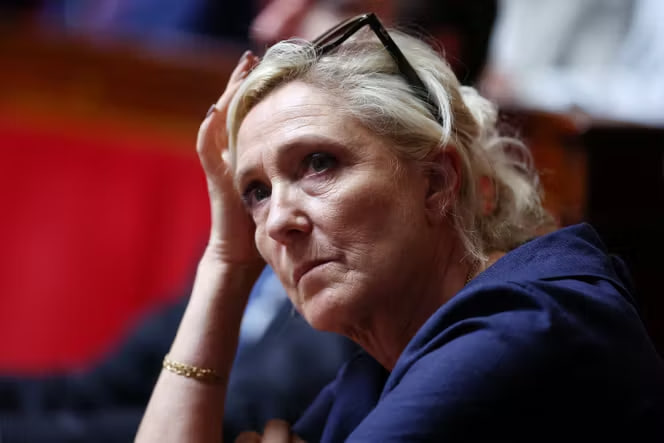
In the second round of the election, according to the poll, Le Pen will lead with 51% of the vote, followed by Edouard Philippe with 49%. Thus, the gap between the two candidates has narrowed, since in the previous poll they scored 52% and 48% respectively.
It should be noted that the polls of “Toluna Harris Interactive” are not biased in the classical sense and they do not draw ratings on the instructions of the Élysée Palace or the headquarters of any party.
However, they work as commercial tools in conjunction with the major French media, their data reflect reality, but with an adjustment for who paid for a specific angle of the question and at what informational moment this poll was launched. For an analyst, such releases are a valuable source, although they should be evaluated exclusively in dynamics and in comparison with other institutes.
“Toluna Harris Interactive” is a global giant in the field of digital market research, but the sample is adjusted for the demographics of France, digital polls sometimes show a shift towards more politicized segments of the population than among the inert mass of voters on election day.
It’s time to reveal the first insider. Russia really wants to organize its information attack in such a way as to increase the activity of the electorate that supports Le Pen, and vice versa, to eliminate as much as possible from participation in the process the legalized migrant circles of the country, who should not feel the threat of being exposed to the very negative consequences of the policies of the far right in the future.
The second insider allows us to clearly understand why the French far right is a trump card and why Marine Le Pen as president is fundamentally different, for example, from Viktor Orban.
It is the Kremlin that is leading a global game with a bet on Marine Le Pen and her “National Rally” party to block or dismantle the idea of a French “nuclear umbrella” for Europe, which can be confirmed by a complex of direct and indirect factors.
The issue of nuclear blackmail is fundamental to the Russian strategy, which is why the destruction of the concept of pan-European security under the leadership of France or NATO is Moscow’s key geopolitical goal.
Emmanuel Macron is actively promoting the idea of the “Europeanization” of French nuclear deterrence (dissuasion élargie), offering protection to partner countries, in particular Germany and Poland, in the event of a weakening of the US role in NATO.
Marine Le Pen is categorically against this, in her columns (in particular for “Le Figaro”, to which we will return later) she directly stated that “sharing nuclear deterrence means destroying it”, and called Macron’s plans “treason against the constitution”. This position fully coincides with the interests of Russia, which seeks to leave European countries without nuclear guarantees against the background of its own nuclear blackmail.
Le Pen also consistently declares her intention to withdraw France from NATO’s unified military command, which for Russia is an ideal scenario that eliminates the coordination of nuclear planning in Europe.
A direct factor in the long-term Russian bet on the “National Rally” is the officially documented fact that Le Pen’s party received a loan of 9.4 million euros from the First Czech-Russian Bank, which was confirmed by an investigation by the French parliamentary commission on foreign interference. Although the debt was later restructured and allegedly already paid off, it formed a stable obligation and political vector.
An indirect factor in the disinformation campaign, which was revealed by monitoring by the aforementioned French government service “VIGINUM” and cybersecurity networks, was the fixation that Russian influence operations, such as the “Doppelgänger” network, focus not on abstract support for the “National Rally”, but on discrediting French defense initiatives. Promoting the thesis that “Macron is dragging France into a nuclear war with Russia because of the protection of others” is aimed at intimidating the French voter and artificially increasing Le Pen’s ratings as a “peace candidate”.
In addition, online resources such as “Egalité et Réconciliation”, founded by Alain Soral, or small conservative institutes financed through European grants of dubious origin or crypto-assets, began to massively distribute expert materials on the “danger and financial inexpediency” of providing nuclear guarantees to neighbors.
Given that France plays one of the key roles in the EU Council and the European Commission, according to Moscow’s plan, the government led by the “National Rally” is simply required to block or delay the adoption of critical decisions, in particular on the extension of economic sanctions against Russia, the allocation of macro-financial and military assistance to Ukraine, and the enlargement of the EU.
Among other things, Moscow systematically attacks the Paris-Berlin-Warsaw axis, its proxy media spread theses that France “feeds Eastern European countries” and is forced to take risks due to the “militant policy of Poland and the Baltics”, which is the current stage of Russia’s cognitive war with the West.
Perhaps this is also taken into account by the French Foreign Ministry, which announced that it plans to summon the Russian ambassador to Paris due to the large-scale cyber campaign that Russia is conducting against ten European countries.
At the same time, the occupied Crimea is becoming a wide springboard for such activities, as evidenced by the latest media provocations orchestrated by the Russians. These include the article published on August 13 in the same “Le Figaro” about the trip to Crimea by its Moscow correspondent Alain Barluet, who was even named a “special correspondent in Sevastopol” for this purpose.
The publication was promptly picked up and promoted in Russian-language content by the “oppositionists” from the “Echo” media structure controlled by Russian intelligence, Maksim Kournikov and Alexei Venediktov.
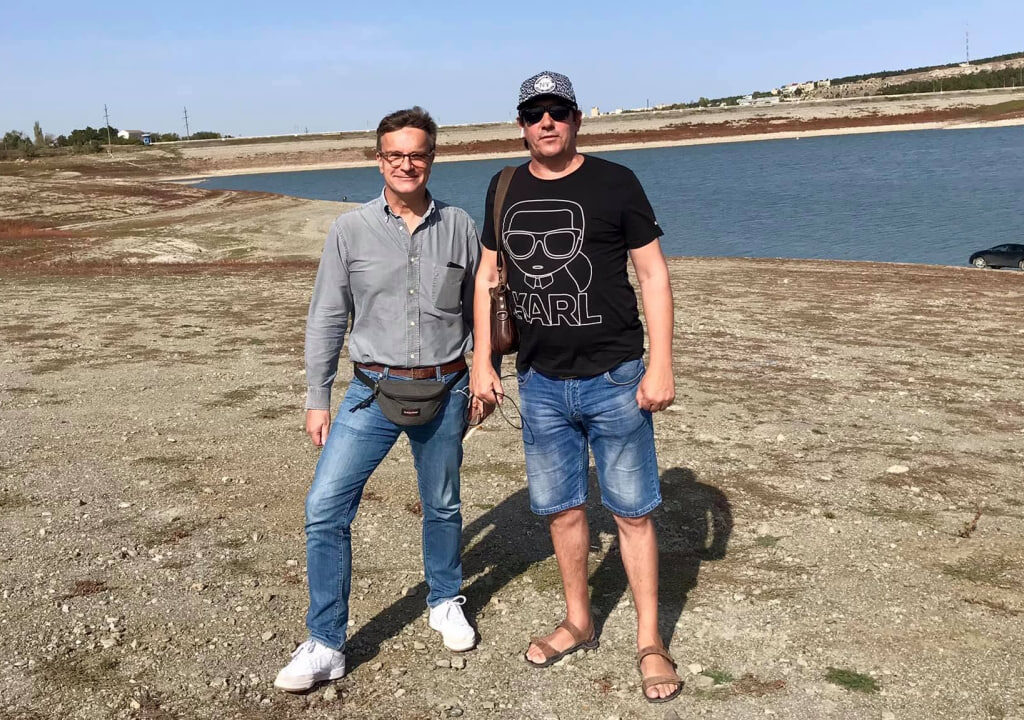
This is not surprising, because the only “subjective” source of information on the peninsula, not counting the anonymized “locals”, is identified in this material as Oleg Kryuchkov, the information and propaganda supervisor of the Crimean Gauleiter Sergei Aksyonov from the Russian special services, whom we have repeatedly described earlier.
Kryuchkov predictably broadcast through Barlue for readers of “Le Figaro” stories about “victorious Russian weapons” and “temporary difficulties”, with an emphasis on such “psychologically correct” plots as Crimean assistance to “aquariums and animal shelters” during power outages.
But Barlue puts more toxic narratives into the mouths of the Crimean no-names he supposedly “interviewed”, of course suggesting that in this regard they trust only his “journalistic reputation”.
Among other things, he repeatedly writes about alleged “statements by locals” that “Crimea will never join Ukraine” and “quotes” them in another narrative from the Russian special services: “the Tatars smile in our faces, and behind our backs they send drones at us”.
Barluet directly spread the thesis of Russian propagandists about the “strike on the passenger train” and cites the alleged “fears” of Koktebel residents that “Ukrainian drones are attacking the Voloshin house-museum” and generally describes Ukrainian operations in Crimea as allegedly “Volodymyr Zelensky’s desire to win the elections.” He also particularly sarcastically cites the statements of the former Minister of Defense of Ukraine that “Crimea will turn into an island,” and in fact the entire described material of “Le Figaro” is devoted to refuting this thesis, and therefore it became a classic example of a cognitive war operation, and not only against Ukraine.
Therefore, the comments under the mentioned publication that “the interviewees and the interviewer themselves gave the impression of infantile people who do not want to think about the causes and consequences of what is happening” are erroneous, because in fact the tasks of this article were well understood by its author and his customers.
We should add that Barluet is not the first time that he has been working out the narratives of Russian special services in Crimea. In 2020, this journalist visited occupied Sevastopol under the pretext of “events to honor the memory of French soldiers” of the Crimean War, and the mediator in this event was such a Russian foreign intelligence outlet as the “Russian Military Historical Society”, with which Barluet has developed specific relations in recent years.
A flashback to this is his current revelations to “Le Figaro” that in that distant war “the victory over the Russian troops went to the allies, the French and the British, at a high price, especially the latter, who suffered significant losses and endured severe suffering.”
It would be difficult to expect a more tragicomic self-exposition, since literally a week before Barluet’s publication, his friends from the Russian foreign intelligence service issued a similar official statement. In it, they called the Sevastopol Panorama nothing other than “a historical trigger that awakens painful memories in the British of a difficult military campaign that resulted in colossal losses among representatives of the highest elite of the United Kingdom.”
The fact that Barluet’s materials are not only “self-censored”, but also agree in content with his Russian friends, is also evidenced by the “Oleg Kocherov case.”
After all, during the 2020 visit, this correspondent, under some unknown circumstances, for a certain time found himself not among the “Potemkin peasants” who told him about the “glorious past and stunning future”, but in the company of the aforementioned activist, whom it was difficult to accuse of loving the same Sergei Aksyonov.
Then Kocherov, who was repressed in the following year, naively boasted on social networks that with “our comrade” Barlue they “discussed the global problems of the peninsula, showed the real state of affairs”, promising that “a series of reports about Crimea will be published in the near future by one of the most famous media outlets in the world, Le Figaro”.
But this did not happen “for some reason” and Kocherov’s revelations about the corruption schemes, stupidity and arbitrariness of the occupation “authorities” did not, of course, make it into Barlue’s then “Sevastopol article”, unlike the author’s admiration for the beautiful performance of the Marseillaise by the Sevastopol residents.
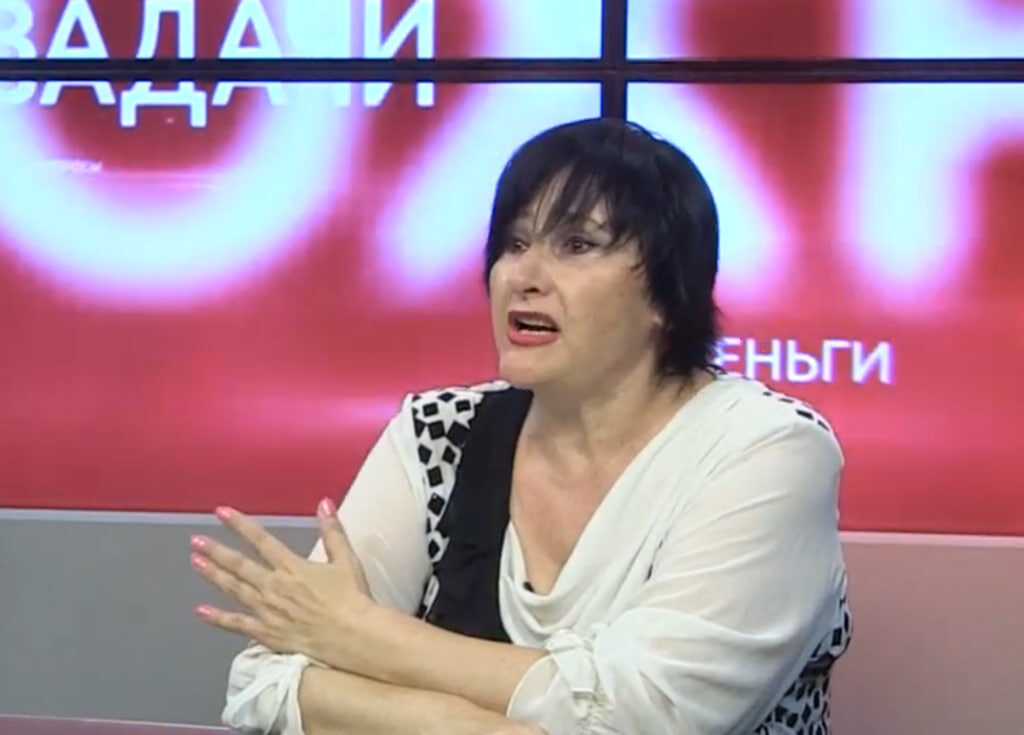
At the same time, the occupiers do not particularly hide the fact that they are waging a cognitive war with France from Crimea. The other day, the local “Yevpatoria press” directly quoted the statements of Victoria Strunina, the local “head of a public organization” from the Russian special services, that “cognitive war”.
Previously, we investigated the role of this figure, a former city council member who in 2014 helped appropriate the coveted land and buildings of the Yevpatoria branch of the “Volodymyr Dahl East Ukrainian National University”, in the French provocations of Russian intelligence related to the activities of Alexandra Delannoy and Philippe de Duvan.
Recall that in early 2023, the aforementioned Delannoy-Kruchkova, declared by Russian propaganda as the head of the vocal department of the Darius Milhaud Departmental Conservatory in Aix-en-Provence, France, initiated the transfer of a century-old German-made grand piano to occupied Yevpatoria, allegedly as a “gift” to the illegal “city administration”.
After our Association intervened with the EU bodies regarding such a demonstrative violation of sanctions by the French municipal structure, the occupiers declared that the grand piano was “private property” and that it will be placed in the “city library of Yevpatoria.”
Later, Delannoy, together with Strunina, became a public cover for the deportation to Russia and the occupied Crimea of the aforementioned de Duvan, grandson of the last mayor of Yevpatoria during the tsarist era, Semyon Duvan.
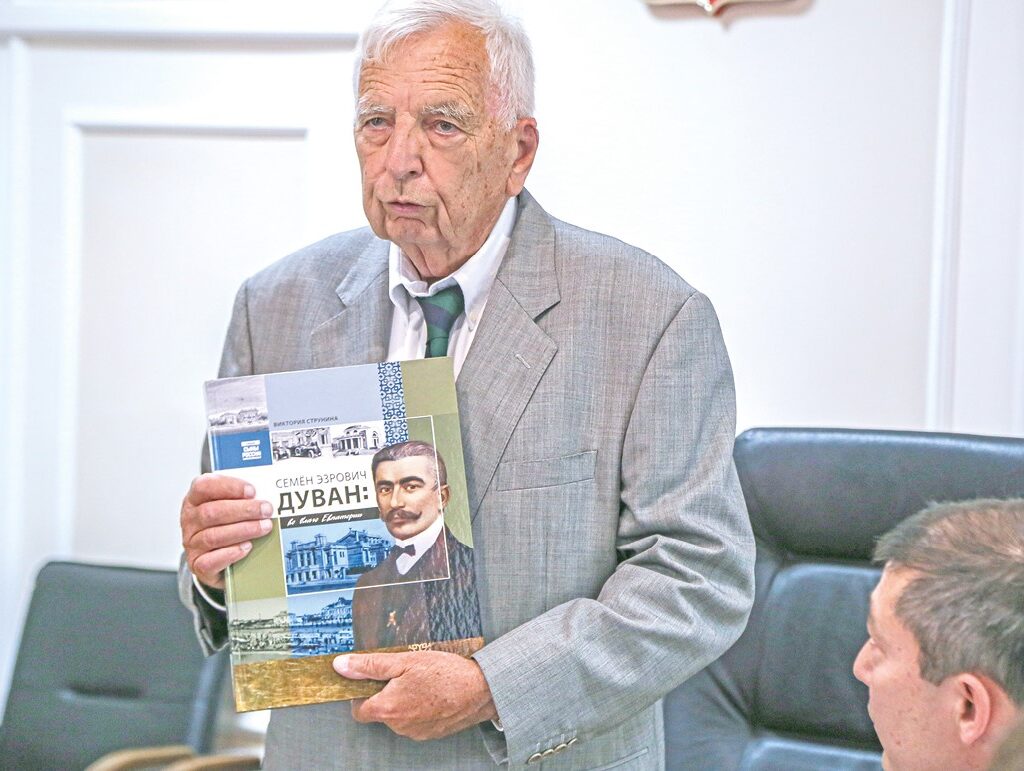
Tragicomically, this visit was preceded by a show with the installation, on the 65th anniversary of Semyon Duvan’s death, in the southern wall of the St. Elias Church in occupied Yevpatoria, of an urn with earth, actually stolen by Russian agents from his grave in the cemetery of the French city of Beaulieu-Sur-Mer.
The fact that the Duvan family is Karaite, that is, has a different religious affiliation, did not upset the organizers of this show much; therefore, it is highly likely that these were the same “especially gifted” representatives of Russian intelligence who now wrote about the “trigger of the Sevastopol Panorama for the British elite”
It is noteworthy that, as it has now become clear, in addition to de Duvan, representatives of the Karaite Association of Paris and a researcher of the Karaite question from the National Institute of Oriental Languages and Civilisations Blandine Guillot were to be involved in the trip to Crimea, but they refused Russian money.
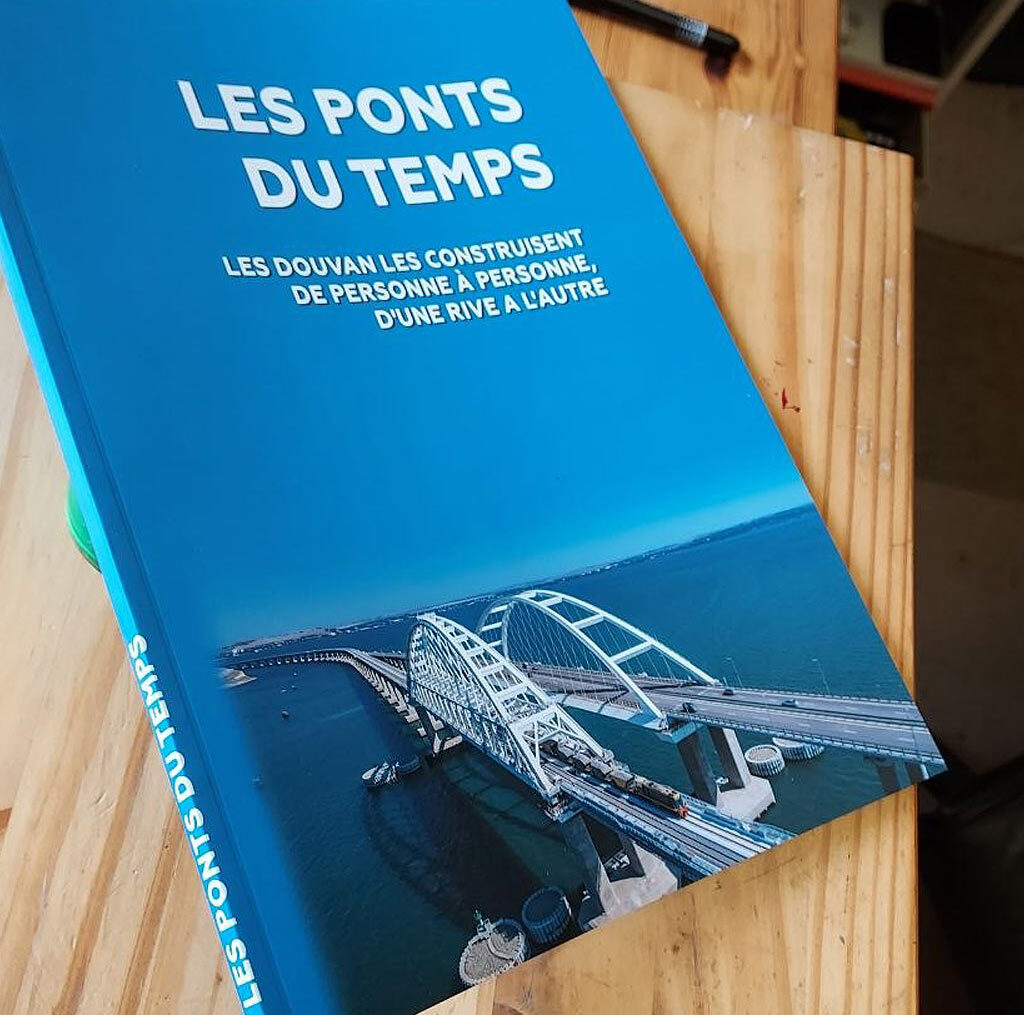
And now, two years after de Duvan’s arrival in Crimea, Strunina herself announced the publication of the book in French “Bridges of Time. Duvans build them from person to person, from shore to shore” as a “shield of cognitive war”. The cover of this book depicts the infamous Crimean bridge, which, as the orchestrators of this provocation emphasize, is supposedly “not to be destroyed”.
At the same time, the organization of the printing of this opus, under the formal authorship of Duvan, who is now sending copies of it across France with accompanying letters about the “beauty and greatness of Russia”, was handled by Strunina herself, to whom her curators “kindly provided” for this “good cause” a number of documents about the Duvan family from the archives of the Russian special services.
Thus, the occupied Crimea is actively used by Russian intelligence services as a springboard for waging cognitive war against France, and in the future, until the presidential elections next year, the corresponding intelligence activity of the aggressor will only grow.
At the same time, its tools will be not only bots on social networks and trained journalists and politicians, but also migrants of all generations who had a “glorious Russian past”: it is obvious that the Kremlin considers them as its “property” for any subsequent provocations.