In 2026, new trends in fraud with ship documents of the Russian tanker fleet, related to their “insurance”, became known, which is worth analyzing on an extremely typical example.
The tanker of the Russian shadow fleet “Paz” (former “Aulis”) IMO number 9233765 left Murmansk on March 9, 2026 with a cargo of 140 thousand tons of Russian oil from “Gazpromneft” with the formal consignor LLC “Varda” from St. Petersburg and continued through the Norwegian Sea in the direction of China, as of April 9 it was in the area of Madagascar.
This vessel had previously transported Russian oil to India and China five times and transported Venezuelan oil to China four times. For the 2026 voyage, this tanker was declared under the flag of Mozambique, but previously it sought to use the flag of Curacao, which was a known fake; the formal owner of the tanker was the offshore company “Noblefu Co Ltd” from the Marshall Islands, and the crew consisted of 24 Chinese citizens, including Captain Zhang Qinglong.
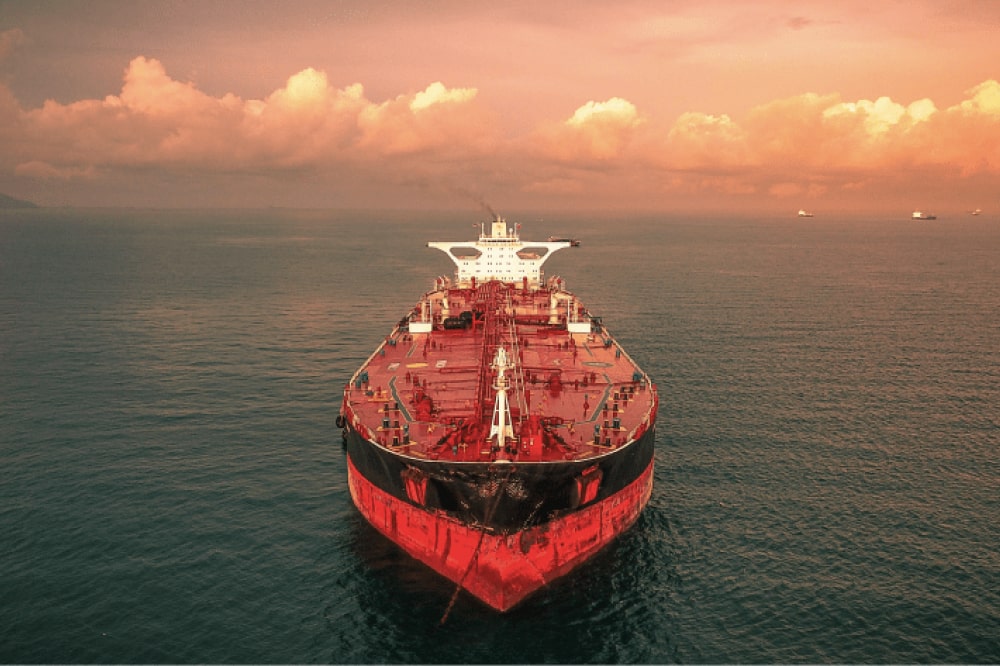
The tanker in question was under the sanctions lists of the USA, EU, and UK, but at the same time, for the described voyage, it declared the use of an insurance certificate from the German company “Seaguard P&I”, despite the fact that German sources really do not have any information about the existence or registration of such a commercial structure.
Previously, “Paz” used insurance certificates from a sanctioned Russian insurance “heavyweight”, namely “VSK”, and its current insurer is as specific as possible. The website of the “Seaguard P&I” structure was created in May 2024, the stated contact number is registered in Sweden, and the stated address of “Seaguard P&I” is an apartment building on Bodderbarg Street in the Hamburg suburb of Pinneberg.
At the same time, the mentioned Swedish contact number 46760969651 is also used in a similar role by the structure “Maritime Solutions Networld”, which positions itself as a Lebanese company from Tripoli, which allegedly provides ship registration services.
The second published contact number of this structure, 963988737077, is Syrian, and the subscriber of both is Mohammad Youssef, a graduate of one of the Syrian universities who indicates Greece as the country of residence on social networks and posts his own photos there in the Swedish city of Malmö.
In social networks, this person indicates his experience working for the Greek ship-owning company “Eikano Shipping & Trading S.A.” with an office in Piraeus, which manages one vessel, the Panamanian-flagged “Osprey Bulker”, IMO 9228265, and the Lebanese company “Tempus Maritime Sarl”, currently managed by Nouhad Charif Abdalla.
At the same time, the owner and operator of the “Osprey Bulker” are companies with the same address in Piraeus, namely “Taco Maritime S.A.” and “Kudos Maritime S.A.”, all of which are also linked to Ali Shehadeh, a graduate of the Arab Maritime Academy in Alexandria, Egypt, and his relative Tahsin Shehadeh.
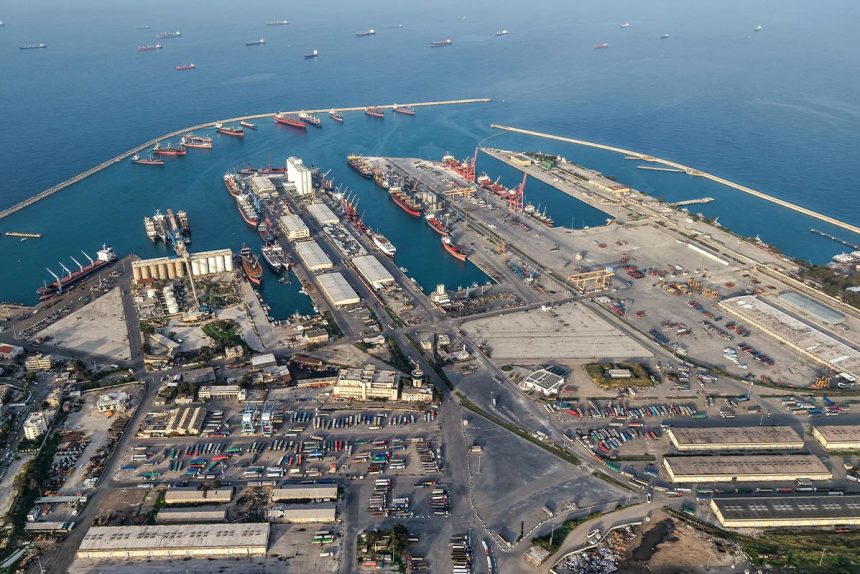
Tahsin Shehadeh is notable for the fact that for a long period until 1990 he held senior positions in the Syrian port of Tartus, where Russia traditionally had a large military and intelligence presence, and after 2010 he worked for a long period in the same Lebanese company “Tempus Maritime Sarl”.
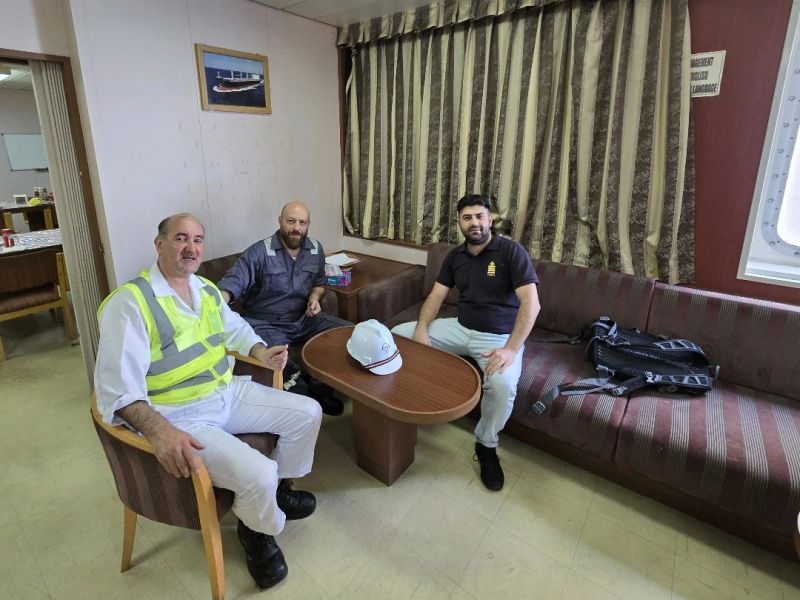
Before that, this graduate of Damascus University was a director at “Tartous Shipping” and at the same time, at least since 2009, he was the secretary general of the “Syrian Chamber of Shipping”. It was in this role that Tahsin Shehadeh spoke in 2017 at the event “Greece & the Arab world: Envisioning a Shared Future”, and in November 2018 at the “7th Arab-Hellenic Economic Forum”, organized in Athens by the “Arab-Hellenic Chamber”.
Among other things, the participation of Greek Prime Minister Alexis Tsipras and the relevant Minister for Maritime Affairs Christos Lampridis in the above-mentioned event in 2017 was announced. It is noteworthy that the “Syrian Chamber of Shipping” was on the Syrian sanctions lists of the U.S., which were canceled in June 2025 after the overthrow of the Assad regime.
Tahsin Shehadeh was also registered with the Cypriot company “Eikano Trading Ltd” with registration number ΗΕ 148339.
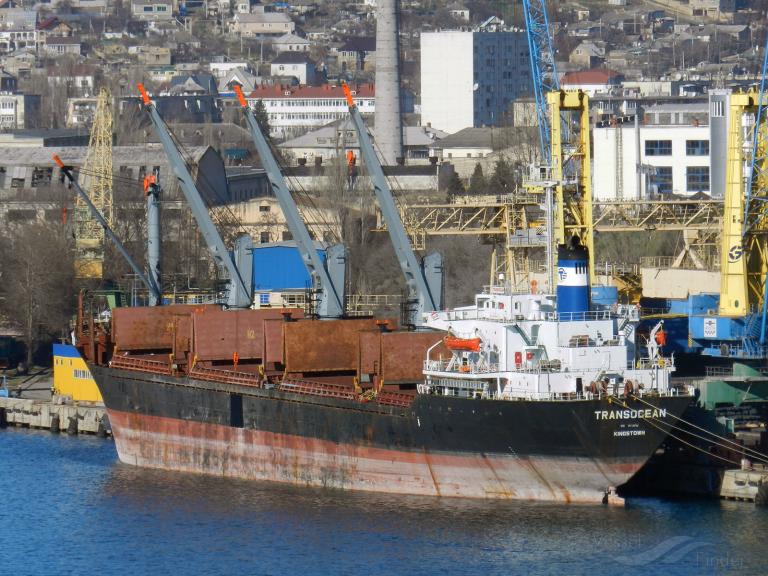
The aforementioned “Tempus Maritime Sarl” operated three vessels until 2020, namely “Transocean” with IMO number 8114912, “Transfair” with IMO number 7627302 and “Transmed” with number 7396616, which were later cut into metal in Pakistan and India.
It is noteworthy that the “Transocean” was spotted in the port of Sevastopol in February 2014, literally on the eve of the Russian operation to seize Crimea; let us recall that it was the “Syrian Chamber of Shipping” that later actively facilitated the so-called “Syrian Express” from the occupied peninsula to Latakia and Tartus.
At the same time, it is noteworthy that the “insurance certificates” from “Seaguard P&I” indicate a completely different contact number, already German, namely +491729371436.
This number is used to open accounts of a local citizen, Jule Dittrich, from the family of a photographer from Chemnitz, Saxony, Wolfgang Dittrich, who has nothing to do with maritime activities and posts photo reports on races, sports, animal protection, and farmer protests on social networks.
After publications about suspicious activities of “Seaguard P&I” in early April, its website seaguardpi.net stopped working. However, it is now clear that more than twenty tankers of the shadow fleet, starting from September 2025, began to use the “certificates” of this structure. As of April 2026, in addition to “Paz”, this is a whole group of tankers under the flag of Mozambique, whose maritime administration, apparently, systematically ignores the known fakeness of “Seaguard P&I” “certificates”. Among others, these are the tankers “Stellar Beverly” IMO number 9208069, “Fenghuang” IMO number 9236248, “Hanson” IMO number 9237412, “Tianma” IMO number 9242120, “Rens” IMO number 9242223, “Soufia 1” IMO number 9273052, “Lily” IMO number 9294331 “Deyna” IMO number 9299903. In addition, entire “flotillas” of shadow fleet tankers with “certificates” from “Seaguard P&I” currently use the Tongan flag, these are “Global Star” IMO number 9198082, “Freya” IMO number 9238052, “CLS” IMO number 9256975 and “TK Scorpio” IMO number 9346732; as well as the Cameroonian flag, these are the tankers “Deliver” IMO number 9194983, “Aqua Live” IMO number 9282792 and “Rcelebra” IMO number 9286073.
Also, “Seaguard P&I” “certificates” are seen on the shadow fleet tankers “Fabule” IMO number 9276573 and “Yfabulous” IMO number 9276585 under the Malawian flag, on the tanker “Maisha” IMO number 9232929 under the Equatorial Guinean flag, on the tanker “Noble Walker” IMO number 9292981 under the Aruban flag, on the tanker “Siren II” IMO number 9337195 under the Hong Kong flag and on the tanker “Lotus” IMO number 9392822 under the Syrian flag.
All of these vessels were not only found to be violating sanctions and transporting Russian and sometimes Iranian oil and petroleum products. The tankers in question systematically violated maritime safety and environmental standards, including by disabling automatic navigation systems, transloading petroleum products at anchorages, and engaging in other dangerous maritime practices.
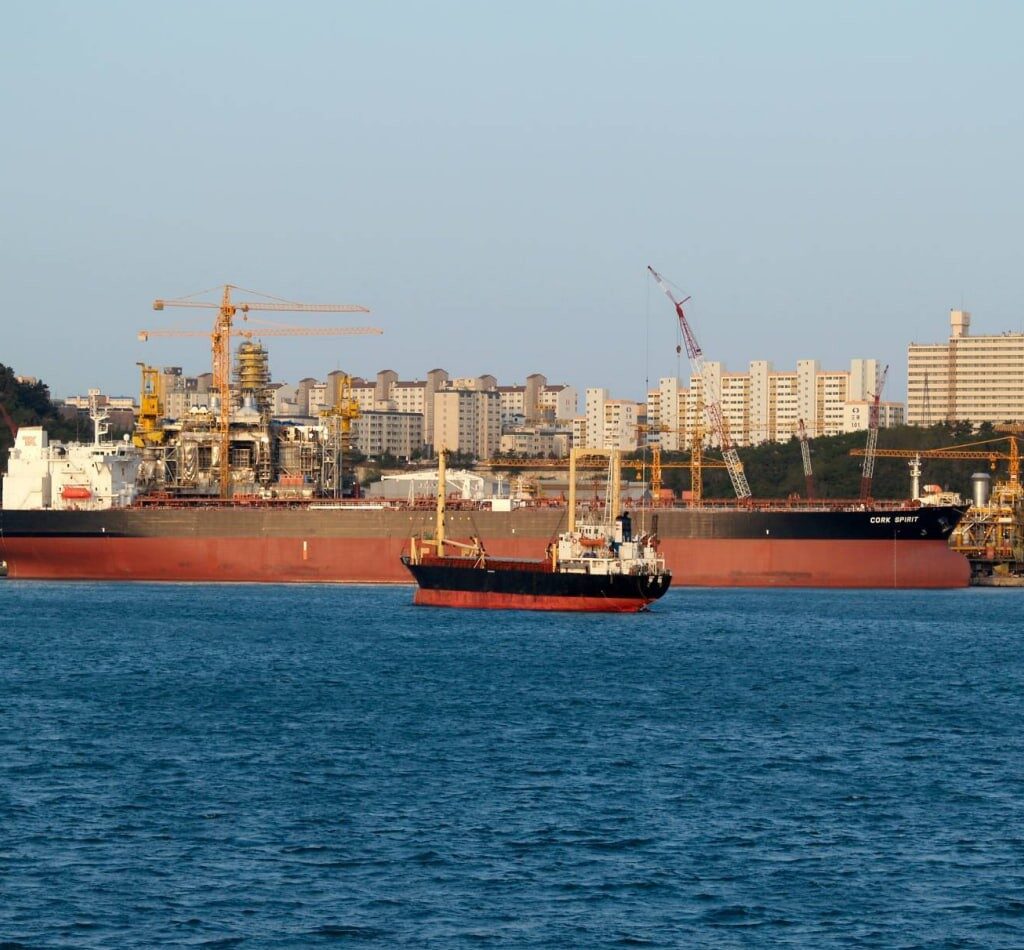
However, the most interesting story can be considered the one with another “happy owner” of “certificates” from “Seaguard P&I”, namely with the tanker IMO number 9312872, which currently has the names “XD Leo” or “Provider” in maritime search engines, and supposedly a Russian flag, despite the fact that the vessel, previously supervised by “Det Norske Veritas”, is currently absent from the classification lists of the “Russian Maritime Register of Shipping” or the “Russian Classification Society”, without which it would be unrealistic to obtain the Russian flag in a “legal way”.
Thus, it is obvious that the scam with obviously fake “certificates” from the non-existent “insurance” structure “Seaguard P&I” is not the initiative of an individual shipowner and cannot be explained by purely commercial, albeit illegal, interests.
Most likely, at the current stage, tankers of the shadow fleet are becoming toxic for the absolute majority of marine insurance P&I clubs, among other things due to the risks of falling under secondary sanctions for receiving insurance funds or making insurance payments. At the same time, if Russia has its own or partner classification structures that can still provide the shadow fleet with technical documents without risking financial liability, then there are simply no P&I clubs controlled by Russia.
And the transfer of such insurance to Russian “land” insurance companies in the current conditions, when the risks of detention or all kinds of incidents for the shadow fleet are increasing, creates significant risks for these structures, in particular, significant financial claims from non-residents of Russia. This applies to both commercial losses of cargo recipients and claims related to sea pollution, death or injuries to crew members, etc.
Thus, it is likely that the top managers of the shadow fleet had the “brilliant idea” to create, with the above-described assistance of Syrian maritime figures and Kremlin lobbyists in Germany, a completely fake “company”, the sole function of which would be to imitate “ship insurance”.
It is obvious that the fake “insurance” of a tanker makes all subsequent documents issued for the vessel, both technical and commercial, at least dubious. It is also obvious that the imitation of the “insurance” of a tanker grossly violates the requirements of the MARPOL convention, in terms of the lack of coverage of the risks of marine pollution by oil, and the MLC convention, in the format of failure to provide insurance for accidents and other challenges for crew members.
But the most interesting thing is how the marine insurance industry will react to such “know-how”, and we are not only talking about the existing Nigerian marine insurance structure “Seaguard International Services”, from which the scammers described above “borrowed” the name, but about all participants in this even not “gray” business. After all, if it turns out that ships can relatively painlessly use completely fake certificates for the cost of creating a website and two phone numbers, extremely difficult times will begin in this industry. But in reality, events will obviously develop differently.