For the past three years, experts have been actively investigating the activities of another tool of the Kremlin’s external influence, namely the “International Russophile Movement” (“IRM”), the “founding congress” of which was held on March 14, 2023 in Moscow.
At that time, the main ideologists of this project in Russia were Konstantin Malofeev and Alexander Dugin, the structure was formed with the active assistance of the Russian Foreign Ministry and foreign intelligence services, but the key speaking head and formal “initiator” of the movement was chosen by the Russians as the Bulgarian marginal politician Nikolai Malinov.
It is noteworthy that this pro-Russian figure had a career in the “Bulgarian Socialist Party” until 2014, declared his studies at the Faculty of History of Kyiv State University and his alleged “PhD thesis” at the Kyiv Institute of International Relations, which, by the way, has no traces in Kyiv educational institutions.
Later, Malinov tried himself in marginal pro-Russian structures and since 2019 he has been in Bulgaria in a case of espionage in favor of Russia, and as the prosecution claims, he “entered the service of a foreign organization”, that is, the Russian special services, interacting with Leonid Reshetnikov and the same Malofeyev.
Then this figure was arranged a meeting with the Kremlin dictator to receive an award, while the defendant Malinov used bribery of a judge to leave Bulgaria, for which he was subject to U.S. sanctions in 2023.
And in September 2022, Malinov was arranged an “interview in the international department of the Russian presidential administration” with the assistance of the old Russian intelligence functionary Georgiy Muradov. At that time, the Kremlin clerks probably resolved the “personnel issue” for future “Russophiles”.
The very name of the movement was clearly borrowed by Malofeev and Kremlin functionaries from the Bulgarian structures associated with Malinov, “Russophiles for the Revival of the Fatherland” and the like.
Malinov’s permanent accomplice in the Bulgarian “Russophiles” was Asen Asenov, who owns the company “Primedia”, which had the rights to show Russian TV channels in Bulgaria, and broadcasts Russian narratives on its own TV channel “TV7”.
In March 2024, Asenov visited occupied Crimea, where he was involved by Russian special services in propaganda events together with the local “head of the regional Bulgarian national and cultural autonomy” Ivan Abazher.
And in July 2024, Bulgarian security forces briefly detained and interrogated the head of the local “Russophile” unit in Plovdiv, Zlatomir Devlensky, who “part-time” was not only a functionary of the local cell of the “Bulgarian Socialist Party”, but also a graduate student at Astrakhan State University.
This caused hysterical statements by the aforementioned Nikolai Malinov that Devlensky was supposedly “politically persecuted” precisely because of his visit to occupied Crimea, this story was broadcast by both the Russian-controlled “Crimean media” and the “Tsargrad” channel of the aforementioned Nazi oligarch Malofeev. However, the “Russophiles” continued to be used by the Kremlin in the “Crimean direction.”
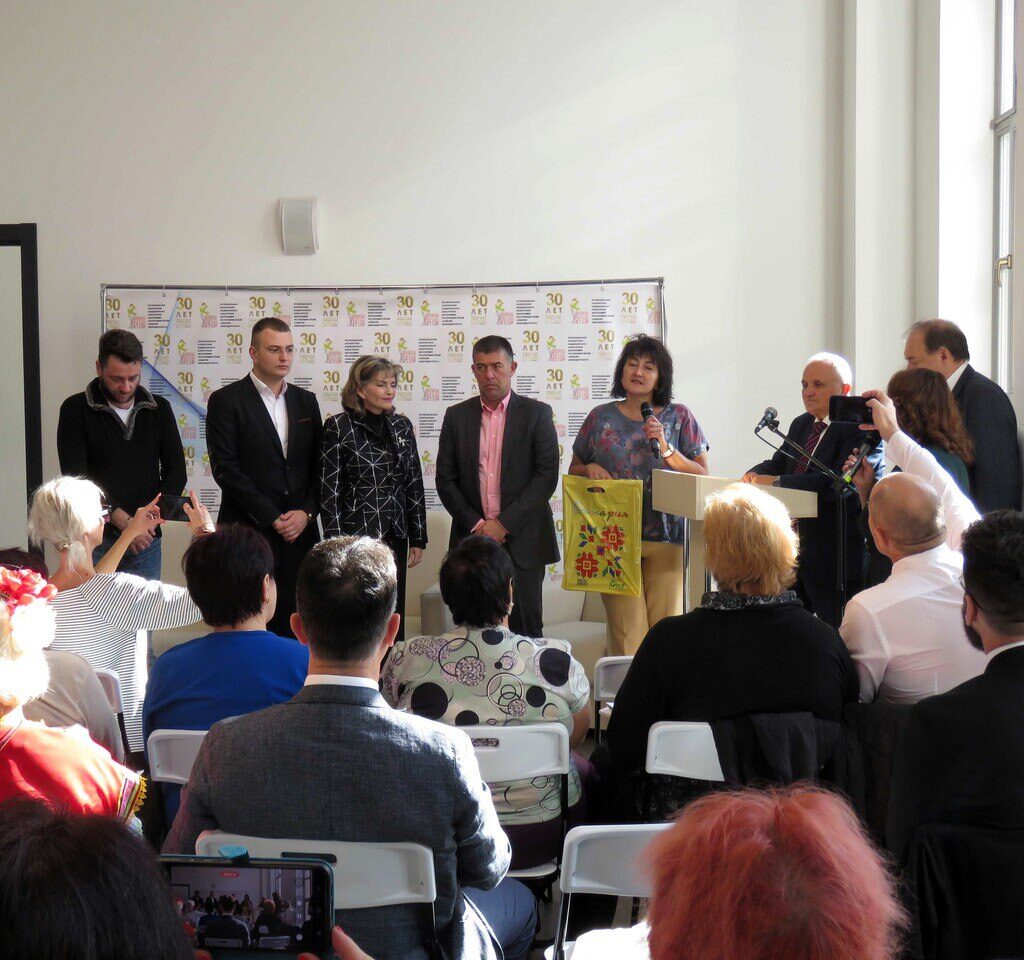
In November 2024, functionaries of the “Russophiles” and the so-called “Strategic Institute of National Policy and Idea”, former Bulgarian parliamentarian Vanya Dobreva and Hristo Monov, an agent of the then socialist Bulgarian special services with the pseudonym “Gogov”, arrived in Crimea for the “international festival” “Bulgarian Meetings”, with the main “talking head” in the form of the aforementioned Ivan Abazher.
At this event, through Abazher, Kremlin functionaries announced the creation of a “federal cultural autonomy of Bulgarians” as another “Balkan toy” of the Russian special services. By the way, the occupiers never created this “interregional structure”.
In addition to the above-mentioned “Russophiles”, the head of the “Bulgaria-Russia” forum and the head of the Bulgarian branch of the Russian intelligence structure “Friends of Crimea” Svetlana Sharenkova, ex-deputy and pro-Russian propagandist Strahil Angelov, and Moldovan journalist of Bulgarian origin Evelina Shvydchenko were also brought to the occupied peninsula.
In parallel, in 2023-2024, the sponsors of the “IRM” systematically involved a number of marginal European politicians, who were clearly connected to Russian special services for a long time.
This list includes former German parliamentarian from “Alternative for Germany” and head of the “International Council of Russian Germans” Waldemar Herdt, former Prime Minister of Slovakia Jan Čarnogurský, Romanian head of the “Union of Subcarpathian Ruthenians” Mikhail Lauruk, pro-Russian figures Eliseo Bertolasi from Italy, Patrick Poppel from Austria, Nuño Rodríguez from Spain, Tobias Pfennig from Germany, and Fabrice Sorlin from France.
The Kremlin organized the formation of the “IRM” through the state “Russkiy Mir Foundation” (“RMF”), which since 2023 has been placed under the control of the Russian Foreign Ministry, with the subsequent replacement of the previous “supervisor” of the fund Dmitry Kozak with Kremlin advisor Vladimir Tolstoy, with his subsequent replacement with Elena Yampolskaya.
Later, the functionaries of “RMF”, Vladimir Kochin and Natalia Zaitseva, who were removed in 2024 at the initiative of the Russian Foreign Ministry, found new feeders precisely in the “movement” apparatus. At the same time, the Kremlin also involved the “Russian Peace Fund”, the “Soviet Peace Fund”, as well as the “Pravfond”, i.e. the “Foundation for the Support and Protection of the Rights of Compatriots Living Abroad”, in the formation and political support of the “movement”.
At the same time, the “Pravfond”, formally controlled by the Russian Foreign Ministry, is closely connected with Russian foreign intelligence, and Danish journalists have proven that “veterans” of Russian intelligence such as Vladimir Pozdorovkin work as representatives of the “Pravfond”.
In 2025, after the second congress of the “IRM”, this structure signed a cooperation agreement with the “Pravfond”, but by that time a “scandal in a non-noble family” was already brewing for the “Russophiles”.
Most likely, it was caused by the aforementioned “change of milestones” by the Kremlin curators in general, and in the Russian Foreign Ministry and the “RMF” in particular; it clearly began with the second congress of the “International Russophile Movement”, held in February 2024.
That event turned into an actual PR show for two actors, Malofeev and Dugin, and as extras, in addition to the aforementioned characters, there were seen the pro-Russian marginal Polish politician Mariusz Swider, the former nuncio to the United States Carlo Maria Viganò, stripped of his dignity by the Vatican, the semi-operetta “princess of the Sicilian house” Vittoria Alliata di Villafranca, Russian propagandists of American origin Jeff Monson and Dimitri Simes, and the like.
It was then that Malinov announced the “goal of European Russophiles”: to collect a million signatures from residents of the European Union countries in support of the lifting of sanctions, and the next congress was promised to be held in the spring of 2025 in Crimea, together with the “Livadia Forum”, which the Bulgarian “Russophile” himself had visited repeatedly until 2020.
But no “million signatures” were collected, and instead of lifting sanctions against Russia, the “International Russophile Movement” itself was subject to EU sanctions on December 15, 2025.
As indicated in the EU Council document 2025/2568 on this issue, the “movement” is used by the Russian government as a cover for manipulating public opinion in other countries, promoting anti-Western sentiments, and repeating other Kremlin statements.
But even before the relevant decision of the European Union regarding the “movement”, characteristic processes began, and their marker was the holding of the “IRM conference” in Johannesburg by the Russians in November 2024, where neither Malinov, nor Dugin, nor Malofeev were seen.
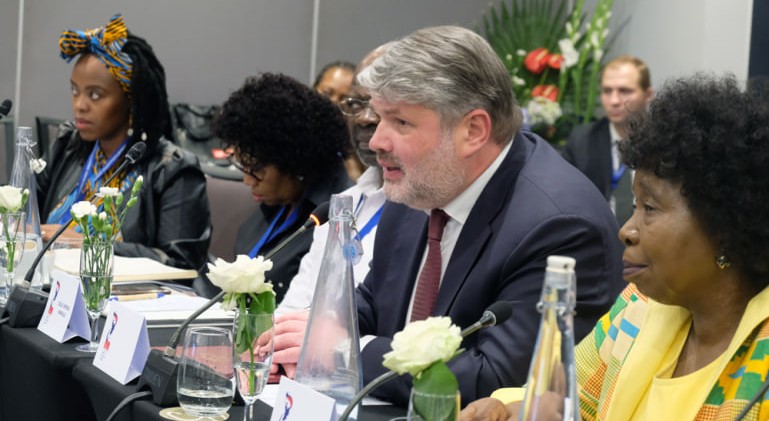
At the same time, the participants of the “conference” underwent a corresponding “casting” directly from the Russian Foreign Ministry and intelligence, and the formal head of the event was the declared “deputy secretary general of the movement” Senegalese Souleyman Ndiaye, although in fact the “conference” was led by the Russian envoy Roman Abramov. And in general, the emphasis of the “conference” was clearly directed not at European marginals, but at the African audience.
Later, in April 2025, Malinov promised to hold the “third congress of the IRM” in Crimea within the framework of the “Livadia Forum”, and in August he “postponed” the holding of this congress to the spring of 2026, again announcing it in Yalta.
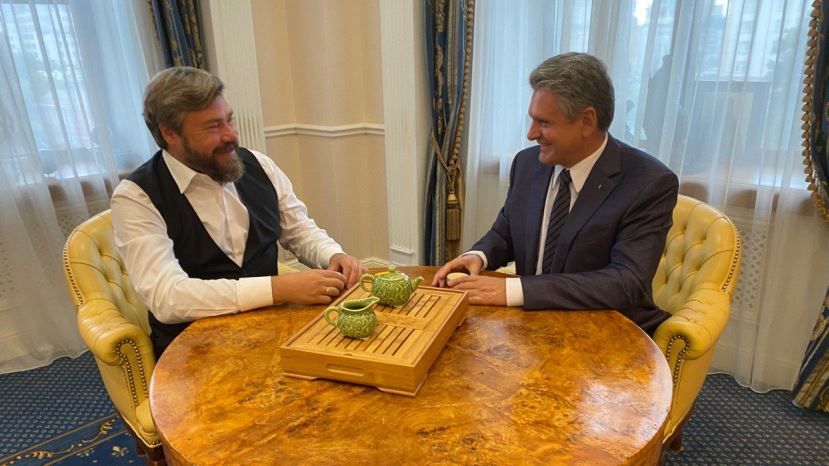
This promise was announced after the public meeting of Malinov and the Crimean gauleiter Sergei Aksyonov on August 25 by both of its participants, but from then on everything went in the “best traditions” of Soviet personnel struggle.
And therefore, the words of the Bulgarian “Russophile” Malinov that “within the framework of the upcoming congress it is planned to adopt the movement’s program, as well as resolve a number of organizational, technical and other issues” should be understood precisely in the format of the “hardware confrontation”, the apogee of which came in December of last year.
Then, on December 12, the occupiers did indeed hold a “winter session of the Livadia Club” in Yalta, but no events from the “Russophiles” were organized there.
And the very next day, the “editorial staff of the portal” of the “RMF” announced that on the same December 12, the same “third congress of the IRM” took place, but in Moscow, under the actual chairmanship of the current chairman of the board of the “RMF” and Deputy Minister of Foreign Affairs of Russia Alexander Alimov.
The message particularly emphasized that “the congress is being held in accordance with the decision of the executive bureau of the IRM” and that “the chairman of the executive bureau of the IRM” was the aforementioned Waldemar Herdt, and the “general secretary of the movement” was the Cypriot activist Mikis Filaniotis; the message did not say anything about Malinov.
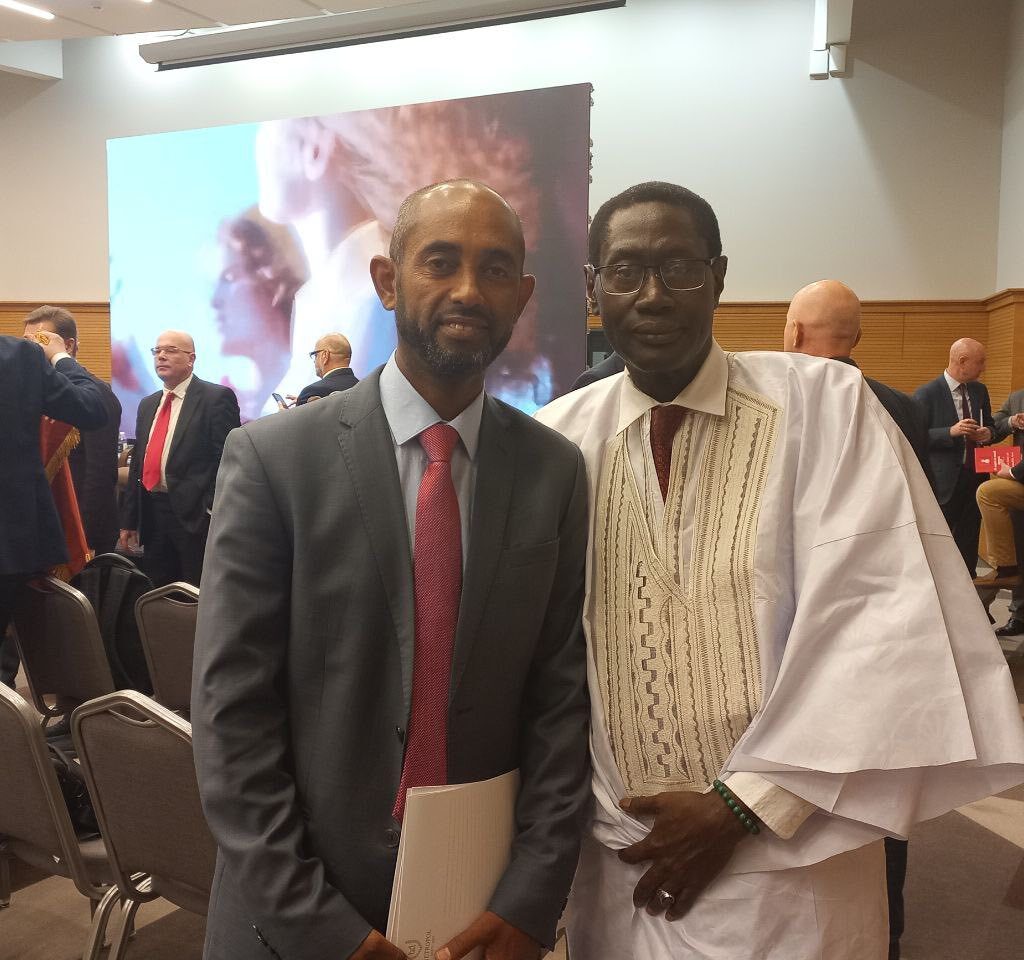
On December 12, Malinov himself published only an article about Pushkin’s descendants in Bulgaria and the “third congress” and did not comment publicly on it either immediately or in the following. At the same time, information about the “participation in the third congress” of foreigners could be found on the pages of Russian embassies in Africa, in particular in Ethiopia, Morocco, Uganda and the same South Africa, which simultaneously posted reports on the Moscow event.
The photos published by the “delegations”, by the way, showed both the “private” nature of the event and the predominant presence of people of non-European appearance at it.
At the same time, this message did not contain any mention of Malinov. However, later, on December 16, the “response to Brussels” to the sanctions against the “movement” described above was signed by Malinov and as the “general secretary of the movement”.
Later, this “dual power” in the profile Russian propaganda is preserved; The website of the “IRM” itself, which, by the way, does not mention the “third congress” at all, in January 2026 named Filaniotis as the “secretary general of the movement”, however, quoting “TASS”, but in March this same website distributed greetings to Muslims on the occasion of Uraza Bayram from the “secretary general of the movement” Malinov.
In parallel, on February 25, an anonymous statement was noticed on the same website stating that “recently, information has been spreading on social networks and unverified sources that the IRM is supposedly ceasing its activities in Europe,” that “this information is completely false, does not correspond to reality, and is of the nature of deliberate disinformation,” and that “the activities of our organization will continue, despite all obstacles.”
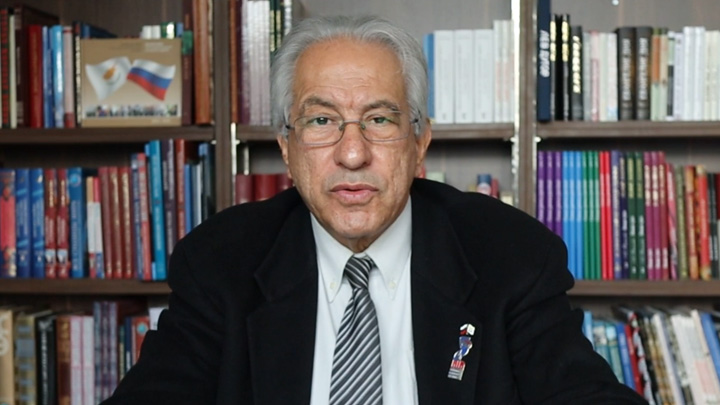
Certain accents of the described undercover struggle can be understood from the “career” of the aforementioned Filaniotis, who was appointed in 2024 to the role of “head of the IRM representation” with the active assistance of the current ambassador to Cyprus Murat Zyazikov, a long-time KGB and FSB functionary, and “part-time” president of Ingushetia until 2008.
It is noteworthy that Zyazikov, as a “Kremlin heavyweight” and “godfather” of the Odessa Engineering and Civil Engineering Institute graduate Filaniotis, holds the same position in Nicosia as the aforementioned KGB diplomat Muradov, the “godfather” of the Kyiv University graduate Malinov.
It should be noted that Filaniotis knows Muradov well, he came to Crimea in 2019 and later, since 2022, he has repeatedly made propaganda visits to the mainland occupied territories of Ukraine near Mariupol.
And immediately after “being elected as the general secretary of the movement,” Filaniotis gave a “program interview” to “Komsomolskaya Pravda”, where he promised “representations of the “Russophiles” in almost all countries of the world” and “to resolve many more organizational, administrative and technical issues.”
Also, a month before the described “third congress”, an extremely noteworthy statement by Malinov took place, about the alleged detention “at about 5 a.m.” on November 19 in Albania by some law enforcement officers of the “representative of the IRM in this country” and at the same time the “head of the control commission of the IRM executive bureau” Alexander Djurbavija.
Malinov reported that allegedly “law enforcement officers seized Djurbavija’s electronic devices, and the interrogation itself lasted all day,” after which the detainee was allegedly “released without charges.”
This story is noteworthy at least in that the “paperwork” of the attendance of delegates at the “IRM congresses” and, accordingly, the “voting results” was entrusted by the “IRM” to Djurbavija, who had previously been often seen at “IRM” events together with Malinov, as his obvious confidant.
Thus, it would be quite difficult for the organizers of such a “putsch” to replace Malinov behind the scenes with another “general secretary” of the “Russophiles” without the participation or neutralization of this “Albanian clerk.”
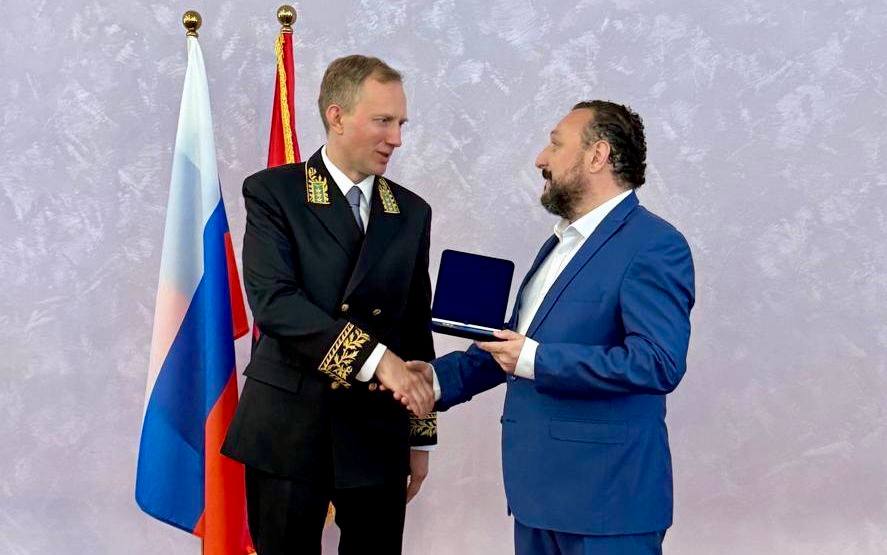
Before the aforementioned alleged detention of Djurbavija, this “businessman”, who calls himself a “professor of economics and international trade at Epoka University”, was systematically used by the Russians, including as a “co-founder of the Association of Friendship of the Peoples of Russia and Albania”, and in July 2025 he received an “honorary badge of the Ministry of Foreign Affairs” from the Russian ambassador to this country.
However, Djurbavija previously positioned himself not as a “Russophile”, but in the role of a “successful businessman”, the creator of the “first cable operator in Albania” and “one of the founders and managers” of the companies “Malësia Solar 1”, “Malësia Solar 2” and “Malësia Solar 3”, respectively. And it was in this role that in March 2021 this figure was officially and publicly appointed as the representative of the Belarusian Chamber of Commerce and Industry in Albania.
The three Albanian companies in question, by the way, have been announcing plans to build solar power plants in Albanian Malësia e Madhe since 2012, but since 2016 they have allegedly entered into a conflict with the local municipality over tax payments. In 2025, this story “suddenly” surfaced in the Albanian media, with accusations of corruption and “oppression of foreign investors” against the Albanian Prime Minister Edi Rama.
The mention of foreigners in these “anti-corruption stories” was not accidental, because in fact the three “Malësia Solar” companies were not founded by the Albanian Alexander Djurbavija, but by Bulgarian citizens Dimitar Botev, Edmond Sterkaj and Emmanuel Kouzmanov Anastassov. Botev heads the Bulgarian company “PV Consult Ltd”, which specializes in intermediary and consulting services for the construction of solar power plants.
Among the projects in which this company allegedly participated, its website lists dozens in various European countries, primarily in Germany and Bulgaria, and at the same time mentions four power plants built in Russia in 2018-2019, such as “Kabanskaya” in Buryatia; all four of these Russian plants were built by Austrian contractors.
And therefore it is not at all surprising that the aforementioned Kouzmanov Anastassov “suddenly” acquires real estate in the Austrian town of Traismauer, and the aforementioned Djurbavija is declared together with Malinov at the “consecration” of the Austrian branch of the “IRM”.
But more surprising, although only at first glance, is that none of the Russian diplomats and propagandists, except Malinov, publicly mentioned the “November repressions” against such a “valuable cadre” of Russians as Djurbavija.
These “repressions” described only by Malinov, about which Djurbavija himself was silent, were not reflected in the “decisions of the third congress of the IRM” and it is generally unclear whether the “chief controller of the IRM” acted at the Moscow “vote for the re-election of the Secretary General” on December 12.
But instead of the “IRM”, the 47-year-old Djurbavija began to appear among the Russians, precisely from the “repressive” November, in a new role: as a participant in another Kremlin project, namely the “international youth movement” “Congress of the Future” (“Kongress Budushchego”), for which his “official portrait” was even posted on a newly created resource with the maximum level of “rejuvenating” photoshop.
At the same time, the “Congress of the Future”, clearly aimed at a European audience, headed by Moscow lawyer Daniel Gauthier, is being developed by Russian intelligence without any curtseys towards the Russian Foreign Ministry and its structures, and with the support of the resources of “neutral” and at the same time wealthy structures – the “Association of Lawyers of Russia”, the Russian “Union of the Food Industry” and the “International Congress of Industrialists and Entrepreneurs”.
The documents and statements of this “Congress of the Future” resemble a stream of consciousness “for all good against all bad”, almost in the format of quasi-religious activity, but at the same time it is obvious that this structure will implement the Kremlin’s tasks in Europe “more accurately” than the “IRM”.
From the above, it clearly follows that a fierce struggle has begun in Moscow and is still ongoing for the position of the “chief Russophile”, which Malinov is clearly not going to give up, despite the fact that the current functionaries from “RMF” and from the Russian Foreign Ministry itself actually conducted a “special operation” to “remove him from office.”
At the same time, it can be assumed that the curators of the “movement” in the Kremlin and their executors from Russian intelligence and the Foreign Ministry are “at a crossroads”: it is obvious that the “Russophiles” have not provided the results desired by the Russians in Europe, if we do not include the massive “exposure” of the agents.
On the other hand, shifting the emphasis of the “Russophiles”‘ work to the “Global South” makes the same numerous European agents, to which the Russians simply have no alternative in specific countries, and on whose existence considerable funds have clearly been spent, a “suitcase without a handle.” Apparently, it is precisely to “increase the replacement” that the Russian special services are now urgently introducing “youth” projects, such as the aforementioned “Congress of the Future”.
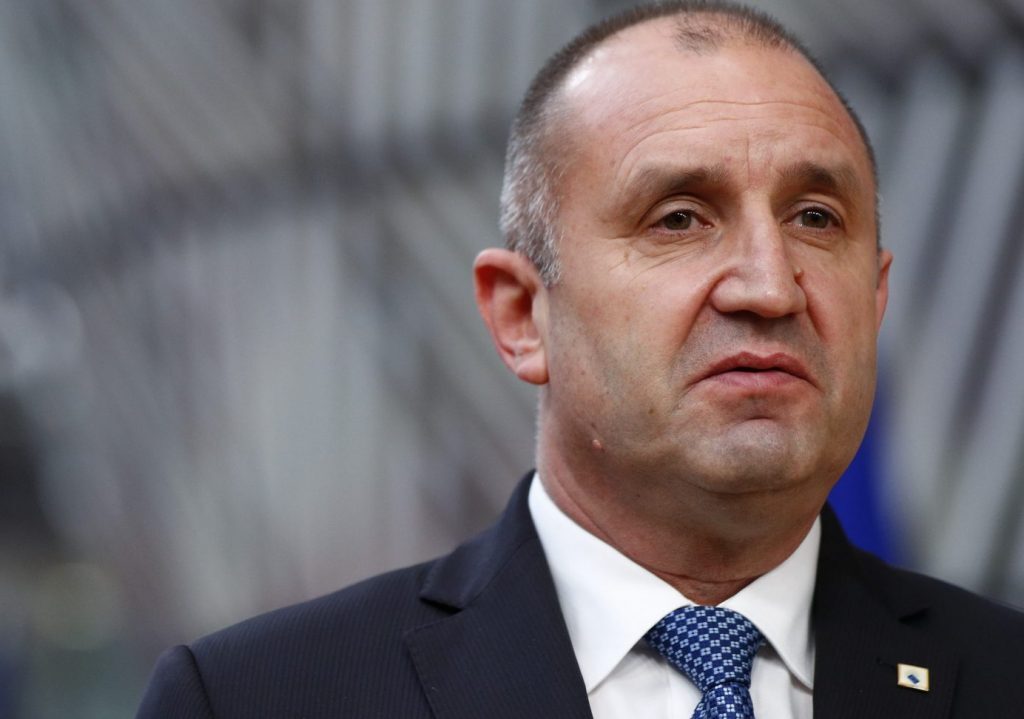
At the same time, the change in the Kremlin’s attitude towards Malinov personally may be related to a significant change in the political situation in Bulgaria after the April 19 elections, which saw the victory of the newly formed party of the pro-Russian ex-president of this country, Rumen Radev, with the entry into parliament of both the Bulgarian Socialists and the openly pro-Kremlin “Revival” (“Vazrazhdane”) party of Kostadin Kostadinov.
Russia actively interfered in these elections. Among other things, at the end of March, Bulgarian officials turned to the European External Action Service to coordinate the detection and analysis of foreign influence campaigns and asked the European Union to activate a rapid reaction mechanism. “given the increased risk of coordinated disinformation campaigns and foreign interference.”
The Bulgarian Foreign Ministry even created a temporary unit to coordinate such measures and brought in investigative journalist Christo Grozev as an advisor. However, the results of these elections, with an extremely low turnout, were quite negative for pro-European forces in Bulgaria.
Given the extremely likely formation of a government by these political forces, Bulgaria is becoming Russia’s new “Trojan horse” in the European Union and NATO, with characters loyal to the Kremlin in government offices. But, precisely in such favorable realities for the Russians, both the Bulgarian and European significance of such marginal figures in politics, such as the outspoken anti-Semite Malinov with a tragicomic delusion of grandeur, whose role in Bulgarian politics is negligible, is significantly reduced in the eyes of the Kremlin.
Of course, the information resources controlled by Malinov actively promoted the political forces of Radev and Kostadinov in March-April, which was a direct implementation of the Kremlin’s instructions.
But for the criminal influence on the election results, the Kremlin attracted not only “Russophiles”, but also the entire, much wider, spectrum of forces and means, and therefore it is unlikely that Malinov and his “Russophiles” will receive any lucrative positions from the new government in Sofia “as a thank you”.
The future will show how Rumen Radev, who has had many expert publications on the role of Russian military intelligence in his extremely extravagant career, will implement his policy towards the European Union and NATO. At the same time, the fate of the “Russophiles” as licensed agents of the Russian special services will still require further expert analysis.