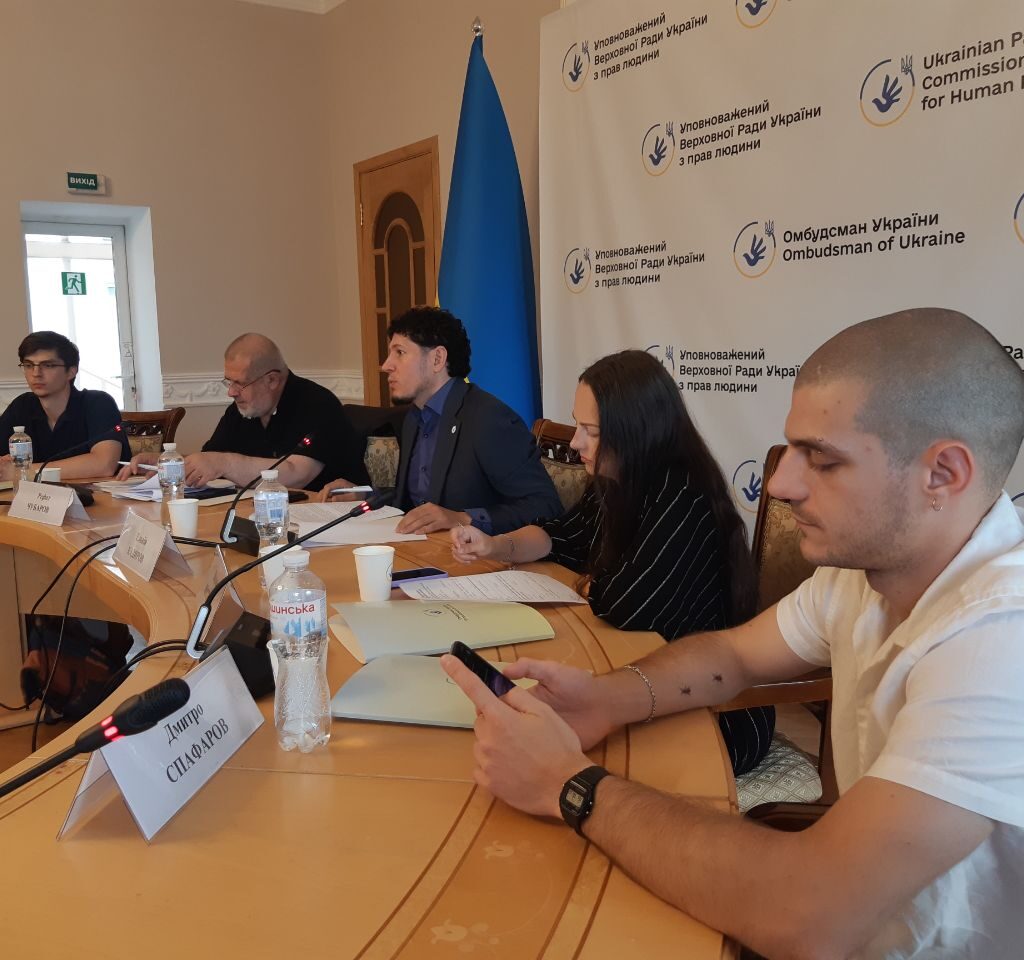
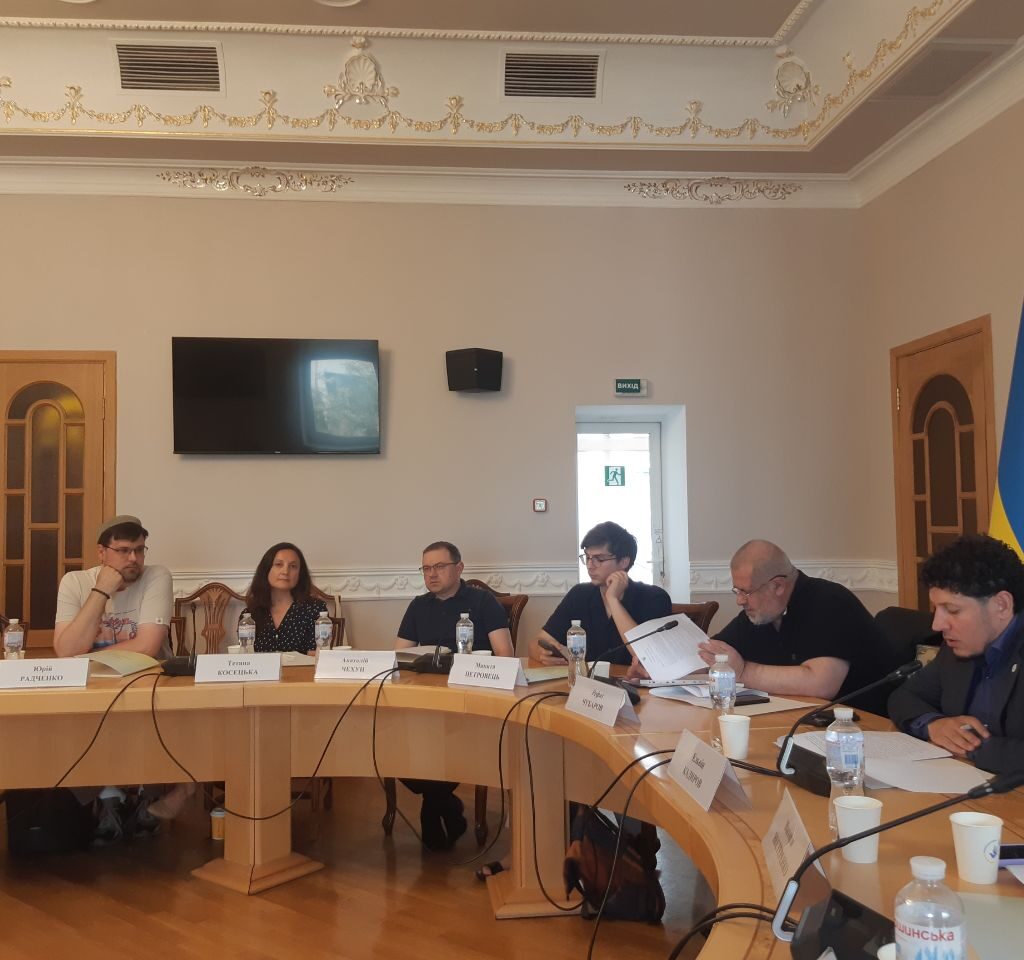
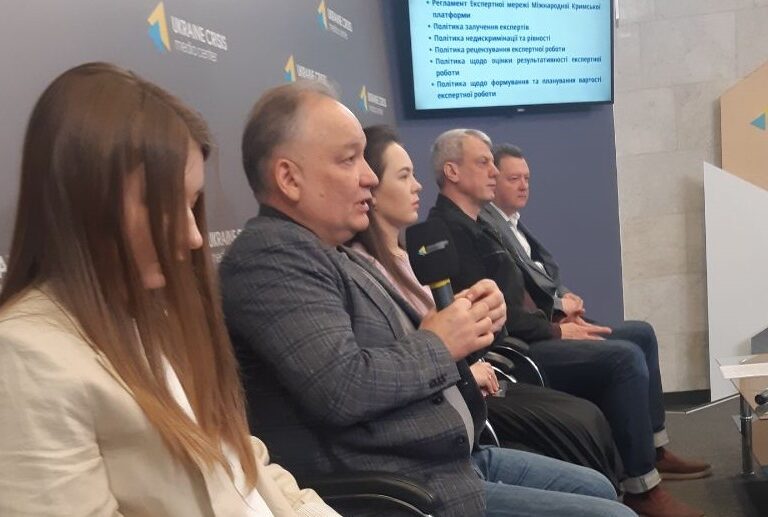
On August 11, our Association’s expert Borys Babin took part in a meeting of the Expert Council under the Representative of the Ombudsman for the Rights of Residents of the AR of Crimea and the City of Sevastopol, which discussed issues of further implementation of Ukrainian legislation on indigenous peoples and aspects of protecting hostages of the aggressor.
The meeting, chaired by Elvin Kadyrov, the Representative of the Ukrainian Parliament Commissioner for Human Rights, was attended by the Head of the Mejlis of the Crimean Tatar People, representatives of public institutions of Karaites and Krymchaks, human rights organizations, the academic community, and the Ombudsman’s staff.
The participants discussed the challenges of discrimination against the indigenous peoples of Ukraine in the occupied territories and aspects of preserving their cultural heritage.
Refat Chubarov shared the vision of the current leadership of the Mejlis regarding the further introduction of this institution into the administrative, budgetary and financial relations of Ukraine through the formation of its separate “executive body” and granting it the status of a legal entity, for which it is proposed to make amendments to the laws of Ukraine.
In his speech, Professor Babin emphasized that without the start of effective activities of the Crimean Tatar people legalized in the Ukrainian legal framework of the Mejlis, the development of a dozen by-laws on the implementation of the norms of the profile law on indigenous peoples is unrealistic.
The expert of the ARC once again emphasized that the choice of the model of further activities of the Mejlis is the exclusive prerogative and responsibility of its leadership.
At the same time, the expert stated, the fundamental changes in the legislation and the actual revision of the very concept of the representative body of the indigenous people are now being proposed, with attempts to shift financial and property issues and responsibility to “executive structures” that were not previously provided for by either the laws or the statutory acts of the Mejlis.
Therefore, the corresponding hypothetical changes to the laws on the status of representative bodies of indigenous peoples, the ARC expert added, should at least be discussed taking into account the public and expert position of the Karaites and Krymchaks structures, which have not yet legalized their own representative bodies, as well as taking into account generally accepted anti-corruption standards.
In addition, the meeting discussed a number of topical issues related to the documentation of persons held in places of deprivation of liberty by the aggressor, and the prospects for introducing the functions of a protecting power state, in particular in the appropriate sectoral approach.