The disaster with two gas tankers, during a covert transshipment of cargo from side to side off the coast of occupied Crimea in early 2019, for the first time clearly showed the consequences of Russia’s irresponsible actions in the use of shadow gas schemes at sea.
Our Association’s experts offer an analytical study of Russia’s strategy on the front of hybrid war with the creation of a new shadow gas fleet.
It has long been obvious to analysts that Russia relies entirely on an oligarchic economy, grown mainly on the oil and gas monopoly, which includes not just large-scale, but even global illegal schemes.
The current situation is not a secret for many and leaves no doubt that the Russian authorities will continue to ruthlessly use the available natural resources and the instruments of influence built on them.
However, in Europe, these threats are seen quite clearly and are resisted. It is already problematic for Russia to exert significant pressure on China and India. Ignoring the interests of the United States and advancing on their side in Latin America is very acute and not always physically possible.
Therefore, the Kremlin has taken up with all its might some countries of the Global South. With the direct plunder of the natural resources of African states, everything is supposedly clear, but politically it is difficult and one wants more.
A new wave of such “friendship” can be traced with the Republic of South Africa (South Africa), where at present there is a real prospect of a significant energy deficit caused by the reduction in the supply of Mozambican gas through the 865-kilometer ROMPCO (Republic of Mozambique Pipeline Investments Company) main gas pipeline, which connects the fields of Mozambique with the industrial heart of South Africa in the city of Secunda.
For more than 20 years, this pipeline has pumped gas from Mozambique’s Pande and Temane fields to South Africa, supplying about 90% of its industrial sector’s needs through “Sasol”. However, Mozambique’s fields are rapidly depleting, and according to forecasts, supplies from them will cease completely in 2027. For South Africa, this means an energy catastrophe.
In this context, the “white and fluffy” Russian state-owned companies “Rosneft” and “Gazprom” are working on a mechanism for “good-neighborly” participation in projects in South Africa and Mozambique to build infrastructure for receiving and transporting Russian LNG gas, which they plan to transport using a developed scheme for using the “shadow fleet”.
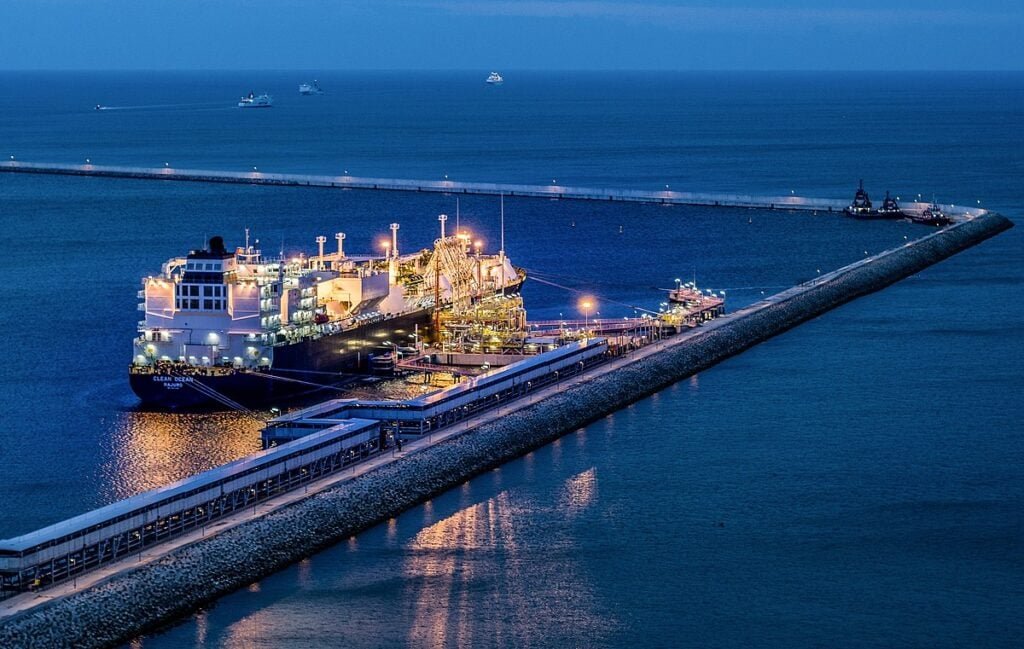
LNG is liquefied natural gas cooled to a liquid state at atmospheric pressure and extremely low temperatures, which requires cryogenic insulated tanks for transportation by sea-going gas tankers. It is not transported in liquid form by pipelines.
At the port of Matola, which operates in the suburbs of the Mozambican capital Maputo, it is planned to permanently moor a floating storage and regasification unit (FSRU), to which gas carriers will deliver LNG from various international sources for further conversion back into regular gas (regasification) and only then feed it into the ROMPCO system.
In addition, the terminal in Matola is being built not only for possible transit to South Africa, but also to provide fuel for the giant new “Beluluane” combined cycle power plant with a capacity of 2,000 megawatts. Part of the regasified gas will be burned on site to generate electricity, which will also be exported to the scarce power grid of South Africa, and, as a “nice bonus”, to Eswatini and Botswana.
But, in order to reliably join the scheme, Russia needs not only political, but also forceful control, and this issue will be resolved by the fighters of the “private” military company of Russian “African Corps” under the pretext of “military-technical cooperation and counterterrorism” in Mozambique, with the provision of physical protection services for the developed infrastructure project.
Recent experience in 2019 shows that about 200 “Wagner” fighters have already assisted the Mozambican government in the fight against Islamist militants of Ansar al-Sunna in the northern province of Cabo Delgado – precisely where the largest gas fields and planned terminals of the “TotalEnergies” and “ExxonMobil” projects are concentrated.
Actually, the “African Corps” was formed to replace “Wagner” and is “private” only in the propaganda space, in fact the “corps” is a special purpose military structure subordinate to the Russian Ministry of Defense, is provided by it and operates under the supervision of Deputy Minister Yunus-Bek Yevkurov and Russian military intelligence.
The research organization “Robert Lansing Institute” in its own report investigated and showed a clear connection between the deployment of the “African Corps” and the subsequent involvement of the energy infrastructure of Russia.
The strategy of deploying the “African Corps” in Mali, Niger, the Central African Republic and Burkina Faso demonstrates the same template scheme, which begins with military assistance in the fight against “successfully found” alleged “terrorists”, for some reason with further forceful control over resource-bearing infrastructure facilities.
By the way, in the previous conflict in Cabo Delgado, the Russians were ultimately defeated and gave way to companies from South Africa and the government troops of Rwanda.
However, it is impossible to simply abandon the main seaport of Maputo in Mozambique, located on the shores of the Indian Ocean, with infrastructure for transshipment of gas for Russia.
Therefore, the task of ensuring point-by-point force control of “gray” port nodes and gas transshipment infrastructure in the Mozambique Channel area makes it necessary to foresee the sending of “African Corps” fighters to Mozambique.
By a “strange coincidence”, supposedly “outsiders” and “unaffiliated” experts with Moscow have significantly intensified the promotion of the idea that the use of Mozambican ports allows South Africa to quickly diversify logistics and reduce the load on its own ports, such as Durban or Richards Bay.
Although at present the South African government is not at all against investments in the development of infrastructure that will allow importing gas, in particular through its own port of Richards Bay, where the “Zululand Energy Terminal” is located, Russia is forced to act more carefully here. The political system of South Africa is a democracy with a complex coalition system. The independence of the judiciary, a powerful private sector and the opposition, for example, the “Democratic Alliance”, make direct protectorate rule from the Kremlin impossible.
Although participation in LNG projects in South Africa is attractive for Russian oligarchs, as a supplier of fuel and pipeline equipment, as an investor and contractor for the construction and operation of LNG terminals, along the way, “investments” of Russia in gas thermal power plants and other infrastructure facilities are possible, which fully meets the criteria of the Kremlin’s expansionist policy towards African countries.
The “Zululand Energy Terminal” project is currently progressing at an extremely slow pace due to the financial difficulties of the South African government, which allows Russia to exert influence with limited resources, gradually capturing the market.
Russia’s efforts to participate in the development of LNG infrastructure in Africa are not so much a “dark” economy, but a clear solution to the political task of forming an alternative to the Asian and European markets. The Kremlin seeks, by diversifying world gas flows, to obtain stable sources of foreign exchange earnings for the further conduct of the war against Ukraine and partially compensate for losses from the effects of international sanctions.
Also, the expansion of the Russia’s economic presence in South Africa and other African countries strengthens its political influence within the BRICS, keeping the energy sector of South Africa and Mozambique under Russian control. Therefore, “Gazprombank” and “Rosneft” are already offering financing and engineering in exchange for long-term control over logistics.
Where will the money earned go? There is no doubt, first of all, about the restoration of the Russian military potential and other “imperial greatness” of Russia. The author is also aware of the opinions of some analysts who see in Russia’s actions a hidden intention to create a long-term foothold in South Africa for future claims to the resources of Antarctica.
The permanent Antarctic Treaty of 1959 and the Protocol on Environmental Protection (Madrid Protocol) prohibit the extraction of minerals there. However, Russia’s position is well-known, which believes that the term of the protocol can be revised.
In addition, the Russian state-owned company “Rosgeologia” has been conducting seismic exploration in the Southern Ocean for many years (in particular, through bases in South Africa), mapping the hydrocarbon reserves of the Antarctic shelf, which, according to Russian estimates, amount to more than 70 billion tons of oil and gas.
It is important that Russia has not lost interest in African countries that help solve the current problem of ensuring the activities of the shadow fleet in the transportation of sanctioned oil. Our Association has repeatedly analyzed in detail various aspects of the use of Russia’s shadow oil fleet.
Now we will only note some important African aspects of the problem. In particular, Russia has created a kind of “Wild West” in the waters of the Gulf of Guinea, where, taking advantage of the obvious weakness of the maritime security institutions of African landlocked countries, it organizes the operation of old vessels over fifteen or even twenty years old under their flags. At the same time, a formal technical inspection is simulated for port control.
For this purpose, if necessary, a scheme of operational “flag hopping” is used by repeatedly and quickly changing the jurisdiction of registration of the vessel to complicate its tracking by international regulators. In this group of West African countries, a sharp surge in the registration of high-risk tankers has been recorded in such states as Benin, Comoros, Gambia, Guinea, Sierra Leone and Cameroon.
For example, according to a report by the Institute for Security Studies (ISS), Cameroon’s national maritime register grew by 126% in a year due to Russian tankers, resulting in the US, UK, and EU blacklisting over 110 Cameroonian-flagged vessels.
At the same time, on the other, eastern side of Africa, there is a scheme of outright fraud with the jurisdictions of countries that have no access to the sea at all, which is carried out, as a rule, through the ports of the same Mozambique, and which do not even have formal maritime authorities and official maritime registers.
There is a scheme here to cover up scrapped ships with documents and flags of countries that their state authorities do not even suspect. According to the “Robert Lansing Institute”, more than 50% of all cases of false flags detected in the world fall precisely on such African jurisdictions.
For example, we can mention the discovery by Germany of the shadowy tanker “Rangevil”, which used a completely false registration of Zimbabwe. The International Maritime Organization (IMO) recorded that all ships under the flag of the state of Eswatini were falsely registered. The situation is similar with Malawi.
This established practice of using African flags indicates that Russia’s shadow fleet is finally transforming from a temporary solution into a systematic network of sanctions evasion with a clearly thought-out algorithm of actions.
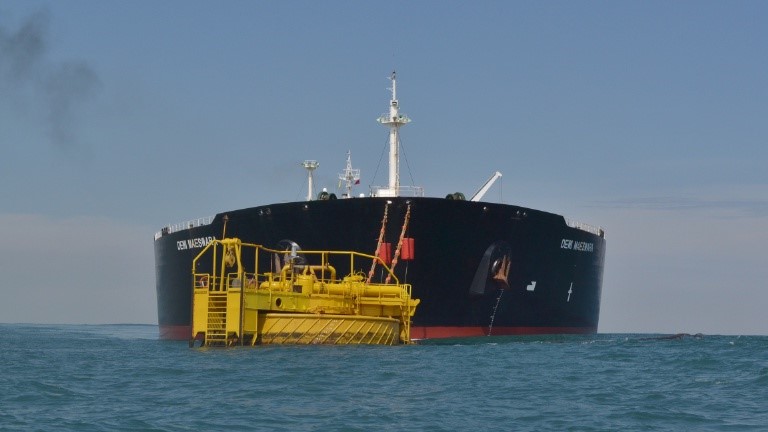
Also, tankers under African flags have switched to the systematic tactic of regularly transshipping oil in the open sea from ship to ship (STS), with their transponders (AIS) turned off, which creates enormous threats to the environment.
In November 2023, the IMO Assembly was forced to adopt resolution A.1192(33), which calls on member states to step up the fight against illegal operations of the shadow fleet and prevent fraudulent use of registers.
This did not stop Russia. On the contrary, it is already known about the further development of shadow schemes. The “Financial Times” recently reported that Russia is expanding its shadow fleet of LNG tankers in preparation for tougher EU sanctions that will come into effect in 2027.
According to the publication, Russia has purchased at least eight second-hand LNG tankers in the past six months alone. In addition, the fleet includes the first two gas carriers built at the Russian shipyard Zvezda. In total, Moscow has already increased its fleet to 25 gas carriers in order to maintain fuel exports after the ban on Russian LNG supplies to the EU.
As the “Financial Times” notes, the Russians have used the same scheme for exporting gas as they do for oil. To do this, ships are registered through Russian-linked companies in Dubai, Hong Kong and Singapore, use “convenient” flags, disable identification systems and transfer gas from ship to ship, hiding its origin.
We previously wrote about the “Floating Storage & Transshipment” scheme, which involves Arctic vessels delivering gas to floating storage facilities near Murmansk or Kamchatka. It is then pumped onto conventional “shadow” LNG tankers for long-term transportation to African or Asian ports.
Can Russia be stopped by the growing practical dangers of the chosen tactics? Let’s return to the disaster off the coast of occupied Crimea mentioned at the beginning, where the consequences of the use of shadow schemes by two gas carriers in 2019 are well known.
Gas tankers “Maestro” IMO number 8810700 and “Candy” IMO number 9005479 under the flag of Tanzania, clearly demonstrated the consequences of Russian shadow business. The vessel “Maestro” was under US sanctions for supplying petroleum products and gas to Syria, so it “officially” entered the port, therefore it began illegal raid transshipment of gas under the STS scheme directly at sea.
During the transfer, a gas leak occurred with a subsequent explosion and a large-scale fire that engulfed both vessels. Due to the high temperature and burning of gas under pressure, the fire lasted for more than a month. Of the 32 crew members, 14 people died, 6 went missing and were later declared dead, 12 were rescued. Both vessels suffered critical damage and burned to the ground.
Unlike oil, LNG exports have a much narrower range of liquefaction and regasification terminals. Tracking a gas carrier using satellite imagery and temperature trackers is also easier than tracking an oil tanker.
Previously, EU ports, such as Zeebrugge in Belgium, were massively used by Russia for commercial STS transshipments from Arctic ice-class tankers to conventional gas carriers. The imposed bans blocked this possibility.
In addition, a decision was approved on a complete embargo on the import of Russian LNG under long-term contracts from January 1, 2027. It was after this decision that Russia began to actively create a large-scale shadow gas fleet.
Although the Association’s experts have some doubts about the sufficient effectiveness of the sanctions, based on their own analysis, for example, the involvement of Greek gas carriers in serving the interests of Russia. As we wrote earlier, Russian exports of natural gas from the two main Russian projects “Novatek” “Yamal LNG” and “Arctic LNG-2” critically depend on specialized icebreaker-class gas carriers.
In addition to the Russian specialized fleet, a significant volume of transportation was taken over by the Greek company “Dynagas”, owned by billionaire Georgios Prokopio. It is he who controls a significant share of the world fleet of Arc7-class tankers and icebreakers, which directly export gas from Russian fields.
According to international analytical agencies and the “Financial Times”, Dynagas alone has made over 140 voyages on 11 specialized gas carriers, transporting over 10 million tons of Russian LNG to Europe and Asia.
In July 2026, during the coordination of the 21st package of EU sanctions, it was the Greek government, protecting the interests of its shipowners, primarily “Dynagas”, who opposed a complete ban on the transportation of Russian LNG by European operators to third countries. As a result, Athens won a limited exemption, which allowed it to continue servicing long-term contracts for the transportation of Russian gas.
Working with Russian energy resources provides Greek operators with freight surcharges at a level of 30-40% higher than market rates. According to the “Financial Times”, over the past three years, Greek tanker companies (including “Dynagas” and “Dynacom”, “Minerva Marine”, “Stealth Maritime”, “Polembros”) have earned more than $3.8 billion in revenue directly from servicing Russian exports.
It is worth adding that “Dynacom”, owned by the aforementioned owner, is also one of the largest carriers of Russian crude oil, and according to investigators, over the past three years it has earned at least $915 million in revenue from this activity, the highest figure among all Greek shipping companies.
In addition to direct freight, Greek shipowners massively sell their old tankers and gas carriers to shell offshore companies in the UAE, Oman, and Hong Kong, forming the shipping resource of the Russian shadow gas fleet.
These conclusions are based on cross-verification from several independent sources, namely, investigations by the “Financial Times” and “Argus Media” into the financial flows of Greek operators, analysis of freight rates and shipping registers; monitoring of tanker/gas carrier departures from Russian ports, decoding of AIS data, and recording of STS transshipments.
They are also substantiated by data on changes in owners, flags, ship operators, and the structure of shipping holdings.
Previously, investigating the relevant Crimean dimension of these scams, we wrote that Greek shipowners remain a key component of the shadow fleet’s activities. The family-hereditary and closed-in-ownership nature of their business, the wide range of influence in Greek politics and media, as well as in the global maritime infrastructure, the connections of these families in the USA and the UK, make these shipowners extremely resistant to sanctions processes.
At the same time, it is the family nature of this business that makes personal sanctions against individuals – beneficiaries a key factor that may lead to a review of their destructive activities in support of the Kremlin’s oil war machine.
Diplomatic sources and the minutes of the EU Council leave no doubt, in particular, reports on the positions of member states during the discussion of 14-21 packages of EU sanctions against Russia, where it was Greece that officially blocked the full embargo on the provision of services for the transportation of Russian LNG.
However, sanctions still show negative prospects for the Russians, so they have intensified the creation of their own shadow gas fleet. According to the investigations of the “Financial Times” and analysts of “Windward”, the basis of the Russian fleet purchased is made up of vessels built in 2005-2006, for example, gas tankers “Kosmos”, “Orion”, “Merkuriy”, “Luch”.
These vessels have a lot of critical violations of the safety standards of SIGTTO (Society of International Gas Tanker and Terminal Operators) and general maritime law in terms of operation.
In particular, SIGTTO standards require that transshipment from ship to ship be carried out in ideal weather conditions, with accredited pilots, certified cryogenic hoses and under the supervision of satellite systems.
It has been recorded that shadow Russian gas tankers conduct STS with disabled or faked AIS signals, often in dangerous waters, to hide the origin of the gas from the sanctioned Arktik LNG-2 plant. To work safely with LNG, a vessel must have insurance from leading P&I clubs, which guarantees a technical audit.
But the vessels of the shadow Russian gas fleet are insured by dubious Russian companies or do not have international coverage at all. Without this, it is simply impossible to verify the operability of automatic emergency shutdown systems (ESD), which is a critical requirement of SIGTTO.
The problem of the lack of certified insurance is compounded by the human factor and technical service. Due to sanctions, leading developers of cryogenic technologies (such as the French company GTT) terminated contracts with Russia, which forced Russian operators to service membrane systems themselves or through fictitious gasket companies in Dubai or Hong Kong, involving ship crews without proper international certification to work in extreme Arctic conditions.
Since the replacement of cryogenic equipment and the servicing of LNG vessels are critically dependent on foreign technology, sanctions against this sector are seen as much more effective than in the oil sector.
There is no universal global rule in international maritime and sanctions law on the mandatory declaration of the sale of any LNG tankers to third countries.
In an attempt to close this gap and stop the resale of vessels through pipeline companies in Dubai or Singapore, in July 2026 the European Union adopted another package of sanctions, which introduced mandatory declaration of the sale of any LNG tankers to third countries for EU resident companies.
In addition, a complete ban on the sale of such vessels to Russia is being considered. A legal framework has been created under which support vessels (bunkering vessels, tugboats) that assist the shadow fleet are subject to sanctions.
Also, at the EU, UK and US levels, restrictions and bans have been introduced on the sale of vessels, including oil and gas tankers, to Russian or its related entities in order to prevent the creation of a “shadow fleet”. Our Association is closely monitoring the functioning of Russia’s shadow gas fleet and is working on preparing relevant proposals.