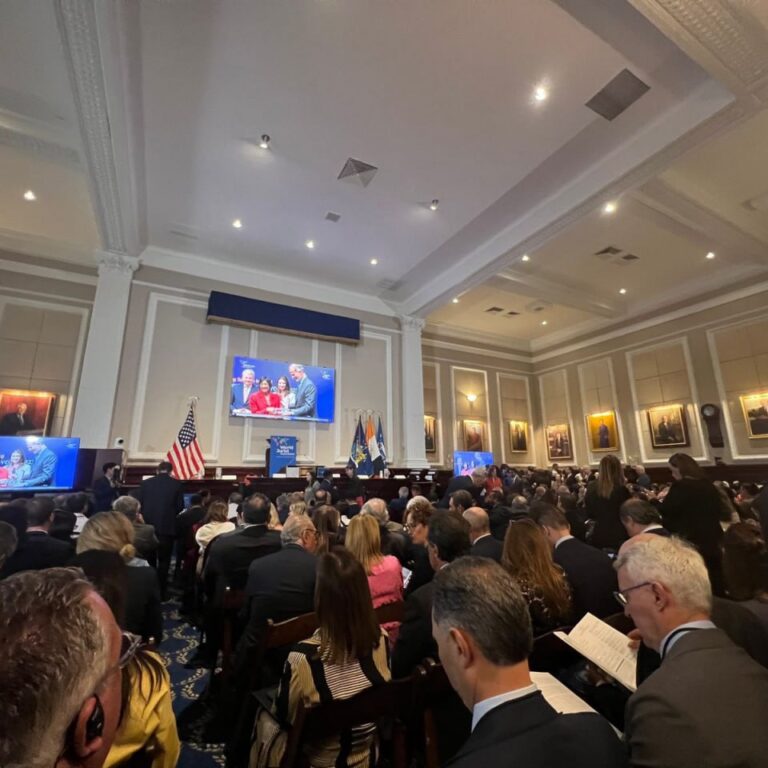
On January 15, in Kyiv’s “Ukrinform”, our Association’s expert Borys Babin took part in a roundtable discussion dedicated to the status of implementation of the law “On Indigenous Peoples of Ukraine” and the process of developing by-laws to it. The event was organized by the State Service of Ukraine for Ethnopolitics and Freedom of Conscience together with the Mejlis of the Crimean Tatar People and the Crimean Tatar Resource Center.
The discussion was attended by representatives of central executive bodies, people’s deputies of Ukraine from relevant Parliament committees, lawyers and scientists, experts in the field of indigenous peoples’ rights, representatives of indigenous peoples of Ukraine, civil society and relevant organizations. During the roundtable, the participants discussed the key challenges that remain on the path to the practical implementation of the law adopted in 2021, and emphasized the need to intensify interdepartmental cooperation to accelerate the development and adoption of by-laws.
In his speech, Borys Babin pointed out that “today, the key role in the international protection of the rights of the indigenous peoples of Ukraine is played by the representatives of the indigenous peoples themselves, who are few in number due to demographic factors and the temporary occupation of Crimea.” At the same time, the expert emphasized, “it is extremely important that not only information about the crimes of the aggressor state, but also specific steps taken by Ukraine to ensure the rights and status of indigenous peoples be heard on international platforms.”
In this regard, Professor Babin emphasized the intensification of provocations by Russian special services to simulate “support” for the occupation of Crimea by representatives of the Crimean Tatar people, in particular the diaspora in third countries.
The ARC expert paid special attention to the importance of implementing the Ukrainian law on indigenous peoples, in particular regarding the legalization of the Mejlis of the Crimean Tatar People, in the context of the observations of the UN Committee on the Elimination of Racial Discrimination, cases regarding representative structures of indigenous peoples in the European Court of Human Rights, and in terms of calculating and compensating for damage to the collective rights of the Crimean Tatars caused by Russian aggression.