We have previously repeatedly noted that Russian special services are attempting to use the occupied peninsula and its collaborators as a tool of influence in third countries, using literally any available guise.
This is further confirmed by the recent exploits of the “Crimean science fiction writers,” namely the trio of Sergei and Galina Malyshev and Evgenia Blinchik, who are the occupiers’ pseudonym for the semi-phantom publishing house “SeZheGa.”
These individuals have long and systematically promoted the ideas of a “Russian world” in Crimea, and since 2022, they have been actively “volunteering” in support of the aggressor army, largely by distributing their own “masterpieces of Russian science fiction,” which are at the level of local amateur artists, to the occupiers’ units.
Let’s note right away that the biography of electrical engineer Malyshev, who was only accepted into the “Union of Crimean Writers” during the occupation for his “services and achievements” to the Russian invaders, as well as the life stories of his two girlfriends, are of little interest.
More noteworthy here is the external vector of their activities, supervised by Russian intelligence, within which “Crimean science fiction writers” not only justify Russian war crimes by acting as frontline propagandists and publishing collections about the “special military operation.”
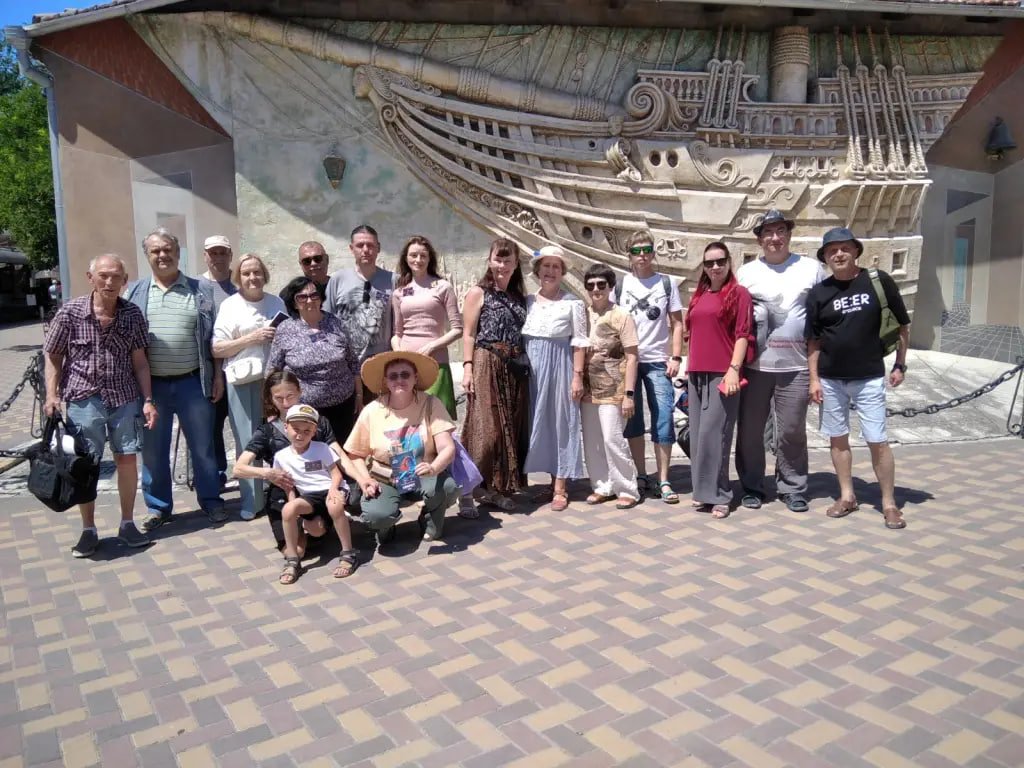
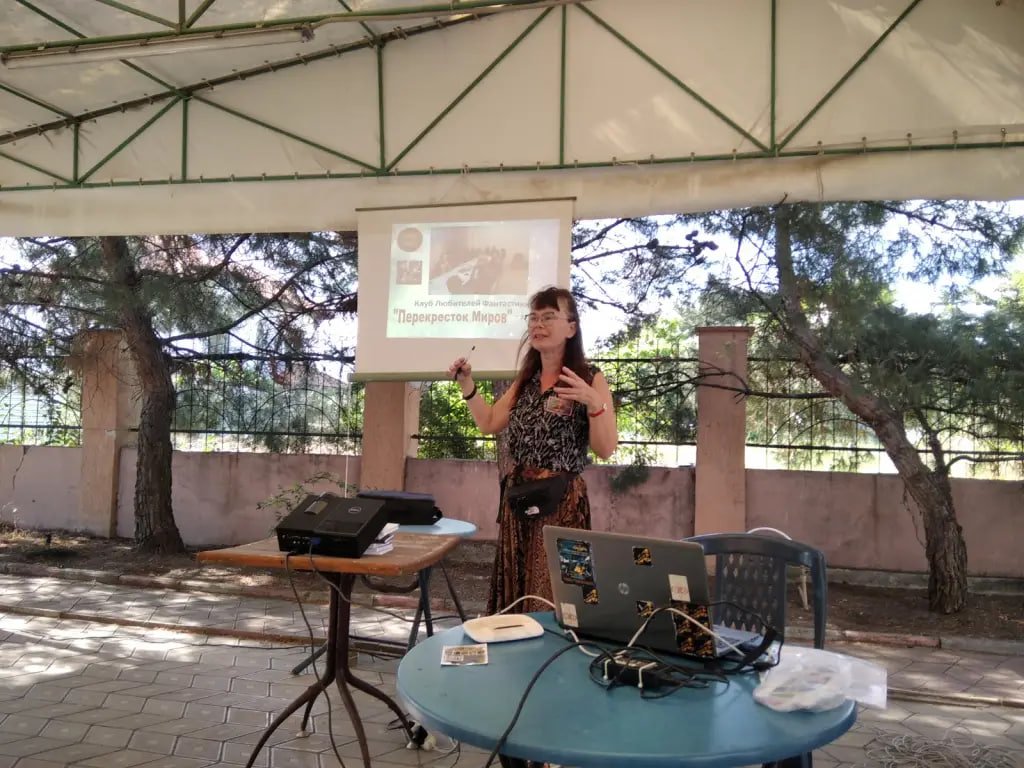
They also seek out similar hack writers from third countries, facilitate the publication of their “immortal works,” and facilitate visits by these “unrecognized geniuses” to the occupied peninsula. This also takes place under the guise of “festivals,” such as the annual “Fandango” or “CrimeaCon,” held in Feodosia in July.
Needless to say, these “writers who suddenly blossomed under the Crimean sun” not only continue to churn out book-like trash in their home countries, saturated with propaganda about the “great Russian world,” but also begin to carry out more specific criminal tasks for the Russian secret services.
A striking example of such “science fiction writers” is Yevgeny Kapba, a Belarusian citizen with Caucasian roots and a journalist for the regional newspaper “Dnyaprovets” in Rechitsa, who periodically appears in Crimea and Sukhumi, and clearly not on editorial assignments.
Yana Abdeeva, an employee of the children’s and youth library in Ust-Kamenogorsk, Kazakhstan, who “made her mark” on the occupied peninsula this summer, also followed a similar path. However, it’s unlikely these “science fiction writers” realize that in real life, the fate of those “travelers” from the Russian secret services differs somewhat from the book version: such stories don’t have a happy ending.