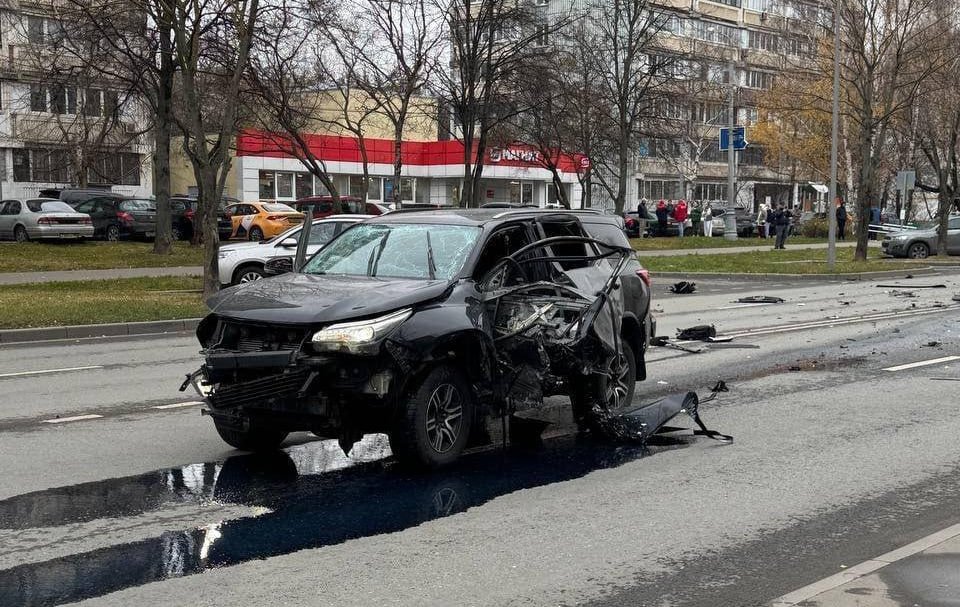
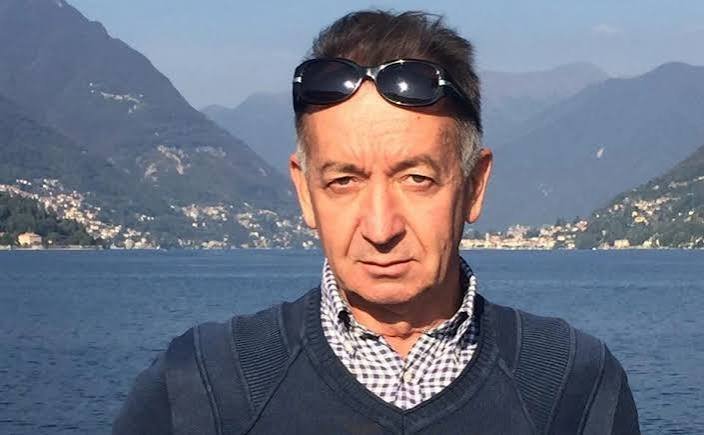
According to several media outlets, including the BBC, a car belonging to “political analyst” Sergey Zavorotny exploded in Moscow on November 13. Zavorotny, a former press secretary for the notorious Mykola Azarov, was hospitalized and remains in a coma.
It is noteworthy that, following the blast, Azarov himself commented on social media, stating that Zavorotny’s “point of view did not always align with my own.” Another collaborator, Oleg Tsaryov, remarked that he had “known Sergey for many years, we once worked together and were friends,” adding that while Zavorotny had previously “worked” with Azarov, he had allegedly “reduced his level of cooperation over the last couple of years.”
This ostentatious attempt to “wash one’s hands” of the matter is significant, especially in light of our investigations from five years ago into the activities of figures like Tsaryov and Azarov, investigations in which Zavorotny also appeared.
We previously reported that, during the early years of the occupation, the “gauleiter” Sergey Aksyonov attempted to seize Azarov’s business assets in Crimea. In a “counterstrike,” the fugitive former Ukrainian Prime Minister, who served under Viktor Yanukovych, deployed Muslim Arbiyev, a representative of Moscow’s Chechen diaspora, to act as “muscle,” while utilizing Zavorotny to provide “information support”, specifically by publishing compromising material on Aksyonov himself.
Furthermore, at that time, Zavorotny, with the backing of Tsaryov and the patronage of various Russian intelligence factions, began organizing other collaborators into an “opposition” to Aksyonov.
At that time, individuals from Azarov’s circle, including Russian presidential aide Sergey Glazyev, State Duma deputy Konstantin Zatulin, Andriy Portnov, and Renat Kuzmin, would periodically gather in Yalta restaurants, joined by Zavorotny and a “prominent figure” from the criminal underworld, Sergey Shkapov.
During these “Yalta evenings,” Azarov’s associates persistently floated the idea that the “Donbas republics” should be handed over to Azarov’s team, while Crimea should be placed under the control of “federal administrators loyal to the Russian president”.
Crimean “bloggers” Alexander Yuryev and Alexander Talipov also served as conduits for leaking this compromising material.
Talipov, for his part, has now “modestly” reported on the Moscow incident, noting only that “the victim of the explosion was taken to the hospital”, without his usual torrent of vitriol directed at the Ukrainian authorities.
Ultimately, however, the Kremlin never gave the green light to remove Aksyonov.
It is also worth noting that this “clash of forces” involved an ethnic criminal group led by Sergey Sarkisyan. This group not only collaborated on various ventures with mobsters Sergey Karnaukh and Iosif Kazandzhyan but was also implicated in organizing “Crimean vacations” for foreign pedophiles, drawn from the ranks of the Kremlin’s “Friends of Crimea”, as well as for distributors of child pornography.
In this context, it is also worth recalling the visits to Yalta by Jeffrey Epstein, which we have previously investigated, that took place during the lead-up to the occupation, while Azarov was serving as Prime Minister.
It is therefore hardly surprising that Zavorotny, who a decade ago received a luxury apartment in the center of Yalta from his “Crimean colleagues”, was identified in a U.S. Senate Select Committee on Intelligence’s report as a career officer in Russia’s Foreign Intelligence Service, involved in special influence operations.
Thus, the anxious reaction of Crimean collaborators and Mykola Azarov to the explosion in Moscow is quite understandable; as for Zavorotny, an associate of Dugin in the “Izborsky Club”, regardless of who orchestrated his recent “rise,” he is best described by the classic phrase: “I knew too much.”