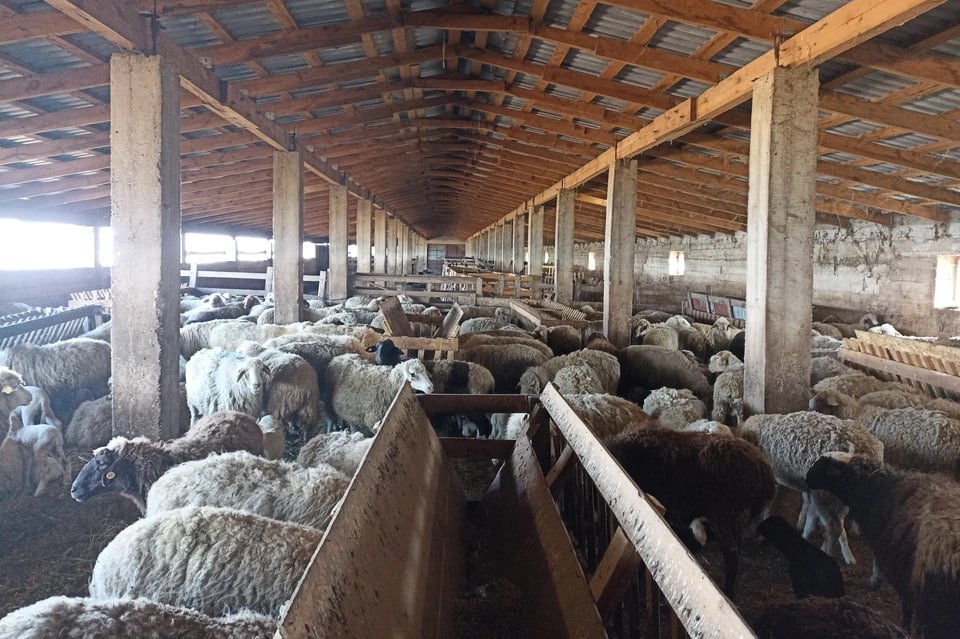
On September 28, Nikolai Tyutyunik, the fake “deputy minister of agriculture of the Republic,” boasted that Crimea had a flock of 100,000 sheep. He emphasized that “sheep farming… does not depend on concentrated feed, as the animals are free-range” and that “Crimea has the suitable conditions and land for developing this sector.”
Indeed, sheep farming is the least vulnerable livestock sector regarding the water supply, electricity, logistics, and other “joys” the occupation brought to the peninsula.
In this context, it is worth noting that at the start of the occupation, in late 2013, the AR of Crimea had a sheep population of approximately 280,000.
Yet, in July 2018, Alexey Kamentsev, the so-called “head of the livestock and breeding supervision department” at that same fake “ministry”, spoke of a crisis in the sector, while simultaneously claiming that “as of today, the republic’s sheep population stands at around 250,000.”
At the time, marketing difficulties were cited as the cause of the crisis; however, the subtext made it clear that the wool and meat from Crimean sheep, mostly raised on small farms, were being bought up at rock-bottom prices by monopolies linked to the occupiers, such as large retail chains and shopping centers.
In early 2025, Denis Gamza, the new “head of the livestock department” at that same sham “ministry”, stated that the “sheep population across all categories of Crimean farms stood at approximately 140,000 head, with about 70% of this total held by private household plots”.
Thus, Crimea’s sheep farming sector has effectively collapsed over the past decade, shrinking several-fold; the reasons for this decline stem entirely from the specific model of “management and economic operation” in the livestock sector imposed by the occupiers long before the current logistics crisis.