Recently, Crimean and Krasnodar-based information resources of the aggressor began vigorously refuting reports of increasing chemical pollution in the Black Sea, allegedly “spreading on social media.”
The most tragicomic aspect of this “disinformation” in the current circumstances is the original source, which turned out to be the official Rospotrebnadzor report “on the state of sanitary and epidemiological well-being of the population of the Russian Federation in 2025.”
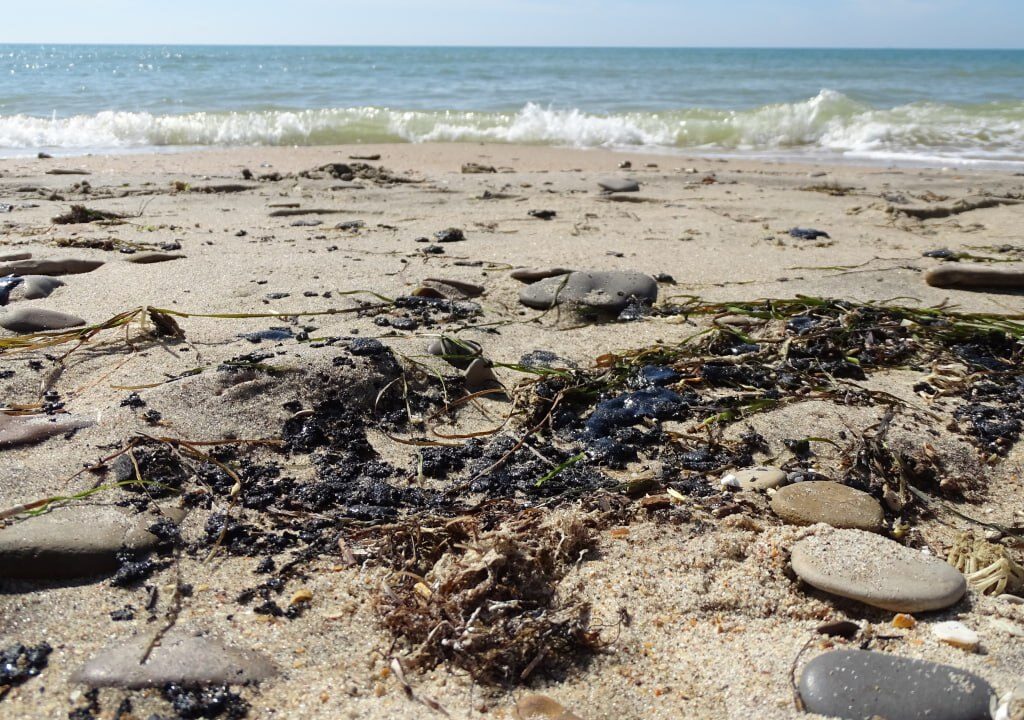
The document was published in early June and stated that after the “emergency situation caused by the oil spill resulting from the wreck of tankers in the Kerch Strait,” “the proportion of samples taken in the Black Sea that did not meet hygienic standards for sanitary and chemical indicators” increased to 12.59%, compared to a previously reported 1.22%.
The hysteria over the “refutation” of these rather modest and obviously “polished” figures has a prosaic reason. We previously reported that, following the sinking of the Russian tankers “Volgoneft-212” and “Volgoneft-239” in December 2024, while carrying fuel oil, the aggressor announced rather utopian plans to “eliminate the consequences of the accident.”
Russian authorities claimed that protruding parts would allegedly be cut off from the three sunken parts of the ships, after which they would be sealed with special engineering structures, cofferdams, supposedly creating a hermetic space around the tankers.
But by the end of last year, the aggressor’s rather confusing statements suggested that only one of three cofferdams had been installed over the remains of the tankers.
Three months ago, Russian Deputy Prime Minister Vitaly Savelyev suddenly announced that “2,000 tons of fuel oil remained to be pumped out” of the Volgoneft-212’s bow, and that this was to be done “by the end of May,” after which the remains of the tanker were supposedly supposed to be raised.
But even in June, the saga of spending 5.8 billion rubles on the “construction and installation of cofferdams” through the Tyumen-based Mostostroy 11 company shows no sign of ending, despite the Kremlin’s “order to the regions” to “launch the resort season” on the Black Sea coast in June “at any cost.”
Against this backdrop, one can also mention the “fruitful development” initiated by the “Council of Ministers” on June 10th, allocating 4.8 million rubles to the “Leninsky District” of the occupied AR of Crimea.
The same propaganda claims to be “reimbursing expenses associated with the elimination of a regional man-made emergency involving oil pollution of the Black Sea water protection zone.”
But an uninformed reader might have two questions regarding the “astronomical size” of this “interbudgetary transfer” and its recipient, since other districts and cities in occupied Crimea did not receive such “significant support,” a thousand times smaller than the cofferdam scam.
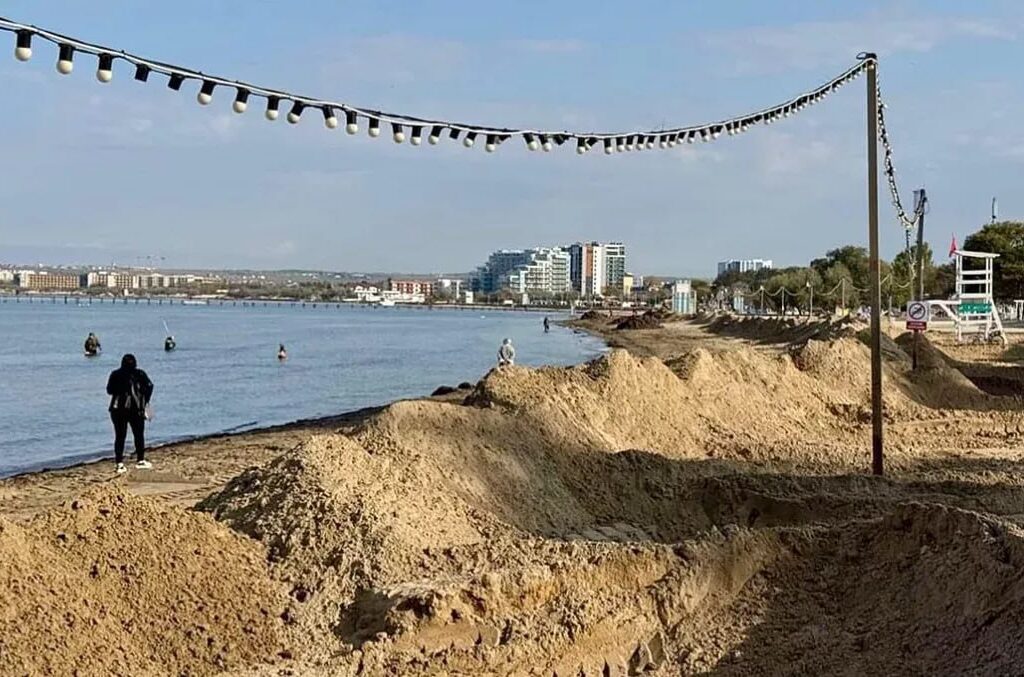
The answer to these questions is prosaic: it’s not about compensating businesses, residents, or even occupation forces for losses, but about “keeping afloat” the site located near Shchelkino, where contaminated soil and biological debris collected from the entire Crimean coastline after the tanker wrecks were dumped.
Moreover, as we previously reported, this site, located near the ruins of the Crimean Nuclear Power Plant, was unequipped and became a source of secondary pollution even before the occupiers began reporting “partial recycling of the collected waste.”