The occupation “press” announced the holding of a so-called “scientific and practical conference” in Sevastopol on April 8th by the so-called interdepartmental expert council on the security of the aggressor’s offshore underwater pipelines and facilities.
It should be recalled that Nikolai Patrushev, a long-time functionary of the Russian intelligence services and the current head of the aggressor’s Maritime board, previously spoke of alleged “threats” to Russian pipelines in the Black Sea, and he is the head of the aforementioned council.
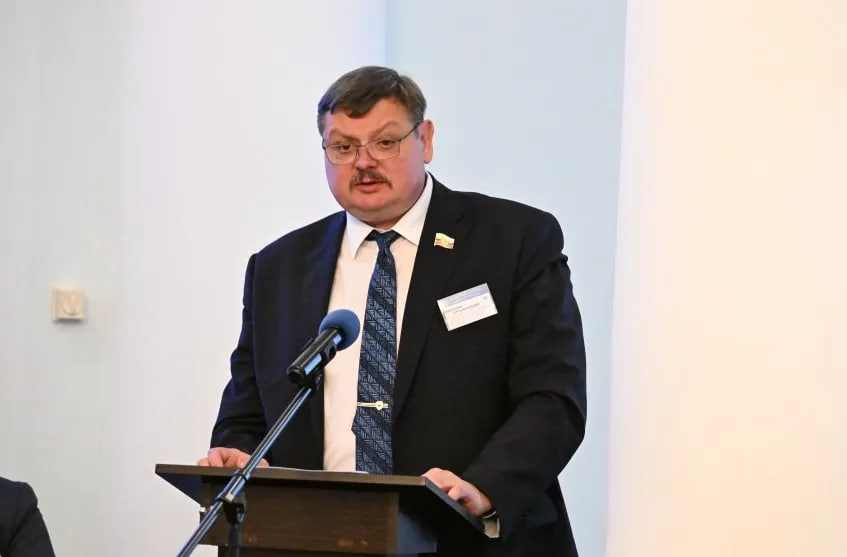
However, this time, Moscow’s bigwigs communicated with Sevastopol exclusively remotely, and the main points were delivered “on the spot” by Sergei Kolbin, a so-called “city legislative assembly deputy” who was brought into the council.
Among other things, he directly acknowledged the aggressor’s goal of “armed escort of Russian vessels,” which, naturally, primarily concerns the tanker fleet and “trained security groups equipped with small arms, active defense systems, and integrated monitoring systems.”
Kolbin openly acknowledged that “issues of escorting vessels were discussed with veterans” of Russian aggression, “veterans of special forces, with command and control, and representatives of the civil maritime industry,” and that there were “positive aspects” to this activity, which violates all requirements of maritime law.
Let us recall that a number of studies have exposed the aggressor’s systematic inclusion of individuals without maritime experience or seafaring experience, but with a clear connection to the Russian army or special services, into the crews of its shadow fleet.
As for the aggressor’s Black Sea pipelines, the “conference” announced its intention to equip them with specialized autonomous and remotely operated unmanned underwater vehicles and drones. It should be noted that such militarization of pipelines makes them, among other things, direct military targets for Russia.
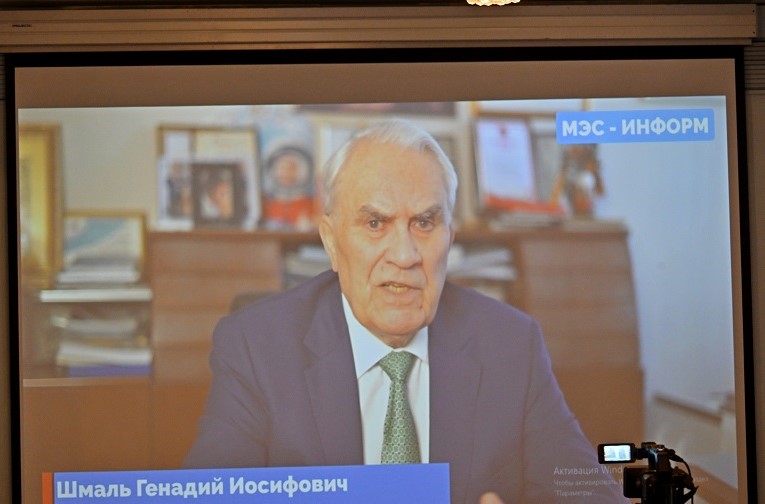
Against this backdrop, a video speech by Genadiy Shmal, Chairman of the Union of oil and gas producers of Russia and former Soviet Minister of construction of oil and gas enterprises, was quite striking.
He stated that “the Black Sea should be excluded from oil production,” that it “should not be touched, no oil production should be carried out there,” acknowledging that “we have recently witnessed serious violations and accidents – for example, tankers carrying fuel oil, the cleanup of which we still have not completed.”
Shmal also acknowledged that Russia will not reach the Arctic shelf “for at least 20-25 years,” and that “we don’t even know today how much oil Russia needs.”
However, these sudden “Black Sea insights” from Shmal, who was responsible for, among other things, the development of Black Sea oil production during the last Soviet decade, are easily explained: since 2022, the aggressor has lost the ability to conduct oil production on its shelf due to military action, while Turkey and Romania are systematically increasing this activity, causing corresponding “phantom pains” in the Kremlin.
Therefore, it cannot be ruled out that the aggressor’s narratives about “liberating the Black Sea from oil production” will be promoted by Russian intelligence services not only on international platforms but also through direct provocations and sabotage against Turkish and Romanian oil production.