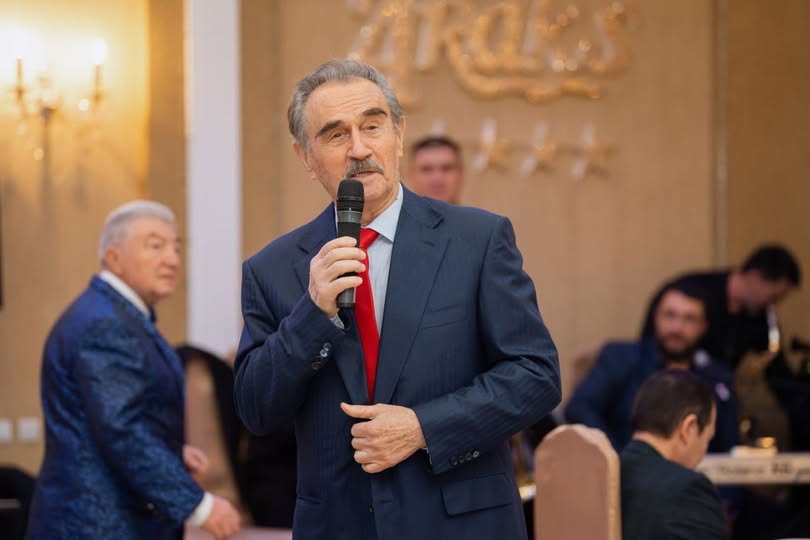
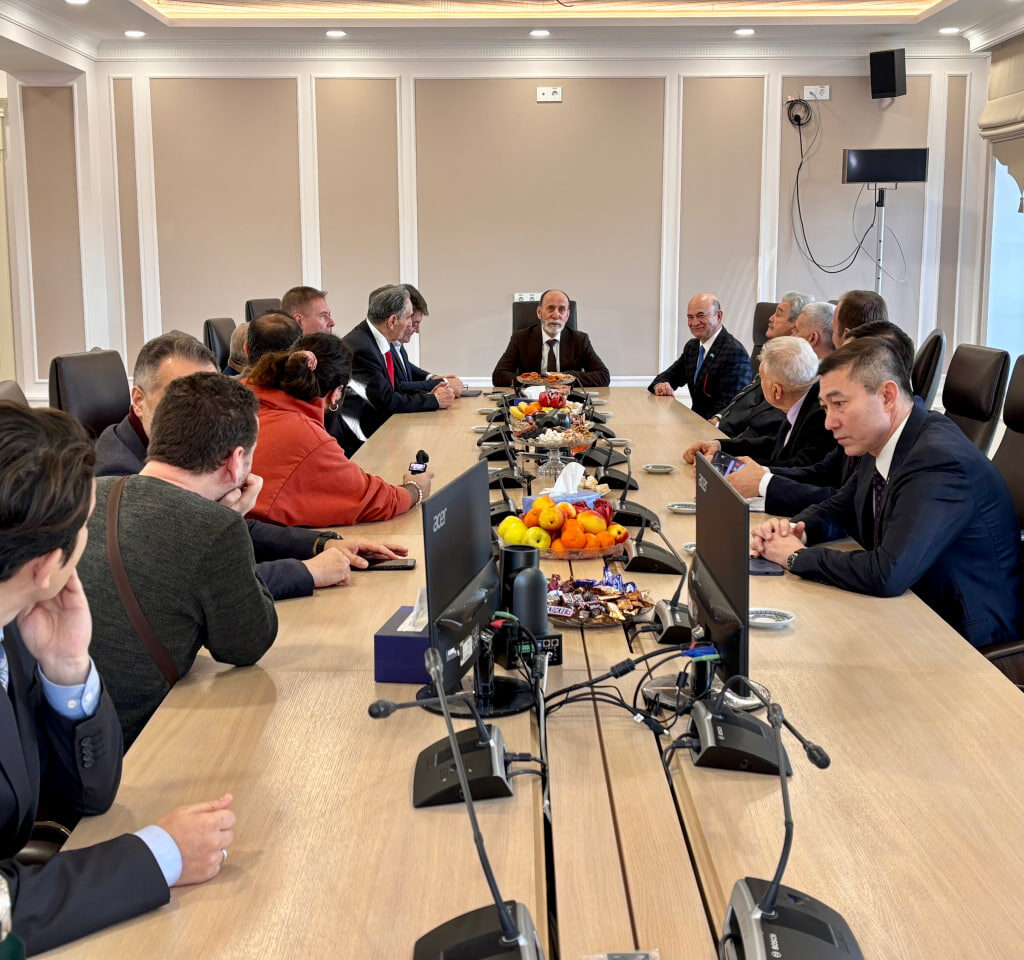
At the end of the year, the aggressor’s propaganda announced the holding of a “forum of Crimean Tatar compatriots” on December 18 in occupied Simferopol, to which “delegates from Turkey and Uzbekistan” allegedly arrived.
The main “talking heads” from among the Crimean collaborators were the infamous “Mufti of Crimea and Sevastopol” Emirali Ablayev, the fake “chairman of the state committee for interethnic relations” Ruslan Yakubov, and the “deputy speaker of the state council” Ayder Tippa, as well as the elderly Russian spy Georgy Muradov.
It is noteworthy that neither the “members of the coordinating council of the congress of deputies of all levels from among the Crimean Tatars,” used by the Russian special services at this show as extras, nor the actual “Turkish and Uzbek delegates” are named by the aggressor’s propaganda, with the exception of “well-known public figure” and “honored worker of the industrial sector of Uzbekistan” Shevket Osmanov.
In June of this year, Osmanov was already brought to occupied Crimea, and three days before the “forum,” the same Muradov in Moscow awarded this figure the “title” of “Compatriot of the Year.”
Such close attention and active use of Osmanov by the Russian special services has an explanation that goes far beyond both Crimea and the “Crimean Tatar question.”
The fact is that for many years Osmanov was the head of the Angren Cardboard and Packaging Plant, launched in 1988, which in independent Uzbekistan became the firm “Promkartontorg,” and since 2002 – the Uzbek-Swiss-English-American enterprise “Sanoatqalinqog’ozsavdo.”
The main investor in this company from the Tashkent village of Gulbog was the Swiss company “Miller Trading GmbH,” which organized the production of toilet paper and napkins at the plant, and the head of the joint venture was Shevket Osmanov, who frequently traveled around Europe.
In 2011, a controlling stake in “Sanoatkalinkogozsavdo” was acquired by the Czech company “Paper Mill Holding s.r.o.”, registered just a couple of months before the deal.
This Czech company, as well as the Uzbek authorities and a number of private individuals, still own the plant, which has since been transformed into the company “Angren Pack,” and the aforementioned Swiss company still maintains close contacts with Uzbekistan.
Thus, the use of Shevkiyev by Russian special services as a clear agent of influence should become the basis for appropriate measures by the authorities of the Czech Republic and Switzerland in the context of exposing Russian special services’ structures, operating under the cover, and within the framework of their possible involvement in mechanisms for circumventing sanctions imposed on Russia.