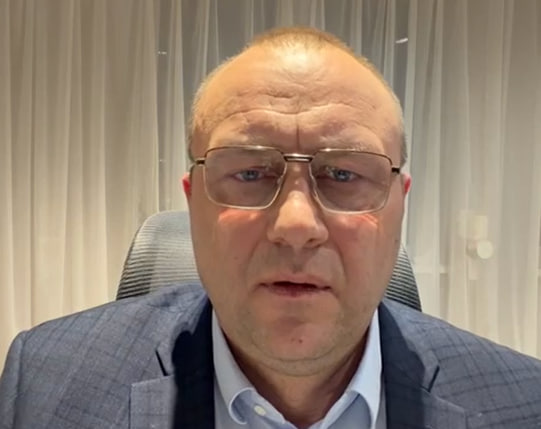
According to statements by the aggressor’s enforcers on September 22, they recently detained in Kabardino-Balkaria a previously wanted Crimean Tatar collaborator, former “state duma deputy” and “deputy chairman of the council of ministers” Ruslan Balbek.
We previously reported that after Balbek was publicly “wanted” by enforcers from the “Simferopol department of the ministry of internal affairs” in mid-August, the aggressor-controlled “media” released a raft of “insider” information about the actual whereabouts of this Crimean Tatar collaborator.
At first, it was stated that Balbek, allegedly “wanted for fraud,” “was supposedly hiding in Turkey.” Then it was “clarified” that he was either in Mersin, Turkey, where he was supposedly awaiting “political asylum” for himself, or hiding in Northern Cyprus, from which supposedly “there is no extradition,” or “was in the Krasnodar Territory. He spends the night in small private hotels. One night at a time. He changes his mailboxes, phone numbers, and digital traces every day.”
We wrote that, judging by the operetta-like attitude of the occupiers themselves toward this “elusive Joe,” their desire to send Balbek to prison is roughly the same as that of the collaborator himself.
But Balbek’s “competitors” from the Emirali Ablaev clan, close to Sergei Aksyonov, clearly “wanted more.” And so, while the infamous Sudak collaborator and former “State Duma deputy” Ruslan Balbek was on the “federal wanted list,” in Sudak itself, the “city administration” began “demolishing illegal buildings” belonging to relatives of the “disgraced politician.”
The bulldozers included the “Merlot” store and two retail pavilions on Cypress Alley used by the fugitive’s aunt, Gulnara Balbek, and “loyal Aksyonovites” also “dismantled an illegal fence” around a hectare of supposedly “municipal land.”
This prompted a public statement from Balbek’s relatives demanding their “prodigal cousin” surrender, since no one was willing to suffer financially for his “misunderstanding with the authorities.”
But the most notable aspect of this tragicomedy were the “horrific crimes” with which Balbek is now “officially” accused: these are no longer “fraud,” but “illegal access to legally protected computer information” and “slander, coupled with accusation of a serious or especially serious crime.”
In essence, they are trying to “defeat” Balbek for “slandering Crimean officials.” This isn’t the first instance of such repression. Previously, under similar circumstances, the occupiers imprisoned Anna Gazhala and Fatima Sovkhoz, who had written appeals to the Kremlin dictator’s administration regarding the activities of an organized crime group within the “ministry of health.”