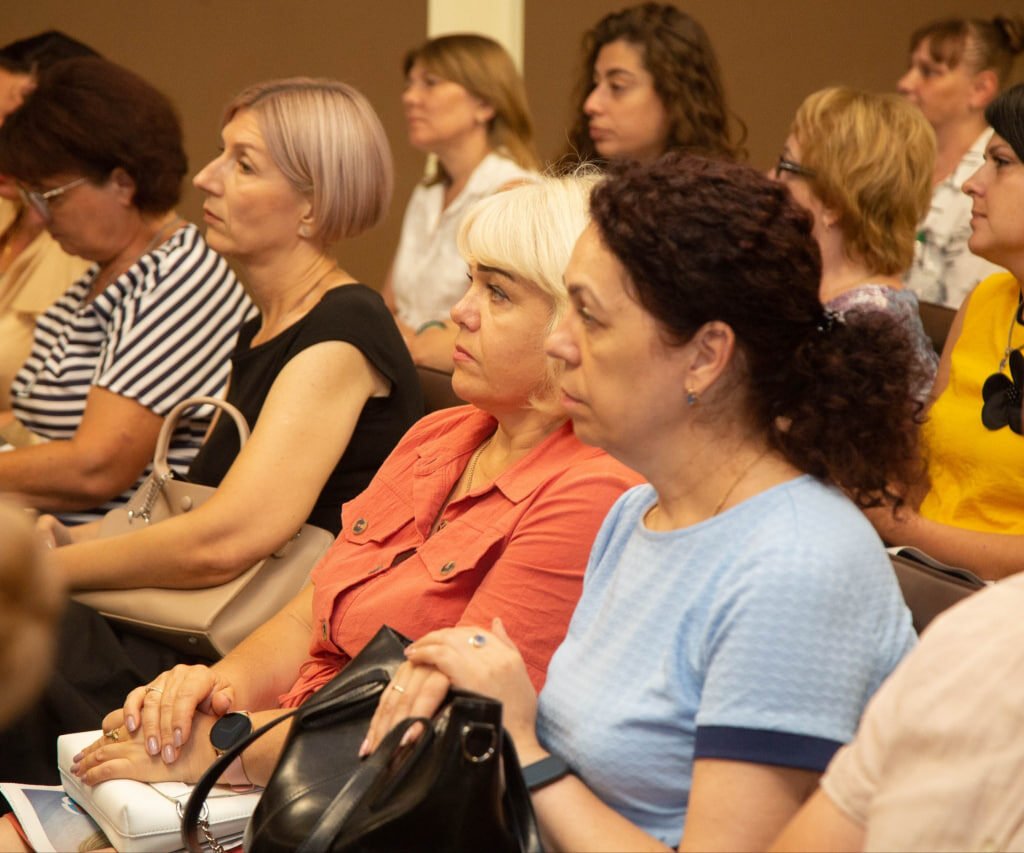
On September 4, fake “speaker” Vladimir Konstantinov told collaborators in Feodosia and the surrounding region, herded together for a propaganda event, that in occupied Crimea, supposedly, “a new industry related to the use of alternative forms of electricity generation and distribution is possible,” and that “the use of solar energy is one of the opportunities that is opening up today.”
Konstantinov also added that “equipment is being shipped to the peninsula whose purpose is to optimize and minimize the consumption of traditional electricity.”
Obviously, the practical purpose of these statements by the thieving construction magnate was a banal promise of another “bright day after tomorrow,” and it remains to be seen to what extent they reflect the aggressor’s plans in the energy sector.
Let’s recall that in August, amid yet another massive blackout on the peninsula, the aggressor government shelved the construction of a “new component of the peninsula’s energy system,” announced by Russia just five months ago, a “100-megawatt energy storage system,” as well as a “transmission line” from this storage unit to the Kafa substation near Feodosia.
It’s highly likely that this wasn’t just about the occupiers’ complete lack of funds or transformers, but rather their understanding that, under current conditions, this system would be quickly destroyed.
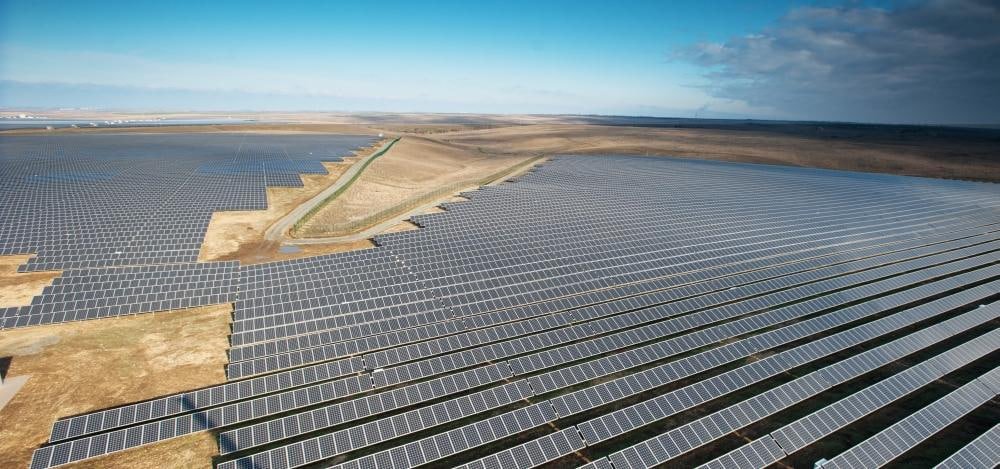
But the solar power plants that Konstantinov clearly mentioned, if they generate industrial-scale amounts, are far more vulnerable to air strikes than any substation or storage unit.
Thus, assuming the “speaker” is at least partially truthful, any moves by the occupiers in solar energy could have practical significance and at least some impact on Crimea’s energy system in two scenarios: either it’s highly dispersed local generation from thousands of small installations, including those located in locations protected from attack by international law.
Or it’s industrial power plants that the occupiers hope to avoid for other reasons, and this scenario requires further analysis. And here it’s noteworthy that Konstantinov, in his “speech about the Sun,” is definitely lying about the main point: industrial solar energy in Crimea has not only existed for 15 years, but has long been the subject of multi-layered collaborations.
As a reminder, we thoroughly exposed this issue, related to the alleged “nationalization” of Crimean solar power plants, carried out through the same Konstantinov’s “state council” in 2023.
Briefly, we recall that both before and after the occupation, the powerful network of these “Solar” stations was controlled by the clan of Andriy Klyuyev, a top Ukrainian official from the Yanukovych era, and his brother, Serhiy, and generated multimillion profits for their beneficiaries up until 2022.
Meanwhile, power plants from the “Solar” network are also operating quite successfully in Ukrainian-controlled territory, and we recently proved their connections, through the Estonian shell company “Winot OÜ” of the Russian special services and its condottiere, Andriy Chuklin, to the global fishery mafia.
Three years ago, we documented the billion-dollar financial interests in all “Solar” stations on the part of the Chinese state-owned concern “CNBM International,” which supplied the bulk of their equipment. We also exposed the Crimean “Solar” companies’ ties to the British subsidiary of “VTB Bank” and, through shared management, like Svetlana Frankovskaya, to the Kremlin-controlled illegal Crimean mobile operator “Miranda”.
The occupiers promised that “nationalized” power plants, such as the key Simferopol “Perovo” plant, would be “put up for auction.” An auction was announced in August 2023 for four shell companies: “Alfa Solar”, “Beta Solar”, “Zeta Solar”, and “Gamma Solar”, but nothing came of it.
The occupiers’ “registers” still list the Cypriot nominees of these companies as they were in 2015. And last May, apparently “forgetting” about the “nationalization” that had taken place, the occupiers announced a “new stage of bankruptcy” through the “Arbitration court of the republic” for the same “Beta Solar” and “Alfa Solar” companies, based on claims from the same VTB Bank from 2017 against their Cypriot nominees.
Now, the “pound,” formally acting on behalf of these entities, is the “bankruptcy administrator.”
Thus, the collaborators carefully hide the real beneficiaries of these power plants, sometimes behind fake “nationalization,” sometimes behind fictitious “bankruptcy,” and, apparently, vainly hope that these top corrupt officials, no strangers to the aforementioned global fishery mafia, will ensure the inviolability of these Crimean facilities under some kind of “reciprocity.”