Since 13 July, our Association’s representative, Lia Gazi (Motrechko), has taken an active part in the 19th session of the UN Expert Mechanism on the Rights of Indigenous Peoples (EMRIP), held in Geneva.
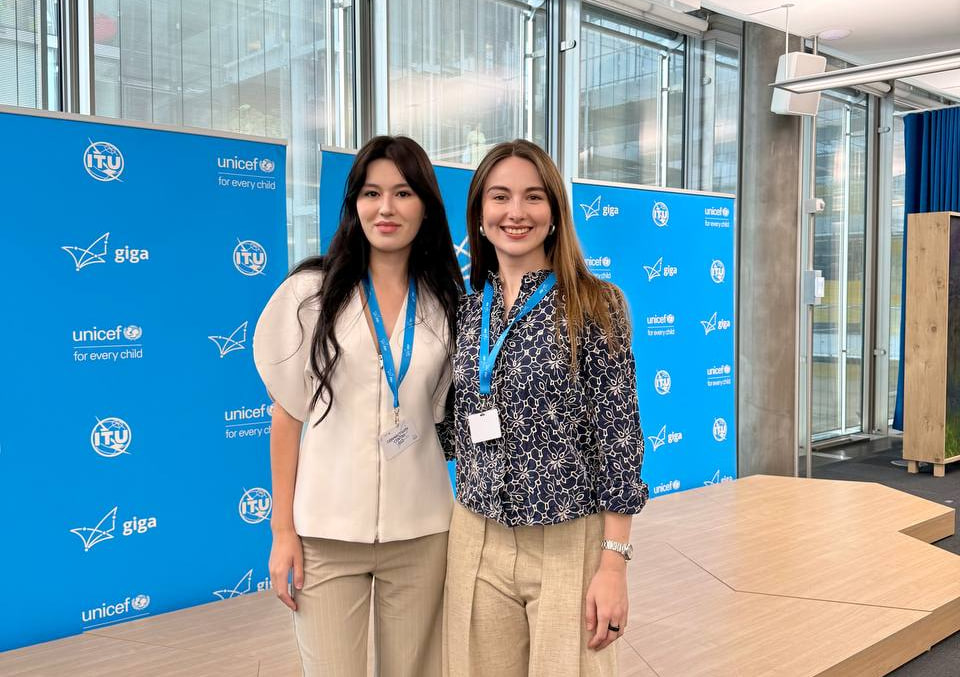
During the session’s side-event, organized by the Youth Democracy Network, Community of Democracies in collaboration with the UN International Children’s Emergency Fund (UNICEF) and the International Telecommunication Union (ITU), Lia Gazi discussed the issues of challenges and opportunities from digital technologies to the young generation of Indigenous Peoples.
Basing on the Crimean examples and on the previous research of our Association, Lia Gazi described the negative consequences of the usage of artificial intelligence and social networks by authoritarian regimes for repressions and propaganda.
Experts stressed that the key challenges of Russia’s usage of artificial intelligence in Crimea and in other Russia-controlled territories, as well as on the Internet and media, are connected with the aggressor’s disseminating fakes, hate speech, and propaganda; counteracting dissidents, human defenders, and activists; creating deepfakes with genocidal, militaristic, and racist character; and controlling faces, trips, and presence in institutions for relevant racial segregation and repressions.
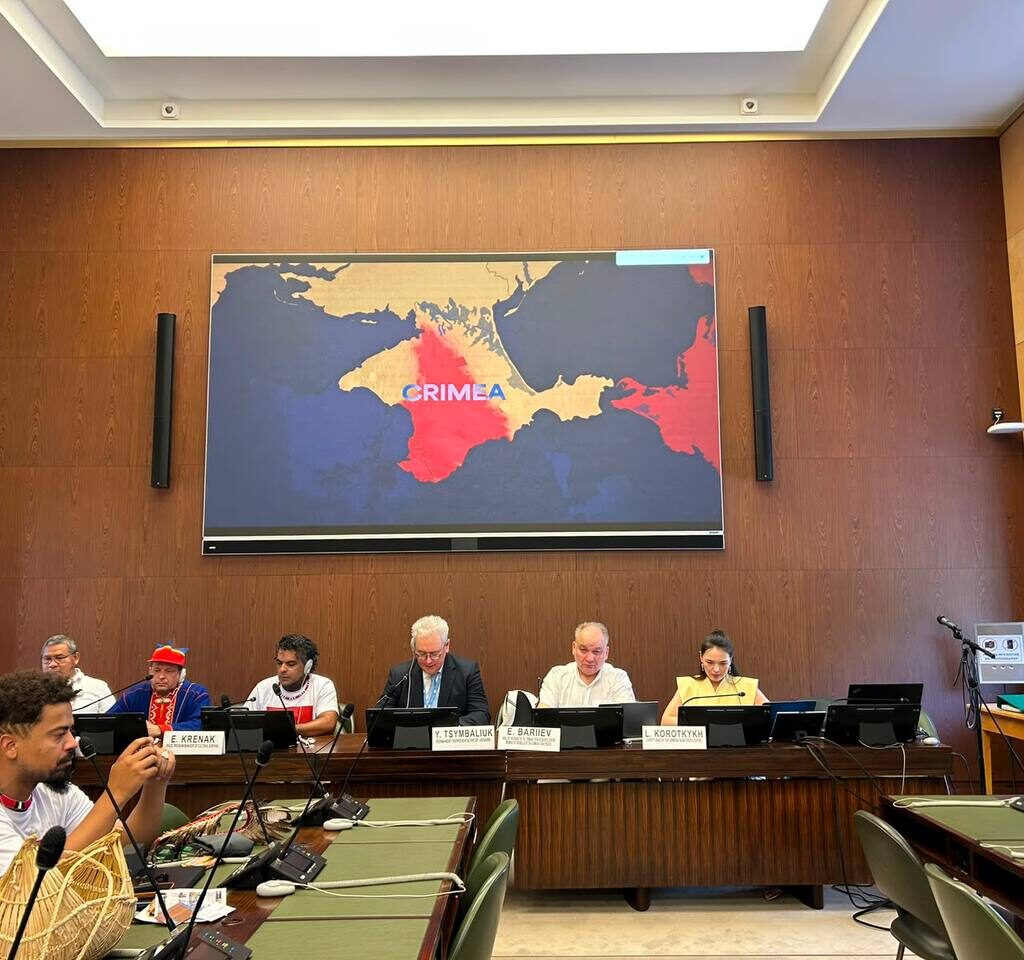
Also, on 14 July, within the framework of the EMRIP 19th session, the Crimean Tatar Resource Center, in cooperation with Cultural Survival and the Permanent Mission of Ukraine in Geneva, held the side-event “Indigenous Peoples in Conflict and Post-Conflict Conditions.”
Side-event speakers, Permanent Representative of Ukraine Yevhenii Tsymbaliuk, Center’s experts Eskender Bariiev and Liudmyla Korotkykh, also as representatives of Brazil Indigenous Peoples Edson Krenak (Krenak People) and Hiparadi Topitiro (A’uwẽ Xavante People) addressed the impact of armed conflicts, occupation, militarization, and violence on the rights of Indigenous Peoples across different regions of the world.
Particular attention was given to the systematic violations of the rights of the Crimean Tatar people resulting from the occupation of Crimea by Russia, as well as the challenges faced by other Indigenous Peoples affected by violence, illegal land appropriation, and political persecution.
Special attention was paid to the role of Indigenous Peoples in peacebuilding, mediation, transitional justice, and post-conflict recovery; the participation of Indigenous women and youth in these processes; international mechanisms for the protection of Indigenous Peoples in situations of conflict and crisis; and the importance of Indigenous knowledge systems and community-led initiatives in strengthening the resilience of Indigenous communities.