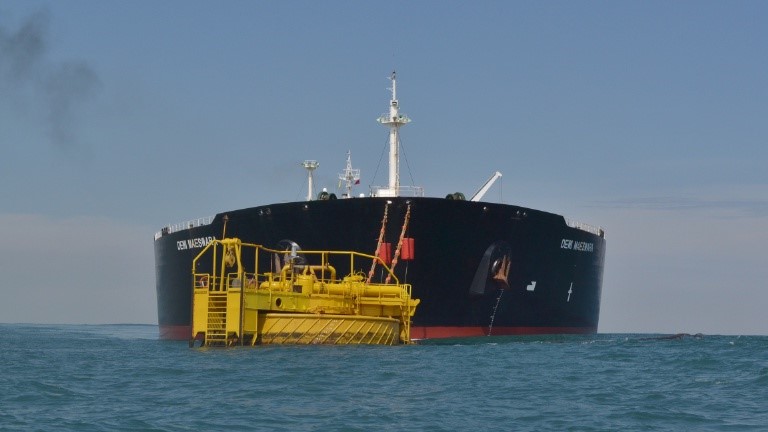
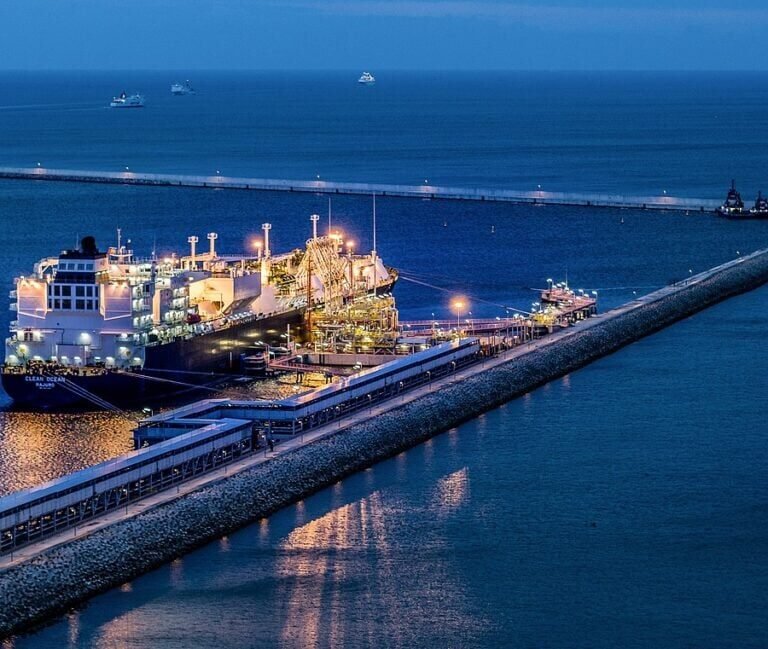
In early June, global economic media reported on active negotiations between the Singaporean subsidiary of the Russian concern “Novatek”, “Novatek Gas & Power Asia”, Japanese shipowners “Mitsui O.S.K. Lines” and South Korean shipbuilders “Hanwha Ocean Co. Ltd.”, formerly “DSME”, regarding the further fate of a group of Arc7-class gas tankers currently in the ports of the Republic of Korea. These issues are currently reflected in a number of publications, which allowed experts to draw certain conclusions.
The facts described concern the Panamanian-flagged vessels “Lev Landau”, IMO number 9918016, “Pyotr Kapitsa”, IMO number 9918004 and “Zhores Alferov”, IMO number 9918028, as well as the Cypriot-flagged gas carriers “Ilya Mechnikov”, IMO number 9918030, “Nikolay Semenov”, IMO number 9918054 and “Nikolay Basov”, IMO number 9918042.
The “Cyprus” tankers “Ilya Mechnikov” and “Nikolay Semenov” are currently controlled by “Mitsui O.S.K. Lines” through its subsidiaries, “Arctic Gold LNG Shipping Ltd” and “Arctic Bronze Lng Shipping Co Ltd”.
All these vessels were built for the prospects of operation in the Northern Ocean, primarily for the “Arctic LNG-2” logistics hub projects, but the sanctions imposed against the Russian gas industry have made their transfer to customers, namely “Novatek” and “Sovcomflot”, more difficult. However, the gas carriers themselves and their Korean builder, which, by the way, has systematic cooperation with the “Russian Maritime Register of Shipping”, were not included in the sanctions lists.
Russian negotiators are trying to form a new scheme for transferring ownership of tankers for their further operation in transporting liquefied gas from the Arctic to China, essentially playing with their only trump card – the above vessels were originally built for navigation in difficult ice areas, and therefore their operation on other routes will be less economically efficient for interested buyers.
At the same time, today in the Arctic, in addition to the described project “Arctic LNG-2”, and the similar “Yamal LNG” from the same “Novatek”, liquefied gas is produced only at the Norwegian “Hammerfest LNG”, but the volumes there are smaller. In addition, the described vessels were intended not just for Arctic navigation, but for the routes of the Northern Sea Route (NSR) in the Eastern Arctic; the conditions of the Barents and Norwegian Seas are milder and allow ships of lighter ice classes to do.
However, the current Japanese and Korean tanker owners also have arguments for bargaining – in addition to the sanctions costs, it is said that tankers are needed urgently for “Novatek”, at least this follows from Russian propaganda. Kremlin mouthpieces constantly emphasize the need to expand the supply of liquefied gas from the “Arctic LNG-2” and “Yamal LNG” to China using the NSR, despite the fact that the European Union market is expected to be closed to Russian liquefied gas from January 2027.
However, the history of Arctic liquefied gas production and the use of this industry by the Russian militarist machine requires a more in-depth analysis.
As of 2026, the “Arctic LNG-2” projects at the Utrennyy Terminal and Yamal LNG at the port of Sabetta are located on opposite shores of the Gulf of Ob of the Kara Sea. The capacity of “Arctic LNG-2”, which operates the Salmanivskoye and Shtormovye fields, is declared at 17 million tons annually, while for Yamal LNG, which operates condensate from the Yuzhno-Tambeyskoye field, it is somewhat smaller.
It was the riches of this field that were “introduced into the public domain” after the collapse of the USSR by the Soviet KGB intelligence officer Nikolai Bogachev. He tried to attract investors from the UAE to the construction of the terminal in Sabetta, under the umbrella of the “Yamalneftegaztechnologii” company, the owner of the license for the Yuzhno-Tambeyskoye field, which Bogachev gradually privatized.
The very idea of exporting liquefied gas from the Gulf of Ob by sea, by tankers, was Bogachev’s “know-how”, since it allowed the potential owner of the terminal to bypass the use of mainland pipelines, which were completely controlled by “Gazprom”.
In the fight against “Gazprom”, Bogachev tried to enlist the support of the then Yamal governor Yuri Neelov and his deputy Joseph Levinzon, giving their pocket funds a share in his own company “Tambeyneftegaz”, to which the license for the Yuzhno-Tambeyskoye field was reissued.
But it was precisely the attempt to cooperate with Levinson that was fatal for the former KGB officer – the vice-governor simply “abandoned” Bogachev, transferring the received shares of assets in the described fields to the structures of his other corrupt partner, Leonid Mikhelson, a descendant of the clan of Soviet pipeline builders and the demiurge of the “Novatek” company.
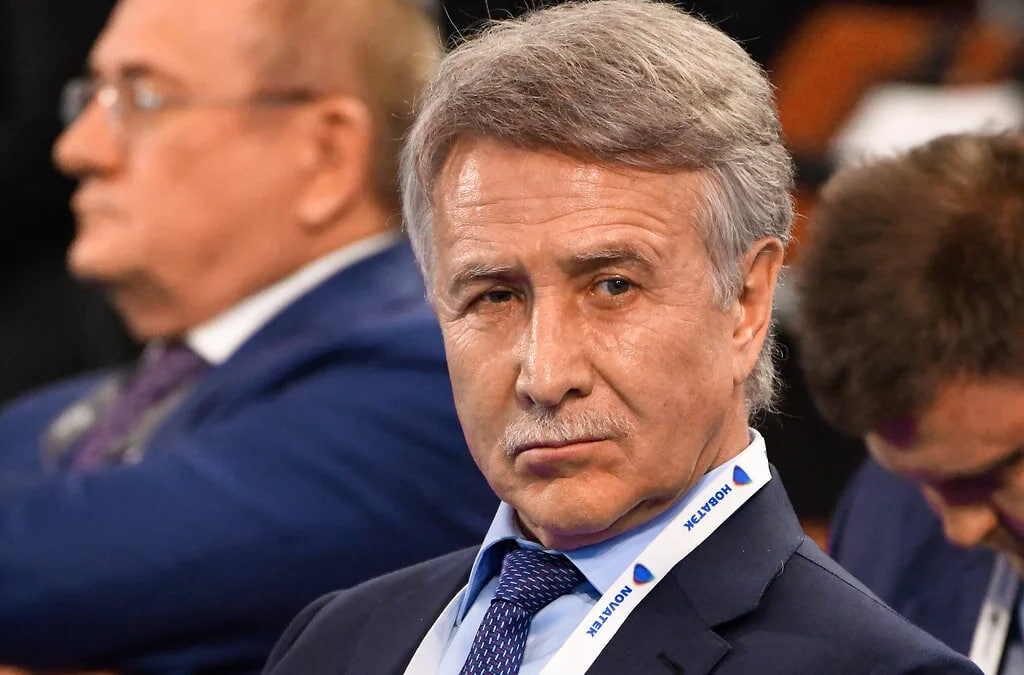
Bogachev’s further attempts to “resolve the issue”, both through the Lyubertsy bandits, and through ordered “raids” by law enforcement officers, and even through the Kremlin dictator’s old confidant, another KGB officer Vasily Shostakov, were unsuccessful. Mikhelson began to gradually squeeze the “founding father” out of the project of offshore gas terminals in the Gulf of Ob, and Bogachev himself began to be presented with “proposals that cannot be refused” regarding the transfer of his shares under the control of “Gazprom”, through “Gazprombank”.
However, later, in June 2006, Bogachev managed to pull off a scam by transferring the license for the Yuzhno-Tambeyskoye field to another company, literally from under the nose of “Gazprom”, but this was already a Pyrrhic victory – a month later, a law was approved in Russia that secured the monopoly on gas exports exclusively for “Gazprom”.
This turned the “carriage into a pumpkin” for all Russian minority gas producers, in particular “Itera” and “Nordgaz”, which were subsequently absorbed by “Gazprom” without much resistance from the beneficiaries, who were forced to receive “redemptions”. Similarly, Bogachev, driven into a corner, “was forced to sell everything”, but the intermediary in the deal was Alisher Usmanov, who “purely by chance” received three quarters of Bogachev’s Yamal assets, guaranteeing the author of the marine terminal projects “the removal of all further questions” from Russian punitive forces.
And then, during the 2008 crisis, Usmanov, taking advantage of the “strategic turbulence”, “threw” his counterparties from “Gazprom” and sold his Yamal assets not to their spies, but to Putin’s scoundrel Gennady Timchenko, who was then a co-owner of the Kremlin oil trader Gunvor with Swiss registration.
Timchenko knew little about Yamal fields and terminals, but had a unique opportunity to “ride on the ears” of the Kremlin leader. Therefore, he entered into a symbiosis with the aforementioned Mikhelson and his “Novatek”, which lasted until 2008 in the shadow of “Gazprom”, exchanging blocks of shares.
The idea of Timchenko, who understood the Kremlin’s alternative reality well and was able to turn it into quite real billions in offshore, was quite extravagant, but one that looked convincing in the eyes of amateurs.
Putin was told that the construction of marine terminals near the gas condensate fields in Yamal would not only allow “a mad increase in energy exports”, but would also become a key tool for the revival of the Russian gas industry and “Russian Arctic dominance”. The moment was chosen well – all of “Gazprom”‘s gas condensate projects in the Baltic, Sakhalin and Yamal had “failed to take off”, and they were offered a “patriotic alternative”.
For this “geopolitical victory”, the Kremlin was asked to “just cancel” all taxes for new projects from “Novatek”, allow gas exports, and build port terminals, roads, and an airport in Sabetta and Utrennyy with federal funds. After agreeing to such “modest conditions”, “Novatek” began to quickly seek money outside Russia for the needs of the relevant projects, and the Russian authorities began to actively promote this.
The main external investor for “Novatek”‘s Yamal projects was the French concern “Total”, whose head Christophe de Margerie signed a memorandum of cooperation with Michelson in March 2011 at Putin’s residence in Novo-Ogaryovo, investing more than $5 billion in the projects. Later, by January 2014, Chinese companies, the state-owned “China National Petroleum Corporation” and its subsidiaries, began to invest in “Novatek”‘s projects.
The occupation of Crimea and the fighting in Eastern Ukraine initiated the first sanctions against Russian corporations, and here the role of “Novatek” co-owner and Kremlin “wallet” Gennady Tymchenko suddenly became the maximum trigger for European investors.
The fact is that it was Tymchenko’s structures that became the “roof” for the construction of the Crimean Bridge and other fundamental projects of the attempted annexation of Crimea. This made his businesses the most vulnerable to sanctions restrictions. In October 2014, the same de Margerie arrived in Moscow to “resolve the situation”, but after deadlocked negotiations with the Kremlin bigwigs, on the night of October 21, the business jet of the head of “Total” Falcon 50EX collided with a snowplow on takeoff from Vnukovo airport.
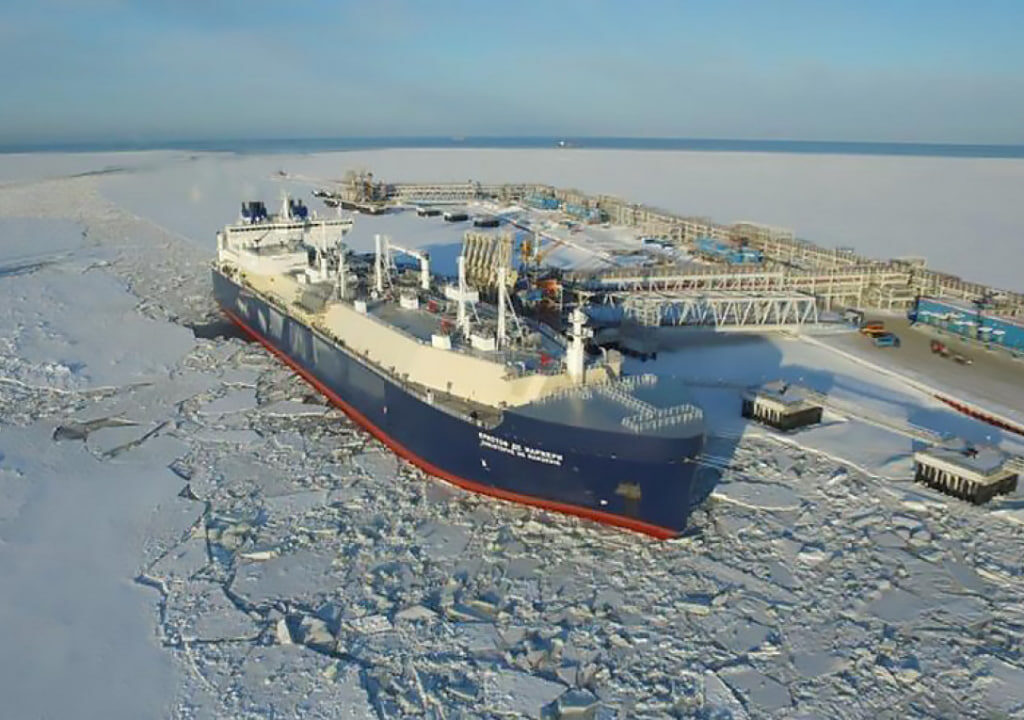
It is noteworthy that later “Novatek” cynically named one of its own tankers in honor of de Margerie, but the absence of European sanctions against this company, both in 2014 and in 2026, has other explanations.
“Novatek” sent the first tanker with Yamal liquefied gas by sea in 2017, but it went not to China through the NSR, but to the “hostile” Boston. After that, it turned out that sea supplies are more difficult to control and track, compared to pipelines, and it was the US authorities who, defending their own position in the gas market, have been conducting a systematic sanctions policy against “Novatek” structures over the past decade, the last powerful package of which fell on January 2025.
Meanwhile, Tishchenko and Mikhelson asked the Kremlin for more and more preferences for “Novatek”, under the same pretext of “loading the NSR infrastructure.” In 2018, the Kremlin set the task of increasing cargo turnover at the NSR to 80 million tons by 2024, half of which was to be cargo from “Novatek”.
However, the entire cargo turnover of the NSR in 2025, according to Russian propaganda, was supposedly 37 million tons, with the absolute majority of it being in the western part of the NSR, from Yamal to Murmansk.
For example, the entire cargo turnover of the “eastern” ports of the NSR, such as Tiksi or Pevek, in 2024-2025 amounted to no more than 700 thousand tons, of which 100-200 thousand tons of transit cargo were in each.
Moreover, the alternative to the NSR, the largest river port in Russia, Osietrovo on the Lena, which is a key hub for transshipment of “northern deliveries”, in 2023-2024 handled no more than a million tons, of which no more than 700 thousand tons were delivered annually to the ports on the NSR route, in particular for the needs of the oil and gas complex, and the owners of this hub from the “Starway” concern “for some reason” decided not to publish data for 2025.
Against this background, “Novatek” businessmen tried to build “gas hubs” in Kamchatka and on the Kola Peninsula, as well as “gravity platforms” for drilling new wells, which were essentially artificial islands: in the Kara Sea, the ice situation makes the operation of “traditional” production platforms practically impossible.
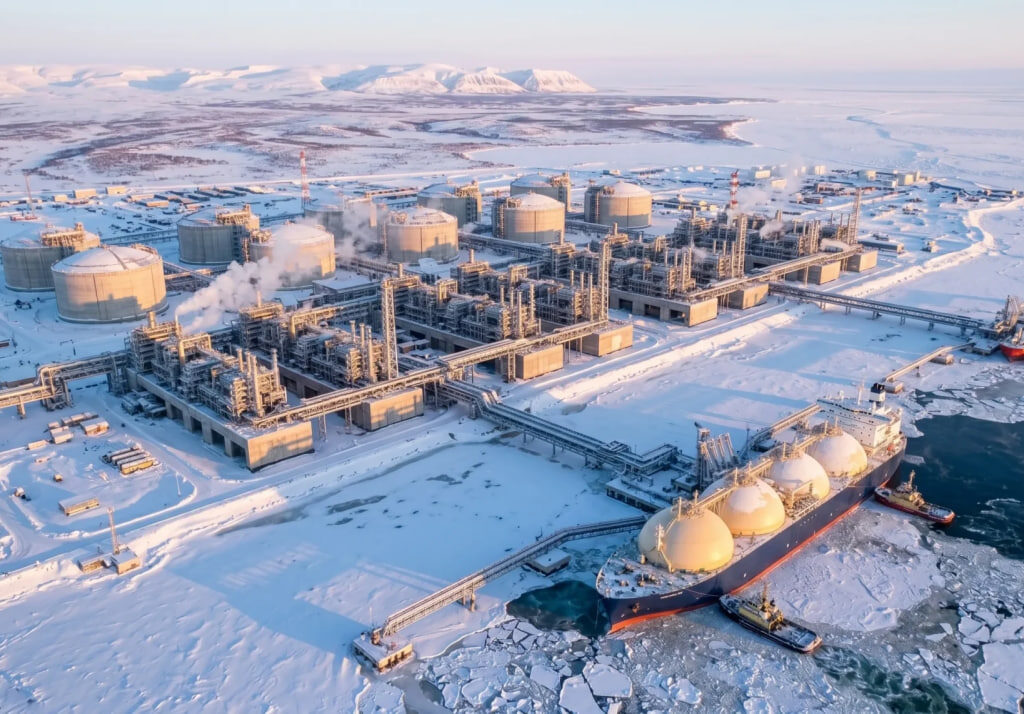
At the same time, the fleet of gas carriers for Arctic projects from “Novatek” was to be built at the Russian shipyard “Zvezda”, as well as through Sovcomflot, which was headed by Tymchenko’s relative Sergey Frank and transferred the order for the construction of six ice-class tankers to the Korean shipyard from “Daewoo”.
The first of these was the aforementioned “Christophe de Margerie” IMO number 9737187, built in 2016 under the flag of Cyprus, but later transferred to the Russian flag, under the supervision of the “Russian Maritime Register of Shipping”.
This gas carrier with main engines from “Wartsila Italia S.p.A.” made its first voyage with gas from “Yamal LNG” in 2017 to the UK, and for the first time it transported gas from “Novatek”‘s second Arctic hub, “Arctic LNG-2”, in 2024, but the cargo was delivered not through the NSR, but to Europe via the Murmansk terminal.
But this tanker made its first voyage with liquefied gas via the NSR to the east, to the Kamchatka terminal “Koryak FSU” IMO number 9915105 in August 2025, after which it fell under sanctions. The name of this vessel was the structure “Zelitiko Shipping Co Ltd” registered in Cyprus by Vladimir Oskirko, the manager of “Sovcomflot”, who is mostly in Dubai.
The mentioned terminal “Koryak FSU” under the Russian flag, supervised by the “Russian Maritime Register of Shipping” was built in Korea by 2023, just like another terminal from “Novatek”, “Saam FSU” IMO number 9915090, and if the first is to provide logistics for tankers from “Novatek” in the eastern direction, through the NSR to China, then the second is responsible for the western direction of transportation, through the Barents Sea.
The Russians claim that in 2024, eight batches of 260,000 tons of gas were allegedly exported from the “Arctic LNG-2” to “unknown recipients,” and that in 2025, up to 380,000 tons were transferred, allegedly to China. However, the real recipients of this gas could have been both American and European buyers.
According to the media, European countries still remain key recipients of Russian liquefied gas, primarily Belgium, France and Spain. Therefore, it is not surprising that in December 2024, the “Novatek” delegation actively participated in the work of the international LNG industry conference in Berlin, and “Novatek”‘s Swiss daughter, namely “Novatek Gas & Power GmbH”, headed by a former functionary from the Azerbaijani “Socar” Sergey Gzhelyak, is actively working on registration in the canton of Zug, and its presence there is actively lobbied by local authorities, including the local head of the finance department Heinz Tännler.
We would like to add that Alexey Solovyev and Kjell Magne Andersen, who also distinguished himself in the Swiss company “Vintage Shipping & Trading AG” from Rotkreuz, which operates four tankers under the Panamanian flag, were previously associated with the activities of “Novatek Gas & Power GmbH”.
One of them, “VST Lyra B” IMO number 9740471, entered the Russian Ust-Luga in March 2026 and continued on its way to Singapore, another, “VST Amara” IMO number 9742211 was in Ust-Luga in April-May 2026, previously other vessels of this structure were loaded in Russian ports, “VST Electra” IMO number 9784611 and “VST Oceania” IMO number 9740469.
Previously, other “Novatek” subsidiaries operated in Switzerland, namely “Novatek Overseas Exploration & Production GmbH” and “Novatek Overseas AG”, and in Cyprus, “Novatek Equity (Cyprus) Ltd.”, registered to Olga Bodina, a key functionary of the “Novatek” system, who permanently resides in Limassol, operated. Moreover, “Novatek” structures, headed by Dariusz Piotr Bratoń, operated in Poland, these are the structures registered in Krakow “Novatek Polska sp. z o.o.” and “Novatek Green Energy sp. z o.o.”
As of the beginning of the large-scale Russian aggression in Ukraine, these companies had over a hundred employees and an annual turnover of a billion zlotys, specializing in the introduction of liquefied gas from Russia by rail, where “Novatek” controlled three thousand wagons in Poland, and having a wide lobby in Polish politics and state transport corporations, such as “PKP Cargo Connect”.
At the same time, the financial director of the “Polish Novatek Green Energy” was Russian Dmitry Knyazkov, sent to Poland from the head office of “Novatek”, and in November 2021, the relevant Polish minister Piotr Uściński even awarded two functionaries of this structure with departmental awards “For Merit in the Development of the Oil and Gas Industry”.
In 2023, the Polish authorities emphasized the “forced sale” of “Novatek Green Energy”‘s assets, after the company began to block gas supplies to the population. The then Minister of Development, Waldemar Buda, stated that it was impossible to confiscate the property, but “the money received from the sale will be frozen”.
This transaction was handled by Warsaw lawyer Karol Maciej Szymański, and “Novatek” itself threatened legal proceedings; however, in the end, the property of “Novatek Green Energy” was “sold” to “Geleo sp. z o.o.” as a company “owned by “Novatek” employees” and headed by the same Dariusz Piotr Bratoń. Thus, it is obvious that in Poland “Novatek” simply changed the signboard and continues the same business with Russian LNG.
However, the Asian vector of “Novatek”‘s activities is also active, including the aforementioned “Novatek Gas & Power Asia”, and “Novatek Asia Development Holding PTE. LTD”, which since 2020 has been noticed in the documents of the European Commission, and not of a sanctions, but of a completely commercial dimension, such as 2020/C88/05.
However, sanctions did arise here, but – from the side of the USA. They were imposed in January 2025 on the Baltic structure of “Novatek”, namely “Cryogas Vysotsk”, on “Arctic LNG-2”, as well as on the Chinese manufacturers of key equipment of this hub, “Zhoushan Wison Offshore and Marine Co Ltd” and “Hongkong Yaqing Shipping Co Ltd”, on “Novatek”‘s Chinese daughter “Novatek China Holdings Co Ltd” and on eight of its counterparties of the “Xuanwu” group of companies. US sanctions were also applied to the Indian operators of the tankers “Mulan” (IMO number 9864837) and “New Energy” (IMO number 9324277), which transported gas from “Arctic LNG-2”, namely “Skyhart Management Services Private Ltd” and “Avision Shipping Services Private Ltd”, which also operated the tankers “Pravasi” (IMO number 9409467) and “Onyx” (IMO number 9236640).
It is worth mentioning separately those vessels that actually transport gas from the “Arctic LNG-2” and “Yamal LNG”, taking into account that among the Russian fleet, only the above-mentioned “Christophe de Margerie” has the “Arc7” ice class and can independently transport gas from the “Novatek” terminals not to the west, but to the east of the NSR.
We have already indicated that in addition to the Korean-built tankers, the Russians promised to produce a series of ice-class gas carriers at the “Zvezda” plant, but as of 2026, they managed to put into operation one tanker, namely “Aleksey Kosygin” under the flag of Russia and under the supervision of the “Russian Maritime Register of Shipping” with IMO number 9904546, which allegedly already entered the “Arctic LNG-2” for loading.
Thus, currently, the transportation of gas from the NSR itself, from the “Arctic LNG-2” and “Yamal LNG” to the Kamchatka storage facility is carried out exclusively by the “Christophe de Margerie” and “Aleksey Kosygin”. The remaining gas carriers transport products from “Novatek” through the Barents Sea, primarily from the storage facility near Murmansk.
It was on this route that in 2025, 9 Russian-flagged gas tankers transported liquefied gas to the Chinese port of Tieshan, where the “Beihai LNG” terminal is located, which made a total of more than 20 voyages, including the movement of gas between Chinese ports and the Kamchatka storage facility.
All these vessels, namely “Arctic Mulan” IMO number 9864837, “Arctic Metagaz” IMO number 9243148, “Arctic Pioneer” IMO number 9256602, “Arctic Vostok” IMO number 9216298, “Buran” IMO number 9953509, “Iris” IMO number 9953523, “Voskhod” IMO number 9953511, “Zarya” IMO number 9953535 and “La Perouse” IMO number 9849887 are under the supervision of the “Russian Maritime Register of Shipping” and have their home ports in Sochi or St. Petersburg.
These tankers, except for the one built in 2024 in China and the most actively operated one at the moment, “Arctic Mulan”, are of Korean design and construction, and if “Arctic Pioneer”, “Arctic Vostok” and “Arctic Metagaz”, which was blown up in the Mediterranean Sea in March 2026, were put into operation in 2003-2005, then the rest of the mentioned gas carriers, except for the six-year-old “La Perouse”, were built in 2023-2024.
All shipowners and owners of the described tankers are declared by Russian companies with St. Petersburg registration. Among other things, the “Korean veterans” “Arctic Pioneer” and “Arctic Vostok”, as well as “Arctic Mulan”, have as their shipowner “SMP Techmanagement LLC”, created in 2024, code 7840114888, the founder of which is the Moscow company “Baka” code 9717163020.
The CEO of “SMP Techmanagement” is Viktor Tikhomirov, “Baka” is managed by Alexander Vygovsky, and its founder is declared Igor Mikheev, all these persons have signs of nominal values. It is noteworthy that the owners of these tankers are declared by the Liberian companies “Zinnia International Co”, “Lule One Services Inc” and “Zara Shipholiding Co”, which are under US sanctions.
But the shipowners of the newly built tankers “Buran”, “Iris”, “Voskhod” and “Zarya” are four companies with similar addresses on St. Petersburg’s Bolshaya Morskaya Street 3-5, these are, respectively, LLC “Angara” Angara code 9710137983, “Elegest” code 9710138000, “Igarka” code 9710137990 and “Kantat” code 9710138017.
The founders of all these companies are the structures “Vostochny Veter” (“Eastern Wind”), code 9725166930 and “Farvater” code 9725166916, both registered in the name of Muscovite Oleg Shishanov, who previously worked in the hotel business and thus has the characteristics of a formal owner. A similar scheme has been introduced for the tanker “La Perouse”, where the shipowner is another clone of this scheme, LLC “Tanama” code 7840120240.
And the formal owners of these four tankers are the Singaporean companies “LNG Alpha Shipping Pte Ltd”, “LNG Beta Shipping Pte Ltd”, “LNG Gamma Shipping Pte Ltd”, etc., which were included in the US sanctions lists as structures related to “Arctic LNG-2”.
Thus, the further development of “Novatek”‘s Arctic activities depends on whether the Russians will gain control over the group of “Arc7” class gas tankers, and whether “Zvezda” will continue the construction of such tankers. We add that on the mentioned new tanker “Aleksey Kosygin” all engines were built by the German “MAN Energy Solutions SE” in 2020, and if the relevant equipment is not supplied to Russia, gas tankers from “Zvezda” will be built for a long time.
A separate issue in this dimension is the position of Korean and Japanese shipbuilders, and in this dimension, it is important to strengthen sanctions against the “Russian Maritime Register of Shipping” as a structure that not only accompanies tankers for “Novatek” from keel laying to voyages to Singapore, but is also a key tool for the Russian special services to influence the maritime business of Tokyo and Seoul.
In addition, sanctions from all democratic jurisdictions should cover not only vessels with Russian Arctic gas, but also all “Novatek” companies and their key figures, including those still operating in Europe. Undoubtedly, the absence of Leonid Mikhelson personally on the sanctions lists is a challenge that needs to be addressed.
If we consider the vulnerability points of the “Novatek” empire to “kinetic” sanctions, then the weakest point is undoubtedly the described storage devices, including the “Saam FSU”, and therefore it is no coincidence that the Russians hide them at their own military bases, such as the Murmansk Ura Bay.