We recently reported on the tragicomedy involving “scientists from Guinea” affiliated with CEREMAC-G, individuals brought in by Russian intelligence to stage a simulation of “scientific cooperation” at yet another “international conference” held at the illegal “Institute of Biology of the Southern Seas” in occupied Sevastopol.
This shoddily concocted spectacle regarding “joint research” on African rivers sparked a wave of sarcasm, even among the aggressor’s own propagandists; it is highly likely that their Moscow-based handlers were also deeply dissatisfied with this so-called “breakthrough information operation.”
Consequently, the Crimean organizers of this charade have been forced to hastily pivot; while continuing to promote the narrative surrounding the same “conference,” they have hurriedly announced that “Serbia is open to cooperation with Sevastopol in the fields of science and technology.”
Yet, no “Serbian scientists” were actually brought to the occupied peninsula, nor were any listed in the “conference program.”
The task of scrambling to find “less ridiculous foreign guests” fell to Natalia Vasilevskaya, from the “Sevastopol department of economic development.”
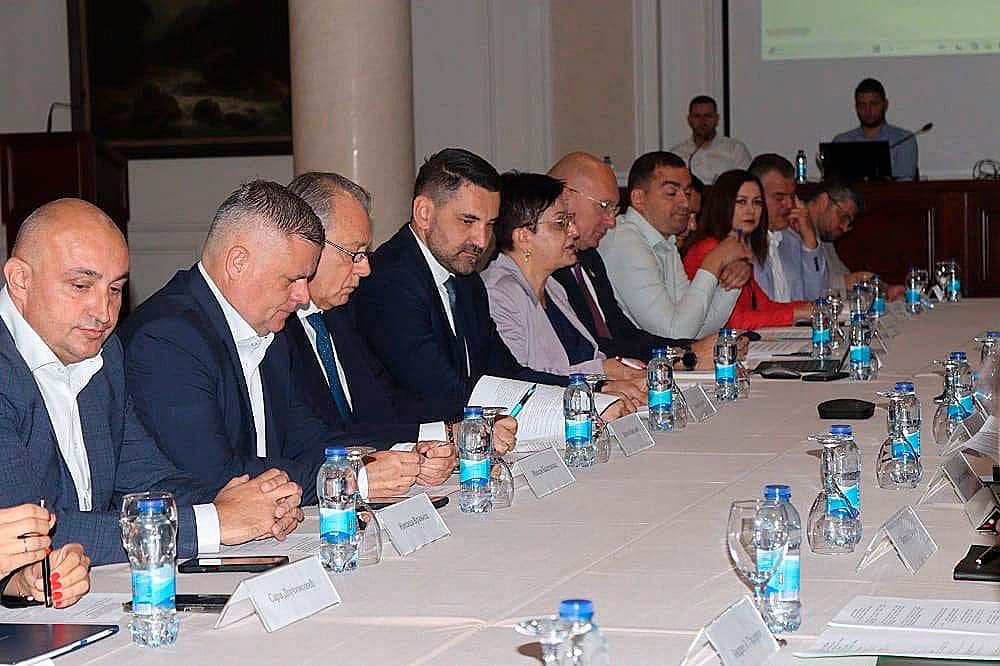
She chose to speak of certain “agreements” reached by the Working group on regional cooperation of Intergovernmental Commission between Russia and Republika Srpska on trade and economic cooperation, which had met back in June in Banja Luka.
It is worth noting at the outset that Republika Srpska is distinct from Serbia proper; it is a Serb quasi-republic within Bosnia and Herzegovina, controlled by the mafia clan of Milorad Dodik, a fervent proponent of the “Russian World” ideology.
Although Dodik was formally removed from the republic’s leadership late last year, he retains control over the levers of power there; we previously reported on the Crimean provocations orchestrated by Darinka Petrović, a propagandist from his captive TV channel, ATV.
Notably, no emissaries from the “authorities” of Crimea or Sevastopol were spotted at the aforementioned working group meeting in Banja Luka, nor has Vasilevskaya provided any names or specific details to date.
It is therefore highly likely that Russian intelligence had only just begun hastily cobbling together this “Crimean cooperation” with Dodik’s faction, in an attempt to fabricate a narrative of “breakthrough successes” retroactively.