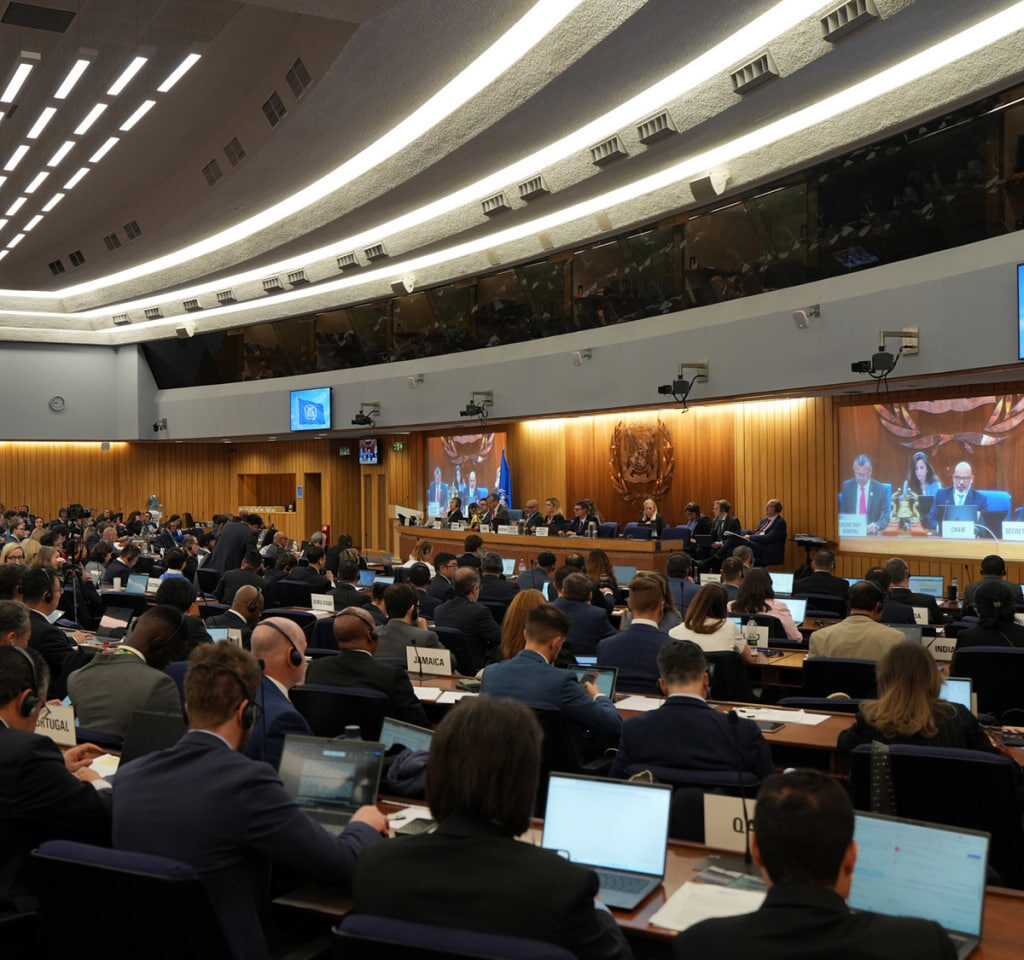
As the International Maritime Organization (IMO) informed last week, the IMO Legal Committee approved the first international guidelines to deter maritime fraud and misuse of flags. Relevant Guidelines were approved by the Legal Committee during its 113th session from 13 to 17 April 2026 at IMO headquarters in London.
A new set of Guidelines improves transparency and due diligence in ship registration, as well as prevents fraudulent registrations and misuse of flags.
The Guidelines help to close a key regulatory gap for the maritime industry, given there is currently no binding international framework to regulate the registration of ships.
The newly approved Guidelines will assist new and existing flag state ship registries by providing practical measures to strengthen verification and due diligence, ensure accurate ownership records, and improve oversight of registration procedures.
The IMO Legal Committee noted that the number of ships flying a false flag had increased since the previous session in 2025, with 529 ships falsely flying the flag of a country in the past year. Nearly 40 member states had seen cases of their flags being fraudulently used by criminal groups without their knowledge or consent.
The Guidelines focus on the legislation governance and control on who can perform registration of ships; the procedures for quality assurance in ship registration; the due diligence on ownership and ship identification and on ship identity and eligibility checks, as well as on the information sources and information sharing.
Let us remind, that fraudulent registrations and misuse of flags are key features of the Russian shadow fleet.
Earlier we informed IMO structures and international authorized bodies, also as the democratic states’ authorized officials on the Russian tanker oil traders’ illegal activities, relevant illegal activities of Crimean “crewing agencies”, of the global crewing structures, and vessel owners, also as issues of traces of Russian oil fleet corporations, in European States, also as risks from “Volgoneft” tankers and on Russian militaries as fake tanker “crew members”, also as on the issues of Russia-controlled oil terminal activities.
Our communication with international structures on those issues, including the next realization and implementation of the new IMO Guidelines adopted, will be continued.