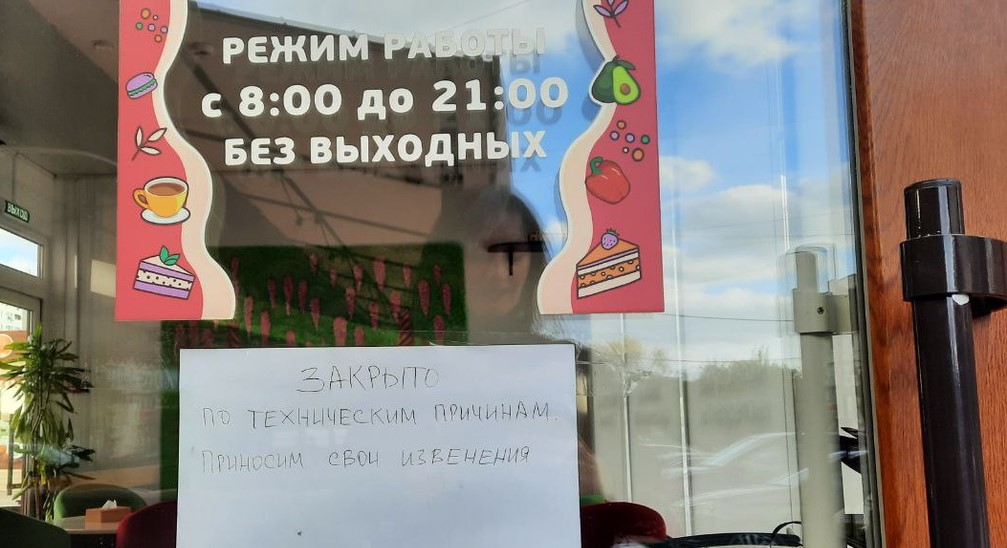
According to the occupation “press” and Crimean social media, “bankruptcy proceedings” have begun on the peninsula for the company “Sladkiy Lisyonok” (“Sweet Fox Cub”), controlled by a family of Sevastopol collaborators, Teymur Atakishiyev and his son Artem.
If we were to believe the occupiers’ claims, then this “startup,” allegedly started by Atakishiyev Jr. “in 2017 in a 23-square-meter workshop with an oven from ‘Eldorado’ store,” and which by last year had grown to a chain of 57 confectioneries in Crimea and Sevastopol, employing 230 people, allegedly hit a rough patch after the poisoning of six customers in 2024 and then “failed to recover.”
In reality, this rather large, multi-million business was a continuation of the elder Atakishiyev’s long-standing commercial activity, both at the “Zolotyi Yakyr” company, which had been heavily involved in the Sevastopol restaurant business before the occupation, and at “Prod-Servis”, which had been “running” the aforementioned confectioneries since 2018.
But the real reason for “Sladkiy Lisyonok”‘s current multi-million debts, including unpaid wages for dozens of employees, was the aggressor’s sharp increase in “taxes” since January.
It’s noteworthy that exactly a year ago, before the Kremlin’s announcements of a “fiscal tightening,” the same Artem Atakishiyev boasted to Sevastopol “media” not only of “returning to previous levels of operation,” but also promised to become “the largest food producer in Crimea” in October.
And already in November, anticipating the inevitable “new fiscal sweetness,” this same Atakishiyev declared that “some locations have been sold, most are closing. Unless some New Year’s magic happens, the enterprise will cease operations completely,” which is precisely what happened, with no “loans” or “subsidies” given to the confectioners.
This striking example of the “negative growth” of Crimean business in the “new tax reality” became public only because no one has been able to hide the disappearance of fifty confectioneries, while dozens of smaller businesses are now disappearing into the peninsula’s “new tax haven” without any mention of their fate.