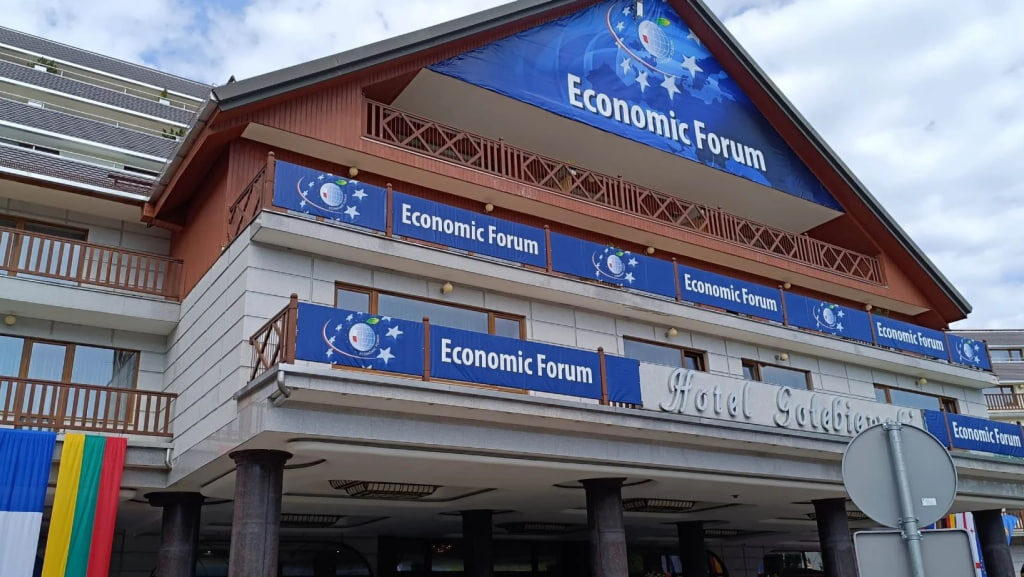
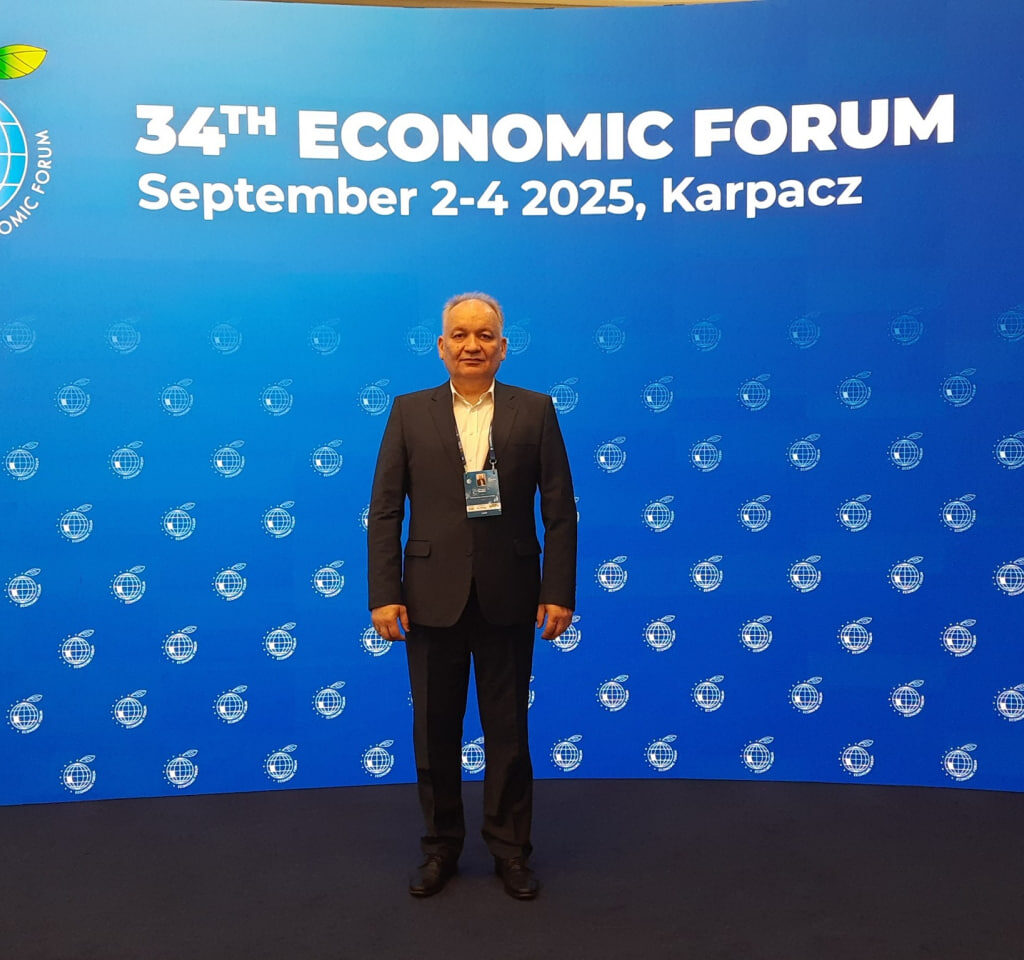
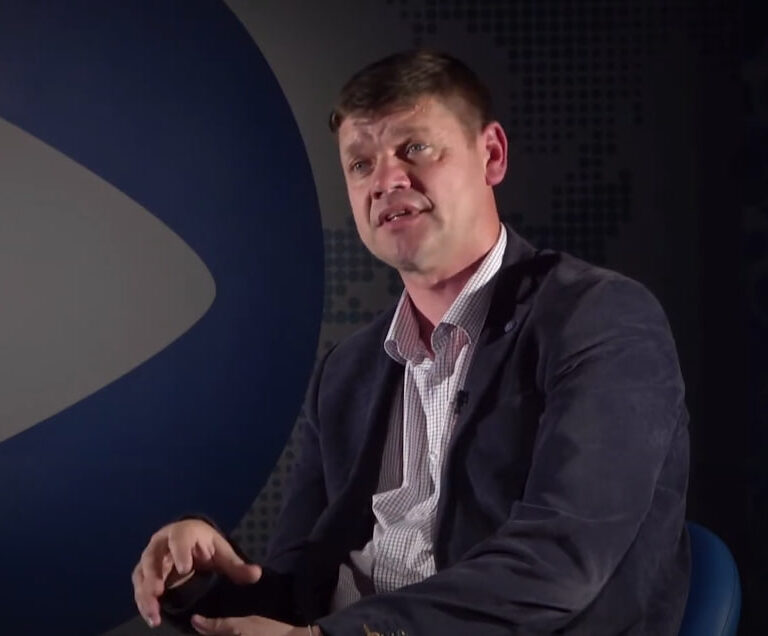
During the September 2-4 34th Economic Forum, “Time of Transition – What Future for Europe?” was held in Polish Karpacz, where Head of the Crimean Tatar Resource Center Eskender Bariiev participated with a report.
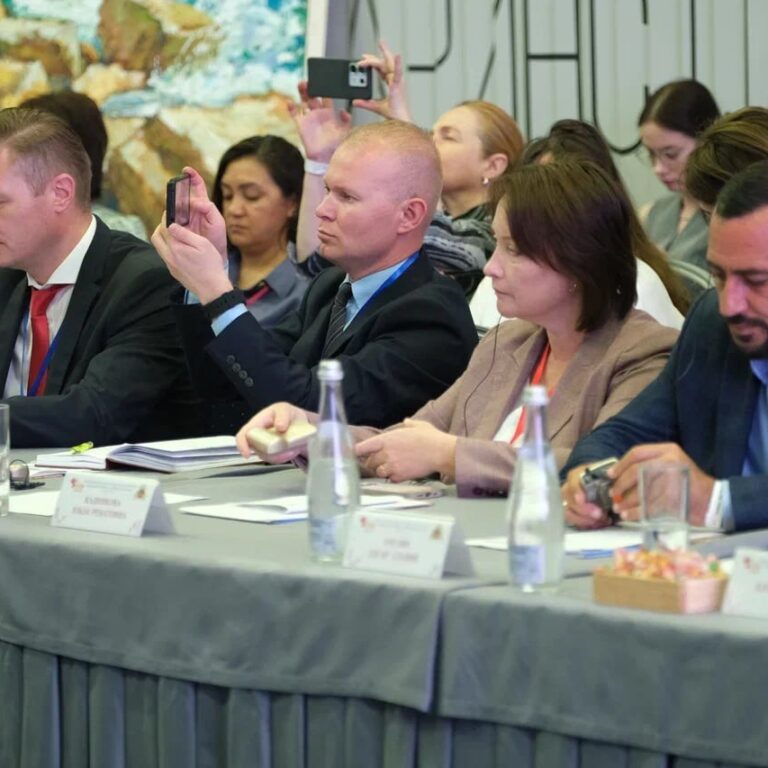
During the Forum, that united political, economic, and social leaders as well as more than 600 journalists from over 60 countries in Europe, Asia, and America, expert Bariiev reported on the panel “The struggle for power in the Black Sea” within the section “International politics and security.”
Eskender Bariiev stressed to Forum participants that the Black Sea region remains a zone of large-scale oil transit, and the activities of the Russian “shadow” tanker fleet have taken a special place here.
The oil ports of the Caucasian coast and the transshipment zone at the Kerch Strait have become not only the main hub for Russia to earn hundreds of billions to continue the war in Ukraine, but also a zone of maximum risk, which was proven by the December catastrophe of two “Volgoneft” tankers, which led the Black Sea ecosystems, if not to collapse, then to a large-scale crisis, expert stressed.
Eskender Bariiev added that at the same time, despite the large-scale damage to recreation and fisheries, the authorities of Georgia, Turkey, Bulgaria, and Romania chose to simply “not notice” this unprecedented event. The reasons for this are obvious: oil products from Novorossiysk, including those allegedly originating from Kazakhstan, continue to flow to their factories.
But Europe as a whole is also quite silent and overly tolerant of the Black Sea caravans of Russian tankers. This is not surprising: over the past months, journalistic investigations have proven the participation in this activity of ship owners and other players in the global maritime business from Greece, Latvia, Estonia, and others, including those who still maintain close business contacts with occupied Crimea, expert pointed.
Eskender Bariiev added that it is unlikely that in such a situation the relevant sanctions of the European Union will have the necessary effectiveness, which allows demagogues and populists to lobby for their cancellation.
Let us remind that after some resonant European media publications on those issues, our Association sent relevant submissions to authorized international agencies and sanction bodies of civilized states.
On September 4, we got the official confirmation from the European Commission’s Directorate-General for Financial Stability, Financial Services, and Capital Markets (FISMA) that our information will be used for the next EU sanctional activities.