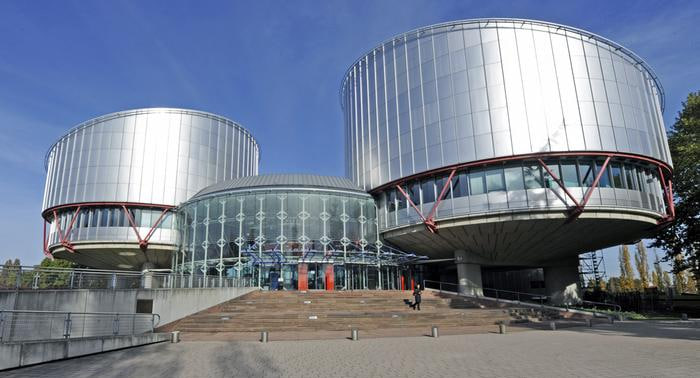
On July 9, the Grand Chamber of the European Court of Human Rights unanimously approved a judgment against the aggressor on interstate complaints by Ukraine and the Netherlands 8019/16, 43800/14, 28525/20 and 11055/22.
This decision describes the events of Russian aggression against Ukraine in the East since 2014 and the events of full-scale aggression, in the period until September 16, 2022, when the jurisdiction of the ECHR over Russia, which was excluded from the Council of Europe, was terminated.
As noted by the expert of the ARC Borys Babin, new judgment became unprecedented not only in terms of the volume of materials, but also in terms of the level and breadth of human rights violations established by the Court, it will undoubtedly become a key document in the future in assessing the consequences of aggression and forms of compensation for its victims.
The Court established its jurisdiction over human rights violations by Russia in the East since 11 May 2014, and determined that Russia had violated, prior to the full-scale invasion, as part of administrative practice, i.e. a deliberate state policy, Articles 2, 3, 4, 5, 8, 9, 10, 11, 13, 14 of the Convention, Articles 1 and 2 of Protocol No. 1 thereto.
This concerns murders, abductions, torture, violations of privacy, freedom of expression, religion and association, the rights to property and education, committed in conditions of discrimination on the grounds of political opinion and national origin, and in the absence of mechanisms for the protection of rights.
Among other things, it established the administrative practice of extrajudicial killings of civilians and Ukrainian servicemen who had left the fighting, the unjustified displacement of civilians and the use of filtration measures, intimidation, persecution and oppression of religious groups, the emphasis of the Court on the destruction and looting of homes and personal property.
The Court established the administrative practice of suppression of the Ukrainian language and indoctrination in education, the transfer to Russia and, in many cases, the adoption there of Ukrainian children, and requires the Russian Federation to immediately release or safely return all persons who were deprived of their liberty on the territory of Ukraine during the occupation until 16 September 2022 and who are still in the custody of the Russian authorities.
The Court also requires the Russian Federation to ensure the identification of all deported Ukrainian children, the restoration of contact between these children and their surviving family members or legal guardians, and the safe reunification of children with their families.
In this judgment, the Court repeatedly referred to its own previous judgment in an interstate case against the aggressor over Crimea, and repeatedly mentioned Crimea as a site of full-scale aggression.
Another important judgment was made by the Court on July 9, in a case against the aggressor on the complaints of the Google corporation (application 37027/22). Its subject matter was the trillion-dollar “fines” imposed by Russian courts for Google’s removal of the aggressor’s propaganda channel “Tsargrad” from its YouTube platform and for Google’s refusal to remove materials that covered Russian aggression against Ukraine and the state of affairs in Russia.
In this judgment, having examined, among other things, the role of “Tsargrad” and its owner, Russian Nazi Konstantin Malofeev, in the attempted annexation of Crimea, the Court found a violation of Articles 6 and 10 of the Convention against Google; As Professor Babin pointed out, this Court’s decision will play a significant role in further countering Russian propaganda, at least in the countries of the Council of Europe.