The problem of deliberately creating obstacles to satellite navigation by jamming, i.e. jamming the GPS signal, and/or spoofing – replacing the correct signal with a false one, has now become systemic in the Baltic region. The incidents recorded by Poland and its allies in June 2025 are already assessed as a direct threat to the safety of aviation, maritime navigation and the functioning of critical infrastructure.
The situation, in particular, taking into account the aggressor’s previous provocations in the sea waters around the occupied Crimea, was analyzed by our Association’s expert Eduard Pleshko.
With the beginning of Russia’s aggression against Ukraine in 2014, systematic massive cases of GPS spoofing began to be recorded in the region of the temporarily occupied Crimea. The American non-governmental organization “C4ADS” documented in its 2019 report that Russian electronic warfare (EW) systems were used more than 10,000 times to distort signals, which led to the display of false coordinates of ships and aircraft.
During the Syrian conflict in 2016-2018, Russia actively interfered with the operation of navigation systems in a new region, which threatened the flights of civilian aircraft in neighboring countries, in particular in Israel.
Since 2016, incidents of disruption of navigation systems near the Kaliningrad region, in the Baltic and North Seas have continued. Their intensity and scale have increased significantly after the start of the full-scale invasion of Ukraine.
The increase in the number of incidents has forced European countries to take active action in the international arena.
On March 17, 2025, Estonia, Latvia, Lithuania, Poland, Ukraine, Finland, France and the Netherlands sent a joint complaint to the authorized UN structure – the International Telecommunication Union with a demand to influence Russia to stop its sabotage (interference in the organization of the proper functioning) of the navigation field, which is formed by a constellation of specialized spacecraft.
Another 17 EU member states and the United Kingdom have expressed support for this appeal. The agreed position of the countries is that the consequences of satellite navigation disruption go far beyond technical failures and pose a multidimensional threat.
First of all, it is a real threat to life and safety. The loss of precise positioning (GPS) at sea and identification of seagoing vessels (AIS) can lead to their grounding, collisions in congested sea lanes with high risks for ship crews, passengers and the environment. GPS disruption makes it difficult to determine the exact coordinates of vessels in distress and makes search and rescue operations (SAR) less effective and endangers personnel.
Navigation disruptions lead to delays, changes in ship and aircraft routes, which causes significant economic and logistical losses, financial losses for transport companies and ports.
The loss of GPS signal and orientation for aviation in general is assessed as critical, especially in low visibility conditions or over water. Meanwhile, since September 2024 alone, more than 30,000 flights over the Baltic region have experienced navigation problems due to such failures.
Constant attacks undermine trust in global navigation systems, which are the basis of modern logistics and trade, forcing operators to look for expensive and less efficient alternatives, abandoning the potential of the latest technologies, hampering scientific and technological progress and civilizational development.
Finally, a number of European countries also recorded failures in the operation of satellites of two major European satellite providers: “Eutelsat” and “SES”, recognizing that Russia’s attempts to disrupt Ukrainian television broadcasts have had negative consequences for many other countries.
In particular, in the Netherlands, Russian propaganda appeared twice on the children’s TV channel “BabyTV”. And such actions, in our opinion, are already interference in the internal affairs of the affected countries with real harm to their society and democratic politics.
According to estimates at a press conference by the Deputy Prime Minister – Minister of National Defense of Poland, Władysław Kosiniak-Kamysz, disruptions with GPS signals over the Baltic Sea were recorded on June 17, 2025, the Polish side associates with hostile actions of the Russian Federation, which are not isolated cases, but a brazen demonstration by Russia of systematic illegal activities.
The actions of the Russian Federation, which pose significant threats to the safety of navigation, also include direct violations of international law.
These include an unconditional violation of Article 47 of the Statute of the International Telecommunication Union (ITU), which obliges members of the Union to take measures to prevent the spread of false distress signals and signals that are misleading.
Distortion of the GPS signal, which can lead to collisions between aircraft and ships, is a violation of the fundamental principles and several rules of the International Convention for the Safety of Life at Sea (SOLAS), which requires the use of reliable means of navigation to ensure safety at sea.
Finally, such actions by Russia are a violation of the “world maritime constitution” – the United Nations Convention on the Law of the Sea (UNCLOS-82), which, although it does not mention GPS directly, nevertheless requires compliance with the freedom of navigation and the right of innocent passage guaranteed by it, which cannot be implemented in conditions where vital navigation systems are compromised.
Among the documented cases of interference in the operation of navigation systems, there are facts of sabotage, for example, during the large-scale NATO exercises in Norway and Finland “Trident Juncture 2018”, when massive GPS signal failures affected not only civil aviation in northern Finland, but also, military units operating in clearly defined closed areas. Then the analysis showed that the source of interference was located on the Russian Kola Peninsula, where the military base of the Russian Northern Fleet is located.
Similar activities were carried out from military bases in the Kaliningrad region and elsewhere, and were clearly correlated with the range of use and other tactical and technical characteristics of Russian weapons.
The proven direct connection with the actions of Russian military personnel against military contingents of NATO countries is no longer just an international offense, it is a reason to assess such actions of Russia as a “casus belli”, that is, a “pretext for war” – a formal pretext recognized by international law for the launch of war by one state against another or a group of countries.
Thus, the problem of GPS jamming and other artificial violations of the normal functioning of the navigation field in the Baltic Sea is a serious, multidimensional threat that requires an immediate and coordinated response from many countries.
The presence of documented incidents and appeals to international organizations emphasize the urgency of this problem. This is not just a technical failure, it is a probable element of the international crime of aggression, and even targeted actions of the Russian Federation to unleash a new war against the countries of the region.
The further strategy should include not only diplomatic pressure, but also a proper international legal assessment of Russia’s actions, technological strengthening and deepening of military cooperation to guarantee the safety of shipping and aviation in the strategically important Baltic region.
The need to coordinate and strengthen countermeasures by NATO and the EU countries is becoming critically important, since ignoring this threat can lead to unpredictable and catastrophic consequences. Countermeasures can also be asymmetrical in nature, but they must be clearly linked to the root cause, adds expert Eduard Pleshko.
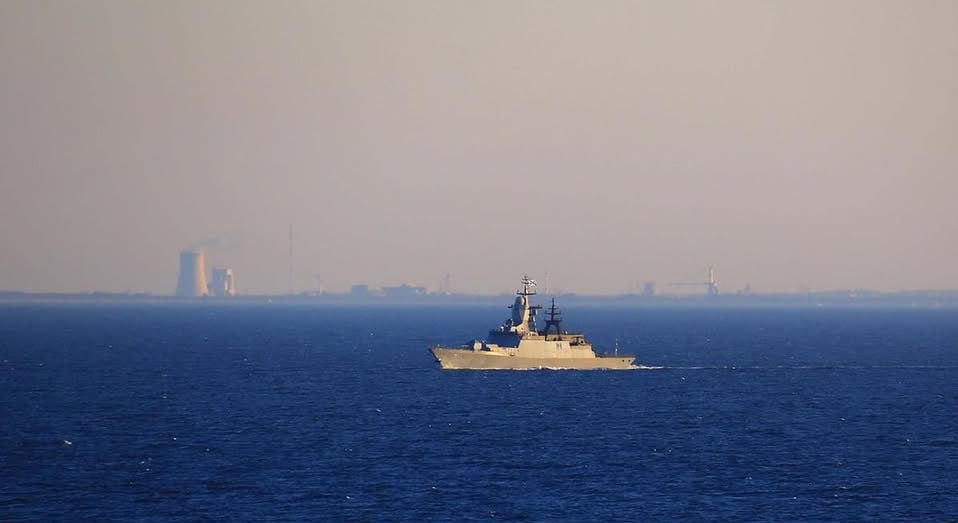
Photo DW