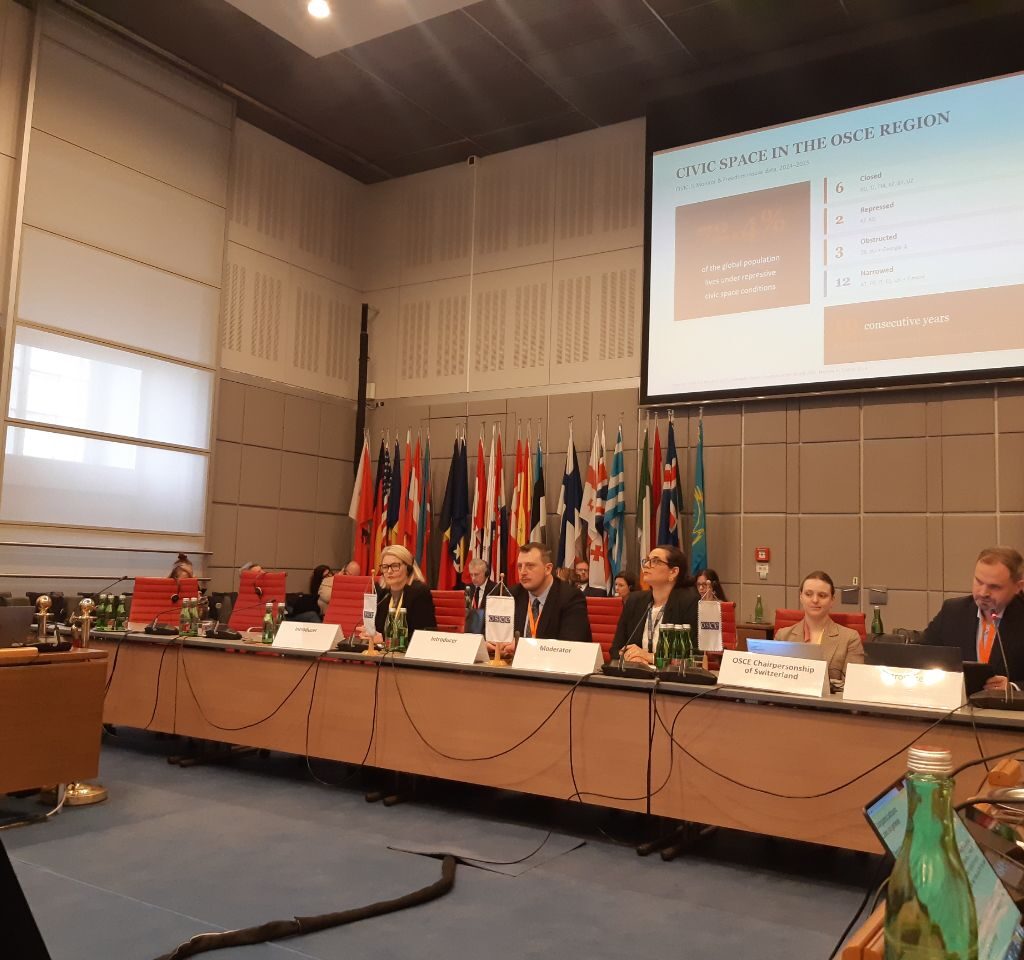
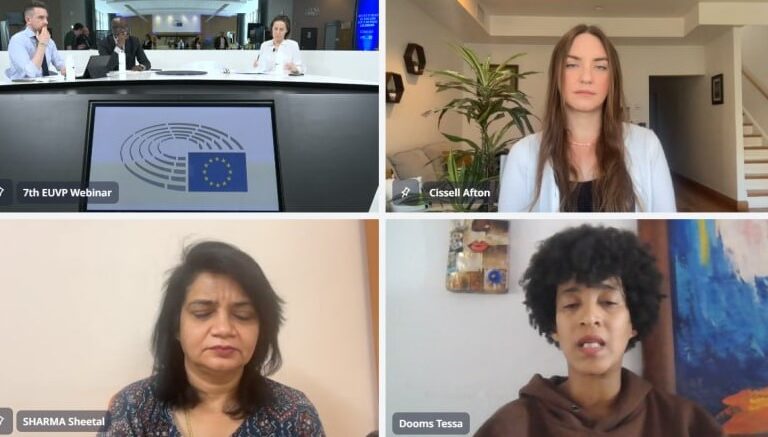
On March 17, ARC expert Borys Babin presented his report on the OSCE Supplementary Human Dimension Meeting “Lawmaking for Democratic Resilience” on issues of civil society participation in legislative countering of Russian aggression.
The expert stressed that the challenges of Russian war crimes, crimes against humanity, genocidal attempts, financing terrorism, Nazi propaganda, and racial discrimination must be counteracted by legal steps on the international platforms, so by national lawmaking, legal programming, and legal enforcement, including the universal jurisdiction.
Professor Babin reminded, that civil society plays an important role in such lawmaking steps of OSCE participating states as a reaction against Russian attacks on Ukrainian civil infrastructure, Russian crimes against prisoners of war, civil hostages, and deported children.
The expert gave examples of some strategic and program documents adopted by Ukrainian authorities regarding processes of reintegrating territories after their de-occupation and of the International Crimea Platform activities.
Professor Babin described the processes and results of four sessions of the Strategic Forum “Future of Crimea,” which were held three last years with more than forty key academicians and civil society representatives.
The expert pointed out the Strategic Forum’s elaborated proposals for the Ukrainian government regarding amendments to the strategic documents mentioned and to all democratic states regarding the issues of the further institutionalization of the International Crimea Platform and of strengthening its activities.
Elaborated versions of the draft Regulations of the Crimea Platform Expert Network and of the Crimea Platform Expert Network Policies were discussed, and our expert invited OSCE states, civil society, and academician experts to participate actively in the Third Black Sea Security Conference, under the auspices of the International Crimea Platform, that will be held in Moldova next week.