In framework of permanent cooperation with United Nations’ bodies and agencies, our Association sent the input to Office of UN High Commissioner for Human Rights, devoted to aspects of realization of the rights to work and to social security in the informal economy, in the context of sustainable and inclusive economies, for relevant report executing Human Rights Council’s resolution 55/9.
Our input, published at UN official web-sources now, described the situation with informal economy at occupied Crimea in the modern conditions. It stressed that after 2014 part of informal economy enlarged in the Crimea as the Russian legislation, illegally implemented in the region, marginalized some areas of small business, including recreation sector, small agrarian enterprises and fishery.
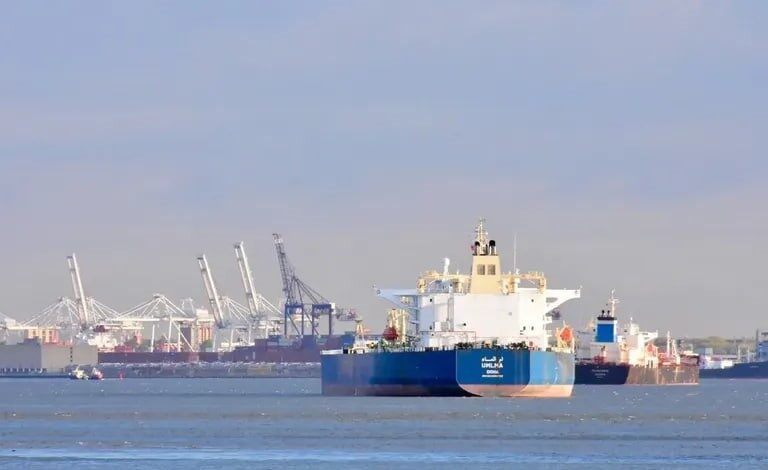
ARC’s input added, that new challenges for the issue of local informal economies at occupied territories, including indigenous sector and land challenges, in environmental and water supply framework, were caused by destruction the dam of Kakhovka HPP on Dnipro River by Russian military units in 2023 and after the catastrophe that occurred on December 15, 2024 in the waters of the Black Sea south of the Kerch Strait with the Russian tankers “Volgoneft-212” and “Volgoneft-239” which polluted maritime spaces by some thousand tons of fuel oil.
ARC’s input described next challenges for Crimean local informal economies, including indigenous sector and land challenges, that appeared in the Russia-occupied Crimea in 2025, when in March illegal “republican authorities” started campaign of “confiscation” agricultural land plots, gardens and vineyards. Input reminded that earlier the occupiers repeatedly demanded Crimean residents, including indigenous ones, to “re-register their land”, complaining about “lost tax revenues” and declaring that the “innovations” also pursue a “fiscal goal”.
ARC’s input added that now, if the “unified state register of real estate” does not contain information about the plot or even its boundaries, then “the procedure for transferring ownership of the plot will be suspended”. It is obvious that, at a minimum, the corrupt income of the occupation “registrars” and “courts” on this issue will increase significantly, ARC pointed.
ARC’s input stressed that on 2025 the Russian occupiers plan to “seize from the owners” more than 170 thousand hectares of agricultural land in the occupied AR of Crimea. Now they are talking not only about those lands that allegedly “have not been cultivated since 2014”, but also about an “inventory” of orchards and vineyards, with the seizure of “lands that have not been cultivated for more than three years”.
And more, as it “suddenly turned out” that the occupiers “do not know the realities” in this area, claiming that those sector is allegedly informal, but this “ignorance” is naturally not the reason, but the pretext for a large-scale redistribution of lands, following the results of the “Rosselkhoznadzor inspection” of 78 vineyards.
They are covering up this “initiative”, carried out in the obvious interests of the collaborators’ clan, by “the entry into force of amendments to the federal law on viticulture and winemaking”. But it is obvious, that the specifics of gardens and vineyards allow for Russian occupiers to “prove” alleged “mismanagement” easily, and even more so “non-compliance with documents” on “the location of the vineyard, planting scheme, varietal composition, etc.”
It is obvious that soon many of the most lucrative Crimean lands, with the “light hand” of the black marketers from the Vladimir Konstantinov’s “state council of Crimea”, will receive “new owners and tenants”, ARC’s submission summarized.