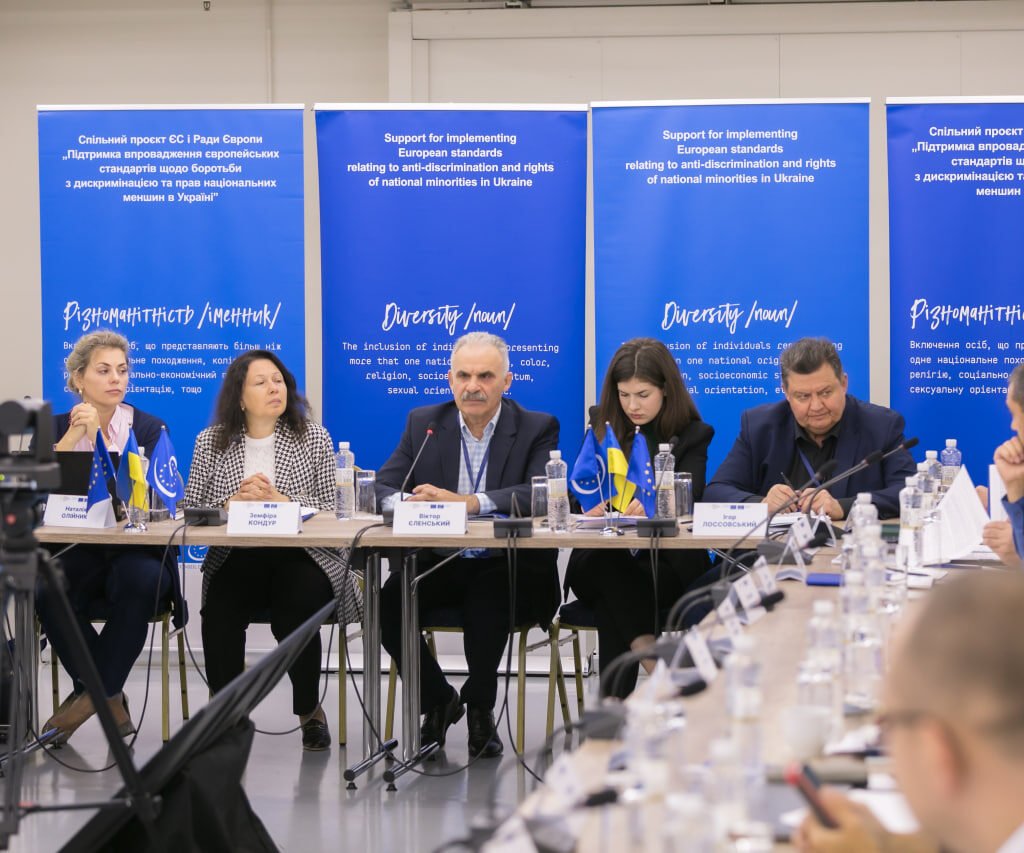
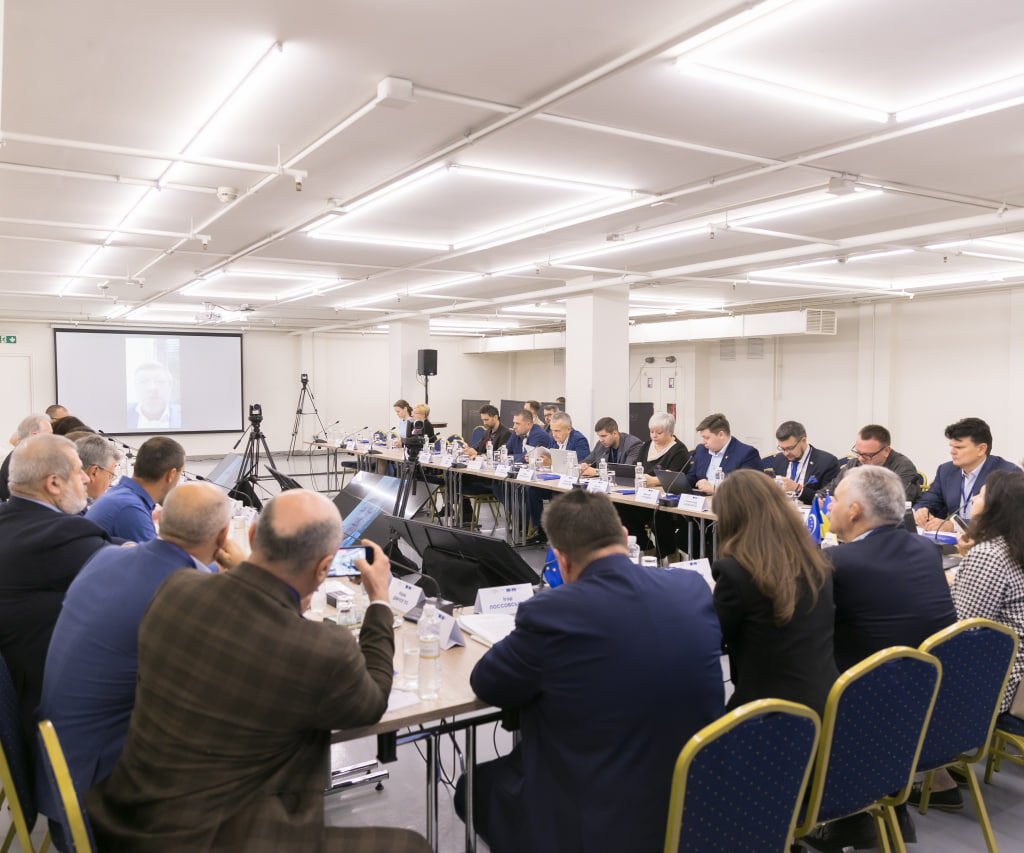
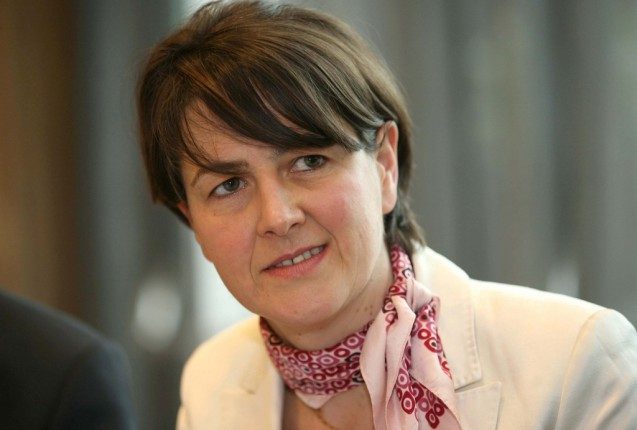
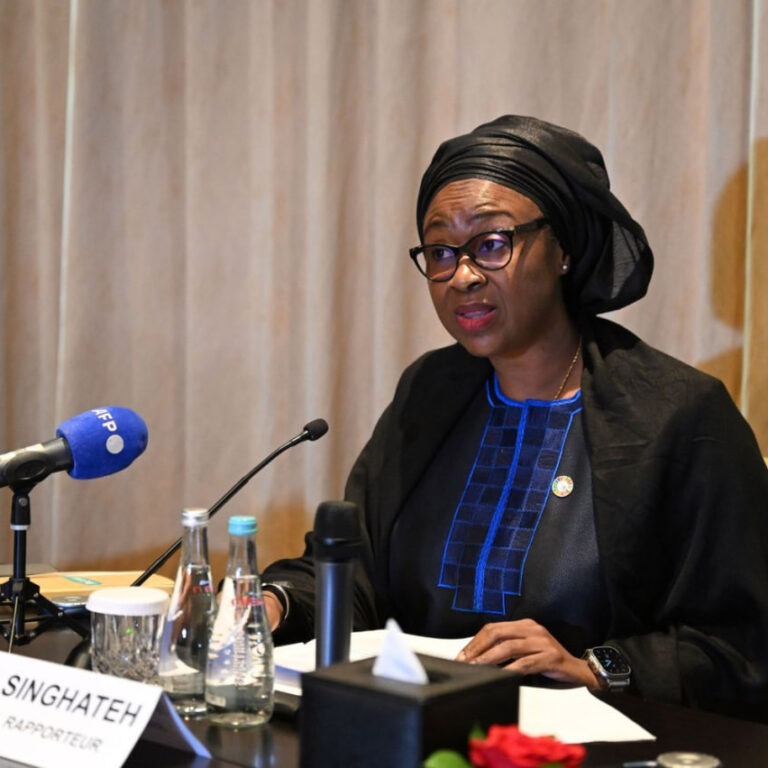
On October 1, experts from our Association, Borys Babin and Anna Prykhodko, participated in a roundtable titled “The Gagauz of Ukraine: History of Formation, Protection of Identity, and Issues of Legal Status,” moderated by the Council of Europe and the State Service of Ukraine for Ethnic Policy and Freedom of Conscience.
The event addressed persistent demands from certain political figures, linked to major cross-border business interests, to recognize the Gagauz as an Indigenous People of Ukraine through amendments to current legislation.
Participants included members of parliament, scholars, and representatives of executive authorities, as well as Crimean Tatar, Karaite, and Gagauz organizations. In his remarks, Professor Babin emphasized again that the Gagauz are undoubtedly a distinct ethnic group whose cultural and educational rights Ukraine must guarantee in accordance with its international obligations and legislation regarding ethnic communities.
At the same time, the ARC expert reiterated that the Gagauz do not qualify for the status of an indigenous people of Ukraine under international standards in this area. He further noted that a meaningful discussion of this issue is impossible without the involvement of UN officials and experts mandated to address indigenous peoples’ issues, and without dialogue with the authorities, academic community, and civil society of Moldova, where the majority of the Gagauz people reside. Professor Babin pointed out that, according to international standards, Indigenous Peoples are victims of colonization rather than groups that colonized specific territories, such as during European or Russian expansion; furthermore, the existence of the Gagauz-Yeri territorial entity in Moldova, whose leadership maintains an openly pro-Russian stance, precludes viewing the Gagauz as a stateless ethnic group.
Particular attention was drawn to the commercial motives behind these demands, specifically the aim to extend legislation regarding indigenous peoples, covering areas such as land and subsoil use, beyond Gagauz-inhabited districts to the entire Odesa region.
Additionally, emphasis was placed on the security challenges posed by these processes and their negative impact on Ukrainian-Moldovan and Ukrainian-Bulgarian relations, particularly given the aggressor’s current drive to destabilize the Ukrainian Budjak region using all Russian-controlled assets and means, following the “Crimea scenario.”