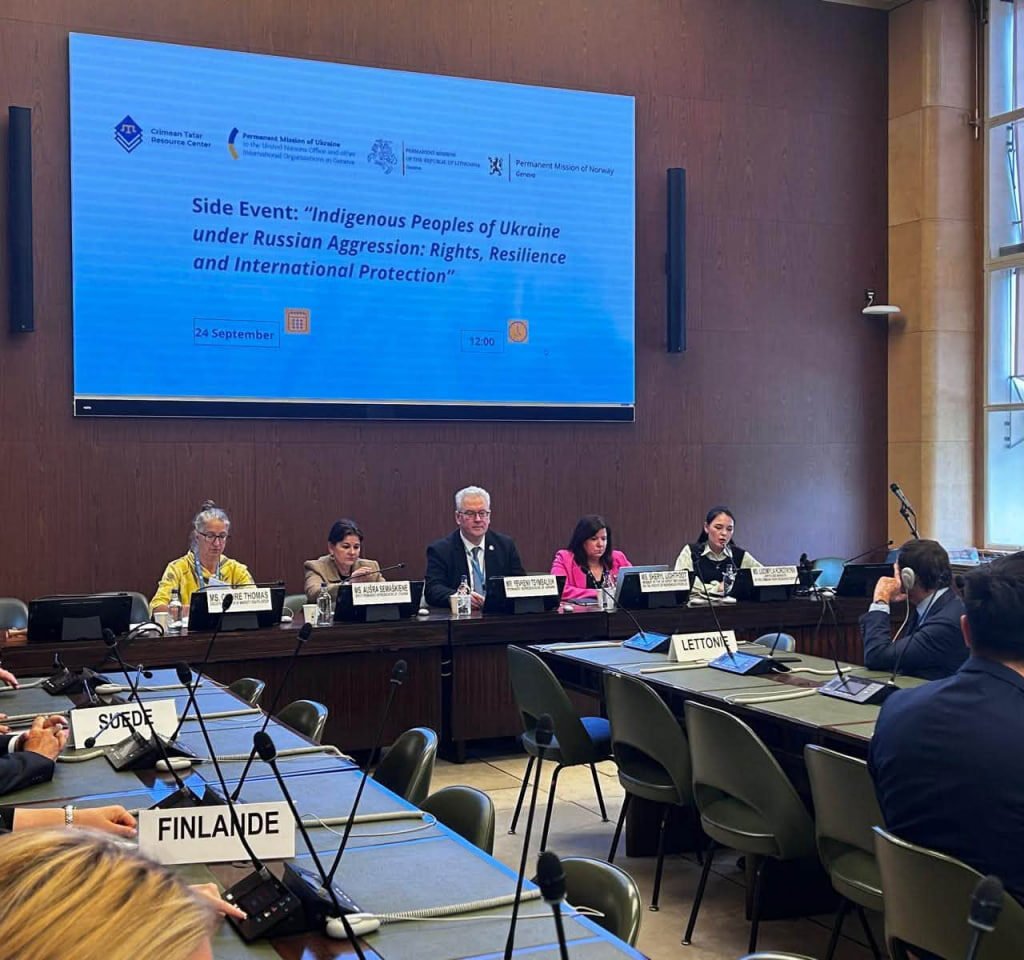
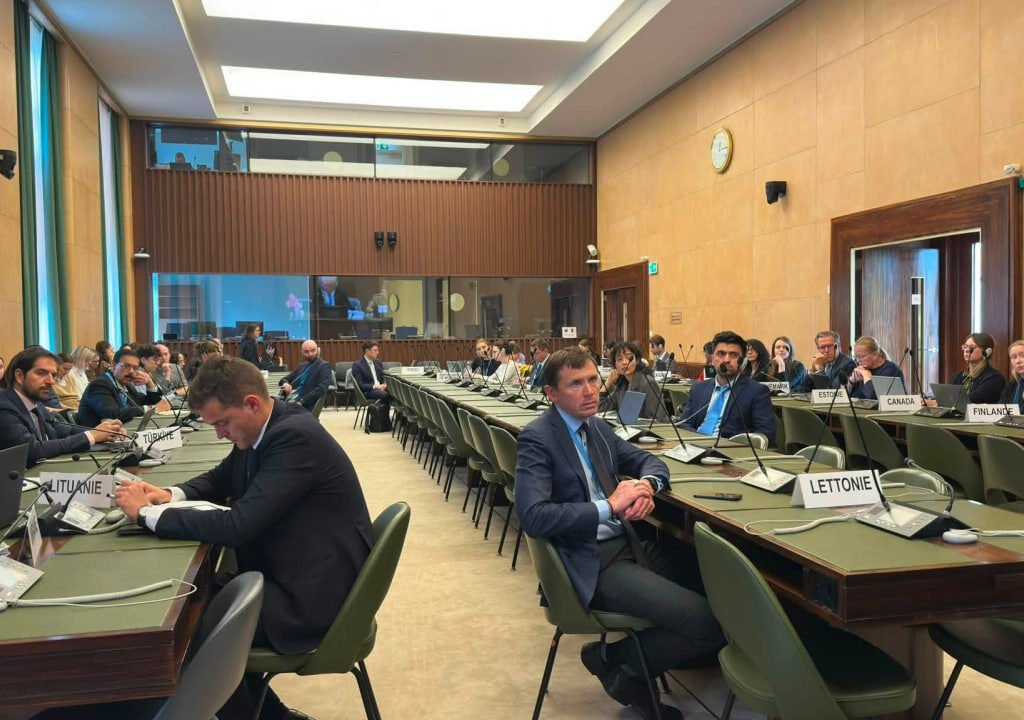
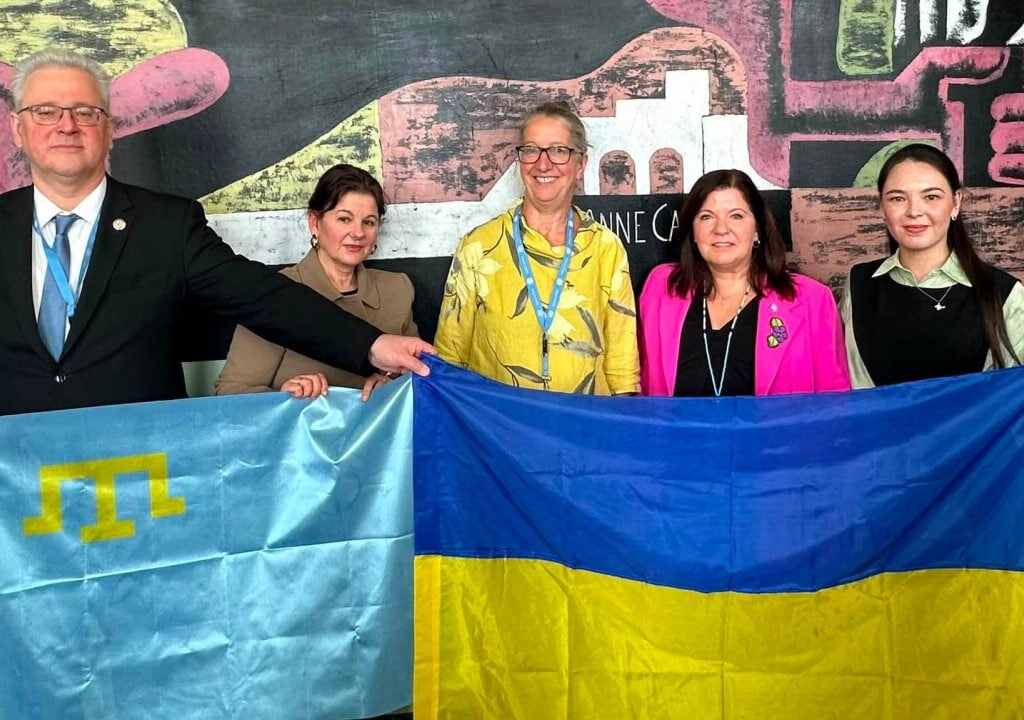
On September 24, a side event “Indigenous Peoples of Ukraine Amidst Russian Aggression: Rights, Resilience, and International Protection,” organized by the Crimean Tatar Resource Center, took place in Geneva during the 63rd session of the UN Human Rights Council.
At the event, Claire Thomas, Executive Director of “Minority Rights Group”, emphasized that “we could cooperate more actively with Crimean Tatars, identify individuals involved in crimes, and initiate proceedings against them based on the principle of universal jurisdiction; this could have a strong deterrent effect.”
Ukraine’s Permanent Representative Yevhenii Tsymbaliuk stressed that for Ukraine, the issue of protecting the rights of indigenous peoples is inextricably linked to the reality of the Russian occupation of Crimea, which is accompanied by systematic violations of human rights and fundamental freedoms. Meanwhile, Aušra Semaškienė, Deputy Permanent Representative of Lithuania, spoke about the 1944 deportation of Crimean Tatars and the ongoing persecution of Crimean Tatars in occupied Crimea.
Sheryl Lightfoot, a member of the UN Expert Mechanism on the Rights of Indigenous Peoples, discussed the Mechanism’s activities and a recent study on the rights of indigenous peoples in conflict and post-conflict situations. She emphasized that for indigenous peoples, peace means not only the cessation of conflict but also the creation of conditions for the realization of their rights and dignity.
Eskender Bariiev, Head of the Center, drew particular attention to the establishment of a Special Tribunal for the crime of aggression against Ukraine. He emphasized the importance of ensuring that the future work of the international accountability mechanism takes into account not only the context of the full-scale aggression that began in 2022 but also the broader context of Russian aggression, including the occupation of Crimea.
He highlighted the role of indigenous organizations from democratic states, which can provide relevant expert, legal, and organizational support, document violations, and participate in international dialogue, aligning with the recognition of the role indigenous peoples play in conflict prevention, peacebuilding, and the establishment of sustainable peace.
Bariiev also noted that when devising mechanisms for utilizing frozen Russian assets, it is essential to consider the collective dimension of the harm inflicted upon the Crimean Tatar people and to provide for the participation of their representative body in determining priorities for the use of these funds.