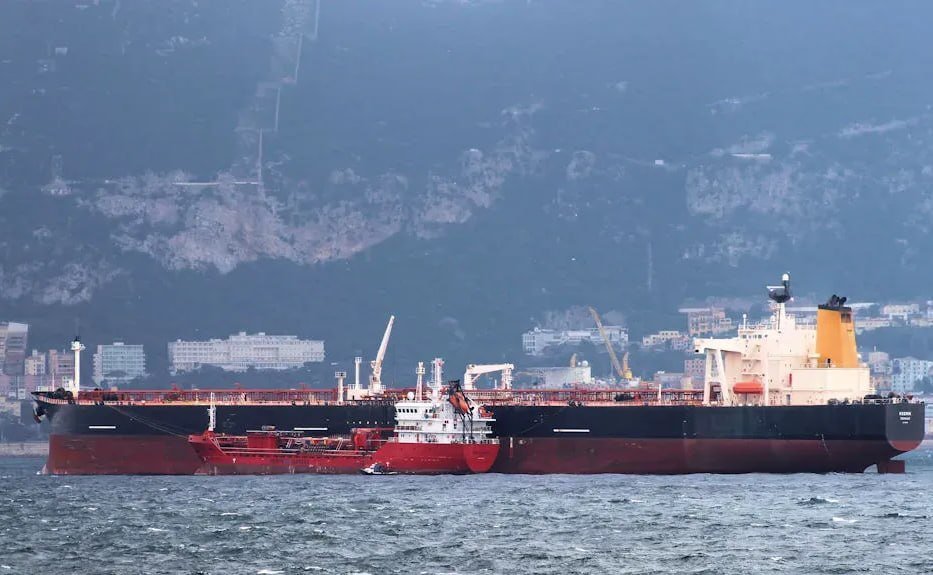
A few weeks have passed since the Kremlin dictator’s statement on August 12 aboard the cruiser “Varyag” while visiting the final stage of the Russian Pacific Fleet’s exercises, while actually on the occupied Japanese territory of the Kuril Islands. The gist of the statement was a direct Russian threat that the Russian Navy might “symmetrically seize” civilian ships from Western countries, supposedly as a countermeasure to their actions taken to counter violations of international law by the shadow fleet.
The very name of the Russian warship, the city, and the gist of the speech were clearly intended to demonstrate the delivery of a “cognitive strike.” To stage such a show in the occupied Crimea or even somewhere near the waters of the Black and Azov Seas, or even the Baltic Sea, would be simply ridiculous. However, the statement caused assessments by analytical media, as well as discussions by specialists and experts associated with leading international analytical centers (Atlantic Council, MEI, RUSI, CSIS, IISS) and the maritime industry. The situation was analyzed by experts from our Association, Oleksii Plotnikov and Eduard Pleshko.
Summarizing the publications of Western expert circles and analytical centers of leading Western analysts, we can highlight several key vectors of assessing the situation. In particular, common to all assessments is the recognition of the legal asymmetry of the Russian approach. All experts almost unanimously emphasize the falsity of the Kremlin’s narrative about the “mirror” nature of the measures. The detention of Russian shadow fleet vessels by Western countries (USA, Great Britain, France, Sweden) takes place within the framework of the UN Convention on the Law of the Sea. The grounds are the absence of a legal flag, the absence of certified insurance, violation of sanctions regimes, smuggling or the danger of an environmental disaster.
When it comes to the detention of ships that do not fly the flag of the Russian Federation, one should remember Article 92 of the UN Convention on the Law of the Sea, according to which ships must fly the flag of only one state and cannot change their flag arbitrarily. They fall exclusively under the jurisdiction of the flag state, and if the ship does not fly the flag of Russia, its detention cannot be the basis for any international processes initiated by Russia. Let us recall that both the formal shipowners and captains of the detained ships are usually not Russian legal entities or citizens.
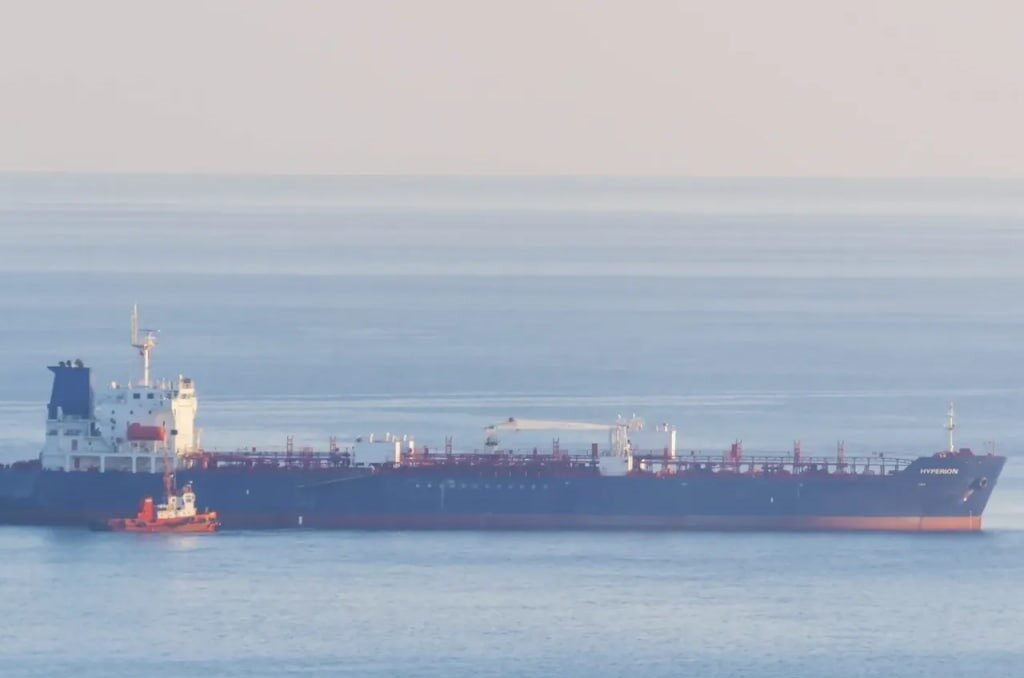
From the point of view of international maritime law, which exists in reality, and not in the imagination of the autocrat, the detention of ships illegally transporting Russian oil is not the piracy. The “mirror” response is also not mirror, that is, there is no analogy between the actions of European governments and the possible seizure of ships of European states.
The simplest explanation is that Russia cannot apply the “mirror response” to ships under the flag of European countries, since these countries do not have a shadow fleet. States against which international sanctions are imposed, for example, Iran and Venezuela, resort to a similar practice. As a rule, the shadow fleet is used to transport oil products and other raw materials to circumvent such sanctions. In addition, ships operated by democratic state owners and transporting cargo in the interests of their business do not use schemes with the absence of a legal flag, have proper insurance, and are not ships serving the interests of a party to an interstate conflict.
But regarding to Russia’s shadow fleet vessels the purpose of their use (circumvention of sanctions) and the methods used (frequent changes of names, flags, and owners, concealment of information, masking of location, transmission of false identification signals, etc.) are similar to those in order to sell sanctioned products in foreign markets, where buyers are willing to buy raw materials of dubious origin. The actions of shadow fleet ships often violate the norms of international maritime law, but European countries have not been able to create a strategy to counter such violations.
Can the detention of shadow fleet ships, which is resorted to by countries that have imposed sanctions, be considered piracy? Absolutely not. To understand the legal nature of the actions of European states regarding the vessels of the Russian shadow fleet, it is necessary to distinguish two elements. The first is the reason for the detention, which is to circumvent sanctions. The second is the basis for the detention, which may be individual for each specific vessel.
Sanctions against Russian hydrocarbons, which were introduced by European countries, have a completely practical goal – to reduce the oil and gas revenues of the aggressor state, and thereby undermine its ability to wage war. Such sanctions are implemented through two main mechanisms: restrictions or bans on the import of Russian petroleum products to EU countries, and through the establishment of a price cap for the sale of such products. The first mechanism is quite obvious, because Europe does not buy Russian oil. The second – more complex – is directly related to actions against the Russian shadow fleet. To understand it, you need to understand who sets the price cap and for whom.
We should start with the fact that there is no general international sanctions regime against the Russian Federation. Such a regime could be created by the UN Security Council, which has experience in implementing a full trade embargo on Iraq in response to its aggression against Kuwait in 1990 (Resolution 661), imposing restrictions on trade, including energy, with the former Yugoslavia in 1992 (Resolution 757), anti-government groups in Libya since 2011, and North Korea in 2017 (Resolution 2375). In particular, the Security Council has full authority to introduce measures to inspect and detain ships, as it did in 2014 with Resolution 2146 on Libya. No such measures have been introduced against the Russian Federation due to the infamous veto power.
In the conditions of paralysis of the main international institution responsible for maintaining peace, states have been forced to resort to legitimate measures against the violator of international law. Such measures can be considered within the framework of collective self-defense in accordance with Article 51 of the UN Charter and the customary law of international responsibility, as reflected in the Draft Articles on State Responsibility, in particular Article 21 about self-defense. It is also possible to speak of the application of countermeasures against the offender within the framework of the mechanism of Article 22 regarding the countermeasures in respect of an internationally wrongful act.
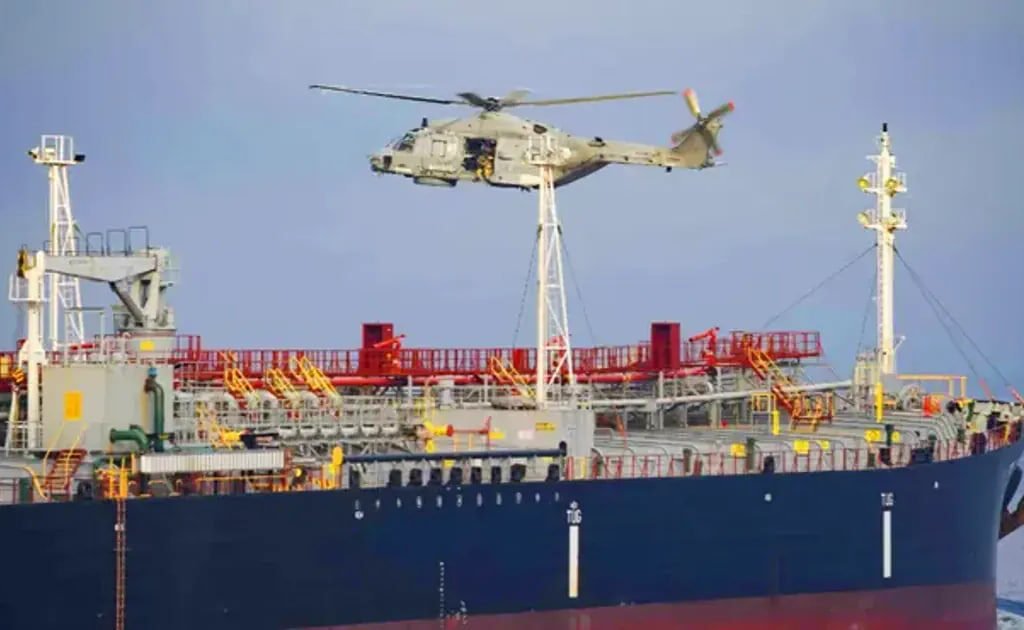
However, in order to avoid some additional complications (for example, the obligation to inform UN bodies about self-defense measures), the European Union and individual states avoid referring to these mechanisms and justify their actions by EU law itself. In EU law, the basis for the application of sanctions is Article 29 of the Treaty on European Union and Article 215 of the Treaty on the Functioning of the European Union, which allow for joint decisions on political issues, including the interruption or reduction of economic and financial ties with third countries.
One of such measures was the establishment of maximum prices for Russian oil products, for which the Price Limitation Coalition was formed, which includes the EU, the G7 countries and Australia. On December 3, 2022, the maximum price was set at $ 60 per barrel, and on July 18, 2025 it was reduced to $ 47.6 per barrel. It is important to understand that this is not about banning third countries from buying Russian oil. Neither the EU nor the G7 can impose trade restrictions on third countries, even those that do not disdain to buy raw materials from the aggressor state. What they can do is not to assist in such trade.
Therefore, EU documents, for example, Regulation No. 2022/2367 of December 3, 2022, or Regulation No. 2026/124 of January 14, 2026, use the wording on prohibition of maritime transport and prohibition of technical assistance, brokering services or financing or financial assistance related to maritime transport to third countries of crude oil or petroleum products originating in or exported from Russia, purchased cheaper than the established price limit agreed by the Price Limit Coalition.
These restrictions allow tankers with Russian oil products not to be accepted in European ports and not to be provided with services by companies registered in EU member states. However, they do not affect the actions of third countries and companies registered in third countries. The principles of freedom of navigation and innocent passage through the territorial waters of states, enshrined in the 1982 Convention, also play into the hands of the aggressor state. Therefore, in each specific case, a specific violation of international maritime law is required, which would allow for detention.
At first glance, the simplest option seems to be to detain a ship for displaying a false flag under Article 110 of the 1982 Convention, which allows warships of states to inspect ships suspected of unlawful acts, including those that do not have nationality. However, the right to inspect does not mean the right to confiscate the ship and cargo. Therefore, ships detained under Article 110 are usually released after completing certain legal procedures.
Thus, on April 11, 2025, Estonia detained the tanker “Kiwala”, which was transporting oil from the Russian Ust-Luga under the flag of Djibouti. On April 28, the ship was released after confirmation of Djibouti’s consent to include the tanker in its registers. On January 22, 2026, France detained the tanker “Grinch” under the flag of the Comoros Islands. On February 17, the ship was released after paying a fine. The name was changed to “Transformer”, the flag to Russian, and as of now, according to the “VesselFinder” resource, the ship is in the Indian Ocean.
On March 20, 2026, France detained the tanker “Deyna” under the flag of Mozambique. On April 16, the ship was released after paying a fine, and is currently in the area of Singapore. On May 31, 2026, France detained the tanker “Tagor” under the flag of Cameroon. A month later, it was released after paying a fine. It is noteworthy that on June 2, 2026, the Shevchenkivskyi District Court of Kyiv seized the “Tagor” as material evidence, but this measure did not prevent the release of the tanker. On August 15, 2026, the ship entered the Black Sea, after which its traces are lost, which may indicate its continued activities within the shadow fleet.
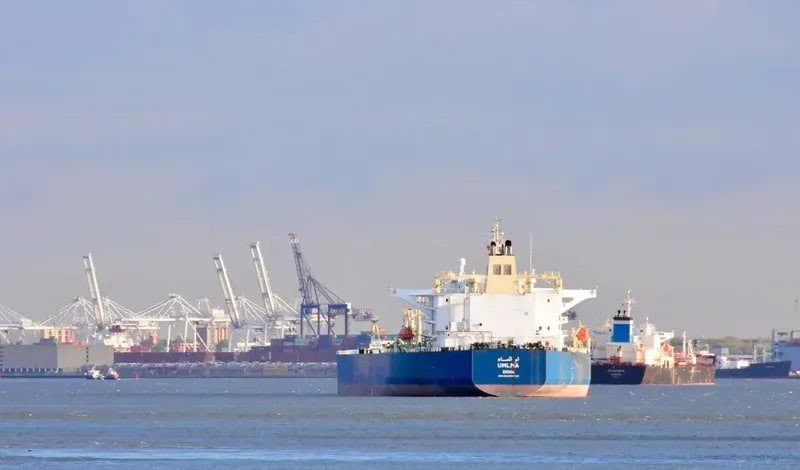
Some ships detained for displaying a false flag remain under arrest, but this arrest is usually related to an ongoing investigation, rather than a fundamental decision to confiscate. For example, Belgium is holding the tanker “Ethera”, detained on March 1, Guinean flag, pending the payment of a bail of 10 million euros. Sweden is holding the tanker “Sea Owl”, detained on March 6, Comorian flag, and the United Kingdom is holding the tanker “Smyrtos”, detained on June 14, Cameroon flag. The captains are under investigation on suspicion of document fraud.
Time will tell whether the European countries’ Themis will find an opportunity to apply more serious measures to them than fines for violating the rules of the vessel’s nationality. Some ships of the Russian shadow fleet are not limited to transporting sanctioned cargo, and are used for sabotage. Such actions may violate the right of innocent passage enshrined in the 1982 Convention. In particular, Article 19 of the Convention prohibits actions that cause harm to the coastal state, including any use of force, the launch of lethal weapons, and actions aimed at interfering with the coastal state’s communication systems. Unfortunately, the response of European law enforcement agencies to such acts of sabotage remains sluggish.
Thus, the tanker “Eagle S” under the flag of the Cook Islands on December 25, 2024 damaged the submarine cable “Eastlink 2” between Finland and Estonia. The vessel was detained by Finland, but the Finnish court did not find sufficient evidence that the damage was intentional and released the tanker on October 3, 2025. In early 2026, “Eagle S” was recorded off the coast of Turkey, further information about it is missing. On December 31, 2025, the freighter “Fitburg” under the flag of St. Vincent and the Grenadines damaged another cable in the Gulf of Finland. It was detained by Finland, but released on January 12, 2026 after the completion of investigative actions. The vessel changed its name to “Finex” and is currently in the Mediterranean Sea.
In addition to damaging underwater infrastructure, the ships of the Russian shadow fleet regularly carry out provocations using drones. For example, on September 7, 2025, Germany detained the vessel “Scanlark” under the flag of St. Vincent and the Grenadines on suspicion of launching drones that flew over a German Navy ship. A Russian-speaking crew and equipment that could be used in espionage activities were found on board. Despite this, the vessel with the entire crew was released, changed its name to “Budva”, raised the flag of St. Kitts and Nevis, and continues to sail the world’s oceans.
And the story of the detention of the tanker “Boracay” by the French authorities on suspicion of launching drones over Denmark looks completely anecdotal. It turned out that “Boracay” is the new name of the tanker “Kiwala”, which was mentioned above. Despite Djibouti’s promises to include the vessel in its registers, it flew the flag of Benin. Detained on August 30, 2025, the tanker was released on October 4. The captain, a Chinese citizen, who simply ignored a summons to the French court, also left with the vessel. Currently, the same vessel, called “Phoenix” and flying the Russian flag, is in the Yellow Sea.
As we can see, the actions of European governments can hardly be called “piracy”, because it is difficult to imagine pirates peacefully releasing a captured vessel and cargo. Rather, we are talking about rare and unsuccessful attempts to somehow interfere with Russian oil trade, which do not have a noticeable impact on it. There are individual cases when the authorities of European countries try to do something more than temporary detention. For example, since January 9, 2025, the tanker “Eventin” has been under arrest in Germany, which drifted into German waters due to an accident.
The customs authorities even ordered the ship to be confiscated as not belonging to any state, because Panama, under whose flag it sailed, excluded it from its register. However, the owners appealed this decision, and the dispute has now reached the Court of Justice of the EU. Another example was given on August 5, 2026 by the Supreme Court of Sweden, which ordered the seizure and transfer to Ukraine of the Guinean-flagged ship “Caffa” for participation in smuggling Ukrainian grain. However, for now these are only exceptions that prove the rule. The EU lacks a strategy to counter the Russian shadow fleet, which abuses the protection provided by international maritime law, the violation of which the Russian dictator so vehemently claims.
Instead, the announced possibility of a Russian warship forcibly intercepting a legal civilian vessel under the flag of a sovereign state on the high seas is assessed as an attempt to create a new regime of forcible deterrence to force the West to abandon legal and law enforcement pressure on Russian oil exports and stolen grain. At the same time, such actions are not based on international law.
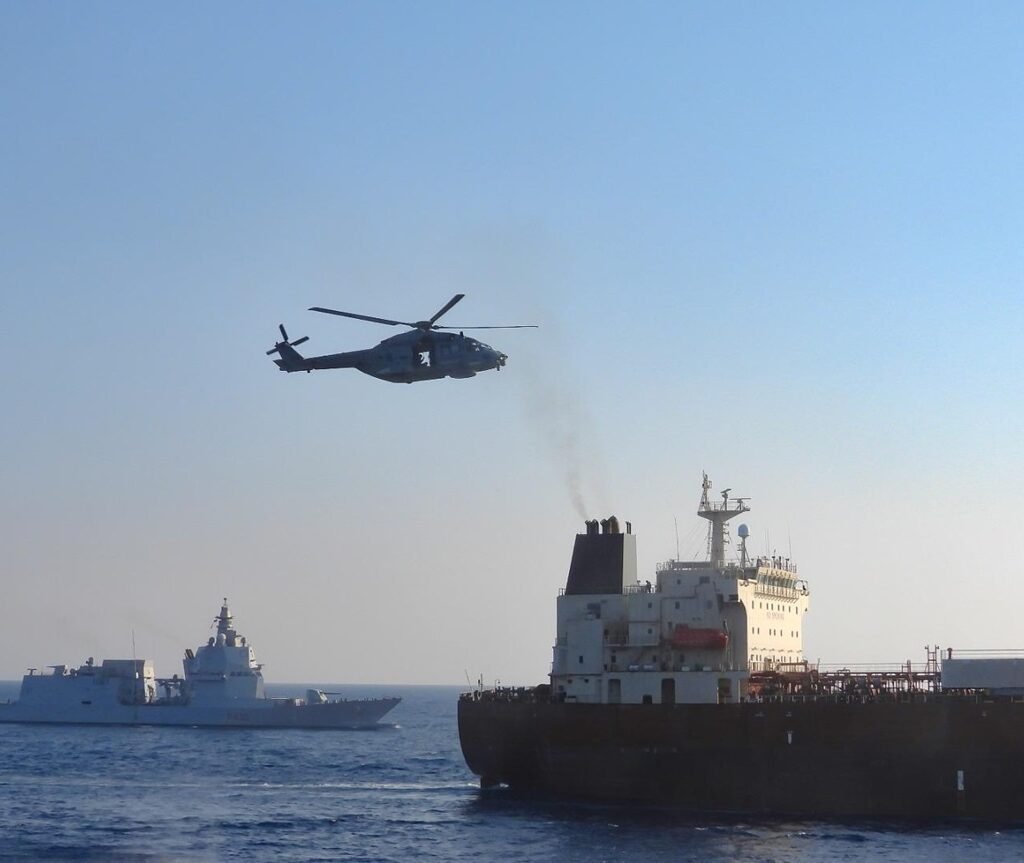
If a war is ongoing between states, the actions of a warship are regulated by the law of armed conflicts at sea. In this case, warships of an opposing state have the legal right to stop, search and seize merchant and civilian vessels of an enemy state at any point in the World Ocean (except for the territorial waters of neutral countries). The captured vessel (“prize”) is subsequently transferred to a special prize court for confiscation.
However, in peacetime, the basic principle is freedom of navigation and the exclusive jurisdiction of the flag State on the high seas in accordance with the UN Convention on the Law of the Sea. Any unprovoked seizure of a civilian fleet by a warship is unlawful. Depending on the context, in peacetime, such actions are qualified as an act of aggression or an internationally wrongful act of a state. Since a warship is an official organ of its state, its actions do not fall under the definition of piracy, since piracy is carried out exclusively “for private purposes” by private individuals. The seizure of a foreign fleet by a state ship is a violation of the sovereignty of another state, an act of state coercion, the use of force (a violation of the UN Charter) or an international offense for which the flag State of the warship bears full responsibility.
Only the legal right to visit and inspect is provided for (as exceptions). The actions of a warship will be considered lawful only if there are reasonable suspicions, as clearly stated in Article 110 of the Convention. A warship may stop a civilian vessel only if it is suspected that it: is engaged in piracy; is engaged in the slave trade; is making unauthorized broadcasts; is stateless, i.e. is a vessel without a flag or is flying a false flag.
Maritime law enforcement measures can only be applied if the incident occurs within the territorial sea or exclusive economic zone of a coastal state, where its military or border ships have the right to detain foreign civilian vessels for violations of local law, for example, for illegal fishing, smuggling or violations of the rules of innocent passage.
Further analytical assessments can be conditionally divided into skeptical ones, which consider such actions of Russia exclusively 100% information and psychological operation and “bluff from helplessness” with reference to the limited capabilities of the Russian Navy to wage a full-fledged “convoy” war on remote ocean communications without the risk of a direct military clash with NATO.
There are also moderately risky assessments of hybrid threats, that if this is not a bluff, then Russia is capable of resorting to “gray” hybrid actions (use of sea mines, GPS/AIS jamming, local point detentions of individual vessels in “vulnerable” zones under the pretext of “violation of regime zones”). There is a consensus in the media and analysts that the Russian statement is another stage of escalating rhetoric, designed to raise insurance rates for shipping and intimidate Western commercial operators, but the implementation of this threat in a direct format will inevitably lead to a stronger law enforcement or even military response from NATO.
Our experts tried to leave aside “military meteorology with its fog of war” and conduct a simplified mathematical modeling using the well-known game theory, where the situation is described as a classic situation of confrontation between two players, with elements of “asymmetric deterrence”. The constructed model of interests and gains with equilibrium analysis assumes that the West consistently protects the principle of freedom of navigation and ensures the effectiveness of sanctions when it is impossible to deviate from them, while Russia is forced to balance its interest in preserving oil revenues, when a third of its budget depends on the “shadow fleet” against the threat of a direct military clash with the navies of the Western coalition countries.
The obtained mathematical probability of Russia’s steps in the form of a serious international offense against the Western merchant fleet is not excluded, but is determined at a level of less than 5%; the options for so-called “mirror” enclave arrests in its own economic zone under a fictitious pretext, for example, for “violation of the Russian environmental legislation in the waters of the Northern Sea Route” or in the Sea of Okhotsk, with subsequent bureaucratic red tape, are about 25%; and finally, asymmetric hybrid actions with already worked out scenarios of electronic warfare attacks on AIS/GPS navigation systems, “accidental” damage to underwater cables or networks in the Baltic or North Seas, using dummy or sabotage vessels, incidents with drones, and even secret mining, have the highest probability, up to 70%.
Understanding that the cornered Russians are not doing well with political mathematics, we still have some idea of the order of their further actions. It is worth remembering that historical experience has proven that the analytical part of Russia’s consolidated intelligence information, as a basis for making strategic decisions, before the Crimean War, the First World War and the Second World War, demonstrated a systemic failure precisely at the stage of generalization, interpretation and reporting to the top leadership. However, this is the topic of another study.
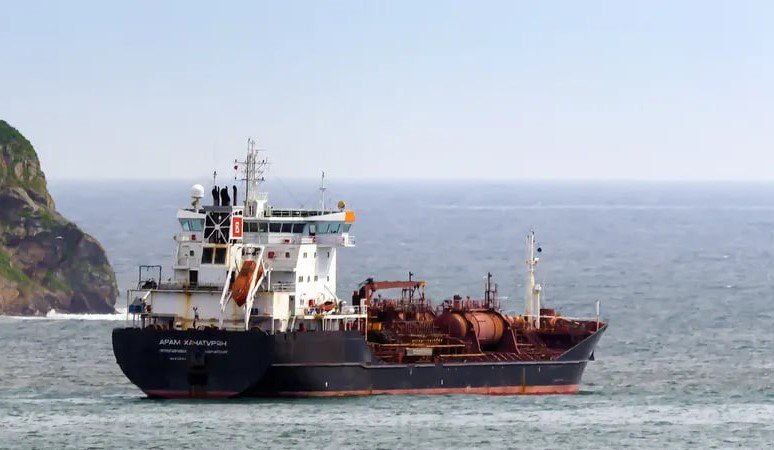
The main problem before and now lies not so much in the lack of primary intelligence or departmental information among the Russians, but in the ineffectiveness of the analytical component, subordinated to political dogma, ideology or the will of one person. Returning to the latest political showdown that took place in the Far East, we note that the Russian Navy does not have sufficient potential and ability to conduct long-term convoy operations to protect hundreds of ships of the “shadow fleet” around the world, its Black Sea Fleet is practically paralyzed, the Baltic is blocked in the “NATO lake”, and the Northern and Pacific fleets are constrained by nuclear deterrence tasks and are limited by the material and technical base.
In this situation, the main node of tension remains the Baltic Sea. The main artery of Russian oil exports passes through the Baltic Straits and the lion’s share of the “shadow fleet” plies from the ports of Primorsk and Ust-Luga. In the Baltic, Russian-controlled vessels are forced to pass through the maritime zone of NATO countries, where their interception is legally and technically easiest. Therefore, despite the bravura report of the commander of the Russian Pacific Fleet that they have taken the necessary measures and are aware of the passage of every merchant ship, for some reason the Russians demonstratively sent the missile frigate “Admiral Kasatonov” and the destroyer “Admiral Levchenko” from the Northern Fleet to the Baltic Sea.
The redeployment of large warships once again demonstrated that Russia considers the Baltic a “zone of particular risk”, where scenarios of forceful pressure and outright sabotage are most likely. This was shown by the incidents on the “Balticconnector”, the “C-Lion1” and “Estlink 2” submarine cables and the “Caffa” vessel, which, after a corresponding decision of a Swedish court, was seized as a carrier of stolen Ukrainian grain, with subsequent transfer to the ownership of Ukraine.
Almost all countries in the region are blatantly ignoring Russian blackmail and have strengthened practical measures in advance. The Baltic countries have begun to require mandatory notification of oil transshipment from ship to ship in their maritime zones in accordance with MARPOL standards. If a tanker turns off the AIS automatic identification system or carries out unauthorized transshipment, this becomes a basis for detention and arrest for violation of maritime safety rules.
The Baltic countries and Denmark have also introduced strict requirements for environmental insurance of ships. If a tanker belonging to the “shadow fleet” does not have a proper insurance policy from a recognized international club (P&I) or has critical technical defects, the navy and coast guard have the right to detain it to check the safety of navigation. NATO also acts in a coordinated manner in the Baltic and has introduced enhanced patrols of water areas (Operation Baltic Guard) to check the insurance of tankers passing through the Baltic Straits and the Gulf of Finland.
Vessels without flags, with forged documents or those that pose an environmental threat will be stopped and seized in accordance with international law, regardless of the Kremlin’s threats.
A specialized analytical NATO Center for the Security of Underwater Infrastructure (CUI Maritime Center) has also been created at the MARCOM base in Norwood, Britain. It collects satellite data, AIS ship-tracking signals, data from underwater sensors and seismographs to detect suspicious vessel behavior in real time. The NATO-EU Joint Task Force is also already operating, which provides direct communication between NATO military headquarters and private operators of underwater communication cables and power networks. Private companies provide the military with accurate maps and telemetry of the network status, which allows them to instantly send a patrol frigate or helicopter to the point of a possible break or threat.
Therefore, the further implementation of Russian plans will not go unnoticed. An important aspect is the perception of the population of the West of the threats of Russia regarding the further escalation of force. They did not cause panic among the population of Western countries, Western society perceives such statements through the prism of “fatigue from Russian ultimatums”.
After nuclear blackmail, energy pressure and threats to “freeze Europe”, new threats against tankers are perceived only as another element of the Kremlin’s military noise. If we evaluate the data of various sociological surveys (Eurobarometer, Pew Research, Gallup), we can see that the level of support for tough actions against Russia and strengthening the protection of maritime borders in the Scandinavian and Baltic countries consistently exceeds 75-80%. In addition, in the countries of Northern Europe, the topic of the “shadow fleet” is perceived not only as a geopolitical, but also as an acute environmental threat, primarily due to the risk of oil spills in the Baltic Sea due to outdated Russian tankers.
Sociology shows that more than 70% of citizens of Finland, Sweden and Denmark expect their governments to take even tougher action to block the old Russian oil transport. Even the increased political feeding of Russian “canned goods” with the promotion of the ideas of “independent” “economic analysts” and “legal consultants” does not help.
By the way, analytical studies have shown a gradual rejection of Russia from the classic areas of STS transshipments in the Baltic, namely near the island of Gotland in international waters in the immediate vicinity of the economic zones of Finland and Estonia, as well as near the Swedish island of Gotland, a previously very active area where large tankers transshipped oil before Sweden, with the support of NATO partners, increased its naval presence there. Under the described pressure from the Baltic countries, Russian logisticians were forced to shift a significant part of the risky transshipments outside the Baltic.
We can note that the Association’s experts are also carefully studying the possibility of an operational response to Russia’s short-sighted actions. Of fundamental importance is a further change in attitude towards Russian operations with a plan of specific actions. Taking into account the statement at the highest political level and the systematic violations of maritime safety rules by the Russian authorities, we are considering the issue of working out recommendations on depriving the Russian Federation of the status of coordinator of two maritime geographical areas (NAVAREA).
Russia is the coordinator of two areas of the World Navigational Warning Service (WWNWS) – NAVAREA XIII (Sea of Okhotsk, Bering and Japan) and NAVAREA XX/XXI (Arctic region). The presence of this status demonstrates Russia’s “responsibility for maritime safety” and allows it to be used to take organizational measures in regulating vessel traffic. Deprivation of the status is regulated by the joint policy of the International Maritime Organization (IMO), the International Hydrographic Organization (IHO) and the World Meteorological Organization (WMO).
Ukraine, which has directly encountered Russian manipulation of maritime safety notifications and the use of false warnings about “military exercises” to block trade corridors, jamming or spoofing GPS/AIS signals, and direct killings of crew members of neutral countries’ vessels, should address the IMO and IHO member states and raise this issue at meetings of the Sub-Committee on Navigation, Communications, Search and Rescue (NCSR) or the Maritime Safety Committee (MSC). The legal grounds are also Russia’s systematic violation of the requirements of IMO resolutions, in particular A.706(17) and MSC.1/Circ.1310.
Transferring the functions of the coordinator to another country in the region, for example, Norway or the USA for the Arctic, or Japan for NAVAREA XIII, requires a decision by the IMO MSC and approval of new boundaries and responsibilities. The consequences of such a step for Russia should be the loss of an official platform for blocking civilian shipping routes through the NAVAREA warnings system. Of course, this will not prevent it from continuing to create physical obstacles or emit illegal radio signals from its own stations.
However, the political and symbolic consequences are very high, since this will deprive Russia of the status of a legitimate “security manager” in strategic regions, especially in the Arctic. Previously, in fact, Ukraine suffered from Russia’s illegal actions, but the current attempt by Russia to raise the stakes in the game will make it a violator of the rights of other countries, and this already requires a collective response in the protection of world values. Perhaps the planning of FONOPs (Freedom of Navigation Operations) should already be discussed, as military missions during which military ships and aircraft demonstrate the right to freedom of navigation and flight in international waters. The conduct of such operations by our partners precisely off the coast of the occupied Crimea was previously analyzed by our Association.