In addition to the significant increase in “federal taxes” and various “local fees” in the new year that we previously described, the criminal “authorities” delighted the residents of occupied Sevastopol by promising that, starting in January, they would “pay management companies more for the maintenance of residential premises in apartment buildings,” the increase in these “fees” was approximately 17%. The last time these “tariffs” were raised was in May 2024, when the increase was approximately 7%.
Against this backdrop, Sevastopol gauleiter Mikhail Razvozhaev decided to “delight” the population with new, disappointing forecasts for a number of long-term construction projects, previously pompously advertised as part of “federal projects.”
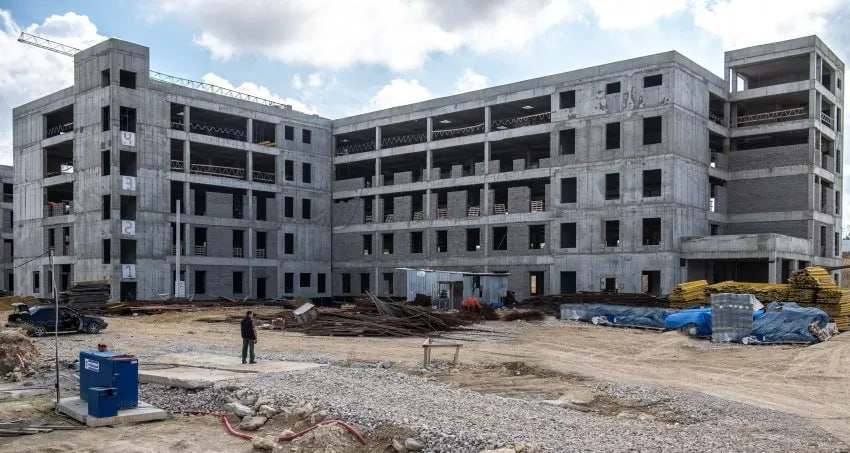
In particular, the previously repeatedly delayed “completion of the emergency hospital” is being pushed back to the end of 2027, allegedly “due to sanctions.”
Razvozhaev claimed that the hospital was supposedly previously intended to receive “imported heavy medical equipment that proved unavailable,” and that “replacing the equipment with similar equipment would require a revision of the projects: changes to utility networks, ventilation, power supply, room dimensions, and even doorways.”
However, Razvozhaev is clearly being disingenuous here, as the same “reason” was stated in 2023, and nothing has been done since then; all the alleged “project changes” described were supposedly “agreed upon” all along.
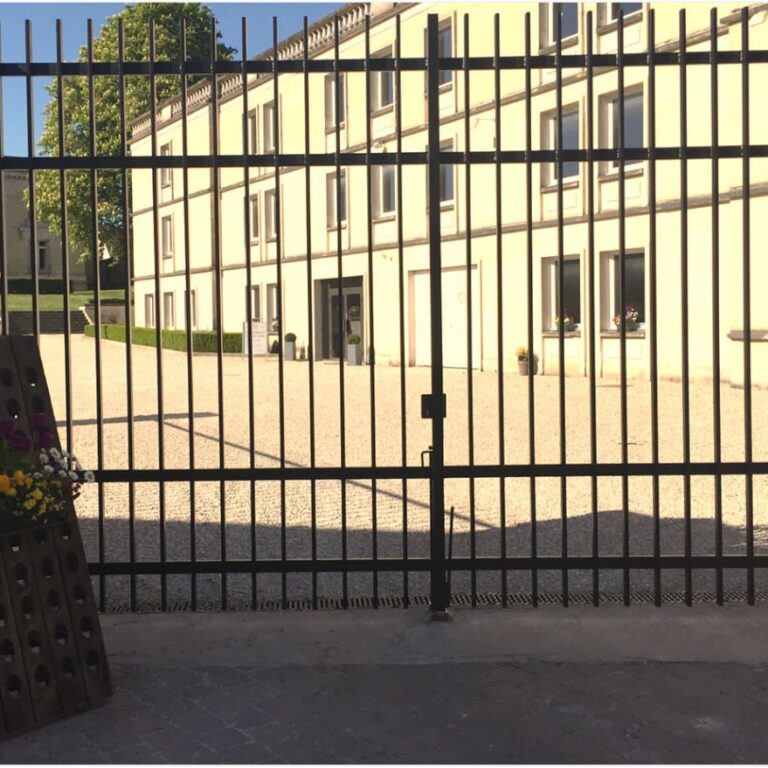
And the gauleiter has now come up with another “reason” for postponing the launch of the “industrial park”: allegedly, the 102nd PES of the aggressor’s ministry of defense was responsible for the “technical connection” to the “industrial park” power grid.
But now, as the gauleiter “laments,” “it turns out that colleagues were counting on supplying power through another project they were developing for the ministry of defense, and in the process, connecting it to an industrial park,” but that “ministry of defense project has been postponed.”
Now Razvozzhaev promises to “approve the park project,” which will have “not three stages but one,” by the end of 2026, but he declined to specify where the occupiers will find the required megawatt.