Recently, certain “Sevastopol Telegram channels” published allegations exposing the leadership of the “Main directorate of the Russian ministry of emergency situations for the city of Sevastopol.”
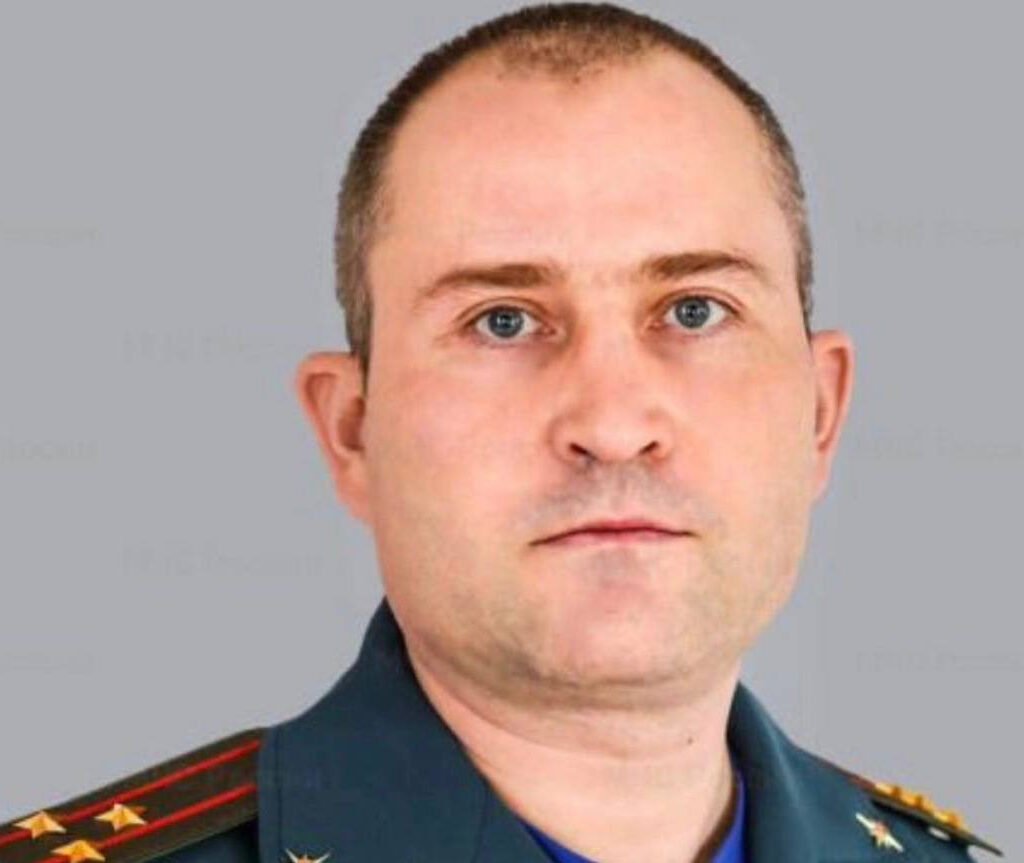
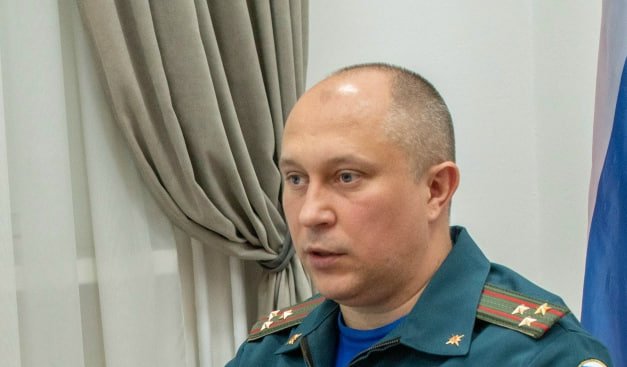
Citing “rank-and-file firefighters,” the reports claim that the “former leadership”, specifically Colonels Alexey Rokhlin and Vladimir Shchedrin, “successfully siphoned off” 50 million rubles between 2023 and 2024.
These funds had been earmarked for “one-time payments” to the firefighters who actually respond to blazes; it is alleged that nearly half of this money went instead to other individuals “close to the leadership.”
The reports also point to a “peculiar arithmetic” regarding salaries, noting that “administrative staff” took home significantly more than the firefighters themselves. Furthermore, it is alleged that “Rokhlin and his deputy, Shchedrin, did not always take a direct, hands-on role in managing units during major incidents,” and “when they did appear on-site, they… generally kept their distance.”
Additionally, it is claimed that money was deducted from the firefighters’ paychecks to “purchase equipment”, even though the “assistant to the head of the directorate,” Alexander Bodko, was responsible for logistics and supplies.
It is reported that a criminal case has allegedly been opened against Bodko in Rostov, involving the “inflated cost of parts by more than 2.5 million rubles” under a “government contract worth over 12 million rubles for the maintenance and repair of two KAMAZ vehicles.”
It should be noted that Saratov native Alexey Rokhlin was “transferred” to occupied Sevastopol in 2021. Prior to this, he held various positions in the Moscow, Ivanovo, and Rostov regions. Notably, in the Moscow region, his tenure overlapped with that of Vladimir Shchedrin, a Moscow native who was himself “transferred” to Sevastopol toward the end of 2022.
On November 5 of this year, Shchedrin was entered into the occupiers’ registries as the “acting head” of their Sevastopol “Main directorate.” While he had previously appeared in the aggressor’s propaganda in this capacity, the occupation “authorities” have made no “official announcements” regarding Shchedrin replacing Rokhlin.
As for Alexander Bodko, he has experienced a “career advancement”; this summer, the occupiers announced his appointment as “acting deputy chief” of the Main directorate of the Russian emergencies ministry for the Rostov Region.
Furthermore, according to the aggressor’s procurement registries, Bodko, who was working in Rostov alongside Rokhlin at the time, was responsible for multi-million-ruble procurements for the “needs of the Main directorate” back in 2017.
Following his recent appointment, local Rostov-based social media channels initially promised to reveal “noteworthy details” about him, but it appears that the aggressor’s security services managed to suppress this “media interest.”
While there is no information in open sources regarding Bodko’s role in schemes involving KAMAZ vehicles, exactly one year ago we reported on “investigative actions” concerning a “40-year-old resident of Sevastopol” who, “since 2015, had served as a managing partner at a major firm… specializing in vehicle repairs.”
According to the aggressor’s punishers, “from the summer of 2022 to December 2024, the man entered deliberately false information into reporting documentation, inflating the volume of work performed and the quantity of technical fluids used,” and “subsequently withdrew the resulting funds in cash from the company’s accounts.”
We previously noted that this likely concerns the Bakhchisarai-based entity “Krym-Avto”, with Alexey Kislov listed as its “founder”, which, as of 2022, had obtained a “license for the maintenance of armaments and military hardware.” This included the “servicing” of KAMAZ vehicles, carried out in the capacity of a subcontractor for the firm “Remdizel,” based in Naberezhnye Chelny.
In all likelihood, the aforementioned “sudden exposures” targeting Rokhlin, Shchedrin, and Bodko are linked to an internal power struggle between factions vying for “leadership positions” within the aggressor’s Ministry structures, both in Rostov and in Sevastopol.