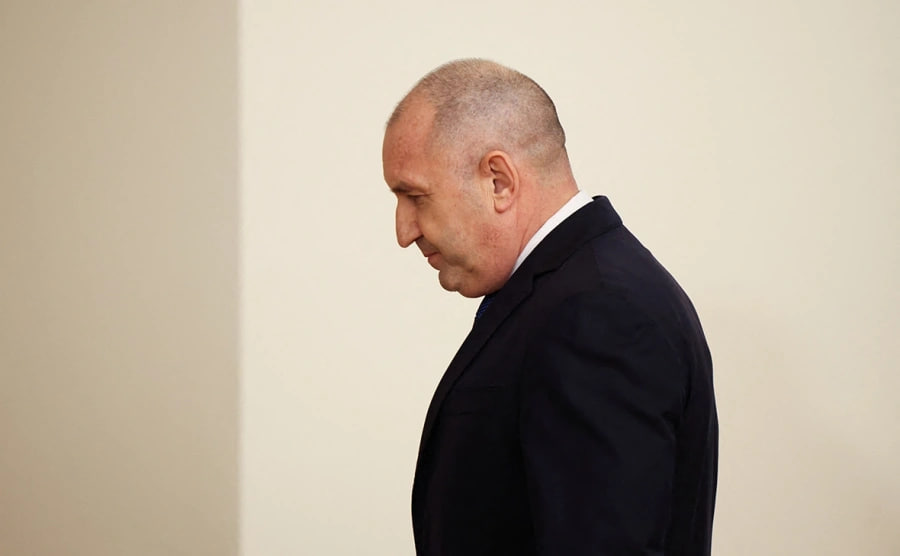
By the end of the month, the aggressor-controlled “Crimean media” decided to discuss the “acute phase of the political crisis in Bulgaria” after the country’s President, Rumen Radev, announced his resignation on January 19.
The resignation was preceded by mass protests that began in November 2025, protesting the government’s economic policies, including tax increases, and corruption.
As a result, Prime Minister Rosen Zhelyazkov resigned on December 11, and Bulgaria found itself with an interim government in the midst of joining the Eurozone and changing its currency.
Now, Kremlin propagandists are claiming that Radev intends to “defeat the Euroliberal tricksters” with his new political party, and that his yet-to-be-existing political force has already been defined as “Eurosceptic and declaring rapprochement with Russia and withdrawal from the Ukrainian agenda.”
We’ve written extensively about Rumen Radev’s unique biography, which includes a “Crimean connection,” so it’s difficult to be surprised by any of his further statements and actions.
It’s also clear that Russian intelligence agencies will seize the opportunity to destabilize the situation during the next parliamentary elections, expected in Bulgaria in 2026.
However, the existing pro-Russian forces – the Socialists and the odious “Renaissance” party – are unlikely to marry with another “Rusev-aligned” project, given their declining popularity – the current protests in the country are supported primarily by the pro-European and liberal electorate.
It’s worth noting that Rusev’s resignation was preceded by a series of substantiated reports from our Association to authorized bodies in Bulgaria and the European Union regarding the activities of a slew of Russian agents in that country, including the situation with the “Lukoil” refinery, oil transportation, crewing and ship repair sectors, sanctions evasion mechanisms, and so on.
It’s possible that the recent cessation of “Lukoil”‘s operations in Bulgaria and the associated anti-corruption investigations, including into the port and crewing sectors, signaled a “change of era” for politicians associated with it, as demonstrated by the current resignations.