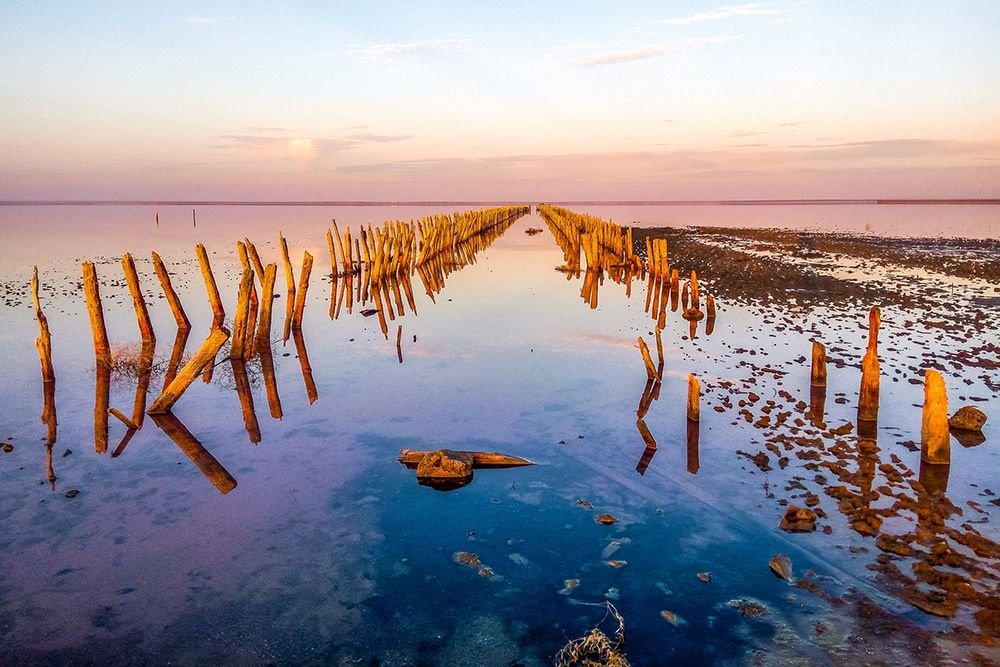
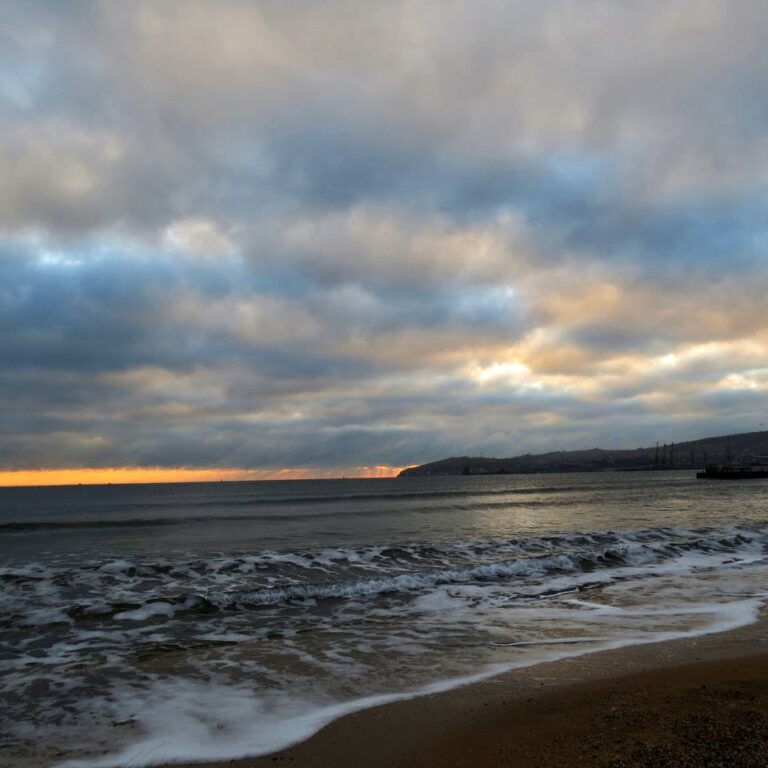
In December 2021, due to the flooding of Yevpatoria by the waters of Lake Sasyk-Sivash, caused by the negligence of the occupiers, our Association pointed out the environmental risks associated with the flooding and erosion of the toxic waste dumps of the Saki chemical plant on Cape Chervony (Krasny) of the same lake.
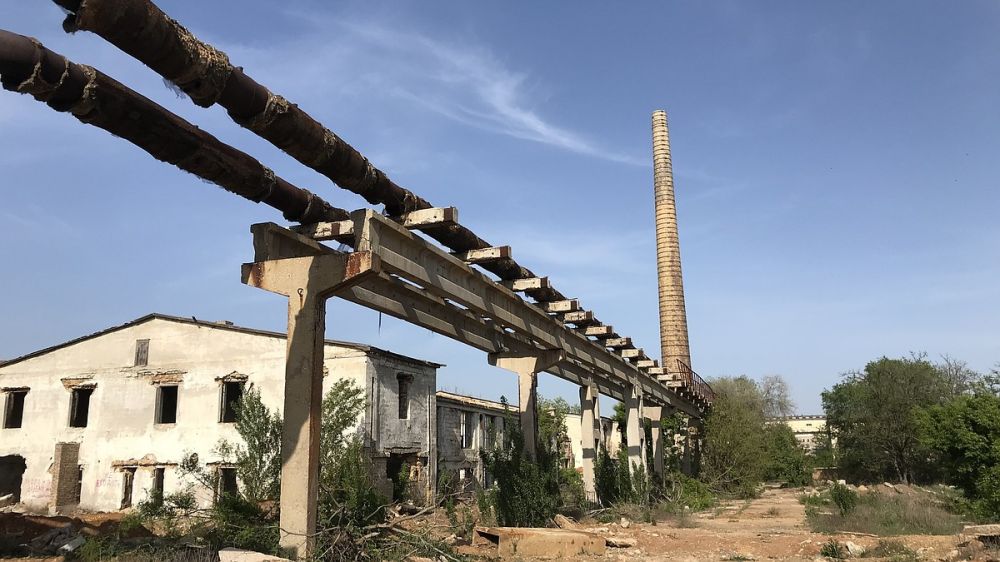
It should be recalled that until 1987, this plant produced components of Soviet chemical weapons and other highly toxic substances for industry from lake brine, in particular methyl bromide. This dangerous production of the Soviet enterprise, located near two children’s resorts, was finally stopped, in its demilitarized component after the collapse of the USSR, by the Ukrainian authorities back in 2002, and the occupation of Crimea interrupted the ongoing remediation measures.
Immediately after our revelations, the Crimean gauleiter Sergei Aksyonov stated that the territory of the chemical plant was allegedly “planned to be reclaimed.” At the same time, the “bankruptcy procedure” was supposed to be completed by the end of 2022, then the dangerous enterprise’s facilities were promised to be transferred to “municipal ownership of Saki,” and only then would some mythical “private investor” allegedly appear, who would then carry out the “reclamation.”
Over the past four years, this, of course, has not happened, and the occupiers are still conducting a chronic procedure of “liquidation” of the Saki chemical plant, within the framework of the so-called “arbitration case A83-2363/2006” with the permanent “bankruptcy trustee” Vasily Pitelyak.
It should be recalled that even Russian propagandists who visited the remains of the plant in 2020 noted that “everything here is chemical industry waste, mixed together” and described “multicolored earth, fragments of plastic, an unusual black porous substance” that “is frightening to touch.”
Although the “reclamation” of the bankrupt plant was declared in the “State program for the development of the industrial complex for 2015-2017” approved by the occupiers at the end of 2014, the occupiers were actually interested in both the possibilities of practically restoring the production of chemical weapons in Saki, and the use of “surplus” plant facilities as building materials.
And no one has mentioned for a long time the millions of hryvnias that disappeared from the plant’s accounts at the beginning of the occupation as part of the scam described above by its “liquidators”.
The risks of pollution of Lake Sasyk-Sivash and the Kalamita Bay of the Black Sea increased after, at the end of 2019, the same Vasily Pitelyak “legalized” through a fake “court process” in “case A83-15797/2019” the “ownership” of the plant’s property complex for his “clone” controlled by the occupiers, and also after the occupiers began actively extracting building materials, namely shell rock, at the chemical plant waste dump on the Sasyk Cape Chervony, and began building the “Simferopol – Skvortsovo – Evpatoria – Mirny” highway for military purposes, bypassing this lake to the Black Sea Fleet bases on Lake Donuzlav.
The potential release of chemical waste from the Saki plant into open waterways connected to the Kalamita Bay of the Black Sea would mean the collapse of unique ecosystems and the destruction of the recreational potential of this area of Crimea, threatening the entire Black Sea region.
And now, in parallel with the “Golden Sands” scam, which we have described many times, involving the construction of buildings for Russian colonizers on coastal lands in the zone of potential pollution, the fake “deputy minister of ecology and natural resources,” Natalia Lisovskaya, announced a “roadmap” that has clearly become a “cover document” for the inaction of the illegal “authorities.”
According to the “roadmap” announced by Lisovskaya, until the end of 2027, the occupiers will only be addressing the issue of “federal funding,” which is already quite utopian in the current circumstances.
And to explain the future failure, it was immediately stated that the situation with the facility on Cape Chervony is “complex,” since allegedly “additional work is required to form the land plot and clarify the status of hydraulic structures,” which no one will do without “funding.”