After Russian intelligence agencies held another so-called “Yalta International Forum” at Moscow’s President Hotel on November 6th and 7th, the aggressor’s propaganda arm faced the extraordinary task of coming up with something “inspiring” to say about this event, which had become incredibly dull, in the same tired, hackneyed format of a small group of “foreign friends of Crimea,” mostly long-established in the Russian capital.
And against the backdrop of the “Crimean authorities”‘ tales of supposedly “hundreds of public and political figures, journalists, and historians from Russia and more than 40 countries,” of all the “political tourists,” only such “monsters of international politics” as former Finnish parliamentarian and current Russian propagandist Ano Turtiainen, marginal Tunisian figure Abdelaziz Messaoudi, and the “President of the Association of Yemeni graduates in the USSR and the CIS,” Anwar Mohamed Ali al-Zarafi, were publicly presented.
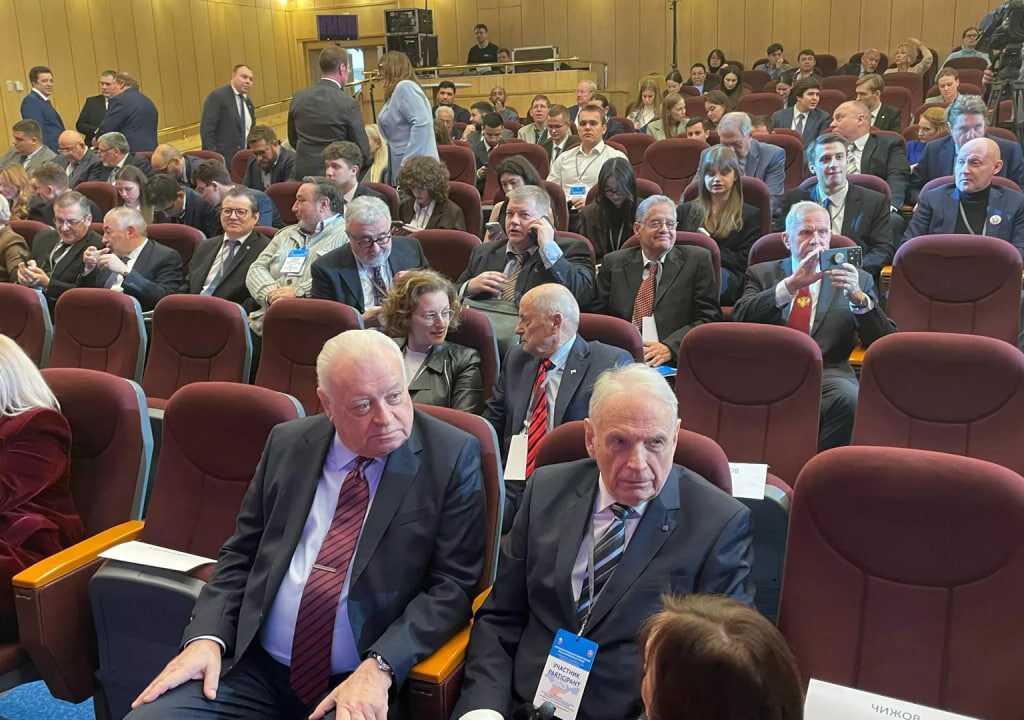
It’s therefore unsurprising that the permanent talking head of the “Yalta Forums,” the aging Russian spy Georgy Muradov, read a “welcome speech” to a half-empty hall from such a “Kremlin figure” as Anton Kobyakov, an adviser to the Russian president, which was, in fact, the apotheosis of the event. Of the “Kremlin’s powers,” only “Duma international affairs expert” Leonid Slutsky was spotted at the “forum,” clearly having come to gloat over his “best friend” and “head of the Crimean delegation,” Vladimir Konstantinov.
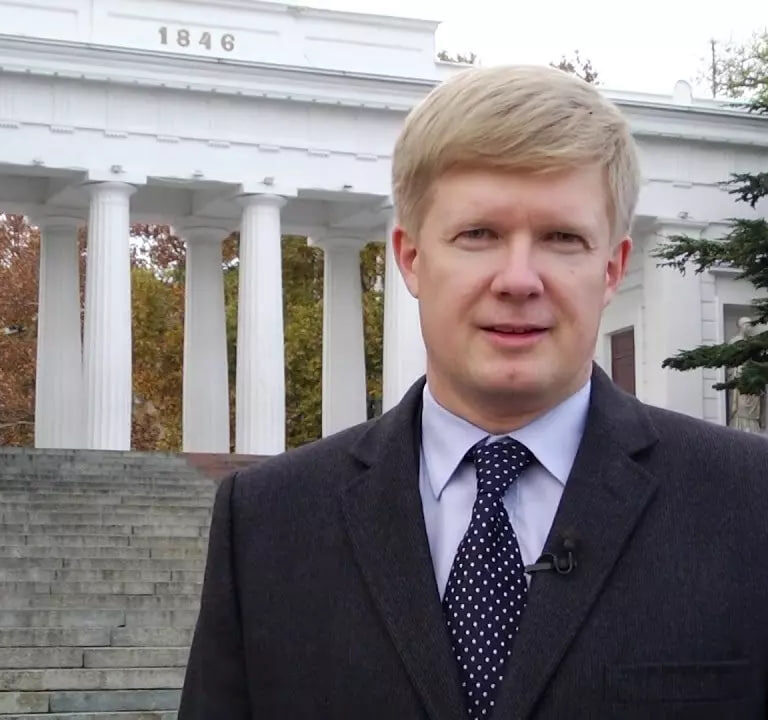
The “Crimean foreman” himself publicly and rather pointedly “thanked” “Georgy Lvovich Muradov personally” for the “forum,” which looked more like a casually veiled mockery.
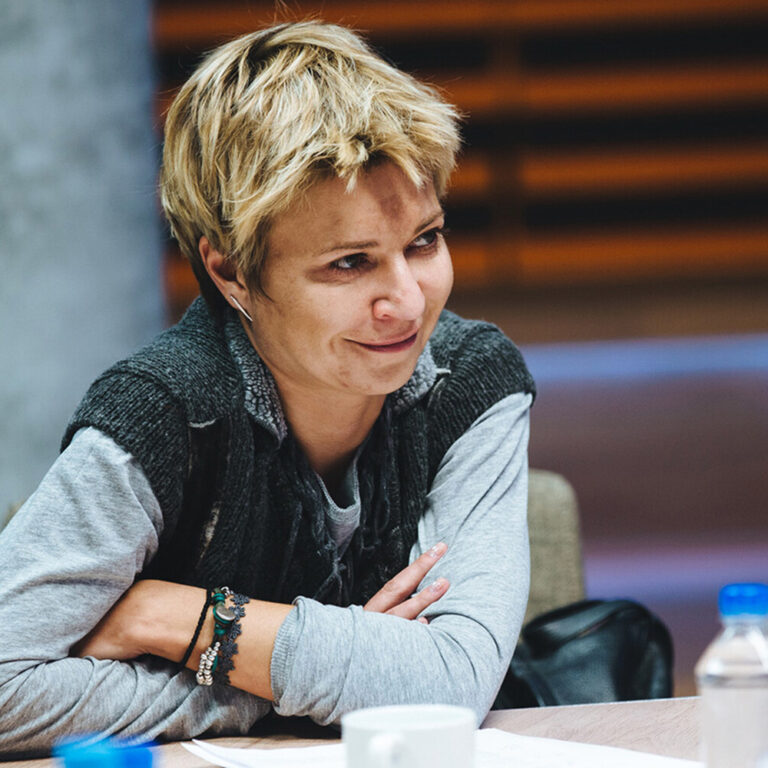
And Muradov himself “delighted” such “forum stars” as Roman Chegrinets and Anastasia Gridchina, declaring that he does not consider “people like Merz or Macron, for example, legitimate”; perhaps he was more pleased with the “legitimacy” of those gathered at the “President Hotel.”
However, such an approach may be of interest not so much to politics or international law as to applied psychiatry; it is no wonder that they are now openly saying about Muradov, even in the Crimean “corridors of power,” that “the old man is going to fewer and fewer events and is mostly doing his own thing.”