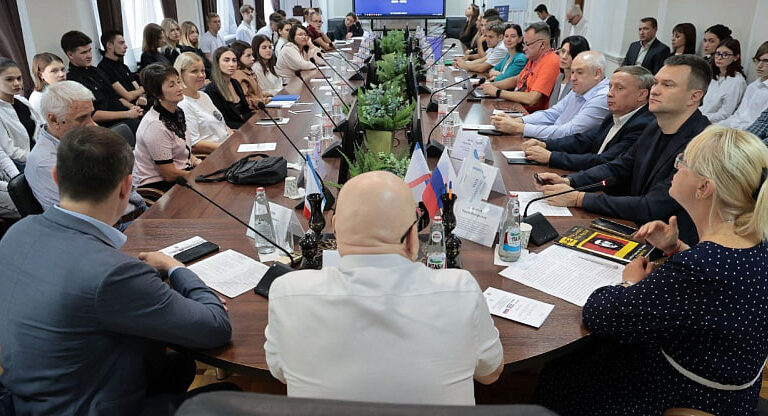
On the occasion of another “mass celebration” of Russia Day on June 12 in the occupied territories, which in fact this time in Crimea was extremely dull, comparing it with the last “frontline” years, the aggressor’s propaganda decided to “wipe the bonds” and tell the population about the “history of the peninsula”, not without the traditional anti-Tatar flavor.
Among a number of “suddenly” and synchronously appeared publications, the so-called “associate professor of the department of history of Russian statehood” of the illegal “Crimean Federal University” Nikita Khrapunov “made his mark”.
In addition to telling about his “personal unique experience” of trying to spread fakes about Crimean history and culture at the hearings in the Netherlands on the “Scythian gold” case, Khrapunov decided to tell the world about the “black legend” that was allegedly spread in Europe about Crimea after its Russian annexation in the 18th century.
In every way “exposing” both many historians of the past and “modern Western ideologists”, Khrapunov stated that allegedly “the Crimean Khanate was never a national state”, that it allegedly “collapsed largely for internal reasons” because “society itself could not adapt to the new political and economic situation”, and the Khanate “could not cope with independence”.
Similar racist stories about some kind of “inferiority” of the Crimean Tatars, who “could not adapt” to the realities of Russian imperialism, were also spread by the “military historian” Sergei Koldin, who stated that the imperial annexation of Crimea allegedly saved the region from slavery and the slave trade, which, it turns out, was carried out by the Crimean Khanate with European countries.
The fact that in Russia itself slavery and the slave trade flourished for another eighty years after the annexation of Crimea, Koldin “modestly keeps silent”; however, his real attitude towards the indigenous population of the peninsula is well described by his previous quote, said on a slightly different occasion, but practically “according to Freud”.
“Naturally, the question of preserving and especially developing the national culture of enslaved peoples does not arise before their enslavers. They are even less concerned about the problems of educating the younger generation and the functioning of the health care system in the occupied lands,” this “historian” recently stated, and it is difficult not to admit that Russian imperialism has been pursuing and is pursuing this very policy for centuries on the “sacred” peninsula.