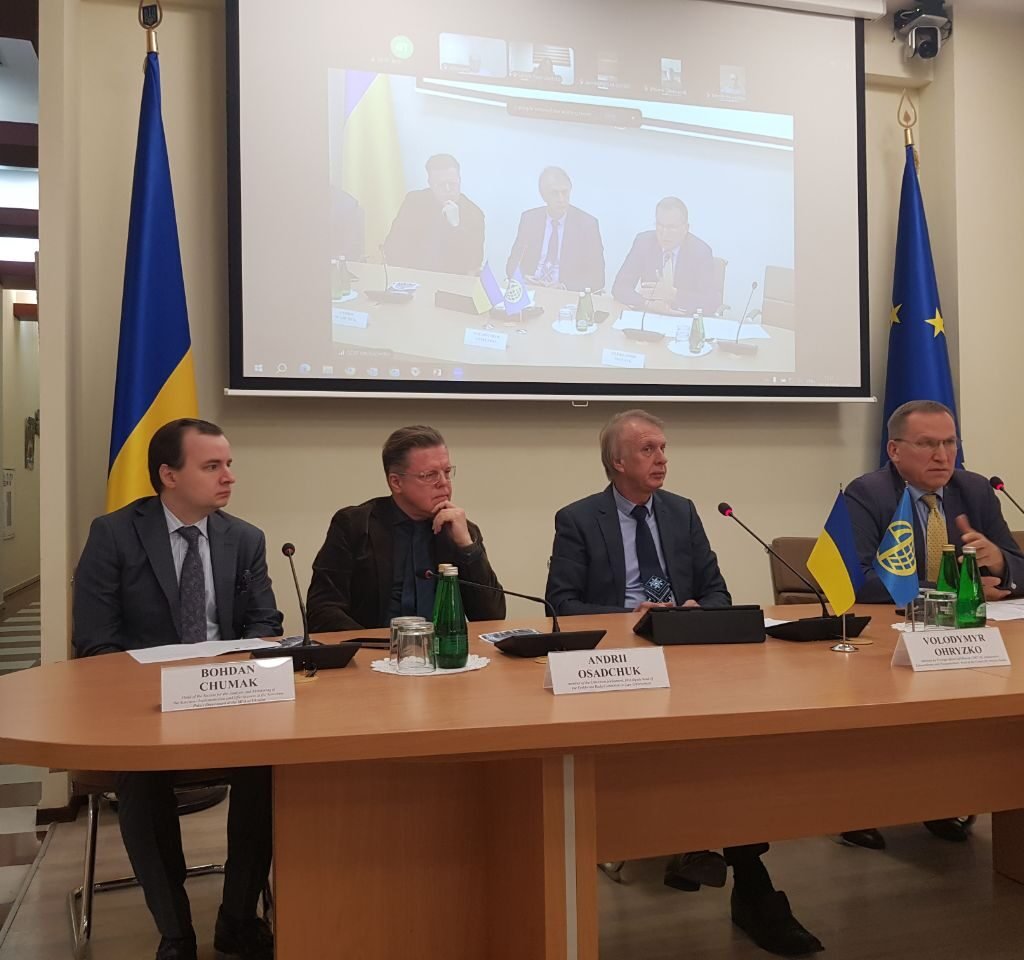
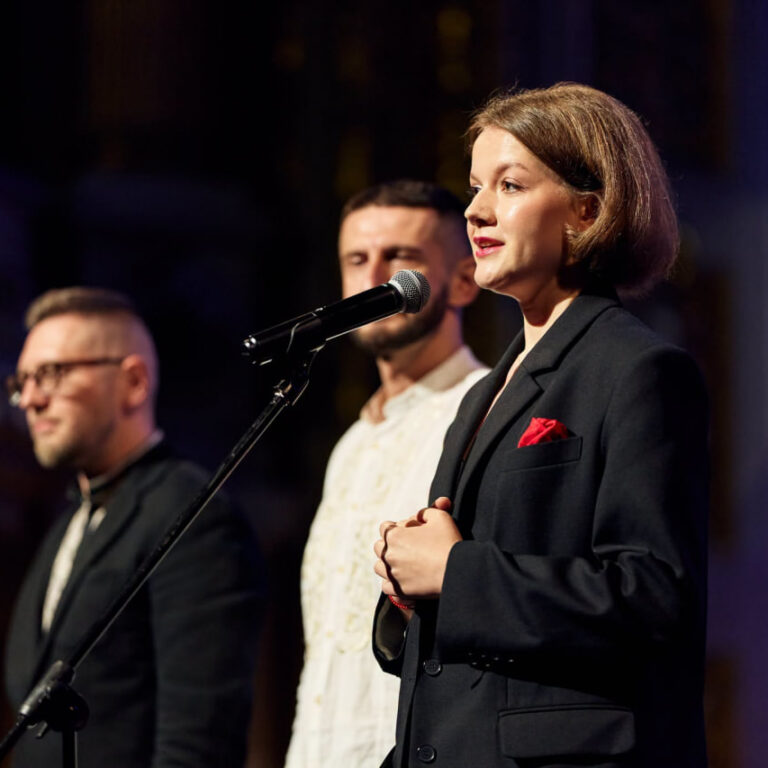
On October 1, experts from our Association, Borys Babin and Anna Prykhodko, participated in a roundtable discussion titled “‘Unfreezing’ Russian Assets for Ukraine: What Stands in the Way?” The event, held in Kyiv, was organized by the Center for Russian Studies with the support of the Directorate-General for Rendering Services to Diplomatic Missions.
The event was moderated by the Center’s head, the prominent Ukrainian diplomat Volodymyr Ohryzko. Distinguished scholars, members of parliament, diplomats, and human rights defenders presented their views on the status of Russia’s sovereign assets and the limits of their immunity, accountability for the crime of aggression as an imperative of international law, and the realistic prospects for compensating Ukraine for the damages incurred.
In his address, Professor Babin drew the experts’ attention to proposals currently under discussion within the Council of Europe regarding the use of Russian sovereign assets, frozen since 2022, to enforce judgments of the European Court of Human Rights in cases against Russia.
These cases relate to the occupation of Ukrainian territories, specifically Crimea, and other acts of aggressive war committed prior to September 2022. This approach was supported by PACE Resolution 2678 (2026), adopted the day before, on September 30, 2026.
An ARC expert noted that Ukraine had effectively won two interstate cases against Russia at the European Court in 2024 and 2025; the key challenge now lies in the Court’s upcoming determination of the format and methods for redressing the violations and awarding compensation to victims, particularly Crimean residents.
At the same time, particular attention was drawn to the systemic and persistent attempts by Russian agents to influence the operations of the European Court and the Council of Europe as a whole.