In the framework of permanent cooperation with the United Nations’ bodies, our Association sent submission to the Office of the UN High Commissioner for Human Rights for their next study on access to medicines and the right to health.
Relevant input, prepared by Dr.Hab, Borys Babin, PhD, Kateryna Karpova, and other experts, and published on the UN web-sources now, reminded about the Russian attacks on medics and medical infrastructure, including clinics and ambulances in Ukraine.
The ARC’s input added that Russian “administrations” provide access to medical services and health products in Russia-occupied territories, only for persons who were forced to get illegal “Russian passports and certificates,” with clear discrimination of Ukrainians.
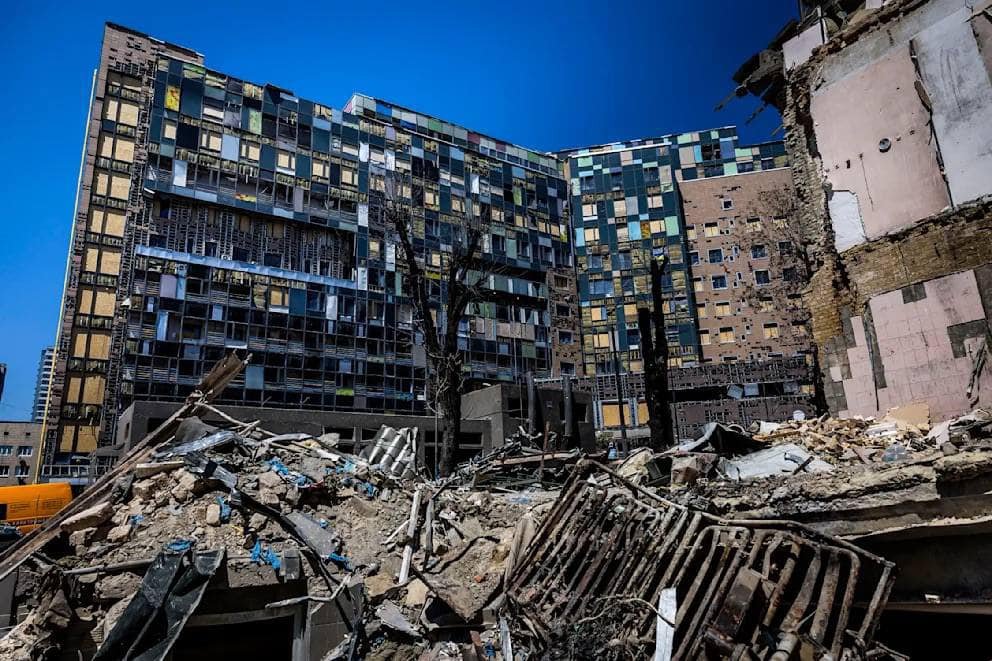
The ARC’s submission also reminded about Russian missile strikes on “Okhmatdyt,” a multidisciplinary diagnostic and treatment facility, and on “Isida,” the largest women’s health and family planning center in Kyiv.
The ARC’s input pointed that the system of medical institutions in occupied territories of Ukraine, is totally no effective and corrupted, illegal “regional governments” change arbitrarily own “ministers of health” and other relevant “officials” there, major part of which have no any experience in managing the medical infrastructure.
The ARC’s submission added that the medical infrastructure and stuff in Crimea are used by Russia for political provocations against third states and militaristic propaganda, also for illegal conscription of Ukrainian citizens into Russian army forces at the same time when there are no basic medical drugs and equipment on the peninsula.
Also, the submission described the Russian voluntaristic campaign to ban abortions in Crimea and the repressions against some Crimean Tatar women, who wrote appeals to the Kremlin regarding the organized crime group within the “ministry of health” and relevant negligence and corruption in the “Crimean Perinatal Center.”
Relevant OHCHR Study A/HRC/63/85 on protection gaps of vulnerable segments of the population regarding access to health products in the context of the right to the highest attainable standard of health, published now, reflected our input.
In its chapter “Armed conflict” the Study, with reference to our information, pointed out that disruptions arise through direct attacks on healthcare facilities and health-workers, obstruction of humanitarian goods, services and staff, interruptions to supply and value chains, population displacement, insecurity, rising costs and interruptions to routine public health programmes, including vaccination.
Study A/HRC/63/85 added, regarding Russia’s warfare practice, that invaders “have reportedly used healthcare facilities for military purposes, interfered with healthcare services offered by hospitals, or alleged that opposing parties were using healthcare facilities for such purposes, sometimes, claiming that these facilities had consequently lost the protection afforded under international humanitarian law”.
Study A/HRC/63/85 stressed separately in its point 18 that the “Ukrainian detainees held by Russia have received limited medical attention, while suffering from poor conditions of detention and subjected to torture and ill-treatment”, demanding in its point 70 to “end attacks on healthcare, and accountability has to be ensured”.