On August 20, amid yet another massive blackout in occupied Crimea, the aggressor government issued an prescript “amending the comprehensive plan for the modernization and expansion of the main infrastructure.”
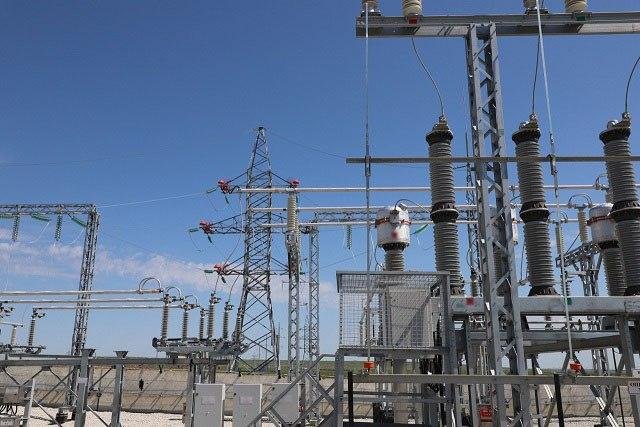
It effectively postponed the construction of the “new component of the peninsula’s power grid,” announced by the occupiers just five months ago, a “100-megawatt energy storage system with a capacity of 600 megawatts per hour,” as well as a “35-kilovolt power line to connect” this storage unit to the 220-kilovolt “Kafa” substation near Feodosia.
The project included the installation of two transformers; “Rosseti” was responsible for the write-offs, and “Rosatom” was to supply the equipment. Similar storage units, but with a capacity of 250 megawatts, were planned for parallel construction in the Krasnodar Krai.
Kremlin officials allegedly justified the need for these storage facilities by citing the need to reduce peak load fluctuations and power generation, and the “more efficient use of solar and wind power plants.”
On the one hand, green energy facilities in Crimea were indeed preserved as a legacy of the pre-occupation period, but, as our research has previously shown, they were eking out a miserable existence even before the current logistical crisis, due not only to the general mismanagement of the occupiers but also to the lack of incentive mechanisms in the Russian regulatory system.
And now the situation has developed quite tragicomically: on the one hand, the Kremlin has initiated a campaign to “create small-scale generation” for regions affected by the energy crisis, including occupied Crimea and Sevastopol.
But on the other, even if we imagine deploying small power plants, both fuel-based and renewable, on the peninsula, the occupiers simply won’t be able to effectively utilize their output.