At the end of February, the occupiers once again decided to talk about “record tax collections in Crimea” and “high growth in republican budget revenues,” claiming that 50 billion rubles had allegedly been brought “out of the shadows” and that there were “no tax evaders” on the peninsula.
We previously reported on the consequences of this “tax skimming” policy, when in 2025, the Crimean “authorities” sought “at any cost” to milk the remnants of “Crimean businesses,” primarily “mid-level” businesses, for twice the usual amount to meet the Kremlin’s rather hysterical demands to “reduce the level of subsidies.”
We previously reported that, following “record collections” in 2025, the “financial balance of organizations” on the peninsula showed an “excess of losses over profits” for all types of “organizations” by 44.9 billion rubles. In the context of this unprecedented “financial stability,” Crimean “tax officials” declared in mid-February that they would not be squeezing “record figures” out of businesses in 2026.
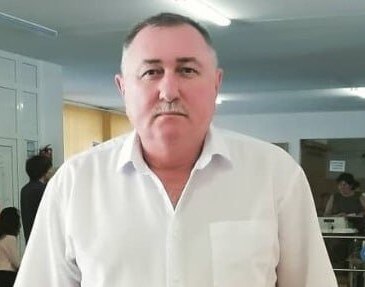
But now, as evidenced by the new “stream of optimism” from “chief Crimean tax official” Roman Nazdrachev, “everything is just beginning” for
Crimean residents.
The fact is that, since the beginning of 2026, the aggressor has significantly increased the tax burden for all groups of the population. While the majority of Crimeans are still “quietly rejoicing” at the price increases due to the “new VAT rates” and new “utility tariffs,” small businesses have felt the “new realities” most acutely.
Since January, the occupiers have lowered the threshold for “VAT exemption” from 60 to 20 million rubles for the previous year, which immediately increased the number of entrepreneurs eligible for the “simplified tax system” instead of the “patent” by 9,000.
And for these individuals, the level of fiscal pressure in 2026 increased immediately and sharply, exponentially, not just by percentage points.
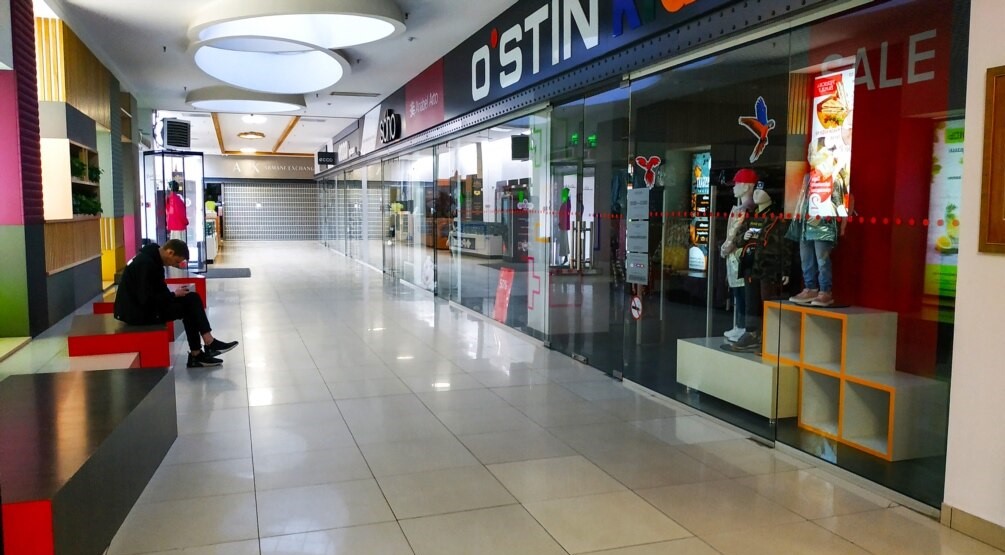
And by the end of February, the “new reality” revealed such an “unprecedented rise in prosperity” on the peninsula that classifieds sites were immediately flooded with offers for Crimean retail outlets, including bars, coffee shops, small stores, and the like.
At the same time, a sharp decline in business activity is already noticeable, and, as a result, a decline in offers in the “related sector,” including advertising, rentals, and so on.
Thus, last year’s “midlife business crisis” has been compounded by the collapse of small businesses, which by summer will clearly add a special flavor to the remnants of the “Crimean economy.”