Russia, the aggressor country, continues to implement in the occupied Crimea a policy of fiscal pressure, forced accounting of even small economic activity and further integration of the peninsula into the fiscal architecture of Russia.
In 2025-2026, this policy is increasingly aimed at extracting resources from businesses, property owners and self-employed individuals. Formally, a significant part of the changes is presented as a “technical adjustment of rates, coefficients or preferential regimes”. At the same time, an in-depth analysis of the content of these decisions gives grounds to consider them as a manifestation of increased control over “taxpayers”, expansion of the “tax base” and reorientation of local economic processes to the needs of the occupational “administration”.
A thorough analysis of key tax changes affecting businesses, property owners, and the “budgetary system” of occupied Crimea was conducted by Associate Professor Andrii Chvaliuk specifically for the Association of Reintegration of Crimea.
This analysis focuses not only on nominal “rates” but also on less obvious mechanisms for increasing the fiscal burden: changing the “list of tax objects,” revising “territorial coefficients,” restricting “preferential regimes,” and strengthening administration.
The author considers the “tax changes” introduced in Crimea not as a set of isolated solutions, but as elements of a single fiscal logic of the occupation administration.
Its key features are the expansion of the circle of “taxable” assets, narrowing access to “benefits”, strengthening “digital and administrative control”, as well as the use of tax revenues to support the “budgetary” and military priorities of the occupation “administration”.
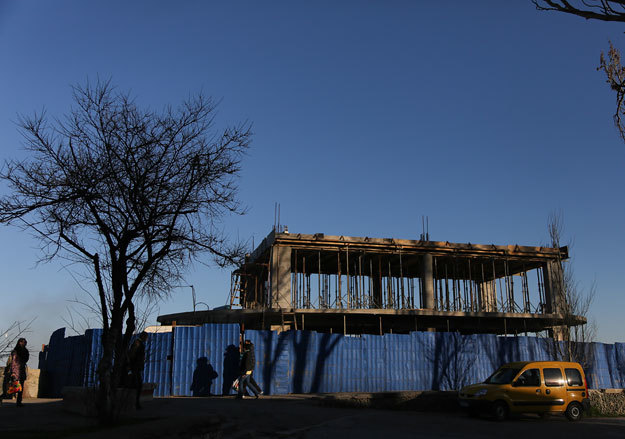
One of the most significant changes was the introduction of “taxation of unfinished construction sites”. The “republican law” of July 2 last year No. 71-ZRK/2025 amended the previous “law” “On the tax on the property of organizations”, adding to the “list of objects of taxation” unfinished construction, for which a “rate” of 2%.
At first glance, such a change may look like “regulating property taxation”. However, its “fiscal logic” is obvious: the occupation “administration” seeks to expand the “taxation” base at the expense of assets that previously did not provide regular revenues.
This especially applies to “legal entities and organizations that own unfinished real estate.” In practical terms, such a policy creates additional pressure on the beneficiaries of problematic or frozen construction projects and turns real estate into an instrument of stable “budgetary” withdrawal.
It is significant that the “tax” emphasis is shifting not only to profitable activity, but also to the very fact of property ownership. This gives grounds to talk about the fiscalization of real estate, when property is increasingly viewed by the occupation “administration” as a resource for replenishing the “budget” regardless of the real economic productivity of the object.
Another “republican law” of February 2 of this year No. 155-ZRK/2026 amended the “law” “On establishing rates of a single tax paid in connection with the application of a simplified taxation system” with the formal preservation of reduced “rates of a simplified taxation system” for 2026. For individual entities, a “rate” of 4% was established for the object “income” and 10% for the object “income minus expenses”, and lower “rates” were declared for companies in the field of information technology and “social enterprises”, 1% and 5%, respectively.
However, the main significance of this change is not in the preservation of preferential “rates”, but in the fact that the circle of those who can actually use them is being reduced. If previously reduced “rates” were perceived as the so-called “support for small and medium-sized businesses”, then from 2026 access to them increasingly depends on compliance with “federal lists” and “industry criteria”.
In simple words, the scheme looks like this: the occupation “administration” formally leaves the “privilege”, but in fact narrows the circle of those who can claim it. Therefore, an entrepreneur may see a low “rate” in the law, but lose the opportunity to apply it if his activities do not fall into the “approved list” or “do not meet the established criteria”. At the same time, it is obvious that for businesses that are not their own and at least somehow working, the Crimean “authorities” have established a systemic corruption corridor to obtain the desired “preferential rate”.
The aggressor’s Federal Tax Service, in recent messages dated December 30 and February 6, actually confirmed this logic. The “clarifications” emphasized that “regions can establish benefits only for areas determined by the government.” Thus, the occupation “administration” of Crimea only imitates the appearance of “tax autonomy,” but in fact acts within the framework of the fiscal policy determined by the Kremlin, with the simultaneous widest possible corruption capabilities in relation to business, which now receives the fiscal press in a “manual mode.” An additional factor of pressure should be considered a change in the “federal-wide rules for value added tax” (“VAT”) for payers of the “simplified taxation system.” Since 2026, the income threshold, after exceeding which payers of the “simplified system” become “VAT payers,” has been reduced to 20 million rubles. This immediately increased the number of Crimean entrepreneurs who fell under the “simplified taxation system” instead of the “patent” by 9 thousand people.
For Crimean business, this means that even with the preservation of the “preferential regional rates” of 4% and 10%, some entrepreneurs will have to maintain more complex “tax accounting”, submit additional “reporting” and take into account the indirect “tax” in pricing. Therefore, the real burden is increasing both due to “regional rates” and “federal complication” for representatives of the “simplified system”.
In addition, the “republican law” of October 30 last year No. 103-ZRK/2025 amended the “law” “On the patent taxation system” regarding the parameters of such a “taxation system”, by revising the potential income and “territorial coefficients”. For the largest cities and resorts, in particular Alushta, Yalta, Kerch, Saki, Feodosia and Simferopol, this “coefficient” was increased from 1 to 1.2, for some districts it was left at 1, and for “remote territories” with practically zero “fiscal prospects” it was formally reduced to 0.8.
But increasing the “coefficients” in large cities and resort locations means increasing the “tax” burden precisely where small business is most dependent on seasonality, “administrative permits” and the purchasing power of the population and the small number of “Russian tourists”.
Therefore, the “patent system”, which was previously declared as a “simplified regime for small entrepreneurs”, actually becomes a tool for extracting income from the most economically active territories of the peninsula.
It is especially important that the increase in “tax” pressure occurs not through a direct change in the “base rate”, but through the “coefficient”. Such a mechanism is less noticeable for public discussion and does not create problems for the occupiers’ propaganda, but it is most noticeable for the payer. After all, the nominal “rates” remain stable, while the real amount of the “tax” increases due to the so-called “technical parameters” of its calculation.
Such supposedly “technical” changes are increasingly becoming a tool for hidden fiscal pressure in the policy of the occupation “administration” of Crimea.
The “budgetary” changes for 2025-2026 and forecasts for 2027, declared by the “republican law” of December 24 last year No. 134-ZRK/2025, demonstrate an attempt to balance the “budgetary parameters” through “reducing the deficit and adjusting expenditures”. At the same time, the occupiers declared that “according to the results of 2025, the budget was executed with a surplus, and the growth of revenues was provided by both federal transfers and tax revenues”.
We will remind, that earlier we covered the collapse of the occupiers’ attempts to transfer the occupied peninsula to “financial self-sufficiency” by 2027, which led to the continuation of the “target program” under which Crimea was on “federal subsidies” until 2030, but in a “lightened version”, which creates an annual “hole” of at least one hundred billion rubles for the current “trimmed republican budget”. This issue is quite painful for the aggressor’s propaganda, and therefore stories about “improving taxation” do not disappear from its feeds.
Earlier we talked about the consequences of the policy of “tax skimming”, when in 2025 the Crimean “authorities” sought at any cost to milk from the remnants of Crimean business twice as much as usual to fulfill the Kremlin’s rather hysterical demands for “reducing the level of subsidies”.
As part of this campaign, the aggressor-controlled “fiscals” reported on an alleged “unprecedented increase in revenues to the Crimean treasury”, which allegedly amounted to “120% compared to the level of 2024”, with a “total amount of funds of about 115 billion rubles”, that is, they declared an additional extortion of about 17 billion from the Crimean residents.
At the same time, both industry and agriculture in 2025 demonstrated exclusively “negative growth” in the occupied AR of Crimea.
After that, the federal statistics of the aggressor stated that in 2025 the “balance of financial activity of organizations” of the peninsula showed an “excess of losses over profits” for all types of “organizations” by a total of 44.9 billion rubles, and in Russia itself a comparable collapse of commercial activity at the regional level was observed last year only in the Russia’s Kemerovo Region.
Against this “optimistic background”, the same Crimean “fiscals”, namely the criminal “deputy head of the Federal Tax Service” Sergey Kryukov, hastened to declare in mid-February that in 2026 they would not squeeze “record figures” from business, declaring a “plan for additional consolidated budget revenues per year” at the level of a “modest” 700 million.
However, this clearly forced “act of tax humanity” did not promise anything good for the remnants of the Crimean economy, since such an “additional increase” in no way cancels last year’s “record” figure of 115 billion, which has already become “planned” for 2026.
Therefore, on the one hand, a new session of “mass degreasing” is planned for Crimean business in 2026, and on the other hand, all the announcements of key Crimean collaborators “about a gradual transition to a non-subsidized budget” will have no relation to reality – it is obvious that with “growth in revenues” measured in millions, not billions, the “budget hole” will not only not decrease, but will also demonstrate the stability valued by the aggressor’s propaganda.
We should add that even the official “fiscal statistics” of the aggressor indicate a sharp increase in revenues from basic taxes, which did not correlate in 2025 with any economic revival – and indicated a strengthening of administration, an expansion of the “taxation” base, and stricter control over income. Therefore, the existing “budget surplus” is clearly not a sign of economic stability, because short-term revenue growth will be accompanied by long-term depletion of entrepreneurial activity.
Our assessment is also confirmed by the aggressor’s sources. In the “budget” for 2026, almost half of the projected “republican revenues” of Crimea fall on the above-described “federal gratuitous revenues” of 117.98 out of 241.45 billion rubles. Even the “Russian business press” reported that the “republican budget” for 2026 “is planned with a deficit of about 3.9 billion rubles, and its coverage is associated, in particular, with the remaining funds and federal budget credits.”
Commenting on the “record revenues” of 2025, obtained in the above-described way, among the tasks of the “authorities” was “reducing dependence on external financing”, but it is obvious that with the dynamics described above, no fiscal “jumps above the head” will make the “budget” of the occupied Crimea self-sufficient: it continues to depend on transfers, in vain replacing which the collaborators will invent new “sources of fiscal seizure”.
The structure of the above-described administratively secured growth of “tax revenues” in 2025 is indicative: the most noticeable increase was in “personal income tax” by 125%, “VAT” by 157%, “profit tax” by 132%, “revenues from special regimes” by 120%, and “property taxes” by 122% compared to 2024. That is, growth occurred in almost all key areas, which does not correspond to the situation of economic recovery, but results precisely from the wider coverage of “taxpayers” and stricter collection of payments. At the same time, this method of filling the “budget” has a limit.
If business and property owners are increasingly pressured, an even greater part of economic activity will go into the shadows, and some entrepreneurs will reduce or close down their activities. At the same time, the most “visible” business will demonstrate the collapse, which simply cannot go into the shadows, which we studied in 2026 on the examples of the collapse of Crimean catering chains and the crisis for “private utility companies” in the form of so-called “management companies”.
Fiscal tightening can indeed provide a short-term increase in revenues, but it does not solve the problem of structural dependence of the “republican budget”. A similar logic is described by the classic Laffer curve, according to which an increase in tax pressure increases revenues only to a certain maximum, after which further increased taxation can reduce budget revenues.
Historical parallels show that such a model of fiscal subordination of a dependent territory is not unique. In colonial and occupation regimes, taxes, budget rules, property accounting and benefits were often used not so much for the development of the local economy as for the extraction of resources, administrative control and reorientation of economic life to the needs of the political center.
A similar logic was demonstrated by the colonial empires of the 19th and 20th centuries, the Nazi occupation regimes in Europe during World War II and Soviet practice in the Baltic states after 1940.
Thus, historical experience shows that when the fiscal system in a dependent territory is transformed into an instrument of political control and financing of power or military priorities, its short-term effectiveness comes at a high price. It may temporarily increase revenues, but at the same time undermines social stability, weakens local economic initiative and accumulates structural risks.
Moreover, radical changes by the controlling state to the fiscal regime of the occupied territory, which create an excessive burden for its population and business, are a violation of the requirements of the Fourth Geneva Convention and can be considered a war crime.
It is noteworthy that the growth of “tax revenues” in Crimea should be considered not only as a “technical budget indicator”, and not even as an imitation of “increasing financial independence of the region”, but also as a resource base for the militarized expenditures of the occupation “administration”.
One of the most striking examples is the payments to residents of Crimea for concluding a “contract” with the Russian Ministry of Defense to participate in large-scale aggression against Ukraine. Here it is important to distinguish between two components: the “regional payment” from the “republican budget” of Crimea and the “federal payment” from the Russian federal budget.
The Crimean “regional payment” was established by the “decree” of the Crimean gauleiter of December 5, 2022 No. 322-U at the level of 200 thousand rubles; the procedure for its provision was detailed ten days later by the “resolution” of the occupation “government”. Later, the “regional part” was successively increased: to 400 thousand rubles from August 2024, to 500 thousand rubles from January 2025, to 800 thousand rubles in September 2025 and to 1.2 million rubles from February 23, 2026.
The “federal lump sum” has not changed for three years, it is 400 thousand rubles, and therefore the Kremlin quite consciously and long ago transferred the additional “financial motivation” for the new “cannon fodder” to the “regional level”. We associate the formation of such an approach with the curtailment of the practice of “territorial formations” in the aggressor’s army after the suppression of the Prigozhin rebellion.
Then, instead of demanding financing and material support for individual “regionally sponsored” military structures, which could constitute a potential “core of instability” in a number of regions of Russia, the Kremlin began to demand from governors and gauleiter funding for recruiting into “line units”, the fate of which regional structures cannot control.
It is noteworthy that recent attempts by the Crimean and Sevastopol gauleiter to circumvent such a policy through “financing individual units of unmanned systems” were presented in the Kremlin administration as purely propaganda, and not as real fiscal and managerial practices.
This dynamics also directly affects the assessment of “budgetary indicators”. If in 2022 the “Crimean regional payment” amounted to 200 thousand rubles, then in 2026 it increased sixfold, in occupied Sevastopol the dynamics were similar.
But such an increase cannot go unnoticed for the “republican budget”: it requires a permanent source of coverage, and therefore makes the strengthening of “tax” administration and the expansion of the “tax base” functionally related precisely to military mobilization expenditures.
Formally, “tax” revenues are not always “marked” as funds for payments to “contractors”, however, within the framework of the “single republican budget” they create precisely the fiscal space that allows the occupation “administration” to increase monetary incentives for the criminal mobilization of the population of the occupied territory.
Therefore, the growth of the “republican budget” revenues in the occupied AR Crimea cannot be analyzed separately from the militarization of expenditures. The increase in “tax” fees and payments for the “contract” from the Russian ministry of defense are elements of the same policy of the aggressor, within the framework of which the incomes of the population and business are increasingly directed to the military needs of the occupation regime.
We should add that although “tax benefits” in the occupied Crimea were not formally abolished completely, their nature is now changing. “Benefits” perform not only an economic, but also a managerial function, stimulating those types of activities that are recognized as priorities by the occupation “administration” or the Kremlin, and at the same time leaving other business segments out of support.
As a result, the “tax system” becomes less neutral: it does not simply collect income, but forms the desired structure of economic behavior. A classic example is the preservation of “privileges” for economic entities in the field of information technologies.
Previously, our Association has repeatedly written about the Kremlin’s desire to create a “gray zone” from Crimea for dangerous research in the field of artificial intelligence, both of a direct military or punitive-sabotage profile, and “dual purpose”; the current “remnants of privileges” in this area additionally confirm the corresponding intentions of the occupiers.
The so-called “automated simplified taxation system”, which has been applied in the occupied Crimea since 2025 and is taken into account in the “budget calculations” for 2026, requires special attention. Its fiscal scale is still insignificant compared to the usual one, but its political and administrative significance is greater. After all, this system transfers part of small businesses to a regime of maximum digital control, where “tax” obligations are determined on the basis of bank and cash data.
And therefore it is not surprising that from the remnants of Crimean business, “as many as” 183 “taxpayers” decided to switch to such a system in the first half of 2025, which allegedly added to the “republican budget” such a “fantastic figure” as two million rubles.
Also indicative is the growth of the occupiers’ “special registers of professional income tax payers.” This primarily concerns “self-employed persons who work without employees and receive income from their own labor or services.” This includes minor repairs, household and transport services, housing rental, tutoring, care services, individual consultations, small trade in their own products or handicrafts, as well as some freelance and digital employment.
As we wrote earlier, the filling of the bases of such “registers” has already led to tragicomic raids by the aggressor’s fiscals against Crimean manicurists, home-based hairdressers, and the like, in the measure of the aggressor’s desire to strengthen control over small incomes.
Thus, in recent months, the “taxation” system of the occupied Crimea has been in a state of tighter “fiscal integration” with the aggressor in terms of treating the population as “new oil”.
The key trend is not in a direct mass increase in “rates”, but in a comprehensive increase in the real burden through the expansion of the “tax base”, revision of “coefficients”, restriction of “benefits”, reduction of the “VAT threshold”, expansion of “cadastral property taxation” and strengthening of “administration”.
These changes are becoming especially noticeable for small businesses, entrepreneurs on the “patent system” and real estate owners: “preferential” regimes are preserved formally, but access to them is narrowing and becoming more corrupt, and ownership of property, in particular non-commercial, increasingly often in itself creates “tax” costs.
At the same time, those participants in the Crimean economy who cannot go underground and do not have hidden reserves or savings are becoming the most vulnerable.
For the occupation “administration”, such a “tax” policy, under the guise of “increasing budget revenues”, reduces the level of “regional differences” and strengthens the “total controllability and manageability” so valued by the Kremlin, but at the same time this same policy expands corruption opportunities, since in the “tax” hierarchy, evaluation criteria play a much greater role.
At the same time, the growth of “tax” revenues in the “republican budget” ensures an increase in financing for military expenditures, in particular for increasing payments for the “contract” from the Russian ministry of defense.
In these expenditures, the “regional authorities” are deprived of any “budgetary maneuver” and can only “play to increase” the corresponding amounts, while the result of the expenditures – the amount of new “cannon fodder” is important and painful for the Kremlin, but the most non-economic criterion, that is, it does not correlate with “fiscal” processes at all.
Therefore, the economic activity of the population and business of Crimea is increasingly turning into a resource for the purely military needs of the occupation regime, which does not take into account either the social or economic state of the region and does not adjust in any way to financial processes.
Under these conditions, the increase in fiscal pressure on the population of the peninsula, which is not justified by socio-economic needs, which leads to its impoverishment and forced migration, has the characteristics of a war crime committed by the occupation administration.