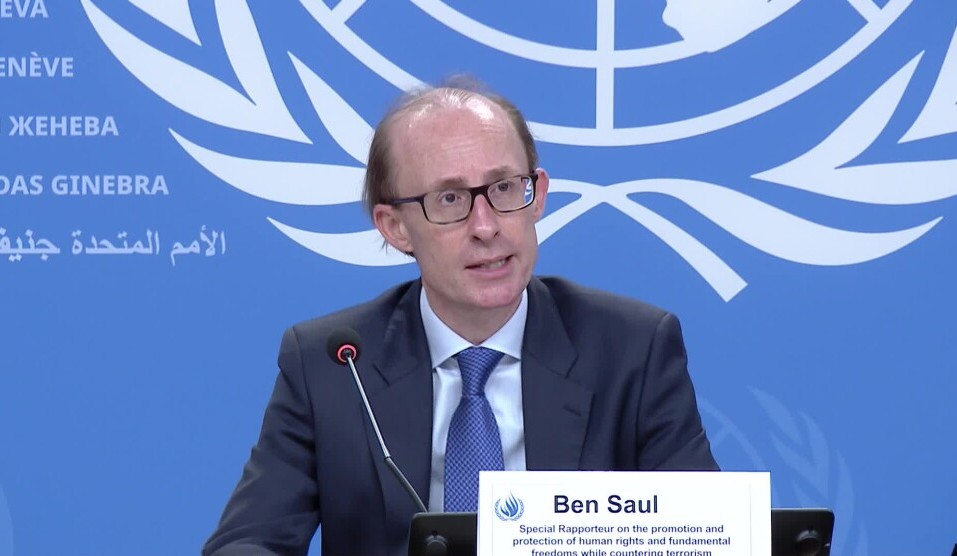
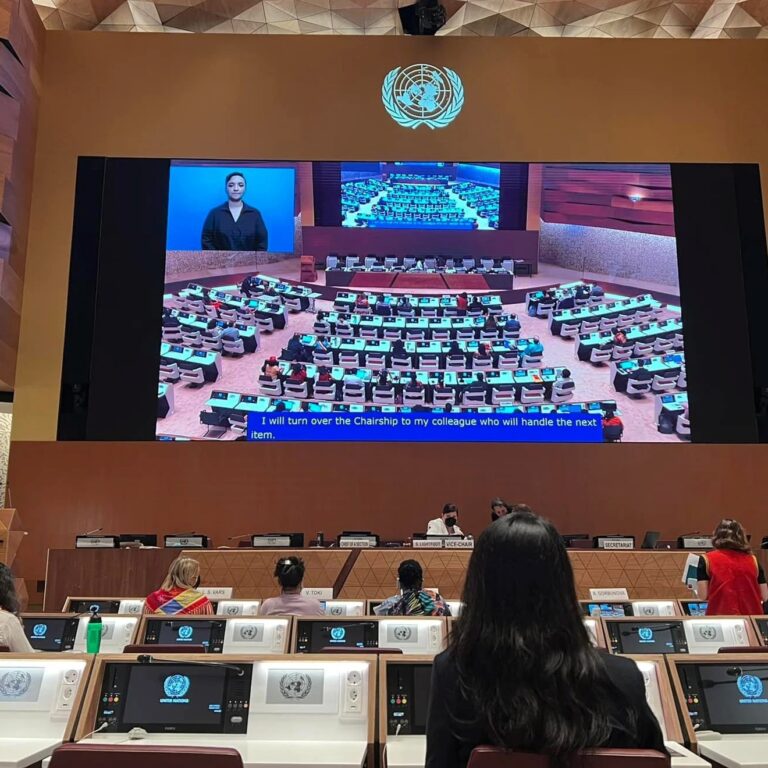
In September 2025, upon relevant requests, our Association sent submissions to the UN Special Rapporteur on the promotion and protection of human rights and fundamental freedoms while countering terrorism, Professor Ben Saul, for the next elaboration of the Position Paper on the Human Rights Impacts of Using Artificial Intelligence in Countering Terrorism and the Ninth Review of the UN Global Counter-Terrorism Strategy.
ARC’s submission, published in January 2026 at UN official web-sources and elaborated with the participation of professors Borys Babin, Olena Agapova, Ihor Kraynov, and Kateryna Karpova, was devoted to challenges of terrorism and artificial intelligence (AI) connected with Russian aggression against Ukraine and temporary occupation of the Ukrainian territories, including Crimea.
The submission stressed that the key challenges of Russia’s usage of AI in Crimea and in other Russia-controlled territories, as well as on the Internet and media, are connected with the aggressor’s disseminating fakes, hate speech, and propaganda; counteracting dissidents, human defenders, and activists; creating deepfakes with genocidal, militaristic, and racist character; controlling faces, trips, and presence in institutions for relevant racial segregation and repressions; and creating chemical and bacteriologic weapons.
ARC’s submissions stressed that relevant examples of Crimean business participation as umbrella structures or as hubs for such Russian provocations and preparations for them prove that duty to protect international solidarity from those challenges to business and human rights, that conjunct terroristic activities, calls for racial discrimination, and calls for aggressive war, genocide, and war crimes in interstate conflict conditions, which may be simplified by AI for committing actors, is also important for UN structures.
The above-mentioned UN Position Paper, funded by the Government of Switzerland and the University of Sydney, is also published, with relevant thanks to 16 states, 3 international organizations, and 21 civil society structures, including our Association, that sent relevant submissions in 2025.
The UN Position Paper agreed with our proposals that applications of AI in specific areas, such as surveillance, moderation of online terrorist content, border management, judicial proceedings, detention, and military operations, must be subject to specific measures to comply with international human rights law and other relevant frameworks, such as refugee law and international humanitarian law.
The UN Position Paper agreed with us that AI technologies fundamentally undermine the anonymity and spontaneity essential for robust democratic debate, transforming the public sphere into a surveilled environment where authentic political expression becomes increasingly constrained and citizens retreat into silence, stressing that the negative impacts on civil and political rights can have cascading effects on other human rights that their exercise protects and promotes.
Regarding AI and military activities, the UN Position Paper stressed that states must consider how these legal frameworks specifically apply to their AI capabilities in the military area and how existing laws can be effectively implemented to ensure compliance, oversight, governance, accountability, and remedies. States and parties to armed conflicts must ensure that human control and judgment are preserved in decisions that pose risks to life, liberty, and human dignity, the Position Paper added.
Our cooperation with UN bodies and officials in relevant areas of expert work will be continued.