In permanent cooperation with United Nations’ bodies and agencies our Association sent in April own submission to the UN Special Rapporteur on Climate Change, Professor Elisa Morgera, for her report on human rights in the life cycle of renewable energy and critical minerals to the General Assembly 80th session.
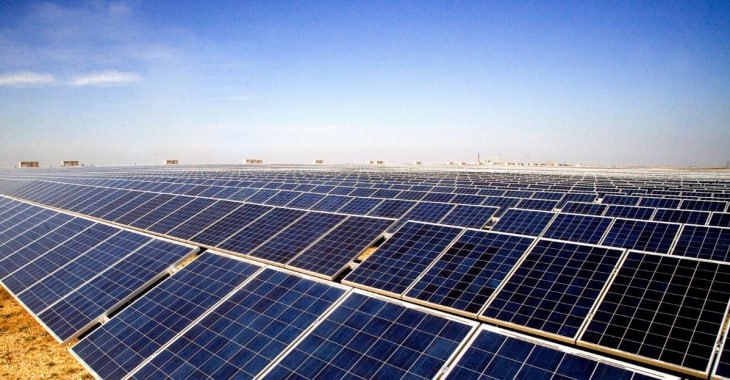
Our submission, prepared by Professor Borys Babin with other experts and published at UN web-sources now, stressed that the war crimes, committed by Russian invaders during ongoing hostilities, are connected with absolutely clear Russia’s war targets in maximal destruction the civil infrastructure and environment, including objects, essential for all Ukrainian ethnic and social groups, like attacks or capture the solar and wind power stations in the Kherson, Mykolaiv and Zaporizhzhya regions.
ARC’s submission stressed that such Russian attacks create gross challenges to all European energy security now. According to estimates by an analytical team at the Kyiv School of Economics, as of May 2024 direct losses in Ukraine’s energy sector alone amount to over US$16.1 billion. The greatest damage resulted from the destruction of electricity generation facilities ($8.5 billion) and primary power lines ($2.1 billion).
Losses for renewable energy producers in Ukraine since 2022 are estimated at $282 million, excluding damage to large hydroelectric and pumped storage power plants. According to an analysis by the Energy Charter Secretariat, 13% of solar power capacity is located in temporarily occupied territories, and 8% of that amount has been damaged or destroyed. Approximately 80% of wind power capacity remains in occupied territory, and some was damaged by aggressor’s shelling.
In addition, at least four biogas plants are known to have been destroyed as a result of Russian aggression. After the deoccupation of all Ukrainian territories, it is very likely that most renewable power generation facilities, located there and built before the war, will have been destroyed, damaged or looted, ARC’s submission added.
ARC’s submission reminded about ongoing challenges for the issue of sustainable development, including growth of poverty, caused by destruction the dam of Kakhovka Hydroelectric Power Plant on Dnipro River by Russian military units, which happened on June, 2023, also as about damage, caused by the catastrophe that occurred on December 15, 2024 in the waters of the Black Sea south of the Kerch Strait with the Russian tankers “Volgoneft-212” and “Volgoneft-239”.
Also, ARC’s submission informed UN bodies about our investigation about “Solar” group power plants, as during all the years of Russian occupation of the Crimea, various structures made money frauds at those solar power plants of the peninsula, including developed since 2011, and their aggressor’s next “nationalization” in 2023, became just another step in the criminal combinations.
And ARC’s submission added that regarding the issue of critical minerals, Russian occupiers created in 2025 a “tight coalition” of Crimea and Melitopol collaborators, for illegal exploration and organization of rare earth materials extraction in the Russia-occupied part of Zaporizhzhya region.
ARC’s submission calls all UN authorized bodies and agencies, also as their member states to pay a special attention to illegal activities of Russia, as the fossil fuel economy state, in Ukraine in framework of global risks for climate and to relevant global human rights and sustainable development, including challenges for green energy and critical minerals, issues of access to climate justice and full, verified information about climate changes and climate challenges, connected with Russia’s ongoing attacks against renewable energy and climate.